Apple and Almond Tart
Tarte normande
A shortcrust case blind baked, filled with almond frangipane and fanned apple, so the base stays crisp under a wet filling.
- Prep
- 40 min
- Cook
- 1 hr 10 min
- Resting
- 30 min
- Total
- 2 hr 20 min
- Serves
- 8
- Revisions
- 5
Allergens
- Cereals containing gluten
- Eggs
- Milk
- Nuts
Named from the ingredients as written, including those carried in from sub-recipes. This is not a guarantee — check the labels on what you actually buy, and note that a product’s recipe can change.
Ingredients
Serves
Method
Rub the cold butter cubes into the 200g of plain flour, the 50g of icing sugar and the 2g of fine salt with your fingertips, lifting the mixture up out of the bowl and letting it fall back so it stays cool.
Stop while it looks like coarse breadcrumbs with a few flakes of butter still the size of peas. Those flakes melt in the oven and leave the layers that make a pastry short.
Beat the egg yolk into the 2 tbsp of ice-cold water.
Pour it over the flour and cut it through with a table knife until the mixture starts gathering into clumps.
Press the clumps together into a ball with your hands, adding a teaspoon more cold water only if it refuses to come together.
Stop handling it the moment it holds. Every extra minute of squeezing develops gluten, and an overworked pastry shrinks back down the sides of the tin in the oven and bakes tough, which is not something you can correct afterwards.
Flatten the ball into a disc about 2cm thick, wrap it and refrigerate for an hour.
Give it the full hour rather than a token ten minutes. The rest hydrates the flour and lets the gluten you did develop relax, and a disc rolled straight from the bowl fights the pin, springs back, and pulls away from the rim as it bakes.
Butter a 23cm loose-bottomed tart tin.
Roll the pastry out on a lightly floured worktop to a round about 3mm thick and 30cm across, turning it a quarter turn every few passes so it does not stick.
Roll the round loosely around the pin and unroll it over the tin.
Ease it down into the angle of the tin without stretching it, lifting the overhang with one hand and pressing it into the corner with the other. Pastry stretched to fit pulls back to its old size in the oven and the sides slump.
Press the pastry into the flutes and leave the excess hanging over the rim.
Prick the base all over with a fork.
Refrigerate the lined tin for 30 minutes.
Heat the oven to 190C/375F.
Bake the case empty before anything goes into it. Frangipane is a wet batter, and on raw pastry the moisture soaks straight down into the base, which comes out pale and sodden and never crisps however long the tart stays in the oven.
Line the chilled case with baking paper and fill it to the top with baking beans or dried rice, pushing them right out into the corner so the sides are held up.
Bake for 20 minutes, until the rim is set and pale gold.
Lift out the paper and beans.
Bake for a further 8-10 minutes, until the base looks dry and sandy rather than damp and translucent.
Trim the overhang off level with the rim with a small knife while the case is still hot, cutting outwards. Trimmed before baking it shrinks below the rim and there is no getting it back.
Turn the oven down to 180C/350F.
Beat the 100g of softened butter with the caster sugar for 3-4 minutes, until pale and visibly lighter. This is the creamed method the lemon drizzle loaf cake in this collection is built on, with ground almonds standing in for most of the flour.
Beat in the eggs one at a time, letting each disappear before the next goes in.
Beat in the vanilla.
Fold in the ground almonds, the 20g of plain flour and the 1g of fine salt until no dry patches are left.
Spread the frangipane into the case in an even layer, no more than two-thirds of the way up the sides, since it rises as it bakes and will swallow anything sitting on top of it.
Use eating apples rather than the Bramleys the apple and blackberry crumble in this collection is built on. A cooking apple collapses to puree, which is what you want under a crumble and not what you want as slices standing in frangipane.
Quarter and core the apples and cut each quarter into 3mm slices, keeping each quarter's slices together as they come off the knife.
Turn the slices through the lemon juice as you go, so they do not brown while you work.
Press the slices into the frangipane in overlapping rings, working from the outside in, curved backs upwards.
Push each slice in far enough to stand up in the batter rather than lie on the surface, or the filling rises around them and buries the pattern.
Scatter the flaked almonds over.
Bake for 35-40 minutes, until the frangipane has risen and set between the slices, the apple edges have caught brown, and a skewer pushed into the filling between two slices comes out clean.
Warm the apricot jam with the tablespoon of water in a small pan for a minute, until it runs off the spoon in a thin stream.
Brush the glaze over the hot tart.
Cool in the tin for 30 minutes, until the filling has firmed enough to cut cleanly.
Push the base up out of the ring and slide the tart off onto a plate.
Cut into 8 slices.
Dust the rim lightly with icing sugar as it goes to the table, rather than earlier, since it dissolves into the glaze within a few minutes.
Serve just warm, with double cream or the vanilla custard in this collection.
Nobody has rated this recipe yet.
Sign in to rate this recipe. One rating per person, and you can change it.
What to expect
- Taste
Rich, nutty and only moderately sweet — the frangipane's almond flavour is deep and slightly toasted rather than sugary, and the apple, using a firm eating variety rather than a sharp cooker, contributes real fruit sweetness and a gentle acidity rather than sharpness. The shortcrust base is plain and slightly sweet in its own right, a background note rather than a competing flavour.
- Aroma
Warm, toasted almond leads as soon as the tart is cut, with a lighter, fresh apple scent and a faint vanilla note underneath, and the apricot glaze contributing a light, jammy sweetness right at the surface.
- Texture
A crisp, short pastry shell giving way to a dense, slightly springy frangipane, with the apple slices offering a distinct, tender bite against the softer filling around them.
- Sound
A clean, brittle snap as the pastry rim is cut, quieter and denser once the fork reaches the frangipane and apple.
- How the flavour moves
The pastry's plain sweetness registers first, the almond frangipane's deeper, toasted richness follows through the middle of the bite, and the apple's fresh sweetness and gentle acidity arrive last, cutting through the richness right at the finish rather than sitting underneath it.
- Serve it
Best served just warm, once it has cooled enough in the tin to cut cleanly but before it has gone fully cold, which is when the almond flavour is most pronounced.
- Goes with
Double cream or the vanilla custard elsewhere in this collection — either cuts the frangipane's richness rather than adding to it, which is the more useful pairing than something equally sweet.
Cook's notes
- Difficulty
Moderate to advanced. The pastry, the blind bake and the layered apple fan all demand real attention, though none of it is individually difficult.
- Cost
Moderate. Butter, ground almonds and eggs are the main costs beyond basic pantry staples.
- Equipment
A 23cm loose-bottomed tart tin, baking beans or dried rice for blind baking, and a stand mixer or hand-held electric whisk for the frangipane.
- When to make it
A dinner party or special-occasion dessert rather than an everyday bake, given the time it takes.
- Best season
Apples are at their best in autumn in most temperate regions, though good eating varieties are available for most of the year through storage and import.
- You know it is done when
The blind-baked case should look dry and sandy at the base rather than damp; the finished tart should be risen and set between the apple slices, with the apple edges caught brown and a skewer between two slices coming out clean.
- And it feels like
A crisp, short pastry case holding a dense, set frangipane, with the apple slices tender but still holding their individual shape rather than collapsing into the filling.
- Food safety
Standard care handling raw egg in the pastry and frangipane doughs, and around the hot beans and tin during the blind-baking stage.
- Where it goes wrong
- Skipping or rushing the blind bake, leaving the base pale, damp and soggy under the wet frangipane.
- Overworking the pastry once it has come together, developing gluten that makes it shrink and toughen in the oven.
- Trimming the pastry overhang before baking rather than after, which lets it shrink below the rim with no way to correct it.
- Using a soft cooking apple like Bramley, which collapses to puree rather than holding its shape as visible slices.
- If it does go wrong
Soggy base: the blind bake was skipped, rushed, or the pastry case was not properly dried out once the beans were removed. Pastry shrunk down the sides: it was overworked, or not rested long enough before rolling and lining the tin. Frangipane sunk or split around the apples: the apple slices were not pushed in deep enough to stand upright, letting the batter rise unevenly around them.
- Making it ahead
The pastry can be made and chilled a day ahead; the fully baked tart itself also keeps well for a day or two and is genuinely good served the next day rather than only fresh.
- Keeping it
Keeps 2-3 days at room temperature, loosely covered, or a few days longer refrigerated.
- Reheating
A short spell in a low oven brings it back close to freshly baked, warming both the pastry and the frangipane without drying either out.
- Freezing
Freezes well, whole or in slices, once fully cooled; thaw and warm gently in the oven rather than a microwave, which softens the pastry.
- Leftovers
Good cold the next day, or gently warmed, with any remaining cream or custard.
- Scaling it
Best made in the stated 23cm size rather than scaled up in a single tin, since a larger tart makes an even, structurally sound blind bake and apple fan considerably harder to manage.
- Substitutions
Frangipane is, by weight, equal parts butter, sugar, ground almonds and egg, which is worth remembering since it scales cleanly to fit any tin size. Any firm eating apple that holds its shape when baked can replace Braeburn or Cox; a soft cooking apple like Bramley is specifically the wrong choice here, since it collapses to puree rather than standing as visible slices.
- Dietary swaps
Contains gluten, eggs, milk and nuts (almonds, both ground and flaked). Not straightforwardly adaptable for any of those four allergens, since ground almonds and egg together are structurally what holds the frangipane together in place of a standard flour-based batter.
- Shopping for it
Firm eating apples specifically, such as Braeburn or Cox, rather than a soft cooking variety; a smooth rather than chunky apricot jam for the glaze, which needs to brush on evenly.
- Keeping the cost down
Ground almonds are the single most expensive ingredient by weight in this recipe; buying them in bulk from a baking supplier rather than small supermarket packets is meaningfully cheaper for anyone making this kind of tart regularly.
- Nutrition
A rich dessert, with meaningful fat and protein from the almonds, butter and eggs alongside the carbohydrate from the pastry and sugar.
- Worth it?
A genuinely impressive tart that rewards the patience its several stages demand, and a good next step for anyone ready to move past a simple crumble or loaf cake.
Where it comes from
- Origin
France, closely overlapping with wider European pastry traditions.
- Also called
Tarte aux pommes et frangipane, or in its closest French regional relative, tarte normande.
- What the name means
Frangipane's supposed origin in an Italian nobleman's perfume is a widely repeated but unverified story rather than a documented etymology.
- History
The earliest pastry cases were functional rather than edible, built purely to protect a filling during baking; frangipane's development as a rich, almond-based filling belongs to a later, specifically pâtisserie-focused tradition within French baking, without a single named inventor.
- Why it matters
A standard pâtisserie and home-baking item across France, where it overlaps closely with the Normandy region's tarte normande, and common as well in Britain, the Low Countries and Scandinavia; its closest British relative is the Bakewell tart, which sets the same frangipane over jam rather than fresh apple.
- When it is eaten
A dinner-party or afternoon-tea dessert rather than an everyday bake, given its relative complexity.
- The traditional way
Blind baking the pastry case fully empty before any wet filling goes in, which is standard technique across French tart-making generally rather than specific to this one, and is the single detail most responsible for a tart's base staying crisp under a wet frangipane.
- Regional variations
The Bakewell tart in Britain sets the same essential frangipane over a layer of jam rather than fresh apple, sharing the technique but differing in filling; tarte normande in France typically uses Normandy apples and sometimes a splash of Calvados in the frangipane itself.
- Sources and credit
No individual is credited with inventing either the pastry-case technique or frangipane; the perfume-derived name story is repeated widely but treated here as unverified rather than fact.
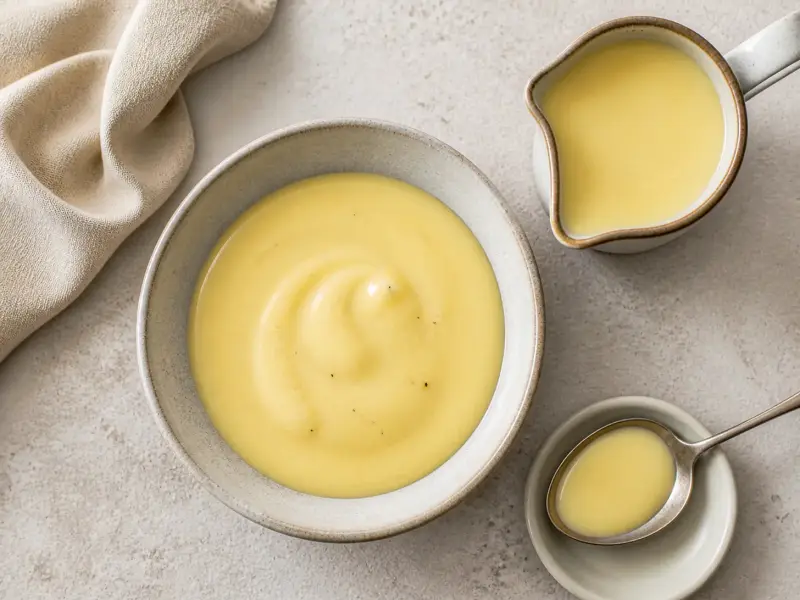 Vanilla Custard
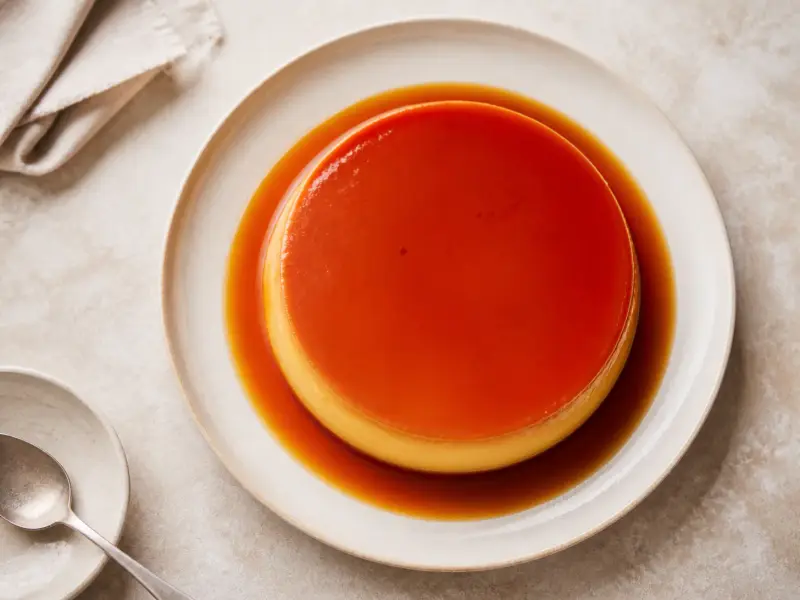 Crème Caramel
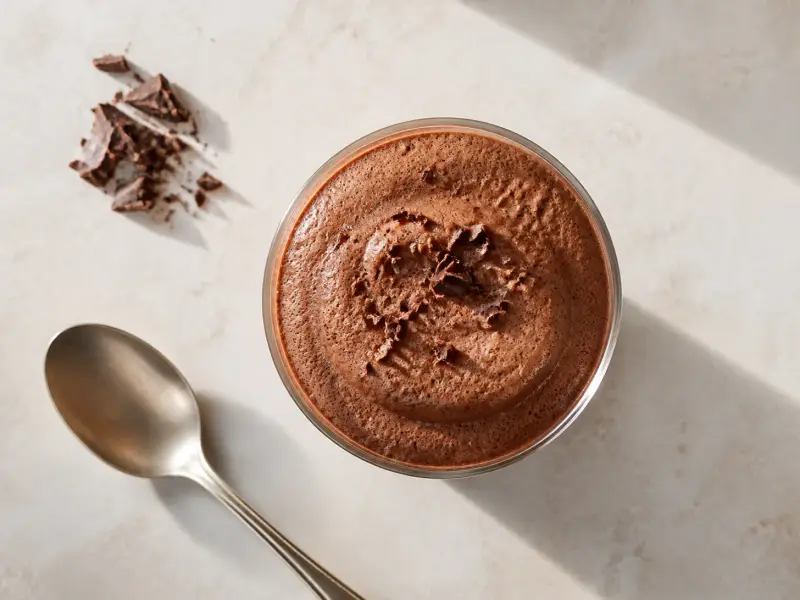 Dark Chocolate Mousse
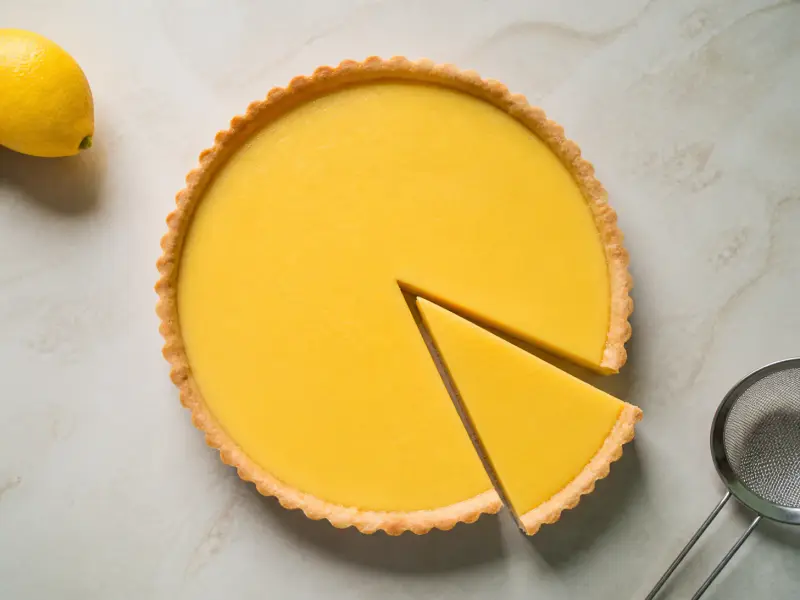 Lemon Tart
 Raspberry Sorbet
 Apple and Blackberry Crumble
 Baked Rice Pudding