Bechamel Sauce
Sauce béchamel
A white sauce built on a cooked butter and flour roux, with the milk beaten in by stages so it thickens smooth instead of lumpy.
- Prep
- 5 min
- Cook
- 20 min
- Resting
- 20 min
- Total
- 45 min
- Serves
- 6
- Revisions
- 5
Allergens
- Cereals containing gluten
- Milk
Named from the ingredients as written, including those carried in from sub-recipes. This is not a guarantee — check the labels on what you actually buy, and note that a product’s recipe can change.
Ingredients
Serves
Method
Pour the milk into a pan with the onion half, the bay leaf and the peppercorns.
Warm it over medium heat for 4-5 minutes, until the surface trembles and steam comes off it steadily.
Take it off the heat before it boils and leave it to infuse for 20 minutes.
Strain the milk into a jug and discard the onion, bay and peppercorns.
Keep the milk warm, or at least not fridge-cold. Warm milk goes into a roux far more easily than cold.
Melt the butter in a heavy pan over medium-low heat, until it foams without colouring.
Stir in the flour with a wooden spoon; it comes together as a smooth paste at once.
Cook the roux for 2-3 minutes, stirring the whole time, until it smells faintly of biscuits and has loosened slightly.
Keep it pale. Cooking the flour is what takes the raw taste out and no amount of simmering later removes it, but a roux taken to gold thickens noticeably less, so this one stops at blond.
Take the pan off the heat and pour in about 100ml of the warm milk.
Beat it until the paste is completely smooth before another drop goes in.
Lumps form in the first minute or not at all. Once flour has taken up milk in clumps the only remedy is a sieve, so the first two additions are the ones to be patient over.
Add the rest of the milk in four or five additions, beating each one smooth over low heat before the next.
Cook over low heat for 8-10 minutes, stirring constantly and reaching into the corners of the pan with the spoon.
Give it the full ten minutes. The starch needs the time to swell, and a sauce pulled off as soon as it thickens still tastes chalky.
Watch the base rather than the surface. Bechamel catches and scorches faster than it looks like it will, and a burnt sauce tastes burnt right through with nothing to be done.
Stop when it coats the back of the spoon and a finger drawn across leaves a clean line — the same test as the vanilla custard in this collection.
Grate in the nutmeg and season with the fine salt.
Taste and correct the salt.
Push it through a fine sieve while it is hot if lumps have got away from you. It works, and it is not a defeat.
Learn the ratio rather than the numbers: equal weights of butter and flour, with the milk setting the thickness. 50g of each with 600ml gives a pouring sauce, the same roux with 400ml gives something thick enough to hold its place in a lasagne, and with a litre it barely coats a vegetable.
Press a piece of cling film onto the surface if it is not going straight into a dish, since a skin forms within a few minutes.
Cool it in a shallow container, refrigerate within two hours and use it within three days.
Reheat it over low heat with a splash of milk, whisking, since it sets almost solid in the fridge.
Nobody has rated this recipe yet.
Sign in to rate this recipe. One rating per person, and you can change it.
What to expect
- Taste
Mild, milky and gently savoury, with a warm, faintly sweet spice note from the nutmeg and a subtle background aromatic from the onion, bay and pepper infusion rather than any strong flavour of its own — it is built to carry other flavours rather than to stand alone.
- Aroma
Warm milk and a faint, biscuity smell from the cooked roux, with nutmeg's sharp, warm spice rising once it is grated in.
- Texture
Smooth and velvety with no graininess, thick enough to hold its shape briefly on a spoon before slumping back.
- Sound
A quiet, steady whisking or stirring sound throughout, with the occasional soft bubble as the sauce reaches a simmer.
- How the flavour moves
Milky richness is the whole of the flavour, with nutmeg's warm spice the one distinct note that rises and lingers at the finish.
- Serve it
Used hot, folded directly into whatever dish it forms the base of, whether that dish is then baked or served straight away.
- Goes with
The base of lasagne, moussaka, croque monsieur, fish pie and almost any gratin, and rarely eaten or served on its own.
Cook's notes
- Difficulty
Easy, though the first few additions of milk to the roux reward patience.
- Cost
Very cheap — butter, flour and milk.
- Equipment
Two pans: one for infusing the milk, one for the roux and sauce.
- When to make it
As a component within a larger dish rather than a meal on its own.
- Best season
None; every ingredient is shelf-stable or standard fresh produce available year round.
- You know it is done when
The finished sauce should be a smooth, pale ivory, glossy rather than dull, with no visible lumps once properly beaten and cooked.
- And it feels like
It should coat the back of a spoon and hold a clean line when a finger is drawn across it — the same test used for a properly cooked custard.
- Food safety
No particular hazard beyond standard care with dairy; the extended simmer is for texture and starch development rather than food safety.
- Where it goes wrong
- Adding all the milk to the roux at once rather than gradually, which is the most common cause of lumps.
- Cooking the roux past blond to a deeper gold, which thickens the finished sauce noticeably less for the same quantity of flour.
- Not cooking the sauce long enough once all the milk is in, leaving a chalky, raw-flour taste that no amount of seasoning covers.
- Letting the sauce catch on the base of the pan, especially over higher heat than the recipe calls for.
- If it does go wrong
Lumpy sauce: push it through a fine sieve while still hot, which fixes the problem rather than being a failure to hide. Chalky taste: it was not simmered long enough once all the milk was added; give it the full eight to ten minutes. Thin sauce: either too little roux was used relative to milk, or it needs longer over the heat to thicken properly.
- Making it ahead
Keeps well for up to three days refrigerated and is genuinely convenient to make ahead of assembling a larger dish.
- Keeping it
Keeps for up to three days refrigerated, pressed with cling film directly onto the surface to stop a skin forming.
- Reheating
Reheat gently over low heat with a splash of milk, whisking, since it sets almost solid once cold.
- Freezing
Freezes reasonably, though it may need a good whisk on thawing to restore a smooth texture.
- Leftovers
Versatile — thin it for a pouring sauce, or use it as the base for a cheese sauce, a soufflé, or a pie filling.
- Scaling it
Scales cleanly by keeping equal weights of butter and flour and adjusting the milk to the desired thickness — a good ratio to memorise rather than a fixed recipe.
- Substitutions
There is no real substitute for the butter-and-flour roux as the thickening method; a cornflour slurry thickens milk but gives a glossier, less rounded sauce without the same body.
- Dietary swaps
Contains cereals containing gluten and milk. A gluten-free flour blend can replace the plain flour with reasonable results; a dairy-free milk alternative changes the flavour and body more noticeably.
- Shopping for it
Whole milk gives a noticeably richer, more rounded sauce than a lower-fat alternative.
- Keeping the cost down
One of the cheapest sauces to make from scratch, using only butter, flour and milk.
- Nutrition
A moderate source of fat and calcium from the butter and milk; not calorically light, though used in modest quantities within a larger dish.
- Worth it?
A foundational sauce worth learning properly rather than reaching for a packet mix, since the technique transfers directly to a wide range of other dishes.
Where it comes from
- Origin
France, associated with the court of Louis XIV though its documented technical origin is somewhat later.
- Also called
Sauce béchamel; besciamella in Italian.
- Said out loud
BAY-sha-mel.
- What the name means
Named for Louis de Bechameil, a financier and steward at the court of Louis XIV, though the connection between the man and the sauce is contested rather than documented.
- History
The attribution to Bechameil comes from later writers with no contemporary evidence that he made or devised the sauce himself; a commonly repeated counter-account holds that a court cook named the sauce after him as a form of flattery rather than genuine credit. What can be documented with more confidence is the technique underlying it: Francois Pierre La Varenne's Le Cuisinier Francois, printed in 1651, is the first French cookery book to build sauces on a flour-and-fat liaison of this kind, and Antonin Careme later fixed bechamel as one of the mother sauces of French cooking in the early 19th century, a classification Escoffier carried forward into his own five mother sauces.
- Why it matters
One of the five mother sauces of classical French cuisine, and the base sauce underlying an enormous range of dishes across France, Italy, Greece and Britain.
- When it is eaten
Everyday household and restaurant cooking, used as a foundation rather than a dish in its own right.
- The traditional way
A pale roux cooked to no more than blond, with warm milk beaten in gradually over several additions rather than poured in all at once.
- How it changed
Escoffier's five mother sauces, bechamel among them, are a direct reworking of the four sauces Careme had set out earlier in the 19th century.
- Regional variations
Besciamella in Italy is used identically as a base for lasagne and other baked pasta dishes; the sauce appears under its own name in Greek moussaka and in British fish pies and gratins.
- Sources and credit
Traditionally, and disputedly, attributed to Louis de Bechameil; the documented technical foundation of the sauce is credited to La Varenne in 1651, with Careme responsible for formally classifying it as a mother sauce.
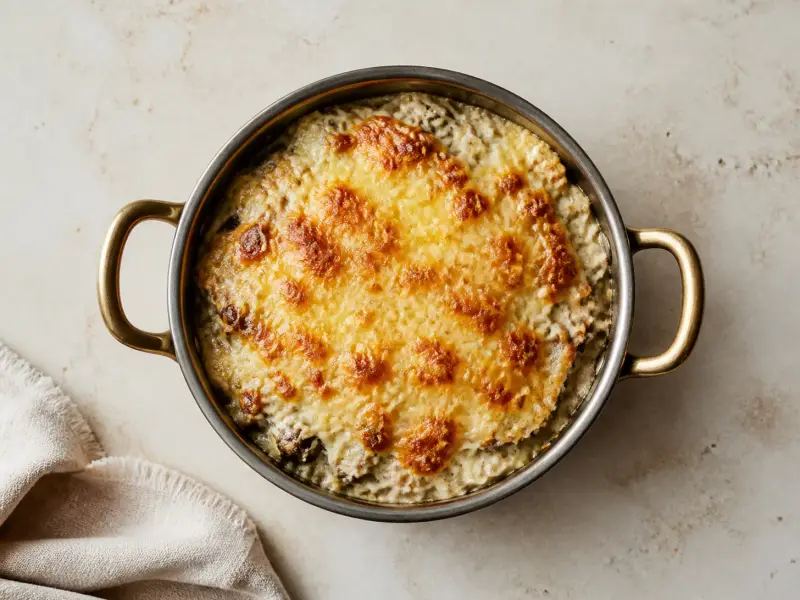 Mushroom Julienne
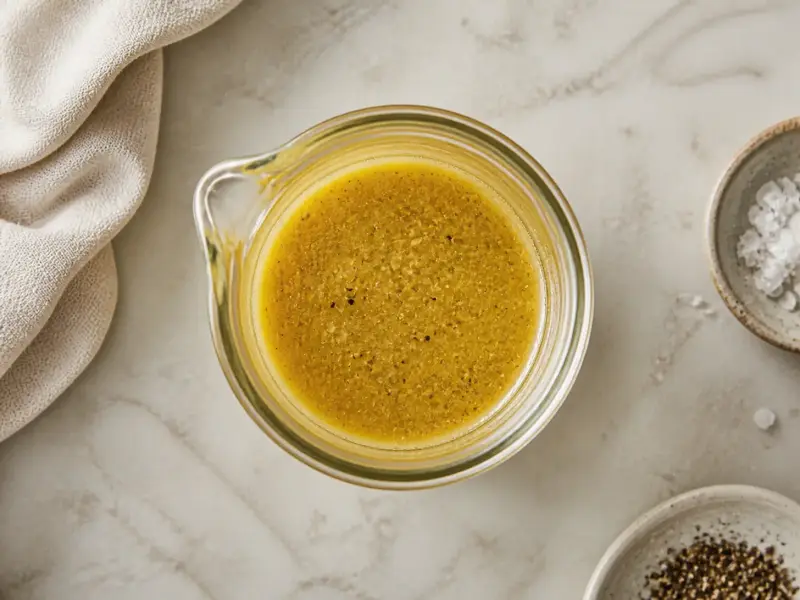 Everyday Vinaigrette
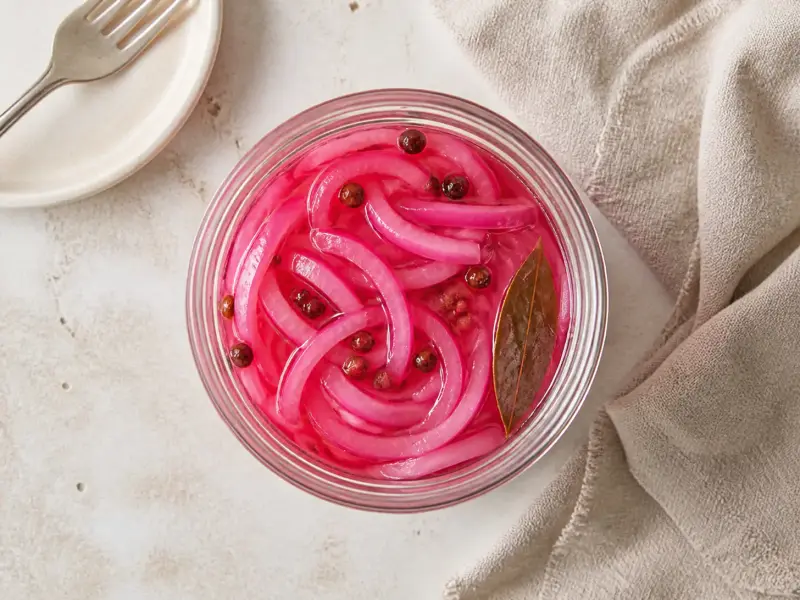 Quick Pickled Red Onions
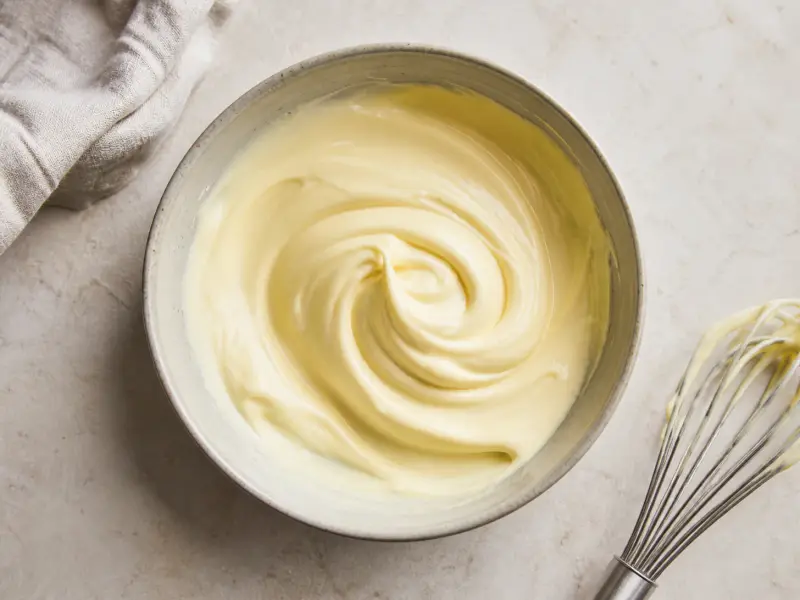 Mayonnaise
 Simple Tomato Sauce
 Steamed Basmati Rice
 Apple and Almond Tart