Mushroom Julienne
Жюльен
Zhulyen
Жюльен — julienne, though it is a baked mushroom dish and not a knife cut.
Mushrooms baked in a bechamel-style sauce under grated cheese, in individual dishes, browned under the grill.
- Prep
- 20 min
- Cook
- 30 min
- Total
- 50 min
- Serves
- 4
- Revisions
- 6
Allergens
- Cereals containing gluten (via Bechamel Sauce)
- Milk
Named from the ingredients as written, including those carried in from sub-recipes. This is not a guarantee — check the labels on what you actually buy, and note that a product’s recipe can change.
Ingredients
Serves
Method
Cut the mushrooms into matchsticks rather than slices, stacking a few flat pieces at a time and cutting them into 3mm strips.
The cut is not decorative. Strips keep some bite in a wet sauce where thin slices go limp, and it is the cut that gives the dish its name.
Heat the oven to 200C/400F.
Melt the butter in a wide frying pan over medium heat and add the onion strips.
Cook the onion for 6-8 minutes, until soft and translucent but with no colour on it.
Turn the heat up and add the mushrooms.
Cook for 8-10 minutes, stirring occasionally, until the water they release has boiled off and the pan is dry and sizzling again rather than simmering.
Wait for the dry pan. Sauce added while the mushrooms are still giving off water thins out, and it separates into a greyish puddle under the grill.
Season with the fine salt and the ground peppercorns and stir in the lemon juice.
Take the pan off the heat.
Stir in the warm bechamel and then the smetana, off the heat, until everything is coated in a sauce thick enough to hold its shape on a spoon.
Add the soured cream off the heat and do not return the pan to it. Boiled soured cream separates into curds and whey, and the sauce cannot be brought back afterwards.
Divide the mixture between four small ovenproof dishes or ramekins, filling them to within 1cm of the rim.
Scatter the grated cheese evenly over the top.
Bake at 200C/400F for 10-12 minutes, until the sauce is bubbling at the edges.
Slide the dishes under a hot grill for 2-3 minutes, until the cheese is browned in patches.
Rest them for 4 minutes before serving. Straight from the grill the sauce is molten and will burn the roof of your mouth.
Scatter with the parsley and serve on plates with a teaspoon each, with bread for the sauce.
Nobody has rated this recipe yet.
Sign in to rate this recipe. One rating per person, and you can change it.
What to expect
- Taste
Deeply savoury and rich — mushrooms cooked down to concentrate their own flavour before anything else joins them, wrapped in a sauce that's both creamy from the bechamel and gently tangy from the smetana, with melted Gruyere adding a final salty, nutty layer on top. The onion, cooked soft with no colour, contributes sweetness rather than sharpness.
- Aroma
Deeply savoury, cooked mushroom first — earthy and slightly meaty — then the warm, milky smell of the bechamel and the sharper, toasted note of the browned cheese once it comes from under the grill.
- Texture
Thick and creamy, coating a spoon rather than running off it, with the julienned mushrooms still offering a little bite against the smooth sauce around them — the browned cheese top adds a contrasting, slightly crisp layer over the soft interior.
- Sound
A quiet bubble at the edges of the dish as it comes out of the oven, and the specific sizzle of cheese browning under a hot grill.
- How the flavour moves
The browned cheese arrives first on the spoon, salty and slightly nutty, giving way to the rich, tangy sauce underneath, with the mushrooms' deep savoury flavour the last thing to register as the main body of the mouthful.
- Serve it
Served properly hot, and genuinely dangerously so straight from the grill — the rest period is functional rather than a suggestion.
- Goes with
Bread on the side for mopping the sauce once the mushrooms are gone, and a green salad or pickled vegetables to cut through the richness of the dish as a whole.
Cook's notes
- Difficulty
Easy, with one point of real technique: getting the mushroom pan back to fully dry before any sauce goes near it.
- Cost
Cheap to moderate — mushrooms, a modest bechamel, smetana and a hard cheese for the top.
- Equipment
A wide frying pan, four small ovenproof dishes or ramekins (traditionally a kokotnitsa, a small metal dish with a long handle), and a grill.
- When to make it
As a starter for a dinner party or celebration, or scaled up as a light main course with bread and salad.
- Best season
None — mushrooms are available year-round.
- You know it is done when
The mushroom pan should look properly dry and be sizzling in fat rather than simmering in liquid before any sauce is added; the finished dishes should be bubbling at the edges with the cheese browned in patches on top.
- And it feels like
The sauce should hold its shape on a spoon rather than running, and the mushrooms should still have some bite left rather than having cooked down to nothing.
- Food safety
Nothing beyond ordinary hygiene; the dishes come out of the oven and grill genuinely very hot and need a real rest before eating.
- Where it goes wrong
- Adding the sauce before the mushroom pan is properly dry, which leaves a thin, separated, greyish result under the grill.
- Slicing rather than cutting the mushrooms into matchsticks, which loses the bite the julienne cut is specifically there to preserve.
- Boiling the soured cream once it's been added, which splits it into curds and whey with no way back.
- Serving straight from the grill without the short rest, when the sauce is genuinely too hot to eat safely.
- If it does go wrong
Thin, separated sauce: the mushrooms weren't cooked fully dry before the sauce went in. Split, grainy texture: the soured cream was returned to direct heat after being stirred in. Bland result: under-seasoned at the mushroom stage, before the rich sauce masks it.
- Making it ahead
The mushroom-and-sauce mixture can be made ahead and refrigerated, then divided into dishes, topped with cheese and baked fresh closer to serving.
- Keeping it
A day or two refrigerated, though the texture of the sauce is at its best freshly grilled.
- Reheating
A low oven to warm through gently; a grill alone will brown the top again but not necessarily heat the middle.
- Freezing
Not ideal — the bechamel-and-cream sauce doesn't freeze and thaw cleanly.
- Leftovers
Best eaten within a day or two rather than kept longer, given the dairy-heavy sauce.
- Scaling it
Scales easily by making more individual dishes; there's no real advantage to combining it into one large dish, since the point is a portion each.
- Substitutions
Older Soviet restaurant recipes used soured cream thickened with a little flour rather than a full bechamel, giving a sharper, thinner sauce than the richer version here; either is legitimate depending on how heavy a dish is wanted. Any good melting hard cheese can stand in for Gruyere.
- Dietary swaps
Vegetarian as written. Contains milk throughout, from the butter, bechamel and smetana as well as the cheese, so a dairy-free version would need substantial reworking of the sauce rather than a simple swap. Naturally gluten-free apart from any flour in the bechamel, which could be made with a gluten-free flour blend.
- Shopping for it
A good melting hard cheese with real flavour — Gruyere or a similar alpine-style cheese — makes a noticeable difference to the browned top.
- Keeping the cost down
Ordinary button or chestnut mushrooms keep this cheap; the cheese and cream are where any real cost lies.
- Sustainability
A modest, low-waste dish using inexpensive, widely available mushrooms as its main ingredient.
- Nutrition
A rich, dairy-heavy starter rather than a light one, given the combination of butter, bechamel, smetana and cheese.
- Worth it?
A genuinely satisfying, quick-to-assemble starter, and a small lesson in how a single word can mean two completely different things once it crosses a language.
Where it comes from
- Origin
Russia, during the period when professional kitchens there worked substantially in French culinary vocabulary.
- Also called
Zhulyen (жюльен), a Russian transliteration of the French julienne.
- Said out loud
zhoo-lee-YEN, following the French pronunciation of the borrowed word.
- What the name means
In French, julienne names only a knife cut — thin matchstick strips. In Russian the word was carried over as the name of this specific finished dish rather than the cut alone, which is a genuine divergence in meaning between the two languages rather than a mistranslation in the usual sense.
- History
French-trained chefs and French culinary fashion were highly influential in Imperial Russian restaurant kitchens, which is the route by which a French knife-cutting term ended up naming a Russian baked dish. No individual chef or specific origin date is documented for zhulyen in its current form.
- Why it matters
A standard restaurant starter across Russia and the former Soviet states, and also a common New Year and celebration dish cooked at home — four portions scale easily into a light main course with bread and a salad alongside.
- When it is eaten
Restaurant starters and New Year's celebrations especially, though it appears as an everyday dish too.
- The traditional way
Mushrooms cut into fine matchsticks and cooked until fully dry, combined with a cream-based sauce, and baked and grilled in individual dishes rather than one shared one.
- How it changed
Older Soviet-era versions more often used soured cream thickened lightly with flour rather than a full French-style bechamel, giving a sharper, thinner sauce than many modern versions; the fuller bechamel-based version is a later, richer evolution.
- Regional variations
A chicken version, zhulyen s kuritsey, using poached chicken alongside or instead of mushroom, is at least as widely made as the plain mushroom version.
- How this version differs
This recipe uses a proper warm bechamel finished with smetana off the heat, rather than the thinner, flour-thickened soured cream of older Soviet versions.
- Sources and credit
No individual chef or restaurant can be credibly credited with inventing zhulyen; it belongs to a broader period of French-influenced Russian restaurant cooking rather than to any one named figure.
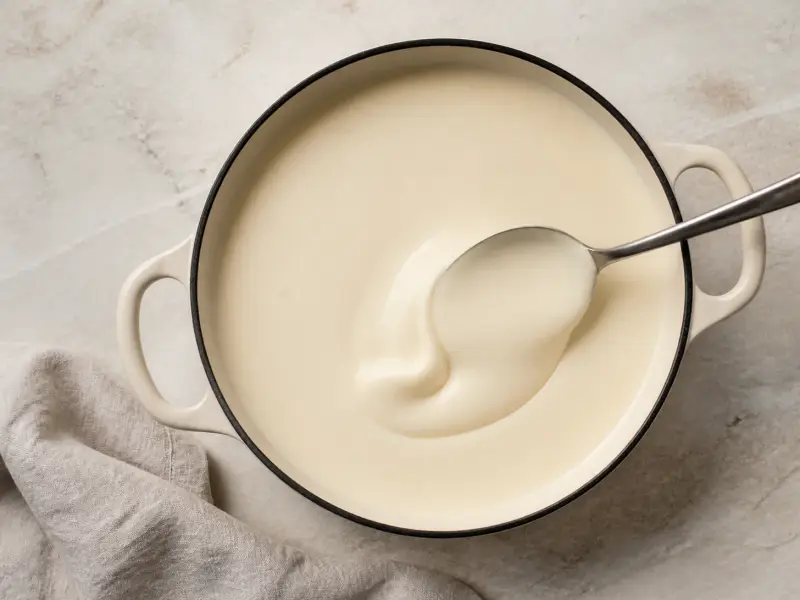 Bechamel Sauce
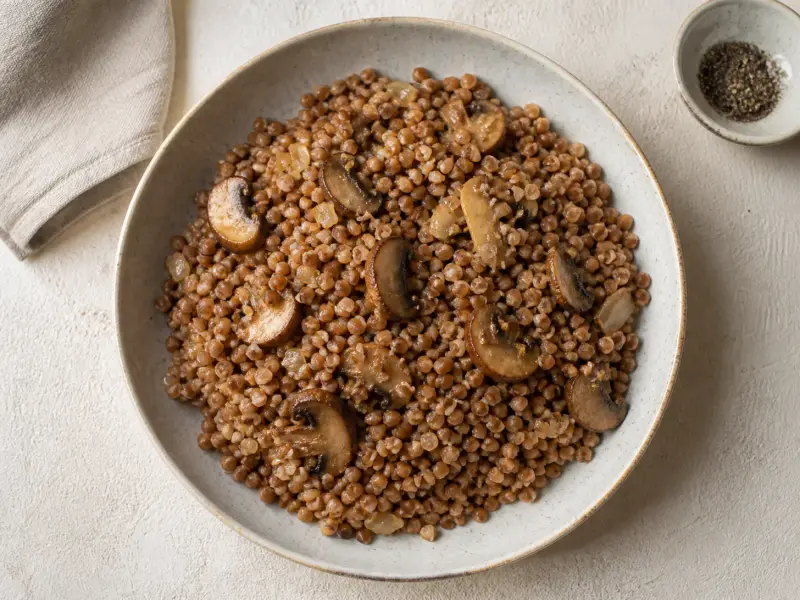 Buckwheat Kasha with Mushrooms
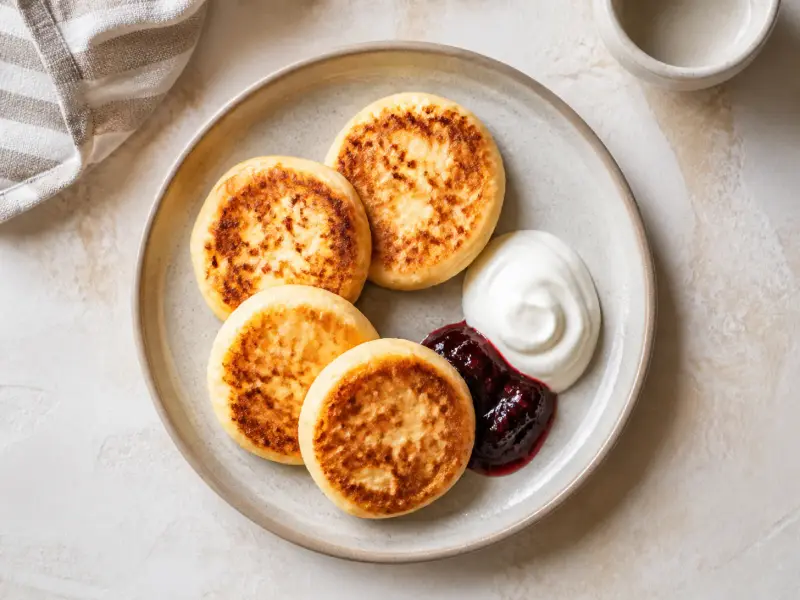 Syrniki
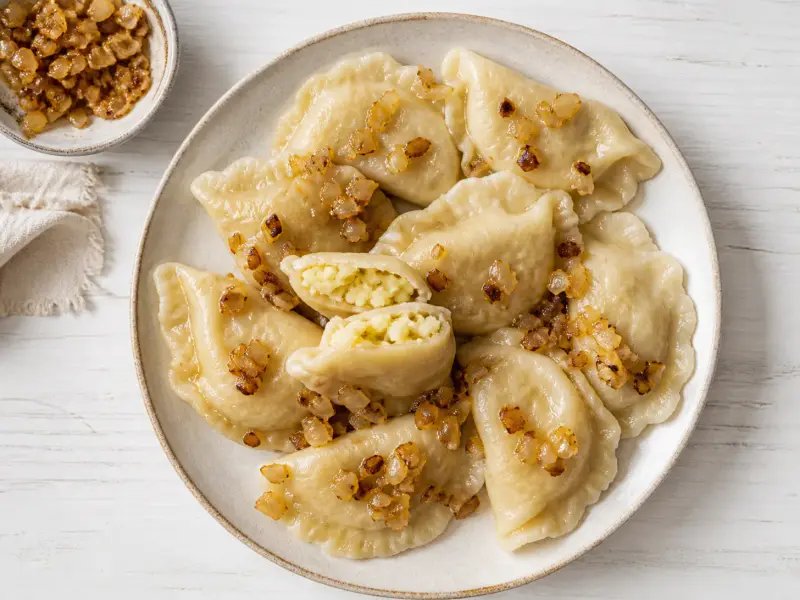 Vareniki
 Beef Stroganoff
 Cacio e Pepe
 Classic Margherita Pizza