Buckwheat Kasha with Mushrooms
Гречневая каша с грибами
Grechnevaya kasha s gribami
Buckwheat toasted dry, then cooked pilaf-style with onion and mushrooms so the grains stay separate.
- Prep
- 15 min
- Cook
- 35 min
- Resting
- 10 min
- Total
- 1 hr
- Serves
- 4
- Revisions
- 5
Allergens
- Celery (via Vegetable Stock)
- Eggs
- Milk
Named from the ingredients as written, including those carried in from sub-recipes. This is not a guarantee — check the labels on what you actually buy, and note that a product’s recipe can change.
Ingredients
Serves
Method
Put the dried porcini in a bowl, pour the boiling water over them and leave for 15 minutes.
Lift the porcini out, chop them roughly, and strain the soaking liquor through a paper filter or a cloth, leaving the grit in the bottom of the bowl.
Tip the buckwheat onto a tray and pick out any dark husk or stray stone.
Stir the beaten egg through the dry groats until every grain carries a film of it.
Toast the coated groats in a dry heavy pan over medium heat for 4-5 minutes, stirring constantly, until the egg has dried onto them and they rattle loose and separate again.
Toasting is not optional here. The dried egg seals each grain and stops it bleeding starch into the liquid, which is the difference between loose kasha and porridge.
Tip the toasted groats out onto a plate.
Heat the oil and half the butter in a wide lidded pan over medium heat.
Cook the onion for 6-8 minutes, until soft and just gold at the edges.
Turn the heat up, add the sliced mushrooms and spread them in as close to one layer as the pan allows.
Leave them undisturbed for 2-3 minutes to take colour, then stir and cook for 6-8 minutes more, until the water they gave off has boiled away and they squeak against the spoon.
Cook them in two batches if the pan is not wide enough. Crowded mushrooms release water faster than it can evaporate and stew to a grey, slack mass.
Add the garlic and the chopped porcini and cook for 1 minute.
Tip in the toasted buckwheat, the hot stock, the strained porcini liquor, the fine salt and the ground peppercorns.
Bring to a boil, then turn the heat to its lowest setting and put the lid on.
Cook for 15-18 minutes.
Do not lift the lid or stir once it is on. Stirring breaks the softened grains and releases the starch the toasting was meant to keep in, and every lift lets out the steam that cooks the top layer.
Take the pan off the heat with the lid still in place and leave it for 10 minutes. The last of the liquid is absorbed in this stage and the grains firm up.
Uncover and fork the remaining butter through, lifting rather than stirring.
Taste for salt, scatter with the dill and serve with a spoon of smetana on each portion.
Nobody has rated this recipe yet.
Sign in to rate this recipe. One rating per person, and you can change it.
What to expect
- Taste
Earthy and nutty from the roasted buckwheat itself, deepened considerably by the dried porcini and their soaking liquor, with sweet, well-browned onion and mushroom underneath and a cooling, faintly sour note from the smetana at the end.
- Aroma
A toasted, nutty smell from the buckwheat as it browns in the dry pan, deep mushroom and onion as they cook down, and a rich, earthy lift from the dried porcini.
- Texture
Distinctly separate grains with a slight bite, tender mushroom throughout, and a cool, thick contrast from the smetana spooned on top.
- Sound
A dry rattle as the coated groats toast in the pan, a hard sizzle as the mushrooms brown, and near silence once the lid goes on for the covered simmer.
- How the flavour moves
Earthy, nutty buckwheat and deep mushroom flavour arrive together at the front, dried porcini's concentrated savouriness builds through the middle, and the cool, faintly sour smetana is the last thing reached, cutting through the richness of the dish.
- Serve it
Served hot, with the cold smetana providing a deliberate contrast on top.
- Goes with
Traditionally served either as a main course on its own or as a side to roasted or braised meat.
Cook's notes
- Difficulty
Easy — the one technique that matters, toasting the egg-coated groats, is simple once understood.
- Cost
Cheap — buckwheat, mushrooms and a small amount of dried porcini for depth.
- Equipment
A wide, lidded pan.
- When to make it
Any weeknight, given the relatively short active cooking time once the groats are prepared.
- Best season
None; every ingredient is shelf-stable or standard fresh produce available year round.
- You know it is done when
The toasted groats should rattle loose and separate in the dry pan rather than clumping together, and the finished kasha should look separate and fluffy rather than sticky or porridge-like.
- And it feels like
Distinct, separate grains with a slight bite, rather than a soft, collapsed, sticky mass.
- Food safety
Standard care with raw egg used to coat the groats, which is then fully cooked through the toasting and simmering stages.
- Where it goes wrong
- Skipping the egg-coating and toasting step, which lets the buckwheat bleed starch into the liquid and turns the dish into more of a porridge.
- Crowding the mushrooms in the pan, which makes them stew and release water rather than brown properly.
- Lifting the lid or stirring during the covered simmer, which lets steam escape and breaks the softened grains, releasing exactly the starch the toasting was meant to keep in.
- Using ready-crushed buckwheat rather than whole roasted groats, which collapses to a soft porridge rather than staying separate.
- If it does go wrong
Sticky, porridge-like kasha rather than separate grains: the egg-coating and toasting step was skipped, or the lid was lifted during cooking. Grey, watery mushrooms: the pan was too crowded — cook them in batches if needed. Flat flavour: dried porcini and their soaking liquor were left out; they carry a real depth the fresh mushrooms alone do not fully replace.
- Making it ahead
Keeps for a few days refrigerated and reheats reasonably well, though it is at its best made fresh.
- Keeping it
Keeps for up to three days refrigerated.
- Reheating
Reheat gently with a splash of water or stock, covered, to loosen it without drying it further.
- Freezing
Freezes reasonably well, though the texture is best when made fresh.
- Leftovers
Good reheated, or cold as a base for a grain salad with extra herbs and a vinaigrette.
- Scaling it
Scales up well in a wider pan, keeping the one-to-two ratio of buckwheat to liquid by volume.
- Substitutions
Whole roasted buckwheat groats are what this dish specifically needs — raw green buckwheat is milder and softer, and the ready-crushed sort collapses to porridge rather than staying separate.
- Dietary swaps
Contains eggs and milk. Vegetarian as written; a dairy-free soured cream alternative and omitting the egg coating, using a little extra oil to toast the groats instead, both adapt the dish reasonably.
- Shopping for it
Whole roasted buckwheat groats, sold specifically for this purpose, and dried porcini from any well-stocked grocer or online.
- Keeping the cost down
A cheap, filling dish where dried porcini, used in a small quantity, deliver a lot of flavour for their cost relative to using only fresh mushrooms.
- Sustainability
A largely plant-based dish built on buckwheat, a crop that requires relatively little in the way of fertiliser and water compared with many cereal grains.
- Nutrition
A good source of fibre and plant protein from the buckwheat, which is a pseudocereal rather than a true cereal grain.
- Worth it?
A dish that introduces a genuinely useful, unfamiliar technique — the egg-toasting step — that changes buckwheat's texture completely and is worth learning on its own merits.
Where it comes from
- Origin
Russia, Ukraine, Belarus and Poland.
- Also called
Grechnevaya kasha (гречневая каша).
- Said out loud
greh-CHNYE-vah-yah KAH-shah.
- What the name means
Grechka, the Russian word for buckwheat, is generally explained as meaning Greek grain, reflecting a traditional but unproven account of the crop's route into Rus through Byzantine intermediaries; kasha means a cooked grain dish generally.
- History
Kasha as a category of food is among the oldest recorded dishes of the East Slavic world with no traceable origin date, and buckwheat itself has been grown in the region for many centuries. Buckwheat with mushrooms specifically developed as lenten food, made during Orthodox fasting periods when meat and dairy were excluded, and it has remained ordinary weekday food well beyond those origins.
- Why it matters
Everyday food throughout Russia, Ukraine, Belarus and Poland, eaten as a main course, a side dish, or at breakfast, and carried to North America through Ashkenazi Jewish cooking as kasha.
- When it is eaten
Everyday eating, with its origins specifically in Orthodox fasting periods when meat and dairy were set aside.
- The traditional way
Coating raw groats in beaten egg and toasting them dry before they meet any liquid, which seals each grain and keeps the finished dish loose rather than starchy.
- How it changed
The egg-coating and toasting technique is an old trick that has persisted essentially unchanged; more modern versions sometimes skip it in favour of simply toasting the dry groats in oil, with a somewhat less pronounced separating effect.
- Regional variations
Ready-crushed buckwheat, sold as a faster-cooking product, gives a softer, more porridge-like result and is a genuinely different texture from the whole roasted groats this dish depends on.
- Sources and credit
No individual is credited with the dish; it belongs to East Slavic and Polish home cooking generally, with origins in Orthodox lenten food.
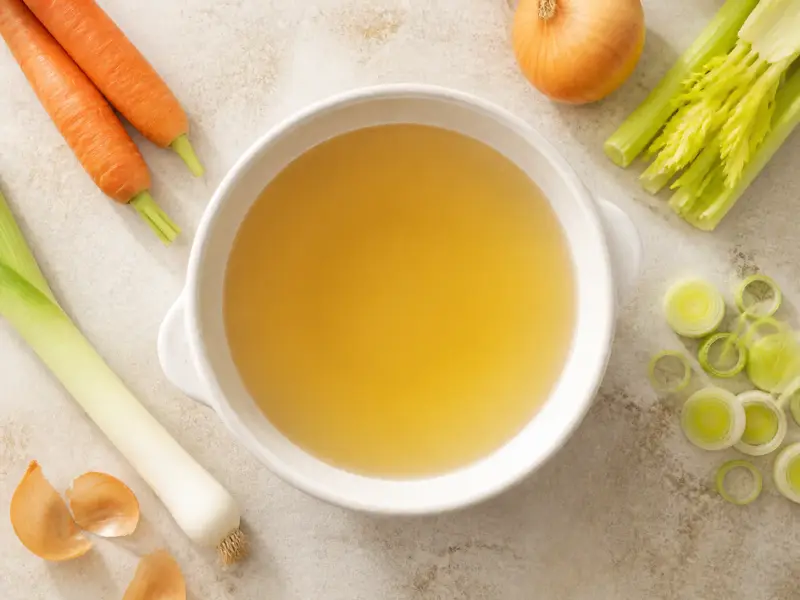 Vegetable Stock
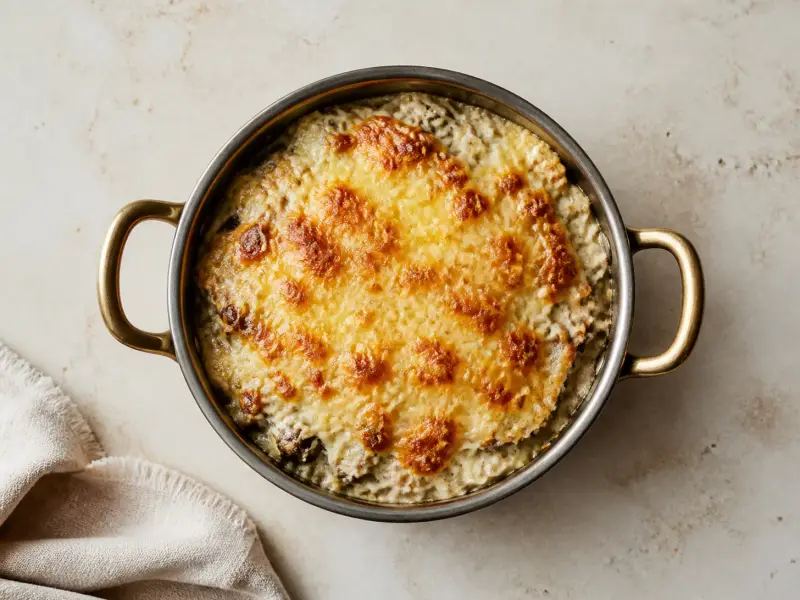 Mushroom Julienne
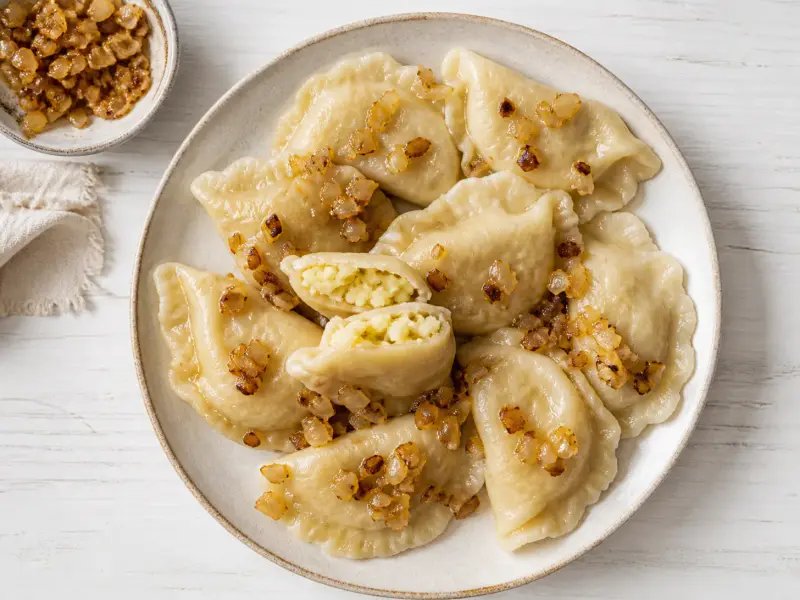 Vareniki
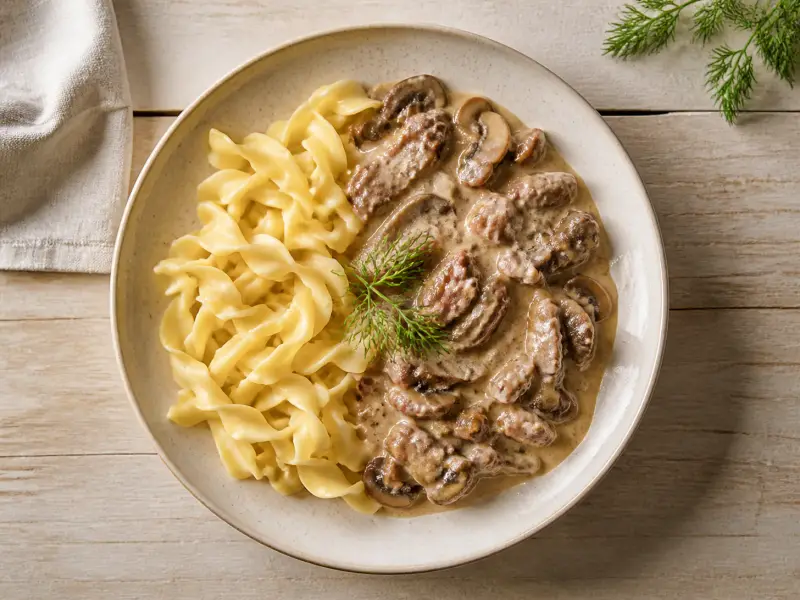 Beef Stroganoff
 Golubtsy
 Medovik
 Mujaddara