Syrniki
Сырники
Сырники — little cheese things, from syr, cheese.
Fried curd-cheese fritters made from drained tvorog, crisp at the edge and soft in the middle, eaten with soured cream.
- Prep
- 20 min
- Cook
- 15 min
- Resting
- 2 hr 30 min
- Total
- 3 hr 5 min
- Serves
- 4
- Revisions
- 5
Allergens
- Cereals containing gluten
- Eggs
- Milk
Named from the ingredients as written, including those carried in from sub-recipes. This is not a guarantee — check the labels on what you actually buy, and note that a product’s recipe can change.
Ingredients
Serves
Method
Line a sieve with muslin, tip in the tvorog, set it over a bowl and refrigerate for at least 2 hours, or overnight.
Do not skip this. Curd carries whey, and wet curd needs far more flour to hold together at all — and flour is exactly what turns a syrnik dense and floury. Drained curd holds its shape with very little.
If you are working with quark or dry curd cottage cheese, drain it the same way. Ricotta will make fritters too, but it is wetter and milder, needs up to 20g more of the shaping flour worked into the mixture, and gives a softer, cakier result that is not quite the same dish.
Press the drained curd through a sieve with a spatula, or blitz it for a few seconds in a processor, until the grain has gone and it is smooth.
Beat in the egg, sugar, salt and vanilla.
Fold in the 60g of flour for the mixture, stopping as soon as it disappears. The mixture should be soft but hold a shape when you press it in your palm.
Scatter the 40g of shaping flour over a tray.
Divide the mixture into 12, roll each piece into a ball in floured hands, then flatten it into a puck about 6cm across and 2cm thick, coating it in flour as you go.
Keep them thick. Thin syrniki dry out and toughen before the middle has warmed through.
Chill the shaped syrniki for 30 minutes, which firms them enough to survive the turn.
If a test one spreads in the pan, fold a spoonful of the shaping flour into the remaining mixture and shape again.
Heat the oil and butter together in a heavy frying pan over medium-low heat, to around 160C/325F. The oil raises the smoke point; butter on its own scorches long before the syrniki are cooked.
Fry for 4-5 minutes on the first side, until a firm deep-gold crust has formed and the syrnik lifts cleanly.
Turn once and fry for a further 4-5 minutes, until the second side matches and the centre feels set but still yielding.
Hold the heat down. There is sugar in the mixture and it browns fast, so a hot pan gives a dark crust over a cold, wet centre.
Drain on kitchen paper and serve warm, with the soured cream and the jam or honey.
Nobody has rated this recipe yet.
Sign in to rate this recipe. One rating per person, and you can change it.
What to expect
- Taste
Mildly sweet and distinctly lactic, and the sourness of the curd is the defining flavour. Tvorog is acid-set — soured milk drained — so it carries a real tang that no other cheese in this collection has, and 30g of sugar across twelve fritters is nowhere near enough to bury it. Vanilla is a background warmth. Salt is doing more than it looks: 3g in a sweet mixture is what stops it tasting flat. And then the accompaniments, which are structural rather than decorative: smetana adds fat and more sourness, jam adds sharp sweetness, and a syrnik eaten plain is noticeably underdressed.
- Aroma
Frying butter, mostly, and a faint milky sourness from the curd. Vanilla comes through as they cook. It is a quiet, domestic, breakfast smell rather than a dramatic one.
- Texture
The whole point, and it is a two-part texture. The crust should be firm and genuinely crisp at the edges. The interior should be soft, moist and slightly grainy from the curd — not smooth like a cake and not wet like a batter. Too much flour makes it dense and floury; too little and it collapses in the pan. Which is why the draining and the test fritter matter more than any measurement.
- Sound
A steady moderate sizzle, and it is a useful cue: a loud aggressive one means the pan is too hot and the outside will be dark before the middle warms. Otherwise very little.
- How the flavour moves
Butter and crust first. Then the soft curd interior, mildly sweet and clearly sour. The smetana adds a second sourness and a coating richness, and the jam arrives sharp and sweet at the end. It is a short, comfortable arc and it is breakfast food doing exactly what breakfast food should.
- Serve it
Warm rather than hot, which suits them — straight from the pan the interior is molten and hard to judge, and two minutes on the plate is better.
- Goes with
Smetana and jam, both of which are effectively part of the dish. Sour cherry, blackcurrant or raspberry preserve rather than strawberry, which is too sweet. Honey. Fresh berries. Strong tea or coffee. Where they fail is as a dessert after a large meal, which they are too substantial for.
Cook's notes
- Difficulty
Easy, with one variable — the wetness of the curd — that you cannot control and must respond to. Hence the test fritter.
- Cost
Low. Half a kilo of curd cheese and an egg.
- Equipment
A sieve and muslin, or a clean tea towel. A heavy frying pan. Nothing else.
- When to make it
Breakfast and brunch, any time of year.
- Best season
None.
- You know it is done when
A firm deep-gold crust that lifts cleanly off the pan. If a syrnik sticks, it is not ready to turn. The second side should match.
- And it feels like
The centre should feel set but still yielding under a gentle press. It is a curd fritter and it is not supposed to be firm all the way through.
- Food safety
Nothing unusual. Tvorog is a fresh cheese and should be used by its date.
- Where it goes wrong
Skipping the drain, which forces you to add more flour and gives dense floury fritters. Making them too thin, which dries them out before the middle warms. A pan that is too hot, which browns the sugar long before the centre is set. Over-mixing after the flour goes in. And not chilling the shaped fritters, which makes them fragile in the turn.
- If it does go wrong
Spreading in the pan: the mixture is too wet — fold in a spoonful of the shaping flour and shape again, which is exactly what the test fritter is for. Dense and heavy: too much flour, which means the curd was not drained enough. Dark outside and cold inside: the heat was too high. Falling apart when turned: not chilled, or too wet. Bland: more salt, and check the sugar.
- Making it ahead
Drain the curd overnight, which turns this into a forty-minute breakfast. Shaped uncooked fritters freeze well and fry from frozen, which is the best version of ahead here.
- Keeping it
Two days in the fridge, and they are much better fresh.
- Reheating
In a dry pan over low heat, which crisps the crust again. A microwave makes them rubbery.
- Freezing
The shaped uncooked fritters freeze well on a tray and can be fried from frozen over a lower heat for a couple of minutes longer, which is by far the most useful thing to do with this recipe.
- Leftovers
Good cold, straight from the fridge, which is how a great many people actually eat them.
- Scaling it
Freely. The frying is the only bottleneck and is done in batches anyway.
- Substitutions
Full-fat quark and dry curd cottage cheese both work and both should be drained the same way. Ricotta will make fritters and they are a different and softer thing — wetter, milder, needing up to 20g more flour, and cakier in the middle. Ordinary wet cottage cheese does not work; the curds are too large and too wet.
- Dietary swaps
Vegetarian. Not vegan and not sensibly adapted, since the curd is the dish. Not gluten-free as written, though the flour quantity is small enough that a gluten-free blend works acceptably. Contains cereals containing gluten, eggs and milk, all declared.
- Shopping for it
Tvorog from an eastern European grocer, or full-fat quark, or dry curd cottage cheese. Avoid ordinary wet cottage cheese. Smetana rather than soured cream if you can find it. A properly sour jam.
- Keeping the cost down
Tvorog and quark are cheapest at eastern European shops, where they are a staple rather than a health product. Making your own curd from milk and lemon juice is cheaper still and takes half an hour plus draining.
- Sustainability
Low impact. A small amount of dairy, no meat, and the recipe exists partly to use up curd before it turns.
- Nutrition
Around 420 calories a serving with smetana and jam. Tvorog is very high in protein and relatively low in fat, so the fritters themselves are more nutritionally sound than they look — around 20g of protein per serving. The accompaniments are where the sugar arrives.
- Worth it?
Worth it, and worth draining the curd overnight so that it becomes a weekend breakfast rather than a project. They are a genuinely good thing — crisp outside, soft and tangy inside — and the two instructions that make them work, drain hard and fry low, cost nothing but patience.
Where it comes from
- Origin
The eastern Slavic world — Russia, Ukraine and Belarus.
- Also called
Syrniki in Russian, syrnyky in Ukrainian. Also called tvorozhniki in some regions, which is the more literal name.
- Said out loud
SEER-nee-kee.
- What the name means
Here is a small false friend worth knowing. Syr in modern Russian means hard cheese, so syrniki looks like it should mean cheese fritters made from something like cheddar. Historically syr meant curd cheese specifically, which is what tvorog is, and the name preserves the older sense. The alternative name tvorozhniki says the same thing in modern vocabulary.
- History
Tvorog is what happens to milk in a warm room, drained. It requires no rennet, no culture bought in and no equipment, which is why it is among the oldest dairy foods in the region and why it appears in so many dishes — syrniki, vareniki fillings, zapekanka, paskha. Its acid-set structure is the reason it behaves as it does: like paneer, and unlike a rennet cheese, it will not melt, so it can be fried and hold its shape. What syrniki are is a way of turning a slightly sour, slightly dull ingredient into breakfast, and they are made in essentially every household across an enormous area.
- Why it matters
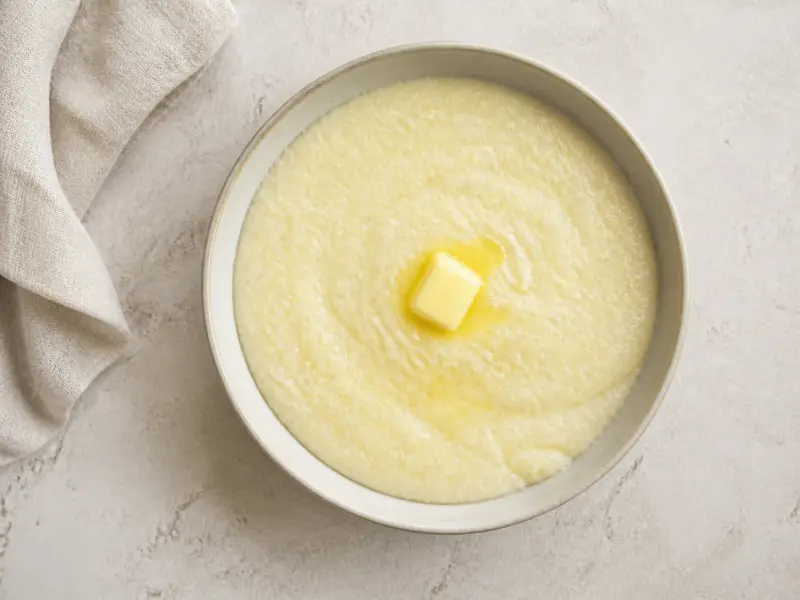
They are childhood breakfast for a very large number of people, in the same register as the semolina porridge elsewhere in this collection. They are also the standard thing to make when a tub of tvorog is approaching its date, which is a domestic rather than a ceremonial role and is none the worse for it.
- When it is eaten
Breakfast, weekends, and any morning with people in the house.
- The traditional way
Draining, sieving and shallow-frying in a mixture of butter and oil. Some households bake them instead, which is lighter and loses the crust.
- How it changed
Very little. The main modern change is that commercial tvorog is more consistently drained than home-made, which makes the recipe more reliable and slightly less interesting.
- Regional variations
Raisins are standard in many households and disliked in others. Ukrainian versions are often larger and sweeter. Some regions bake rather than fry. In the Baltic states similar curd fritters go by other names entirely.
- How this version differs
It splits the flour into a structural quantity and a shaping quantity, which not all recipes do and which keeps the fritters lighter. It also tells you to fry a test one, which is the honest response to an ingredient whose wetness varies by brand.
- Sources and credit
None. Traditional and unauthored.
 Mushroom Julienne
 Oladyi
 Blini
Blini Buckwheat Kasha with Mushrooms
 Medovik
 Semolina Kasha