Egg Curry
अंडा करी
Anda kari
Hard-boiled eggs, scored and browned in spice, simmered in an onion and tomato masala.
- Prep
- 10 min
- Cook
- 30 min
- Total
- 40 min
- Serves
- 4
- Revisions
- 5
Allergens
- Eggs
Named from the ingredients as written, including those carried in from sub-recipes. This is not a guarantee — check the labels on what you actually buy, and note that a product’s recipe can change.
Ingredients
Serves
Method
Boil the eggs for 9 minutes, cool them under cold running water and peel them.
Score each egg with three shallow cuts around its length.
Heat 1 tbsp of the oil in a pan and roll the eggs in it with a pinch of the turmeric until lightly golden. Lift them out.
Add the rest of the oil and the cumin seeds and let them sizzle for 20 seconds.
Add the onions and cook over a medium heat for 15 minutes until deep brown.
Add the garlic, ginger and green chillies and fry for 2 minutes.
Add the ground coriander, remaining turmeric and chilli powder and fry for 30 seconds.
Add the tomatoes and the salt and cook for 8-10 minutes, until the mixture thickens and the oil separates and pools at the edges. That separation is the signal the masala is done.
Pour in the water and simmer for 5 minutes.
Return the eggs, spoon the sauce over them and warm through for 2-3 minutes only.
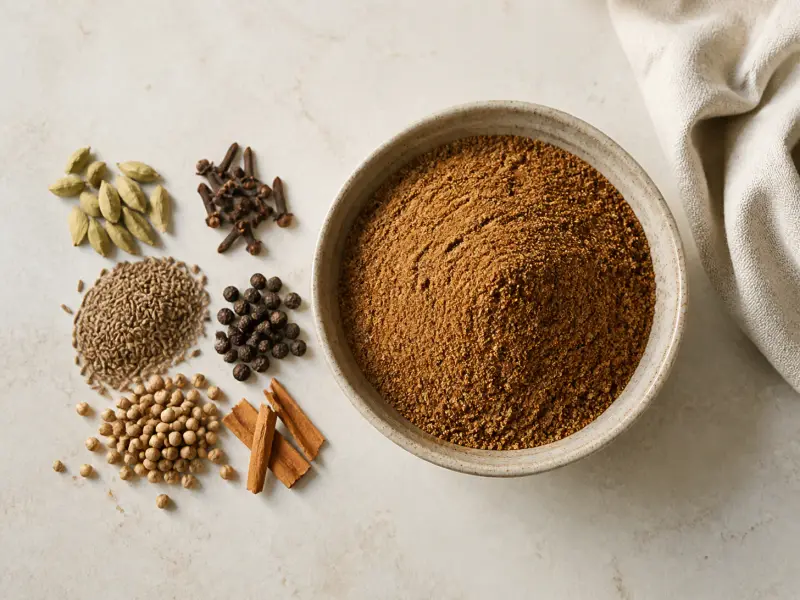
Scatter with garam masala and fresh coriander and serve with rice or roti.
Nobody has rated this recipe yet.
Sign in to rate this recipe. One rating per person, and you can change it.
What to expect
- Taste
Sweet first, and it is the onions. Fifteen minutes of browning converts a great deal of their sugar and the sauce tastes almost caramelised — that sweetness is the backbone and it is why the step cannot be shortened. Tomato brings acidity against it. Ginger is warm and slightly sharp, garlic is mellow, and the green chillies contribute a clean grassy heat that stays mild because they were slit rather than chopped. Cumin seeds fried whole at the start are nutty and quite different from ground cumin. Coriander seed is citrusy and earthy. Turmeric is more bitterness and colour than flavour. And then the eggs, which are rich, slightly sulphurous and completely bland, which is exactly why they work: they are a canvas, and the scoring is what lets the sauce onto them. Garam masala at the end is warm and aromatic and goes in last because heat destroys it.
- Aroma
Cumin seeds hitting hot oil is the first and best smell in the dish — sharp, nutty, and it happens in twenty seconds. Then a long stretch of browning onions, which is sweet and increasingly deep. Ginger and green chilli are bright over the top. The ground spices give a thirty-second burst of toasted earth. Garam masala at the end is the most aromatic moment of all, which is precisely why it goes on off the heat.
- Texture
Smooth thick sauce against firm egg white and soft yolk. The score marks give the sauce somewhere to sit, so each mouthful of white carries some. There is no crunch anywhere, which is why it is served with rice or bread — the bread is the texture.
- Sound
Cumin seeds crackling in oil for twenty seconds, which is the shortest and most important sound cue in the dish. Then a long quiet period as the onions brown, with occasional stirring. The tomatoes go in with a hiss and then reduce with a thick, slow bubbling that changes character as it thickens — when the sound goes from a light simmer to a heavier plop, the oil is about to separate.
- How the flavour moves
Sweetness from the onions first, then tomato acid cutting it, then the ground spices across the middle. Ginger and chilli heat build behind. The egg is the last thing and it is mild and rich, which resets the mouth. Garam masala shows up in the nose rather than on the tongue. The finish is warm and sweet and the chilli accumulates across the plate.
- Serve it
Hot, with hot rice or bread. It holds heat well and is good the next day, though the whites toughen slightly.
- Goes with
Plain rice or hot roti, and roti is the better of the two here because the sauce is thick. Plain yoghurt, which cools it and adds acid. A simple cucumber and onion salad with lemon. Pickle. Where it fails is next to another rich curry — this is a dish that wants something plain beside it, and it is at its best as the only cooked thing on the table.
Cook's notes
- Difficulty
Easy, and the only thing that goes wrong is impatience with the onions. Fifteen minutes of browning is the flavour of the dish and there is no shortcut that produces the same result.
- Cost
Very low. Eight eggs, two onions, three tomatoes and spices from a cupboard. It is among the cheapest full meals here.
- Equipment
A pan for boiling eggs, a bowl of cold water, and a wide heavy pan for the masala. Nothing else.
- When to make it
Weeknights, any time of year.
- Best season
None.
- You know it is done when
The onions should be genuinely deep brown, not golden. The masala is done when oil separates and pools at the edges of the pan — this is the classic cue in Indian cooking and once you have seen it you will use it in every curry you make. The sauce should coat a spoon.
- And it feels like
The sauce should be thick enough to cling to an egg rather than run off it. The egg whites should still be tender.
- Food safety
Eggs boiled for nine minutes are fully cooked. Nothing else to manage.
- Where it goes wrong
Rushing the onions, which is the fault — pale onions give a thin, sharp sauce and no amount of spice fixes it. Overboiling the eggs, which gives a grey ring and a chalky yolk. Burning the ground spices in their thirty seconds. Adding water before the oil has separated, which stops the masala ever finishing. Boiling the eggs in the sauce at the end, which toughens the whites. And adding garam masala early, which wastes its aromatics entirely.
- If it does go wrong
Sauce thin and sharp: the onions were undercooked and the tomatoes underdone — keep cooking before adding water, and look for the oil. Bitter: the ground spices caught, or the turmeric is heavy. Rubbery whites: the eggs were boiled in the sauce. Grey ring on the yolk: overboiled. Bland: salt first, then more browning next time; this dish is more often under-browned than under-spiced.
- Making it ahead
The masala can be made two days ahead or frozen, which is the best way to use this recipe — the fifteen minutes of onions is the whole cost, and doing it once for three meals is sensible. Boil the eggs fresh.
- Keeping it
Two days in the fridge. The whites firm up somewhat, which is the limit on keeping it.
- Reheating
Gently. Take the eggs out, heat the sauce, and put them back for a minute — reheating them in a bubbling sauce is what makes them rubbery.
- Freezing
Freeze the sauce alone, which does very well for three months, and boil fresh eggs. Frozen cooked egg white goes watery and unpleasant.
- Leftovers
The sauce is more useful than the dish. Thin it with stock for a soup, or use it as the base for a chickpea or potato curry.
- Scaling it
Doubles easily, with the caveat that four onions take longer to brown than two in the same pan; use a wider pan or accept twenty-five minutes.
- Substitutions
Tinned tomatoes work and need slightly longer to cook down. Ghee instead of oil is richer and more traditional in some regions. A spoon of yoghurt or coconut milk stirred in at the end takes it towards a Kerala-style curry and is very good. There is no substitute for the browned onion.
- Dietary swaps
Vegetarian as written and easily vegan if the eggs are replaced with fried potatoes or paneer, which is a standard variation rather than an improvisation. Dairy-free, gluten-free and nut-free. Contains eggs, declared.
- Shopping for it
Nothing specialist. Whole cumin seeds rather than ground, which is a genuinely different ingredient and the one place this recipe wants a specific form. Fresh ginger rather than paste. Eggs a week old rather than very fresh, which peel far more easily.
- Keeping the cost down
There is very little to save; it is already cheap. Making a double batch of masala and freezing half is the real economy, since it turns a forty-minute dish into a fifteen-minute one next time.
- Sustainability
Eggs are among the lowest-impact animal proteins, and the rest of the dish is onions and tomatoes. It is one of the more defensible things in the collection.
- Nutrition
Around 340 calories a serving. Two eggs give about 13g of protein along with choline, selenium and vitamin B12, and the sauce is essentially vegetables and oil. It is one of the better-value dishes here nutritionally as well as financially.
- Worth it?
Worth it, and it is the best introduction to Indian cooking on this site. Everything in it is cheap and already in most kitchens, the technique it teaches — browning onions properly and waiting for the oil to separate — transfers directly to a dozen other dishes, and the result is a genuinely good dinner for about the price of a coffee.
Where it comes from
- Origin
The Indian subcontinent, and it is made from Kerala to Bengal to Punjab with different spicing in each.
- Also called
Anda curry or anda masala in Hindi and Urdu — anda is egg. Dim bhuna in Bengali, mutta curry in Malayalam.
- Said out loud
AHN-da.
- What the name means
Literally egg curry. There is nothing more to it.
- History
There is no invention story to tell and it would be wrong to supply one. What is worth knowing is the structure, because it is the most useful thing in Indian home cooking: fat, whole spices, onions browned properly, then aromatics, then ground spices, then tomato, then liquid. That sequence — and the oil-separating cue that marks the end of it — underlies an enormous number of dishes, and eggs are simply one of the cheapest things to put into it. Egg curry is common precisely because eggs are the protein most households have.
- Why it matters
It is everyday food and its significance is exactly that. In much of India it is also the standard non-vegetarian option for people who eat eggs but not meat, which is a large and specific category — Indian menus frequently distinguish vegetarian, egg and non-vegetarian as three separate things rather than two.
- When it is eaten
Weeknights. It is not a celebration dish anywhere.
- The traditional way
Two things. Browning the onions properly — bhunna, the slow frying that builds the base — and frying the boiled eggs before they go into the sauce, which is done across most of the subcontinent and gives the whites a firmer, slightly blistered surface that holds up better.
- How it changed
Very little. Pressure cookers have shortened the onion stage in many kitchens, which works less well than it seems: pressure does not brown, and a masala made this way is sweeter and flatter.
- Regional variations
Considerable. Kerala versions use coconut milk and curry leaves and are much lighter. Bengali versions often use a paste of onion and a distinctive whole-spice mix and are drier. Punjabi versions lean on tomato and cream. Some cooks halve the eggs and lay them cut side up in the sauce rather than leaving them whole; some skip the frying entirely.
- How this version differs
It is a north Indian style base. The scoring and the turmeric-oil roll are both traditional and both frequently skipped, and the recipe insists on them because they are the difference between eggs in a sauce and an egg curry.
- Sources and credit
None. Traditional and unauthored.
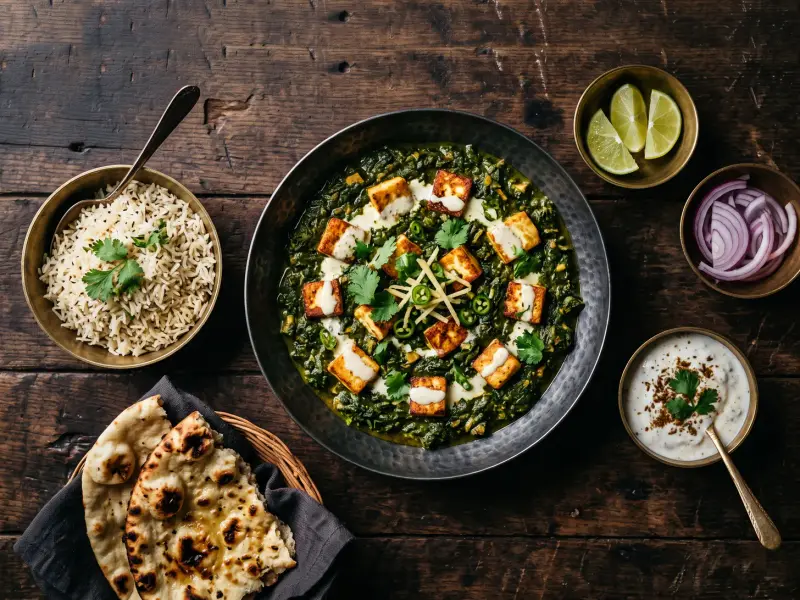 Saag Paneer
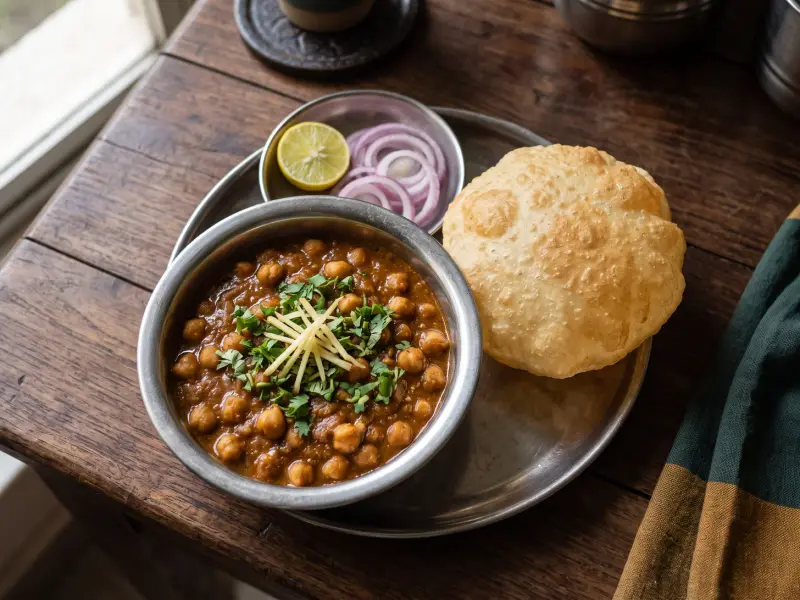 Chana Masala
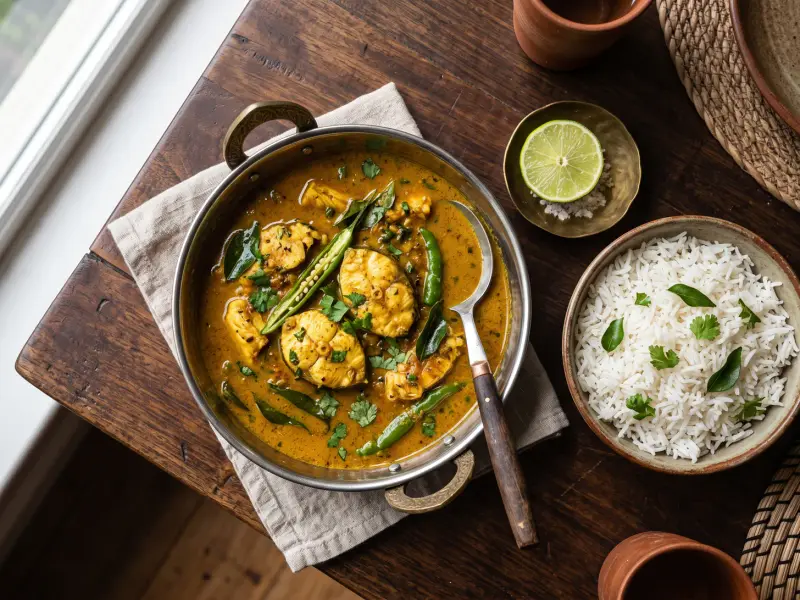 Goan Fish Curry
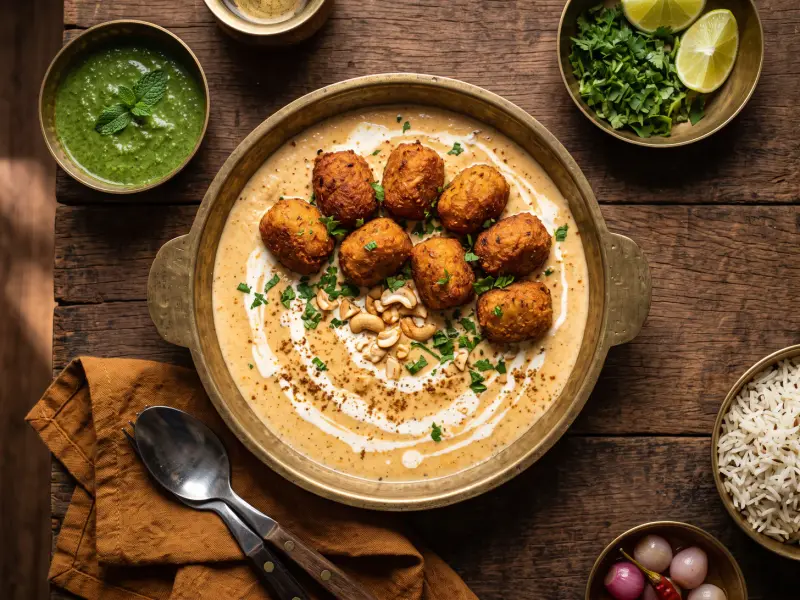 Malai Kofta
 Garam Masala
 Basil Pesto