Chana Masala
छोले मसाला
Chole masala
Chickpeas simmered in a dark, sour tomato and onion masala, finished with amchur so the sourness sits behind the spice rather than on top of it.
- Prep
- 15 min
- Cook
- 40 min
- Total
- 55 min
- Serves
- 4
- Revisions
- 5
Ingredients
Serves
Method
Heat the oil in a wide heavy pan over medium heat.
Add the onions and cook for 15-18 minutes, stirring often, until they are genuinely brown rather than merely soft.
Add the garlic, ginger and chillies and cook for 2 minutes.
Stir in the cumin, coriander, turmeric and chilli powder and cook for 30 seconds, until fragrant.
Tip in the tomatoes and cook for 8-10 minutes, pressing them against the side of the pan, until the oil separates and pools at the edges.
Add the chickpeas and 300ml water and stir well.
Simmer uncovered for 15 minutes, until the sauce clings to the chickpeas rather than sitting under them.
Crush a few chickpeas against the side of the pan with the back of a spoon to thicken the sauce.
Stir in the amchur, the garam masala and the salt.
Taste and correct the sourness and salt together, since one hides the other.
Scatter the coriander over and serve.
Nobody has rated this recipe yet.
Sign in to rate this recipe. One rating per person, and you can change it.
What to expect
- Taste
Deep, dark and savoury from the well-browned onion, with a rounded warmth from cumin, coriander and turmeric rather than any single spice dominating. Amchur's sourness sits behind the spice rather than in front of it — a genuinely different effect from lemon juice's brighter, more immediate tang — and the chillies give a background heat rather than an overwhelming one. Tinned chickpeas themselves are mild and starchy, taking on the sauce's flavour rather than contributing much of their own.
- Aroma
Deep, sweet, browned onion is the first and most persistent smell, with toasted cumin and coriander rising as the ground spices hit the hot pan, and a tangy top note from the amchur once it's stirred in near the end.
- Texture
Thick and clinging rather than thin and soupy, with the chickpeas holding their shape but yielding easily to a bite — some crushed into the sauce for body, most left whole for texture.
- Sound
A steady, quiet sizzle through the long onion-browning stage, settling to a gentler simmer once the tomatoes and chickpeas are in.
- How the flavour moves
The deep, sweet browned-onion flavour arrives first and underlies everything else, the warm ground spices building through the middle of the mouthful, and amchur's sourness the last thing to register, sitting behind rather than cutting sharply across the spice.
- Serve it
Served hot, straight from the pan.
- Goes with
Bhatura, the puffed fried bread it's traditionally sold with as street food, or plain rice for a more everyday household meal.
Cook's notes
- Difficulty
Easy, though the onion-browning stage rewards patience over speed more than any other single step.
- Cost
Cheap — tinned chickpeas and tomatoes, onions and a modest amount of spice.
- Equipment
A wide, heavy pan.
- When to make it
Any weeknight, given how quickly it comes together once the onions are done.
- Best season
None — every ingredient is a shelf-stable or standard fresh item available year-round.
- You know it is done when
The onions should be a real, deep brown rather than pale gold; the tomato base should show oil pooling separately at the edges of the pan once it's properly cooked down.
- And it feels like
The sauce should cling to the chickpeas rather than sit as a thin liquid underneath them, thickened partly by crushing some of the chickpeas against the pan.
- Food safety
Nothing beyond ordinary hygiene — tinned chickpeas are already fully cooked, so the simmer here is entirely for the sauce's sake rather than for food safety.
- Where it goes wrong
- Rushing the onions at too high a heat, which either leaves them merely soft rather than properly brown, or burns them and turns the whole dish bitter.
- Adding the ground spices to oil that's too hot, which burns them within seconds rather than blooming them gently.
- Not cooking the tomato down fully before adding the chickpeas, leaving a raw, acidic taste in the finished dish.
- Adding too much amchur or lemon at once rather than tasting and correcting sourness and salt together, since each affects perception of the other.
- If it does go wrong
Flat, one-note flavour: the onions weren't browned enough. Bitter undertone: the onions or the ground spices were cooked too hot for too long. Too sour or not sour enough: correct with more amchur or lemon a little at a time, tasting alongside the salt rather than adjusting one without the other.
- Making it ahead
Keeps and reheats well, and many cooks consider it better the next day once the flavours have settled.
- Keeping it
Three to four days refrigerated.
- Reheating
Gently on the hob or in a microwave, loosened with a splash of water if it's thickened too much on standing.
- Freezing
Freezes well for up to three months.
- Leftovers
Good reheated as is, or thinned slightly and used as a filling alongside other elements in a wrap or flatbread.
- Scaling it
Scales up easily in a bigger pan; the onion-browning stage takes proportionally longer with a larger quantity and is worth watching closely rather than assuming the same timing.
- Substitutions
Lemon juice can replace amchur where it isn't available, added at the same stage. Fresh tomatoes, peeled and chopped, can replace tinned if good ripe ones are available.
- Dietary swaps
Naturally vegan and vegetarian as written, with no dairy, egg, gluten or nuts in the recipe at all.
- Shopping for it
Amchur, dried unripe mango powder, is available from South Asian grocers and is worth seeking out specifically for the sourness-without-liquid effect it gives, distinct from lemon juice.
- Keeping the cost down
One of the cheapest substantial main courses in the collection — tinned chickpeas and tomatoes, onions and a modest amount of spice.
- Sustainability
A low-cost, entirely plant-based main course built on one of the most sustainable pulses to grow.
- Nutrition
A high-fibre, high-plant-protein main course, naturally low in saturated fat.
- Worth it?
A genuinely excellent demonstration of how far technique — specifically, patience with the onions — carries a dish built from cheap, everyday ingredients.
Where it comes from
- Origin
North India and Pakistan, particularly the Punjab and Delhi regions.
- Also called
Chole masala.
- Said out loud
CHO-leh muh-SAH-lah.
- What the name means
Chana (or chole) is the Hindi and Punjabi word for chickpeas; masala refers to the spice blend or spiced sauce the chickpeas are cooked in.
- History
Chickpeas are among the oldest cultivated pulses anywhere, with archaeological evidence of cultivation in the Levant dating back several thousand years, and they reached and were adopted across the Indian subcontinent very early in that long history. No specific date or individual can be credited with combining chickpeas with this particular onion-tomato-and-spice masala; it is a household and street-food staple that developed gradually rather than being invented at one point.
- Why it matters
A defining dish of Punjab and Delhi in particular, eaten both as street food — typically with bhatura, the accompanying fried bread that gives the combination chole bhature its name — and as an everyday household weeknight dinner with rice.
- When it is eaten
An everyday dish, eaten as commonly at a household dinner table as from a street stall.
- The traditional way
A slow-browned onion base, ground spices bloomed briefly in the hot oil and onion, tomato cooked down until the oil separates back out, and chickpeas simmered in the resulting sauce with a final souring agent stirred in near the end.
- How it changed
Little about the core technique has changed; the dish's identity is built on the same slow-browned onion base wherever it's made, with variation mainly in how much chilli heat and how strong a souring agent is used.
- Regional variations
Chole bhature, the combination with fried bhatura bread, is the classic Delhi street-food pairing; the same chickpea masala is served with plain rice or roti in a more everyday household context.
- How this version differs
This recipe uses tinned chickpeas, noting that since they're already cooked, the simmer time is entirely for developing the sauce rather than softening the pulses — a genuine practical difference from cooking dried chickpeas from scratch, which would need considerably longer.
- Sources and credit
No individual can be credited with chana masala; it is a regional street-food and household staple rather than a composed or invented dish.
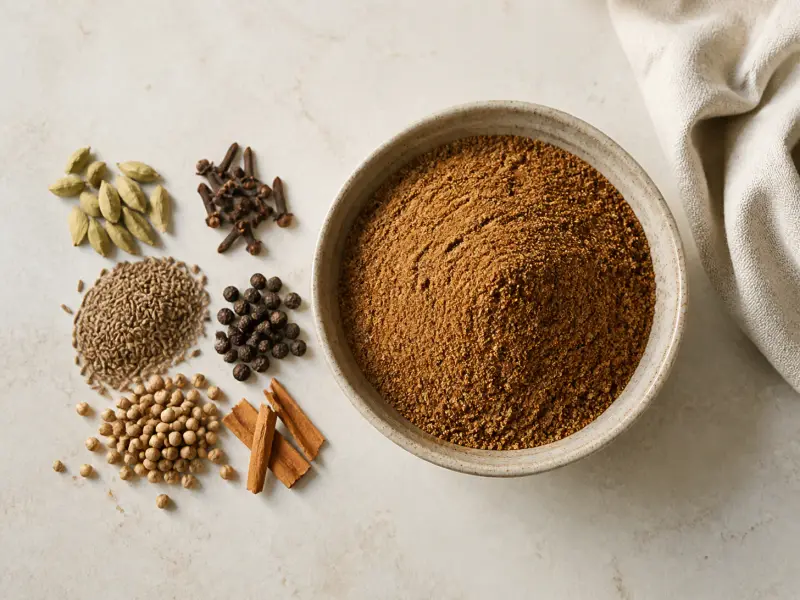 Garam Masala
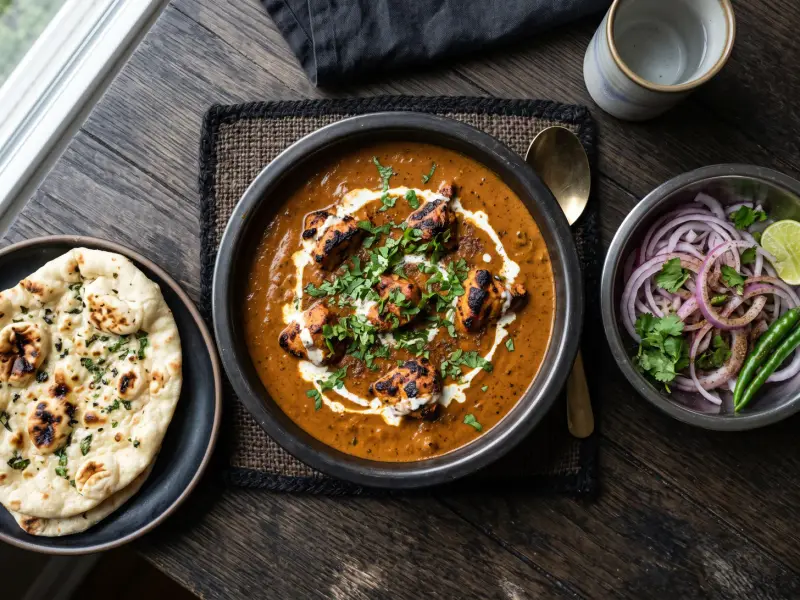 Chicken Tikka Masala
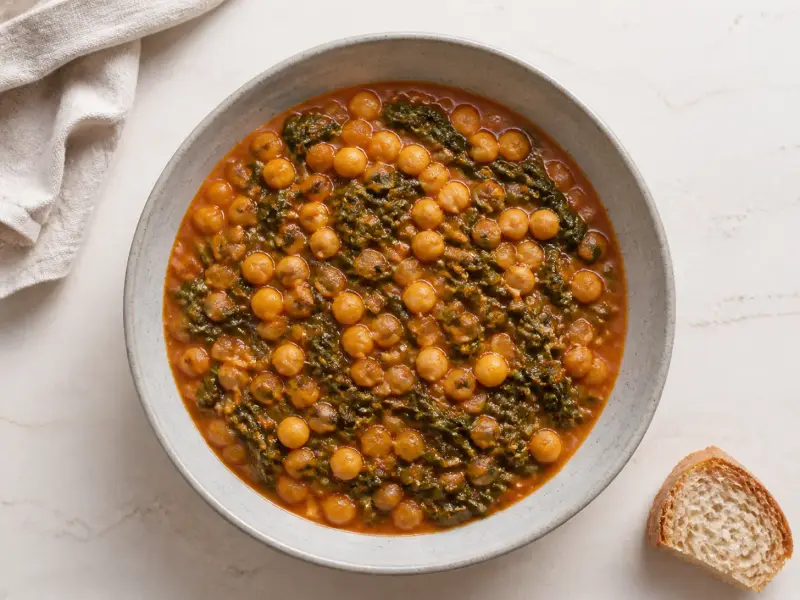 Chickpea and Spinach Stew
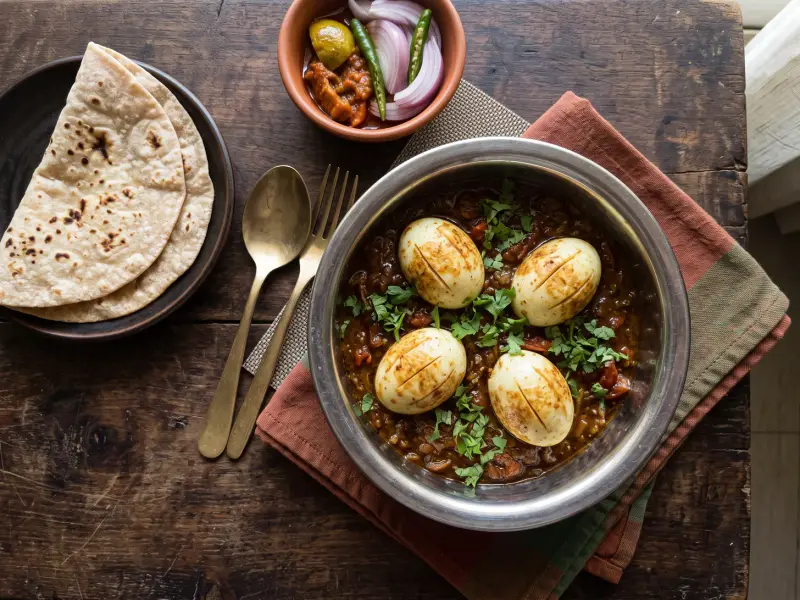 Egg Curry
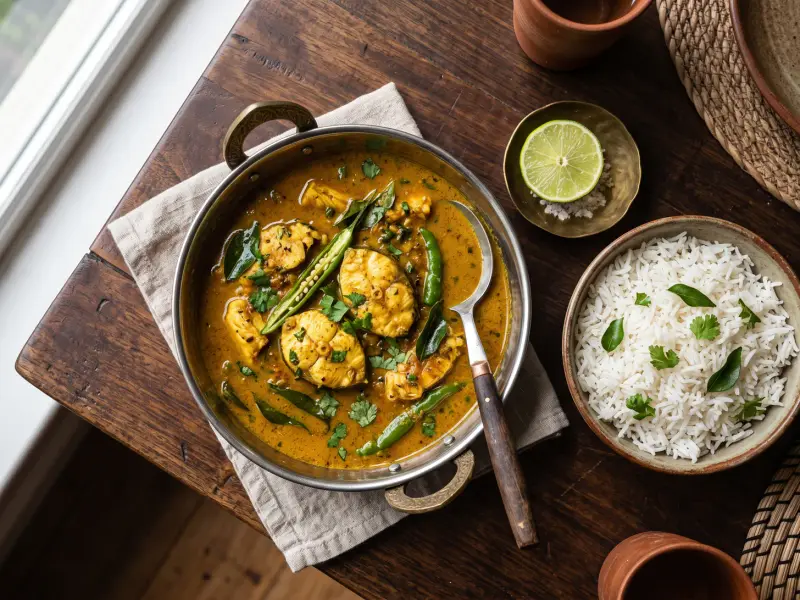 Goan Fish Curry
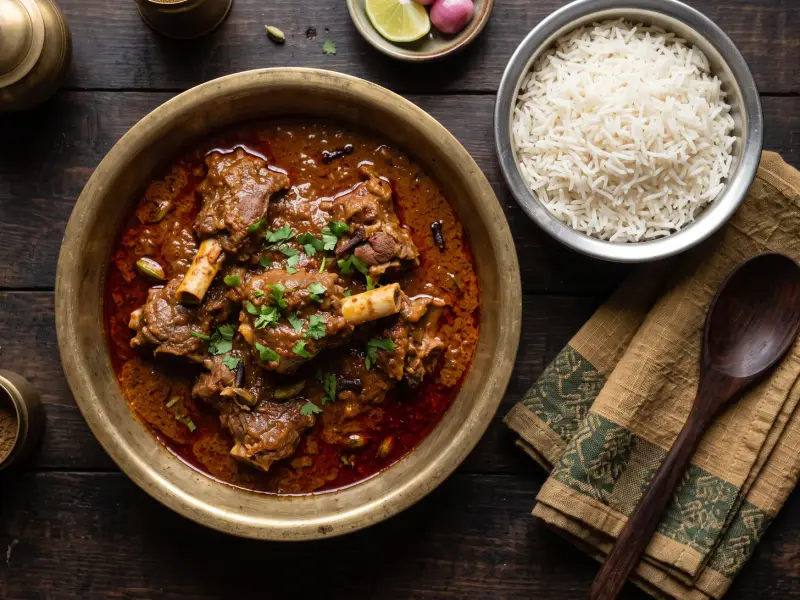 Lamb Rogan Josh
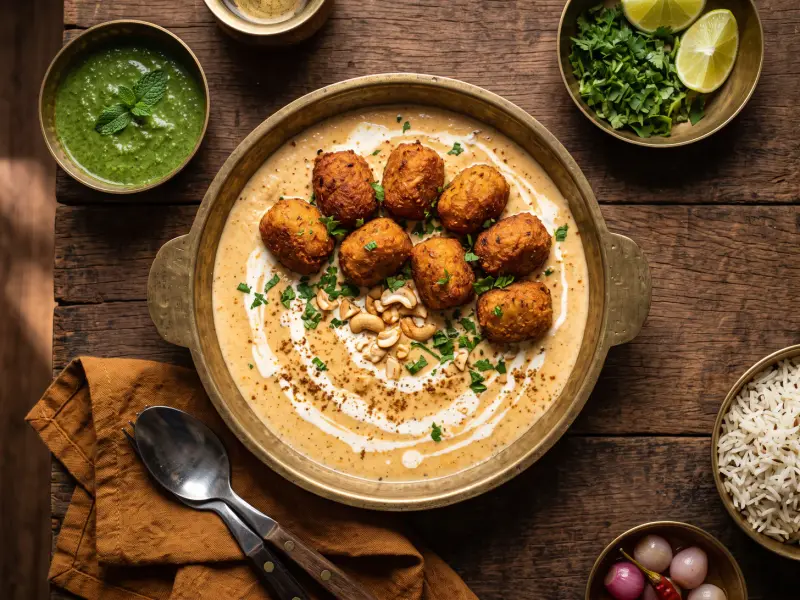 Malai Kofta