Chickpea and Spinach Stew
Garbanzos con espinacas
Dried chickpeas cooked from scratch and thickened with fried bread pounded to a paste, which is how Seville gets body without cream.
- Prep
- 25 min
- Cook
- 1 hr 45 min
- Resting
- 12 hr 5 min
- Total
- 14 hr 15 min
- Serves
- 4
- Revisions
- 5
Allergens
- Cereals containing gluten
- Milk (via Everyday White Tin Loaf)
- Sulphites
Named from the ingredients as written, including those carried in from sub-recipes. This is not a guarantee — check the labels on what you actually buy, and note that a product’s recipe can change.
Ingredients
Serves
Method
Put the chickpeas in a large bowl with the bicarbonate of soda and cover them with cold water by at least 5cm.
Soak for 12 hours or overnight. They take up roughly twice their own weight in water, so give them room and more water than looks necessary.
Drain and rinse them well, which takes the bicarbonate off with the soaking water.
Bring the chickpeas to the boil in the 2 litres of fresh water with the bay leaf and skim the foam off.
Simmer, part-covered, for 60-90 minutes, until a chickpea crushes easily against the roof of your mouth with no chalk at the centre.
Top up with hot water from the kettle whenever they come near the surface. Cold water poured in stalls the pan and the skins split away from the flesh.
Accept that very old chickpeas may simply never soften. Nothing in the pan fixes that, and if they are still hard at two hours the packet was the problem.
Reserve 500ml of the cooking liquid and drain the chickpeas, discarding the bay leaf.
Warm the olive oil in a wide, heavy pan over medium heat.
Fry the bread for 2-3 minutes a side, until deep gold and crisp right through, then lift it out onto a plate.
Fry the whole garlic cloves and the cumin seeds in the same oil for 1-2 minutes, until the garlic is gold and smells sweet, then lift them out to join the bread.
Take the garlic out at gold and not a shade later. It is going into the thickener whole, so anything burnt here is bitter in every spoonful of the finished stew.
Tear the fried bread into a mortar with the garlic and cumin seeds.
Pound to a coarse paste with 1 tbsp of the sherry vinegar and a splash of the reserved chickpea liquid.
This is the majado, and it is the whole thickening method: fried bread pounded into the pot does the job flour or cream does elsewhere, and it carries the garlic and cumin through the dish rather than leaving them in pieces.
Cook the chopped onion in the oil left in the pan over medium-low heat for 10-12 minutes, until soft and pale gold.
Take the pan off the heat and stir in the smoked paprika for 20 seconds, until it smells of smoke rather than dust. Paprika burns over direct heat in seconds and turns acrid, and it cannot be rescued.
Return the pan to the heat, add the crushed tomatoes and cook for 5 minutes, until they have darkened and no longer smell raw.
Add the drained chickpeas, 400ml of the reserved cooking liquid and the 6g of fine salt.
Simmer for 15 minutes, so the chickpeas take up the seasoning.
Stir in the majado and simmer for a further 5-10 minutes, until the liquid has thickened enough to hold a trench behind the spoon.
Loosen with the rest of the reserved liquid if it tightens past that.
Add the spinach a large handful at a time, folding each one under before the next goes in.
Cook for 2-3 minutes only, until the last of it has collapsed and turned dark green. Spinach held longer goes khaki and gives its water back into the pan you have just thickened.
Stir in the remaining 1 tbsp of sherry vinegar off the heat.
Season with the ground peppercorns and taste for salt.
Stand it for 5 minutes before serving, and expect it to be better still the next day once the majado has settled through it.
Nobody has rated this recipe yet.
Sign in to rate this recipe. One rating per person, and you can change it.
What to expect
- Taste
Deep, savoury and faintly smoky from the paprika, with a distinct sourness from the sherry vinegar running through the whole dish rather than sitting only at the edges. The chickpeas themselves are mild and starchy, the majado's fried bread and garlic giving real body and a toasted, nutty undertone, and the spinach adding a mineral, slightly bitter contrast that keeps the stew from tasting purely rich.
- Aroma
Smoked paprika is the most immediately recognisable smell — sweet and faintly of woodsmoke — layered over sweet cooked onion and the toasted, savoury smell of fried bread and garlic from the majado.
- Texture
Substantial and hearty, thickened to a real body by the majado rather than being a thin broth with chickpeas floating in it — the chickpeas themselves should be soft enough to crush easily, and the spinach tender without being reduced to a slick.
- Sound
A slow, heavy bubble at a gentle simmer once the majado has thickened it, and the specific crunch and pound of the mortar and pestle at the majado stage.
- How the flavour moves
Smoked paprika and sherry vinegar's sourness arrive together at the front, the savoury chickpea-and-majado body filling the middle, and spinach's mineral bitterness the last thing registered before the swallow.
- Serve it
Served hot; it holds its heat well given how thick the finished stew is.
- Goes with
Bread for mopping, and little else needed — this is a substantial, complete dish in its own right, traditionally eaten during Lent when meat is avoided but entirely satisfying without needing it.
Cook's notes
- Difficulty
Moderate. Nothing individual step is hard, but cooking dried chickpeas from scratch and building the majado both take a little patience and attention.
- Cost
Cheap — dried chickpeas, bread, spinach and a modest amount of oil and spice.
- Equipment
A large pan for the chickpeas, a mortar and pestle for the majado, and a wide pan for building the stew.
- When to make it
Any time, though it has a particular association with Lent and Holy Week in its home region.
- Best season
None — every ingredient is available year-round, though the dish has a strong seasonal association with Lent.
- You know it is done when
The finished stew should be a deep, rust-red colour from the paprika and tomato, thick enough to hold a trench briefly behind a dragged spoon.
- And it feels like
Chickpeas should crush easily against the roof of the mouth with no chalky centre; spinach should be fully collapsed and dark green, not khaki, which happens if it's cooked too long and gives its water back into the pot.
- Food safety
Very old dried chickpeas may simply never soften fully regardless of soaking or cooking time — nothing in the method fixes that, and it's a sign of the packet rather than the technique.
- Where it goes wrong
- Burning the garlic while frying it for the majado, which puts a bitterness through every spoonful of the finished stew.
- Adding the smoked paprika directly over heat, which burns it to acrid within seconds — always take the pan off the heat first.
- Cooking the spinach too long, which turns it khaki and gives its water back into the pot rather than staying dark green and intact.
- Adding acid (tomato, vinegar) too early if using very old chickpeas, which can slow their softening further.
- If it does go wrong
Chickpeas still hard after 90 minutes: they may simply be very old stock and no amount of further cooking will fix that. Thin stew: not enough majado was made, or it needs more time to thicken through. Bitter undertone: the garlic or paprika was burned at some stage.
- Making it ahead
Genuinely improves made a day ahead, once the majado has had time to settle through the whole pot.
- Keeping it
Improves overnight as the majado settles further through the stew; keeps three to four days refrigerated.
- Reheating
Gently, with a splash of water or the reserved chickpea liquid if it's thickened too much on standing.
- Freezing
Freezes reasonably well, though spinach's texture softens further on thawing.
- Leftovers
Genuinely better the next day, once the majado has had time to settle through the whole pot.
- Scaling it
Scales up cleanly, though cooking a much larger batch of dried chickpeas may need a bigger pan and slightly longer simmering.
- Substitutions
Tinned chickpeas can replace dried ones for speed, though the dish loses the light chickpea stock that cooking from dried produces, which is part of what gives this version its particular character.
- Dietary swaps
Naturally vegan and dairy-free as written. Contains gluten from the bread used in the majado; a gluten-free bread could substitute, though the texture of the fried majado bread is worth testing carefully since gluten-free breads behave differently when fried.
- Shopping for it
Fresh dried chickpeas, from a shop with good turnover, cook far more reliably than old stock that has sat in a cupboard for years — pimentón de la Vera, specifically oak-smoked Spanish paprika, is worth seeking out for the authentic smoky flavour.
- Keeping the cost down
Dried chickpeas are considerably cheaper than tinned by weight, and cooking them from scratch also produces a useful, flavourful stock as a byproduct.
- Sustainability
A low-impact, entirely plant-based main course built on one of the more sustainable pulses to grow, with modest amounts of oil and bread as the only other significant inputs.
- Nutrition
A high-fibre, high-plant-protein main course, naturally low in saturated fat.
- Worth it?
A genuinely satisfying, entirely plant-based stew whose whole trick — the majado — is worth learning for use well beyond this one dish.
Where it comes from
- Origin
Andalusia, in southern Spain, particularly around Seville.
- Also called
Garbanzos con espinacas.
- Said out loud
gar-BAHN-zos kon es-pee-NAH-kas.
- What the name means
Garbanzos is the Spanish word for chickpeas; espinacas is spinach — a straightforwardly descriptive name.
- History
The dish's flavour profile — cumin, paprika, vinegar — reflects Andalusia's long history under Moorish rule, which left a deep and lasting mark on the region's cooking, though no single date or moment of invention can be attached to this specific dish. It is most closely associated with Seville during Lent and Holy Week (Semana Santa), when it serves as a hearty, filling option for a period when meat is traditionally avoided.
- Why it matters
A tapas-bar and home cooking standard across Andalusia, eaten especially in the weeks before Easter, though it appears on menus and tables year-round as well.
- When it is eaten
Particularly associated with Lent and Holy Week in Seville, though eaten as an everyday dish more broadly across the region.
- The traditional way
Cooking dried chickpeas from scratch to retain their own light cooking stock, and thickening the finished pot with a majado — fried bread, garlic and often cumin, pounded to a paste in a mortar — rather than with flour, cream or a blended puree.
- How it changed
The technique of thickening with fried bread pounded in a mortar (majado, or picada in Catalan cooking) is a long-standing and widespread Spanish practice used across many dishes beyond this one, rather than something unique to garbanzos con espinacas.
- Regional variations
Chickpea and green-vegetable stews of a broadly similar family are found across Spain, Portugal and North Africa, each with local variations in spice and thickening method.
- How this version differs
This recipe cooks the chickpeas from dried specifically to make use of their own cooking liquid in the finished stew, which the recipe's own facts note is most of the difference between this and a version made from tins.
- Sources and credit
No individual can be credited with this dish; it is regional home and tapas-bar cooking rather than a composed dish with a traceable inventor.
Related recipes
 Everyday White Tin Loaf
 Gazpacho
 Pisto
Pisto Beef and Ale Stew with Herb Dumplings
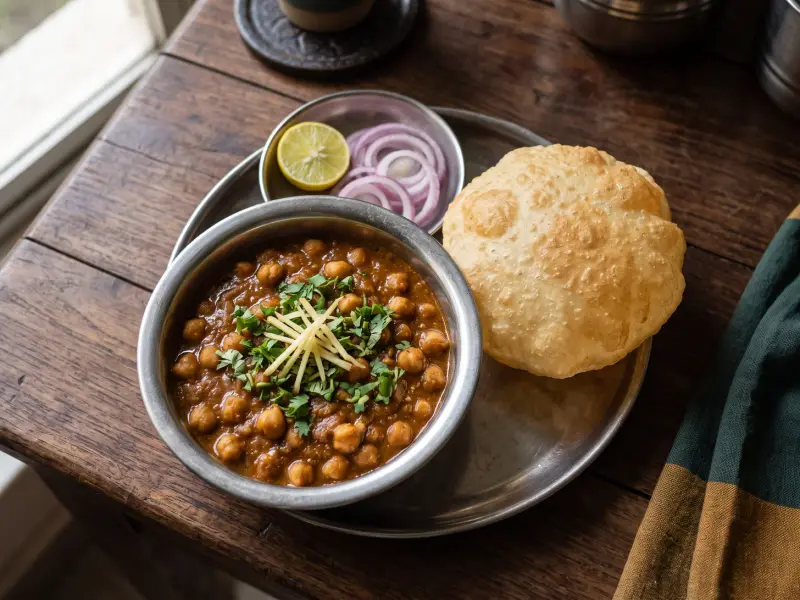 Chana Masala
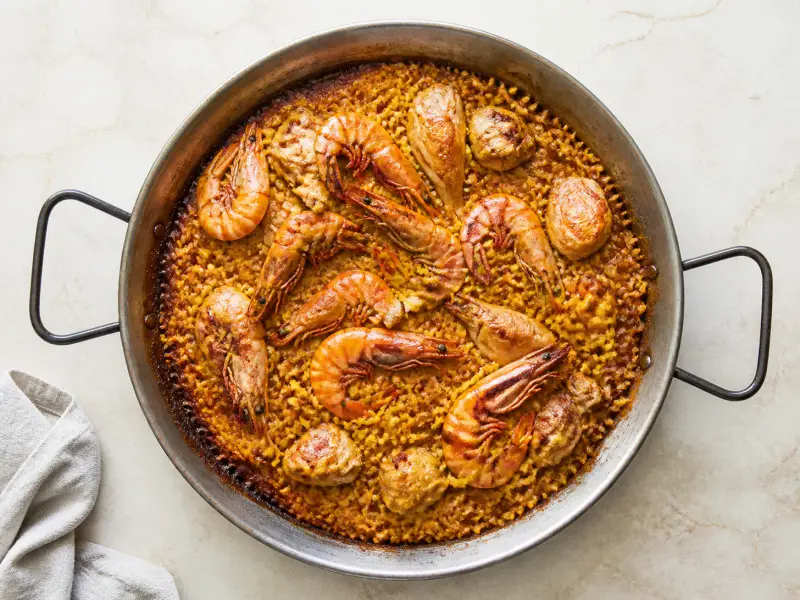 Chicken and Prawn Paella
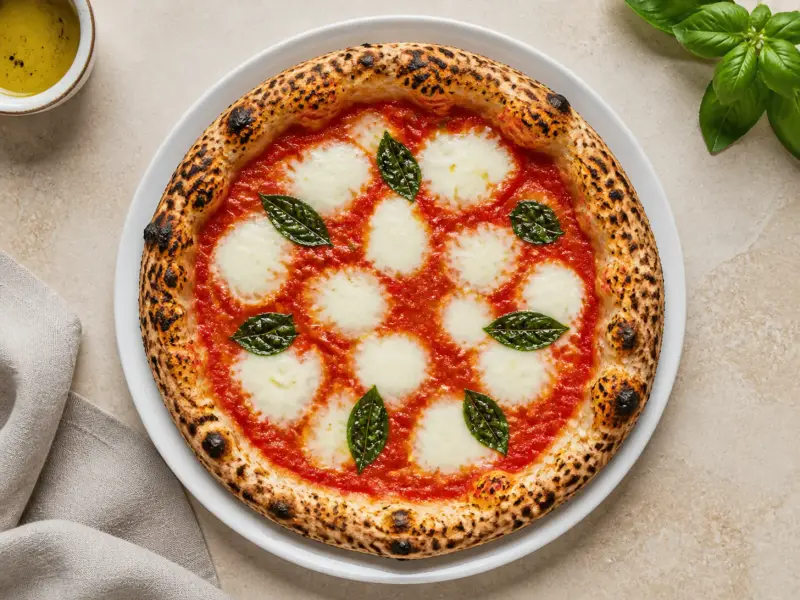 Classic Margherita Pizza
Categories
Cuisines
Courses & dish types
Main ingredients
Diets