Beef and Ale Stew with Herb Dumplings
Chuck steak simmered in dark ale until it gives, with suet dumplings steamed on the surface of the pot for the last half hour.
- Prep
- 30 min
- Cook
- 3 hr 30 min
- Total
- 4 hr
- Serves
- 6
- Revisions
- 5
Allergens
- Celery
- Cereals containing gluten
- Fish
- Sulphites
Named from the ingredients as written, including those carried in from sub-recipes. This is not a guarantee — check the labels on what you actually buy, and note that a product’s recipe can change.
Ingredients
Serves
Method
Heat the oven to 160C/325F.
Pat the beef dry on every side with kitchen paper.
Season the pieces all over with the 6g of fine salt.
Heat the oil in a heavy casserole over medium-high heat until it shimmers and runs thin across the base.
Brown the beef in three batches, leaving a couple of centimetres of bare metal around every piece, 3-4 minutes a side, until each one has a deep crust and lifts off the base without tearing.
Crowd the pan and none of this works: the steam cannot escape, the metal drops below browning temperature and the beef goes grey and leaks its juice instead of crusting, which is set out at length in the slow-braised beef shin in this collection.
Move each batch to a plate as it browns.
Turn the heat to medium and add the onions, carrots and celery to the same pan.
Cook for 8-10 minutes, stirring, until the onions have softened and gone translucent at the edges.
Stir in the garlic and cook for 1 minute, until it smells sweet.
Add the tomato puree and cook for 2 minutes, stirring constantly, until it darkens from bright red to brick.
Scatter the 25g of plain flour over the vegetables.
Stir for 1-2 minutes, until no white streaks are left and the pan looks pasty. The flour has to cook in the fat now; stirred into the liquid later it seizes into lumps and tastes raw in the finished sauce.
Pour in the ale a third at a time, stirring each addition smooth before the next goes in.
Scrape the base of the pan clean with a wooden spoon while it bubbles.
Simmer for 5 minutes, until the foam has subsided and the smell of raw beer has gone.
Return the beef and any juice on the plate to the pan.
Pour in the hot stock, which should come about two-thirds of the way up the meat rather than covering it.
Stir in the Worcestershire sauce and the brown sugar, which stands against the bitterness the hops leave behind as the ale reduces.
Tuck in the bay leaves and the 4 whole thyme sprigs.
Bring it to a bare simmer, where a bubble breaks somewhere on the surface every second or two.
Cover with a tight lid and cook in the oven for 2 to 2.5 hours.
Test with a spoon rather than a clock: a piece pressed against the side of the pan should crush without resistance while still holding its shape.
Rub the self-raising flour, the suet, the stripped thyme leaves, the finely chopped half of the parsley and the 3g of fine salt together in a bowl with your fingertips.
Stir in the cold water with a knife until the mixture just comes together as a rough, lumpy dough.
Stop mixing the moment no dry flour is left. Worked smooth, the dough turns elastic and the dumplings steam into heavy rubber balls instead of opening up.
Divide the dough into 8 and roll each piece into a loose ball with light hands.
Take the pot out of the oven and season the stew with the ground peppercorns.
Sit the dumplings on the surface of the stew, well spaced, and press each one down until it is half submerged. They double in size, so they need the room.
Cover the pot and return it to the oven for 25 minutes.
Leave the lid on for that whole stretch. The dumplings cook in trapped steam, and every lift of the lid lets it out and stops them rising.
Take the lid off and cook for a further 10 minutes, until the tops are browned and a skewer pushed into the middle of one comes out clean.
Note that no internal temperature applies to the beef by this point. Two and a half hours at a simmer takes it far past any safety threshold, and the only question left is texture.
Taste the sauce and correct the salt, bearing in mind how the stock was seasoned.
Scatter over the rest of the parsley.
Serve straight away in shallow bowls, while the dumplings are still light.
Nobody has rated this recipe yet.
Sign in to rate this recipe. One rating per person, and you can change it.
What to expect
- Taste
Deeply savoury and rich, with dark ale's bitterness balanced against Worcestershire sauce and a little brown sugar — hops concentrate as the beer reduces, so an ale-based stew tends to turn bitter in a way a wine-based one turns sour instead, and the sugar is the standard correction for that. The beef itself, cooked this long, is soft and deeply savoury rather than needing much seasoning of its own; the dumplings are mild, buttery-tasting from the suet, and carry a fresh herbal note from the thyme and parsley worked through the dough.
- Aroma
Rich, malty and savoury from the reducing ale and the long-braised beef, with thyme's earthy, slightly medicinal note running through both the stew and the dumplings.
- Texture
The beef should be tender enough to cut with the side of a fork but still hold together in distinct pieces, sitting in a thick, glossy sauce; the dumplings should be light and slightly spongy, opened up by trapped steam rather than dense — suet stays solid until the dumpling is already hot, and the steam released as it finally melts is what opens the crumb.
- Sound
A slow, heavy bubble at a simmer, and a soft, wet give as a spoon cuts through a properly light dumpling versus a dense thud from an overworked one.
- How the flavour moves
The rich, slightly bitter ale sauce arrives first, the tender beef's deep savoury flavour filling the middle of the mouthful, and the mild, herby dumpling providing a soft, comforting contrast at the end that balances the more assertive stew.
- Serve it
Served properly hot, straight from the oven — this is a dish that holds its heat well given its thickness and the volume in the pot.
- Goes with
Mashed potato or crusty bread would be entirely at home alongside, though the dumplings themselves largely take on that starchy, absorbing role within the dish.
Cook's notes
- Difficulty
Moderate. Browning the beef properly in batches takes discipline, and the dumpling stage has one absolute rule about the lid that can't be broken.
- Cost
Moderate — beef chuck is the main cost, with the ale, stock and dumpling ingredients all comparatively cheap.
- Equipment
A heavy lidded casserole capable of going from the hob to the oven, and a bowl for the dumpling dough.
- When to make it
Cold weather, weekends, and any occasion calling for a substantial, unhurried braise.
- Best season
A cold-weather dish by character, though every ingredient is available year-round.
- You know it is done when
The stew should look thick and dark, the beef pieces holding their shape rather than falling apart, the dumplings risen and pale before their final browning stage.
- And it feels like
A piece of beef pressed against the side of the pan should crush without resistance while still holding together as a recognisable piece — chuck holds together this way where shin would shred into strands instead. The dumplings should be light and airy inside, not dense or gummy.
- Food safety
No specific internal temperature applies to the beef by the time it's this tender — 2.5 hours at a simmer takes it far past any safety threshold, and texture is the only remaining question. A skewer through the middle of a dumpling should come out clean.
- Where it goes wrong
- Crowding the pan while browning the beef, which steams it grey instead of developing a proper crust.
- Overworking the dumpling dough, which turns it elastic and the dumplings dense and rubbery rather than light.
- Lifting the lid to check on the dumplings during their covered cooking stage, which lets the trapped steam escape and stops them rising.
- Adding the flour to the liquid rather than cooking it into the fat with the vegetables first, which leaves it raw-tasting and prone to lumps.
- If it does go wrong
Tough beef: it needs more time — chuck genuinely takes 2 to 2.5 hours and there's no shortcut. Dense, heavy dumplings: overmixed, or the lid was lifted during their covered cooking stage. Bitter sauce: the ale reduced further than expected; add a touch more sugar to balance it.
- Making it ahead
The stew itself can be made a day or two ahead and reheated, with the dumplings made fresh and added at the point of reheating for the best texture.
- Keeping it
Three to four days refrigerated; the stew itself, without the dumplings, also freezes well.
- Reheating
Gently on the hob or in the oven until piping hot throughout; dumplings are best made fresh rather than reheated, since they lose some lightness on a second heating.
- Freezing
The stew freezes well without the dumplings; dumplings are best made and cooked fresh rather than frozen and reheated.
- Leftovers
The stew alone reheats and often improves over a day or two; leftover dumplings are edible reheated but noticeably denser than fresh.
- Scaling it
Scales up well in a larger casserole, though browning the beef in appropriately sized batches remains important regardless of total quantity.
- Substitutions
Shin can replace chuck for a version that shreds into strands rather than holding together in recognisable pieces, since the two cuts cook to a similar tenderness but behave differently once there. Any dark ale or stout works; a lighter beer will not give the same depth of flavour.
- Dietary swaps
Contains gluten (flour, both in the stew and the dumplings) and fish (Worcestershire sauce, which traditionally contains anchovies) and sulphites, and possibly celery as an allergen from the vegetables. Not suitable for a vegetarian or vegan diet as written, given the beef and suet are both structural to the dish.
- Shopping for it
A dark, malty ale or stout rather than a very hoppy, bitter craft beer gives a rounder result with less risk of the sauce turning too bitter as it reduces.
- Keeping the cost down
Chuck is a comparatively economical cut of beef, chosen specifically because long, slow cooking is what makes it tender rather than because it's expensive.
- Sustainability
Chuck is a lower-demand, more economical cut relative to prime steaks, making good use of the whole animal.
- Nutrition
A substantial, protein-and-carbohydrate-rich main course, made more filling by the suet dumplings.
- Worth it?
A proper, satisfying winter stew, and the dumpling stage in particular is worth doing exactly by the book — the covered steaming time is not a suggestion.
Where it comes from
- Origin
Britain and northern Europe more broadly, with no single point of invention.
- Also called
Beef and ale stew, or in various pub menus simply 'steak and ale'.
- Said out loud
Plain English throughout.
- What the name means
A straightforwardly descriptive name for its two defining ingredients — beef and the ale it's braised in.
- History
Suet dumplings appear in English cookery writing from the seventeenth century onward, from a period when a household's cooking equipment was centred on a boiling pot and a pudding cloth rather than an oven, and dumplings would have been boiled or steamed within a larger pot of stewing meat and liquid rather than baked on top of it in the modern oven-braise style this recipe uses. Meat stewed in beer as a method has no attributable origin point; the Belgian carbonade flamande is the best-documented named relative of the same basic technique.
- Why it matters
A winter standard in British and Irish pubs and homes, closely related to Belgian carbonade and French daube in method, if not in the specific choice of beer over wine.
- When it is eaten
Cold-weather comfort food, strongly associated with pub menus and family Sunday dinners in winter.
- The traditional way
Browning meat properly in batches for flavour, building a sauce thickened with flour cooked into the fat rather than added raw to the liquid, a long slow braise, and dumplings steamed on the surface under a lid for the final stage of cooking.
- How it changed
The specific combination of an oven-braised stew finished with dumplings steamed on its surface, rather than dumplings boiled separately or within a boiling pot in the older tradition, reflects the shift from open-hearth cooking with a boiling pot to a modern kitchen built around a controllable oven.
- Regional variations
The Belgian carbonade flamande follows a very similar method with Belgian beer in place of British ale; the French daube uses wine rather than beer as its braising liquid, giving a stew that turns sour rather than bitter as it reduces.
- How this version differs
This version specifically calls for dark ale or stout over wine, and includes Worcestershire sauce and brown sugar as a deliberate counter to the bitterness that concentrates as the ale reduces during the long braise.
- Sources and credit
No individual can be credited with beef and ale stew or with suet dumplings; both are long-standing regional cooking traditions rather than composed or invented dishes.
 Chicken Stock
 Chickpea and Spinach Stew
 Roast Chicken with Lemon and Thyme
 Roast Leg of Lamb with Garlic and Rosemary
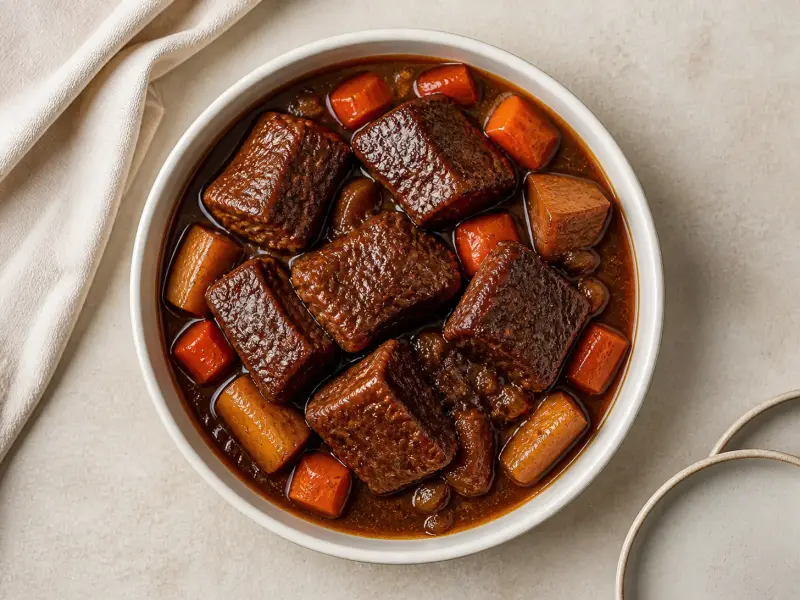 Slow-Braised Beef Shin
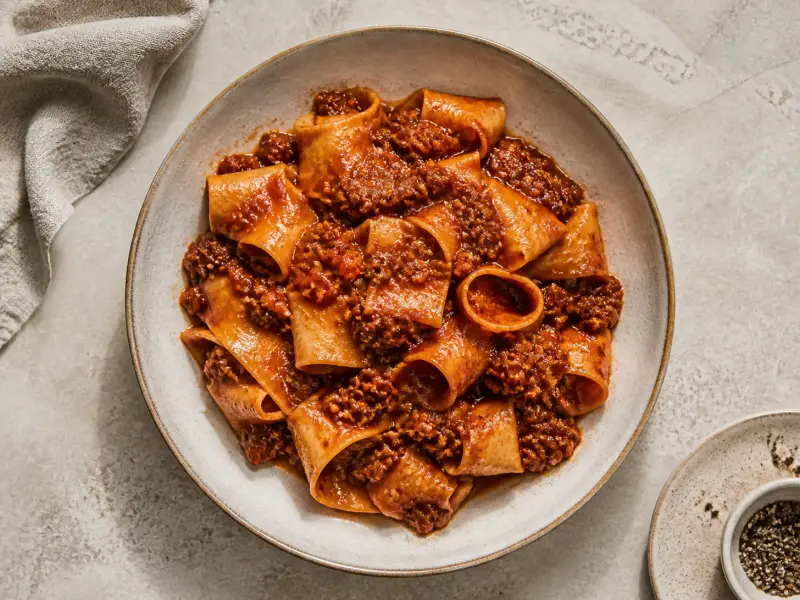 Slow-Cooked Beef Ragu
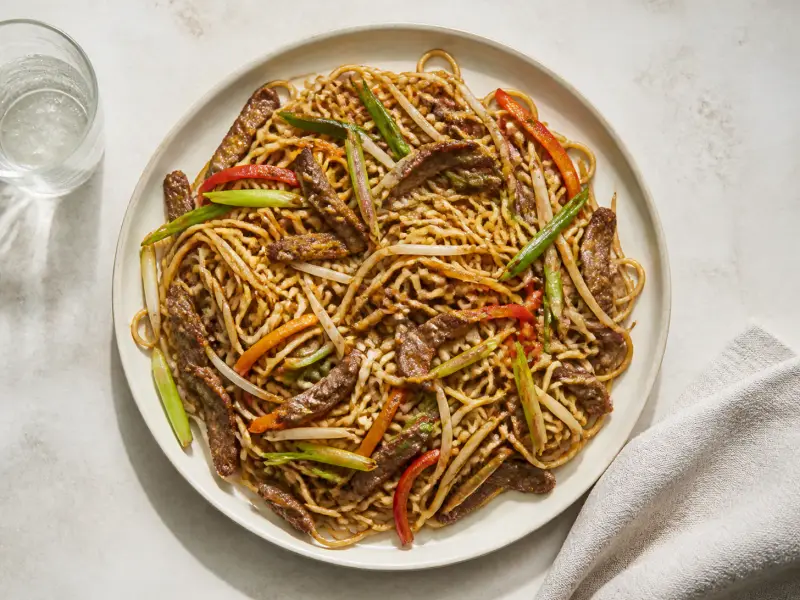 Beef Chow Mein