Pasta alla Norma
Pasta alla Norma
Pasta alla Norma — for Bellini's opera, a Catanian compliment to something perfect.
Fried aubergine folded through a simple tomato sauce with torn basil and salted ricotta, which is the ingredient the dish stands or falls on.
- Prep
- 20 min
- Cook
- 30 min
- Total
- 50 min
- Serves
- 4
- Revisions
- 5
Allergens
- Cereals containing gluten
- Milk
Named from the ingredients as written, including those carried in from sub-recipes. This is not a guarantee — check the labels on what you actually buy, and note that a product’s recipe can change.
Ingredients
Serves
Method
Toss the aubergine with the teaspoon of salt in a colander and leave it for 20 minutes over the sink.
Pat it thoroughly dry with kitchen paper. Wet aubergine spits and will not brown.
Heat the olive oil in a wide frying pan over medium-high heat until a cube dropped in sizzles immediately.
Fry the aubergine in two batches for 6-8 minutes each, turning, until deep golden and collapsed.
Lift each batch onto kitchen paper with a slotted spoon.
Bring a large pan of well-salted water to the boil and cook the pasta to just short of the time on the packet.
Warm the tomato sauce in a wide pan large enough to hold the pasta.
Fold three quarters of the aubergine through the sauce.
Reserve a mugful of pasta water, then drain the pasta and tip it into the sauce.
Toss over medium heat for a minute, loosening with pasta water until the sauce coats every piece.
Take the pan off the heat and tear in most of the basil.
Serve topped with the remaining aubergine, the grated ricotta salata and the last of the basil.
Nobody has rated this recipe yet.
Sign in to rate this recipe. One rating per person, and you can change it.
What to expect
- Taste
Sweet and savoury together, and the sweetness is unexpected — properly fried aubergine is genuinely sweet, almost caramelised, and nothing about a raw one predicts it. Tomato sauce brings acidity and its own sweetness. Basil is the aromatic top note, peppery and slightly aniseed, and torn rather than chopped so it bruises less and holds more of its oils. And then the ricotta salata, which is the flavour that makes the dish what it is: sharp, distinctly lactic, quite salty, and with a tang that neither Parmesan nor pecorino quite has. It is the acid-and-salt element that stops a dish of fried aubergine and tomato from being merely soft and sweet. Salt in the pasta water is doing the seasoning for the pasta itself and there is nothing else to correct it with.
- Aroma
Frying aubergine, which smells sweet and nutty and not much like a vegetable. Then tomato and olive oil. Basil is the last thing in and it is by far the most aromatic — torn into a hot pan off the heat, it releases immediately and the smell is the signal the dish is finished. Ricotta salata smells faintly of sheep and of a cheese cave, which is a good sign.
- Texture
Soft on soft, deliberately, with one contrast. The aubergine should be creamy and almost melting; the pasta is the only firm thing in the bowl, which is why it is cooked short and finished in the sauce. The grated ricotta salata is dry and slightly crumbly and is the third texture. If the aubergine is not properly soft the whole dish falls apart texturally.
- Sound
The frying is where the sound is, and it is informative: aubergine hitting properly hot oil gives an immediate hard sizzle that gradually quietens as the water cooks out — when it goes quiet, the cubes are close to done. Then a minute of tossing at the end, which is the loud, satisfying part of any pasta dish.
- How the flavour moves
Tomato acidity first, then the aubergine's sweetness across the middle, then the cheese arriving sharp and salty at the back. Basil is aromatic rather than tasted and shows up in the nose throughout. The finish is the cheese — lactic, salty, a little sheepy — and it is what makes you want the next forkful. Over a plate the aubergine becomes progressively more dominant.
- Serve it
Hot, in warm bowls, served at once. The cheese goes on at the table so it does not melt into the sauce — it is meant to stay as distinct dry shards, and warm enough to soften them slightly is exactly right.
- Goes with
A Sicilian red served slightly cool — a Nero d'Avola or an Etna Rosso, which is grown on the volcano this dish sits under and is a genuinely good match rather than a geographical joke. Bread. A sharp green salad afterwards. It does not want a starter and it does not want cheese beyond what is already on it. Where it fails is next to anything creamy or meaty, which flattens the aubergine entirely.
Cook's notes
- Difficulty
Easy. The only thing that requires attention is the frying, which needs the oil genuinely hot and the aubergine genuinely dry, and the only thing that requires a decision is buying the right cheese.
- Cost
Low to moderate. Aubergines and pasta are cheap; ricotta salata is a specialist purchase and a little goes a long way.
- Equipment
A wide frying pan, a colander, kitchen paper, and a pan wide enough to toss the finished pasta in. A box grater for the cheese.
- When to make it
Late summer, when aubergines and tomatoes are cheap and good. It is worth making with tinned tomatoes out of season and the aubergines will still be the limiting factor.
- Best season
Genuinely seasonal in Sicily and worth respecting: aubergines and tomatoes both peak in late summer and the dish is markedly better then.
- You know it is done when
The aubergine should be deep golden brown and visibly collapsed, not merely coloured at the corners. Undercooked aubergine is the most common fault in this dish and it is unmistakable — the cubes stay square and squeaky rather than going soft and silky.
- And it feels like
Aubergine should be creamy to the point of nearly melting. The finished pasta should be coated and glossy with no free liquid in the bottom of the pan.
- Food safety
Nothing to manage. A pan of hot oil deserves the usual respect — never add wet aubergine, which is why the drying step is a safety instruction as well as a culinary one.
- Where it goes wrong
Undercooking the aubergine, which is the fault — it must be genuinely collapsed and deep gold, not merely coloured. Too little oil, or oil that is not hot enough, either of which gives greasy grey cubes. Crowding the pan. Using fresh ricotta instead of ricotta salata. Chopping the basil rather than tearing it, which bruises and blackens it. And draining the pasta thoroughly rather than keeping its water, which is what loosens the sauce.
- If it does go wrong
Greasy: the oil was not hot enough, so the aubergine absorbed rather than sealed. Squeaky, firm aubergine: undercooked, and it needs longer than feels right. Sauce dry and claggy: more pasta water. Bland: not enough cheese, or the pasta water was under-salted. Aubergine bitter: rare in modern varieties, and if it happens the fruit was old — look for firm, glossy skin and a light feel for its size.
- Making it ahead
The aubergine can be fried several hours ahead and left at room temperature, which is genuinely useful because it is the messy part. The tomato sauce keeps a week. Assemble at the last minute.
- Keeping it
Two days in the fridge, and it is much less good on the second — the pasta keeps absorbing and the aubergine loses its texture.
- Reheating
Poorly, like most dressed pasta. A splash of water in a pan is the least bad approach.
- Freezing
No. The fried aubergine alone freezes acceptably.
- Leftovers
Spare fried aubergine is genuinely useful — on toast with ricotta, in a sandwich, or folded into any tomato sauce.
- Scaling it
The sauce and the aubergine scale freely; the frying does not, and more people simply means more batches. Tossing more than about 400g of pasta in one pan does not work well.
- Substitutions
Ricotta salata is the one that matters. If you genuinely cannot find it, a dry aged pecorino is the closest thing — sharp, salty, crumbly — and Parmesan is a distant third because it is nuttier and less lactic. Fresh ricotta is not a substitute and makes a different dish. On the pasta: a short ridged shape is right, because it catches the cubes of aubergine; spaghetti lets them fall off.
- Dietary swaps
Vegetarian as written, with a caveat — traditional ricotta salata is usually made with animal rennet, so a strict vegetarian should check the label or use a vegetarian hard cheese. Vegan without the cheese, which loses the dish's defining flavour; a salted, crumbled firm tofu is not a real answer. Not gluten-free as written. Contains milk and cereals containing gluten, both declared.
- Shopping for it
Ricotta salata from an Italian delicatessen — it is worth a special trip and it keeps. Firm, glossy aubergines that feel light for their size, which means fewer seeds and less water. Good tinned tomatoes for the sauce out of season.
- Keeping the cost down
Aubergines are cheapest in late summer and this is a dish worth making when they are. Ricotta salata is expensive per kilo and 80g serves four, so the cost per plate is small; a wedge keeps for weeks wrapped in the fridge.
- Sustainability
A vegetarian main with no meat and one small piece of cheese, built on two seasonal vegetables. Low impact by any measure.
- Nutrition
Around 680 calories a serving. Most of the fat is olive oil absorbed by the aubergine, and how much that is depends almost entirely on how hot the oil was — a properly fried batch absorbs considerably less than a badly fried one. Aubergine itself is very low in calories and high in fibre.
- Worth it?
Worth it, and worth doing properly. The two things that ruin it — undercooked aubergine and the wrong cheese — are both entirely avoidable, and the version that results is one of the best vegetarian plates in the collection. Fry the aubergine longer than you think, and find the ricotta salata.
Where it comes from
- Origin
Catania, in eastern Sicily.
- Also called
Pasta alla Norma. In Catania it is sometimes simply pasta ch'i mulinciani — pasta with aubergines, in Sicilian.
- Said out loud
PAS-ta AH-la NOR-ma.
- What the name means
After Bellini's opera Norma, first performed in 1831. Vincenzo Bellini was born in Catania and is the city's most famous son; the airport is named after him. The name is used the way one might call something a masterpiece.
- History
The dish is older than its name. Aubergines arrived in Sicily with Arab rule between the ninth and eleventh centuries — as did much else in Sicilian cooking, including citrus, rice, sugar cane and a great deal of the island's sweet tradition — and tomatoes came from the Americas several centuries later. So the combination cannot predate the seventeenth or eighteenth century, and aubergine cooked in oil with tomato is simply what Sicily does. The Norma name is nineteenth-century at the earliest and the anecdote attached to it, usually credited to the playwright Nino Martoglio exclaiming over a plate, is repeated in every account and documented in none.
- Why it matters
It is Catania's dish in the way that a city can own one, and it is one of the small handful of Sicilian recipes that has travelled worldwide intact. It is also a good demonstration of what makes Sicilian cooking distinct from mainland Italian: the aubergine, the salted sheep's cheese and the sweet-savoury balance are all closer to North Africa than to Rome.
- When it is eaten
Summer, when aubergines and tomatoes are both at their best. It is everyday food.
- The traditional way
Deep or shallow frying the aubergine in olive oil. Roasting it is a modern, lighter substitution that produces a drier, less silky result, and it is not what the dish is.
- How it changed
Roasting instead of frying is the main modern change and it is a real loss. Some contemporary versions also use fresh ricotta, which is a misunderstanding of the name rather than a variation.
- Regional variations
Within Sicily the pasta shape varies — maccheroni, rigatoni, sedani — and some versions leave the aubergine in slices rather than cubes. Palermo tends towards different aubergine dishes altogether. Caponata, from the same island, is aubergine in a sweet-and-sour dressing and is a different thing entirely.
- How this version differs
It reserves a quarter of the aubergine for the top, which is a texture decision rather than a traditional one. Otherwise it is the standard build, and it is explicit about ricotta salata being a hard cheese, which is where most people outside Italy go wrong.
- Sources and credit
The Bellini connection is universally repeated. The specific anecdote is not evidenced and is presented here as a story.
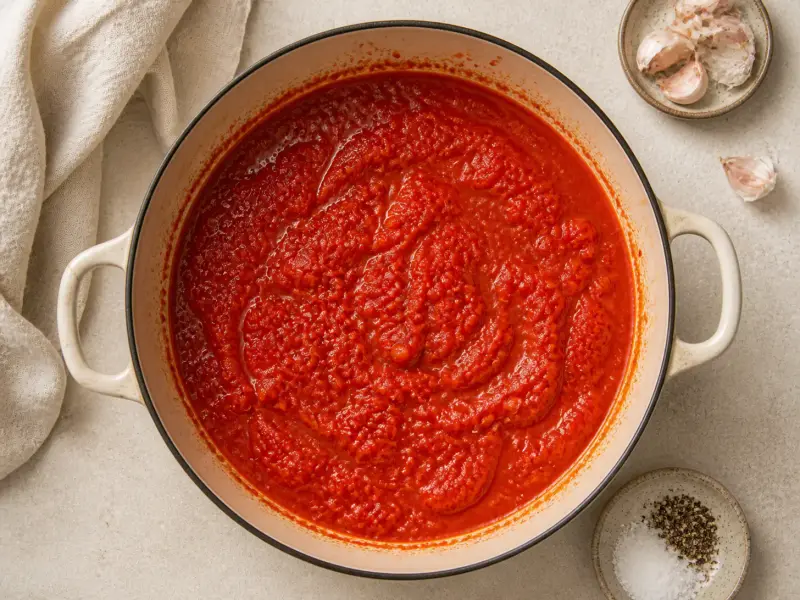 Simple Tomato Sauce
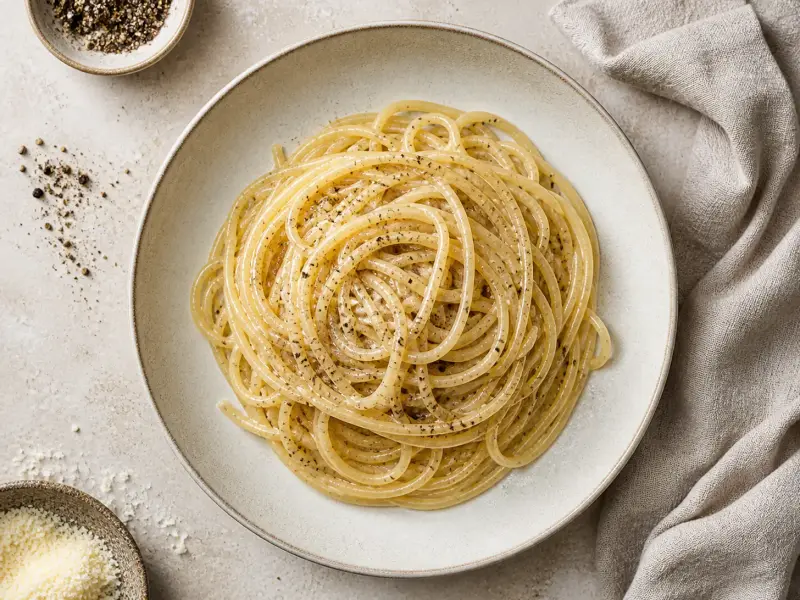 Cacio e Pepe
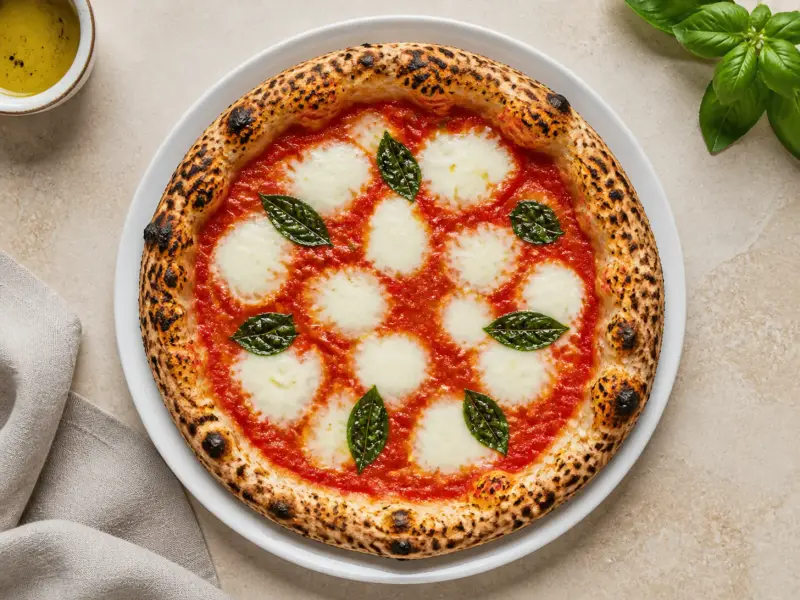 Classic Margherita Pizza
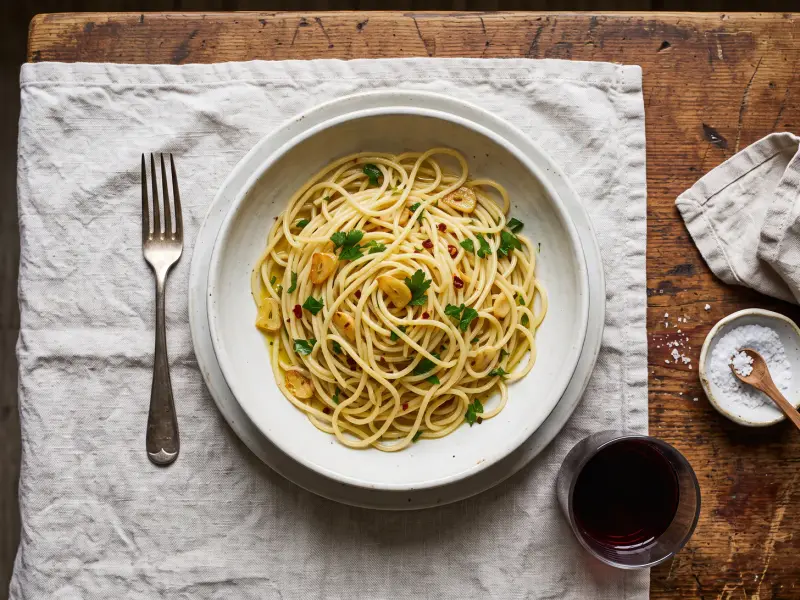 Spaghetti Aglio e Olio
 Slow-Cooked Beef Ragu
 Pasta e Fagioli
 Spaghetti alla Puttanesca