Pho Bo
Phở bò
Phở bò — beef pho.
Charring the onion and ginger before they go near water is what makes the broth smell like pho rather than beef soup. Everything else is patience.
- Prep
- 30 min
- Cook
- 6 hr
- Total
- 6 hr 30 min
- Serves
- 6
- Revisions
- 5
Allergens
- Cereals containing gluten
- Fish
Named from the ingredients as written, including those carried in from sub-recipes. This is not a guarantee — check the labels on what you actually buy, and note that a product’s recipe can change.
Ingredients
Serves
Broth
To serve
Method
Broth
Cover the bones with cold water, bring to a boil and cook hard for 10 minutes. Drain, and scrub the bones and the pot clean. Skipping this parboil is why home pho goes cloudy.
Char the onion and ginger cut-side down in a dry pan or under a grill until blackened in patches, about 8 minutes. Blackened, not browned.
Toast the star anise, cinnamon, cloves and coriander seeds in a dry pan for 90 seconds, until they smell warm.
Return the bones to the clean pot with the brisket, charred aromatics, toasted spices and 5 litres of cold water. Bring to the barest simmer.
Skim the grey foam off for the first 20 minutes, then leave to simmer, uncovered and never boiling, for 6 hours. A rolling boil emulsifies the fat and turns the broth murky.
Lift the brisket out after the first 90 minutes, cool it, and refrigerate until serving.
Strain the broth, discard the solids, and season with rock sugar and fish sauce until it tastes complete on its own.
To serve
Soak and cook the rice noodles according to the packet, then divide between six deep bowls.
Slice the cold brisket thinly and lay it over the noodles with the raw sirloin.
Bring the broth back to a full rolling boil and ladle it over. The heat of the broth is what cooks the raw beef, so it has to be genuinely boiling as it hits the bowl.
Serve immediately with the herbs, lime and chilli alongside, for each person to add themselves.
Nobody has rated this recipe yet.
Sign in to rate this recipe. One rating per person, and you can change it.
What to expect
- Taste
Deeply savoury first and sweet underneath — the rock sugar and the long-cooked bones give a roundness that reads as sweetness without tasting sugary. The star anise and cinnamon are warm rather than hot; there is no chilli heat in the broth itself. Fish sauce supplies the salt and a savoury depth, and does not taste of fish. The charred onion sits under everything as a faint smoky sweetness that is very hard to place if you do not know it is there. Whatever the eater adds at the table — lime, chilli, basil — arrives on top of that rather than in it.
- Aroma
This is the sense the dish leads with, and it arrives before the bowl does. Star anise and cinnamon carry furthest, over hot beef fat and a low sweetness from the charred onion. It is the smell that separates pho from beef soup, and it comes almost entirely from the eight minutes of charring rather than from the six hours of simmering.
- Texture
Flat rice noodles are soft and slippery with almost no chew — they are a carrier rather than a texture. The brisket is yielding, the sirloin silky and barely set. Everything in the bowl is soft, which is exactly why the raw bean sprouts and torn herbs added at the table matter: they are the only crunch in it.
- Sound
Very little. The eating noise is the point at which noodles are involved, and the herbs are torn rather than cut.
- How the flavour moves
Aroma arrives first and is the most spice-forward part of the whole experience. The first spoonful of broth alone is savoury and round. The beef and noodles are mild by comparison, so the eater keeps returning to the broth, and what they add themselves — lime, chilli, basil — sharpens it as the bowl goes on rather than at the start.
- Serve it
Served as hot as it can be made. The bowl is filled with boiling broth and eaten immediately, and it stays hot for a long time because of the fat on the surface.
Cook's notes
- Difficulty
Not technically hard. It is long, and it punishes impatience at exactly two points — the parboil and the simmer.
- Cost
Low for what it is. Bones are cheap; the sirloin is the only expensive item and there is very little of it.
- Equipment
A stockpot large enough for 5 litres plus bones, a fine strainer, a dry pan or grill for charring
- Where it goes wrong
Boiling the broth. Skipping the parboil. Slicing the sirloin too thick, so the poured broth cannot cook it through and it stays raw in the middle.
- Making it ahead
The broth is better made the day before. Chilled overnight, the fat sets and lifts off in a sheet, and the flavour is cleaner for it.
- Scaling it
Scales up cleanly; the only limit is pot size. Do not scale down below about 1kg of bones, because the surface area to volume changes and the broth reduces too far.
- Substitutions
Oxtail can stand in for some of the bones and adds body. Rock sugar can be replaced with an equal weight of caster sugar, at a small cost in clarity of flavour.
- Dietary swaps
There is no honest vegetarian version of this dish — the broth is the dish, and it is beef. A mushroom-and-charred-onion broth is a good soup and is not pho.
Where it comes from
- Origin
Northern Vietnam, early twentieth century. Nam Dinh and Hanoi both claim it and the sources do not settle it. See core.history — the French pot-au-feu derivation and the Cantonese noodle-soup derivation are both commonly repeated and neither is established.
- History
DISPUTED, and the dispute is the interesting part. Pho is generally agreed to have appeared in northern Vietnam in the early twentieth century, with Nam Dinh province and Hanoi both claiming it. Beyond that the accounts diverge and none of the sources settle it: one line derives it from French pot-au-feu, on the strength of the sound of 'feu' and the French colonial appetite for beef in a country that had mostly used cattle for work; another derives it from Cantonese rice-noodle soups carried by Chinese migrants, pointing at the noodles and the technique rather than the beef. A third position is that both fed into it and neither is the parent. Say none of this out loud in a short film.
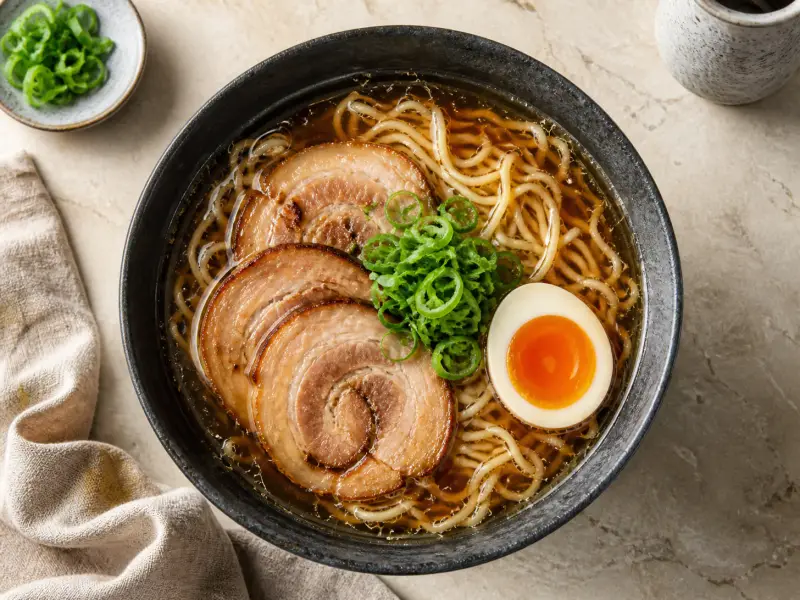 Shoyu Ramen with Chashu Pork
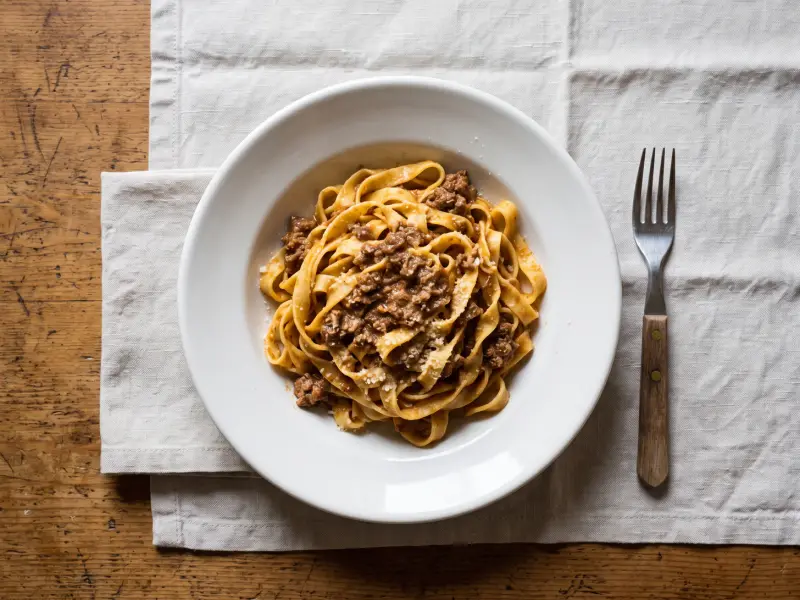 Tagliatelle al Ragù
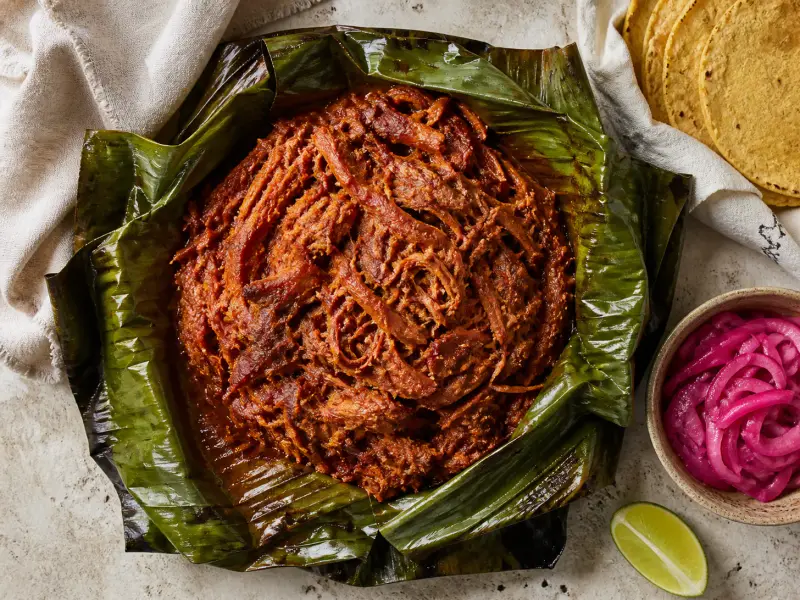 Cochinita Pibil
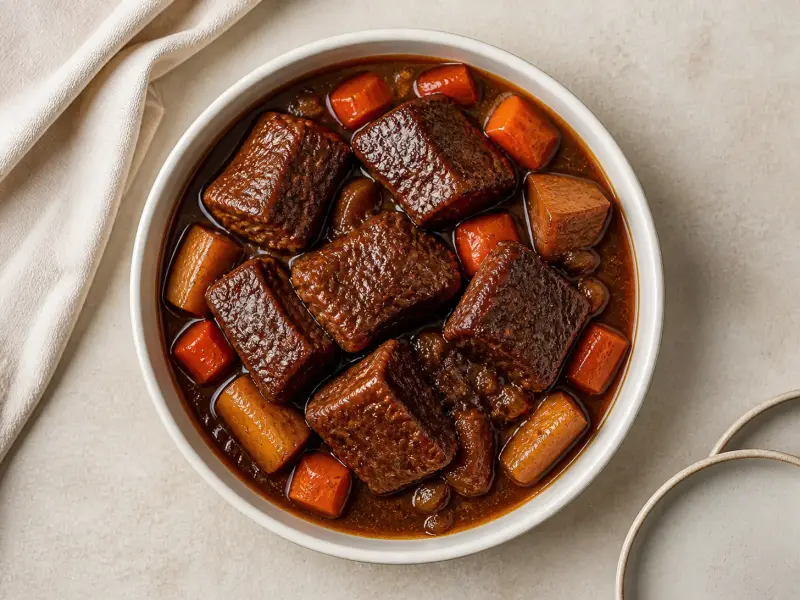 Slow-Braised Beef Shin
 Steak Diane
 Slow-Cooked Beef Ragu