Tagliatelle al Ragù
Tagliatelle al ragù
Tagliatelle al ragù — from tagliare, to cut.
Bolognese ragù cooked for three hours with milk and a little wine, served on fresh tagliatelle rather than spaghetti, which is what Bologna actually does.
- Prep
- 25 min
- Cook
- 3 hr
- Total
- 3 hr 25 min
- Serves
- 6
- Revisions
- 5
Allergens
- Celery
- Cereals containing gluten
- Milk
- Sulphites
Named from the ingredients as written, including those carried in from sub-recipes. This is not a guarantee — check the labels on what you actually buy, and note that a product’s recipe can change.
Ingredients
Serves
Method
Heat the oil and butter in a heavy casserole over medium heat.
Add the onion, carrot and celery and cook gently for 15 minutes, until soft and sweet without browning.
Add the pancetta and cook for 5 minutes, until its fat has run.
Raise the heat and add half the beef and pork, breaking it up, and cook for 6-8 minutes until browned rather than grey. Lift it out and repeat with the rest.
Return all the meat to the pan.
Pour in the milk and simmer, stirring now and then, until it has cooked away almost completely, about 15 minutes.
Add the wine and do the same again, about 10 minutes.
Stir in the tomato puree, the tomatoes and the salt, and add 200ml water.
Bring it to the barest simmer, with a bubble breaking every second or two, and set the lid slightly ajar.
Cook for 3 hours, stirring every half hour and adding a splash of water whenever it looks dry.
The ragù is ready when the fat has separated and sits glossy on the surface.
Taste for salt.
Cook the tagliatelle in well-salted boiling water for 2-3 minutes, until it floats and is just tender.
Drain it, reserving a mugful of the water, and fold it through the ragù in the pan over low heat, loosening with a little pasta water.
Serve with grated parmesan.
Nobody has rated this recipe yet.
Sign in to rate this recipe. One rating per person, and you can change it.
What to expect
- Taste
Meat first, and sweet rather than sharp — which is the thing that surprises anyone expecting a tomato sauce. Three hours reduces the soffritto into something genuinely sweet, and the milk adds a lactic softness that rounds off every edge. Pancetta brings salt and a cured depth. The wine has almost entirely evaporated and what it leaves is acidity and a faint sweetness rather than any recognisable wine flavour. The tomato is present as background acidity and umami and does not taste of tomato at all in the finished sauce. There is no garlic, no herbs, no chilli and no oregano, which is worth stating because their absence is deliberate. Salt is the only seasoning and it needs to be judged at the end, after three hours of reduction. Parmesan at the table brings the sharpness the pot deliberately lacks.
- Aroma
Soffritto first, sweet and vegetal, for the first quarter hour. Browning meat after that, which is the loudest moment. Then milk, which smells surprisingly strong as it reduces. And then three hours of something slow and deep and meaty that fills a house — a smell more like a roast than like a pasta sauce.
- Texture
Velvety, which is the whole aim. Three hours breaks the mince down past the point of granularity into something soft and unified, and the milk contributes to that as well as to the flavour. Against it, fresh tagliatelle is soft and slightly chewy with a porous surface that holds sauce far better than a smooth extruded pasta does. There is no crunch anywhere and none is wanted.
- Sound
Almost nothing for three hours, and silence is the correct state — a bubble breaking every second or two is the target and anything more energetic is too hot. The browning stage is the loud part, and the fresh pasta going into boiling water is the last sound before the plate.
- How the flavour moves
Sweetness first, from the soffritto and the milk. Then the meat across the whole middle, savoury and deep. Acidity arrives late and quietly. The finish is long and fatty and slightly sweet, and it is the Parmesan grated at the table that cuts it — without cheese the dish is noticeably heavy, which is why the cheese is not optional in practice. Across a plate it becomes progressively richer.
- Serve it
Hot, in warm bowls. It holds heat well because of its density and its fat.
- Goes with
A Sangiovese, or a Lambrusco — the real dry Lambrusco of Emilia-Romagna, which is a serious wine and is what Bologna actually drinks with this. Parmesan, which is from thirty miles away and is part of the dish. Bread. A sharply dressed green salad afterwards, which is the traditional structure and supplies the acid. Where it fails is next to anything else rich, and with white wine, which it flattens.
Cook's notes
- Difficulty
Easy and very long. Nothing in it is difficult; what it requires is a willingness to spend fifteen minutes on the soffritto, browning the meat in two batches, and then three hours of leaving it alone.
- Cost
Moderate. Two kinds of mince and pancetta, and it feeds six with leftovers.
- Equipment
A heavy casserole with a lid — heavy matters, because three hours at a bare simmer in a thin pan means constant catching. A pan wide enough to toss the finished pasta in.
- When to make it
Weekends, cold weather, and the day before you want to eat it.
- Best season
None. It is a winter dish by temperament.
- You know it is done when
The recipe gives the right cue and it is the only reliable one: the ragù is ready when the fat separates and sits glossy on the surface. Before that it looks wet and slightly grey; after it, dark, thick and unified, with an orange sheen. It should be the colour of terracotta rather than the colour of tomato.
- And it feels like
Thick enough to hold its shape on a spoon, with the meat broken down into something almost velvety rather than in distinct grains.
- Food safety
Three hours of simmering puts it far past any threshold. Cool it quickly if you are keeping it, rather than leaving a large hot pot on the stove.
- Where it goes wrong
Adding the milk after the wine or the tomatoes, which curdles it. Browning the meat in one batch, which steams it grey. Rushing the soffritto. Too much tomato, which turns it into a different sauce. Too high a simmer, which reduces it to dryness in an hour and leaves the meat tough. Adding garlic and herbs, which is not a fault exactly but makes something else. And serving it on top of the pasta rather than folding it through.
- If it does go wrong
Grey and granular meat: browned in too crowded a pan. Curdled after the milk: it went in after the acid, and it will mostly cook out over three hours. Dry: add water, a splash at a time, and lower the heat. Thin after three hours: raise the heat and reduce with the lid off. Bland: salt at the end, and check the soffritto was cooked long enough — this sauce is more often under-sweetened by a short soffritto than under-seasoned. Sharp: it needs longer, and a splash of milk at the end will round it.
- Making it ahead
Strongly recommended. It is better on the second day and it freezes perfectly, so the honest way to cook this is to make a double batch on a Sunday and have five more dinners in the freezer.
- Keeping it
Four days in the fridge and it is better on day two. This is a dish worth making a day ahead on purpose.
- Reheating
Very well, with a splash of water. It expects to be reheated.
- Freezing
Three months and it survives perfectly. Freeze it in portions; it is one of the most useful things to have in a freezer.
- Leftovers
Excellent. In a lasagne, which is its other traditional home in Bologna, or on polenta, or baked with béchamel.
- Scaling it
Doubles well in a large enough casserole. The browning is the only stage that takes proportionally longer, since it must be done in batches regardless.
- Substitutions
White wine is traditional here and red is very common; white gives a cleaner result and red a deeper one, and neither is wrong. Pancetta can be unsmoked bacon at some cost in delicacy. Fresh tagliatelle is the point of the dish and dried tagliatelle or pappardelle is a reasonable substitute; spaghetti is not, for reasons the story section explains. Whole milk cannot be replaced by cream, which is richer and does not do the same tenderising job.
- Dietary swaps
Not adaptable. Contains cereals containing gluten, milk, celery and sulphites, all declared. Not vegetarian, vegan, gluten-free or dairy-free.
- Shopping for it
Coarse beef mince with a decent fat content, not the extra-lean kind. Pancetta rather than bacon if you can. Fresh tagliatelle, which is worth buying from an Italian shop or making. Real Parmigiano Reggiano, which is a protected name and a genuinely different product from generic hard cheese.
- Keeping the cost down
Coarse mince from a butcher is better than lean supermarket mince and often cheaper. Making a double batch costs almost nothing extra in time and halves the effective cost per meal. Save Parmesan rinds in the freezer and drop one into the pot for the three hours — free flavour from something usually thrown away.
- Sustainability
Beef is the highest-impact ingredient in this collection. Against that, 750g of mixed mince feeds six substantially and the dish freezes, so nothing is wasted. Using more pork and less beef lowers the footprint meaningfully and changes the dish very little.
- Nutrition
Around 780 calories a serving with pasta and cheese. It is a substantial plate: high in protein, high in fat, and the vegetables in the soffritto disappear entirely. As a way of feeding six people on 750g of meat it is reasonably efficient.
- Worth it?
Worth it, and worth doing at double quantity. Three hours sounds like a lot until you notice that forty minutes of it is yours and the rest is a pot on a low heat. What comes out is genuinely different from what most people mean by bolognese — sweeter, meatier, barely tomatoey — and it freezes into five more dinners. Put the milk in first.
Where it comes from
- Origin
Bologna, in Emilia-Romagna.
- Also called
Ragù alla bolognese, served on tagliatelle. The word ragù comes from the French ragoût, which is worth knowing — it points at the dish's eighteenth-century, French-influenced origins among the Italian nobility rather than in a peasant kitchen.
- Said out loud
ta-lya-TEL-leh al ra-GOO.
- What the name means
Ribbon pasta with meat sauce. Tagliare is to cut, and tagliatelle are cut ribbons.
- History
The dish is younger and grander than its reputation suggests. Ragù in Italy descends from French ragoût and enters Italian cooking through aristocratic kitchens in the eighteenth century; the first printed recipe recognisably related to this one is Pellegrino Artusi's, in his enormously influential 1891 cookbook, and his version is smaller and simpler than the modern one. The formalisation came in 1982, when the Accademia Italiana della Cucina lodged an official recipe with the Bologna Chamber of Commerce, and again in 2023 when it was revised. Bologna has done the same for its tagliatelle: a golden reference ribbon is held at the Chamber of Commerce, and the specified width is a little over eight millimetres cooked, defined as a precise fraction of the height of the city's Asinelli tower. That is either delightful or absurd depending on temperament, and it is real.
- Why it matters
It is the dish that Bologna is known for and the dish Bologna is most annoyed about, because spaghetti bolognese — a thing that does not exist in Italy — has become one of the most widely cooked meals in the world under the city's name. The mayor of Bologna has publicly complained about it. The complaint is narrower than it sounds: nobody objects to a mince and tomato sauce on spaghetti, only to it being called bolognese.
- When it is eaten
Sundays and family lunches. It is a dish built around having an afternoon.
- The traditional way
Two things. The milk, added before the acidic ingredients and cooked away completely, which tenderises the meat and rounds the sauce — added after the wine or the tomato it would curdle. And the very long, very low cook with the lid ajar, which reduces rather than steams.
- How it changed
Outside Italy it changed beyond recognition: more tomato, less time, garlic and herbs added, and spaghetti underneath. Inside Italy it has changed rather little, though the 2023 revision of the official recipe adjusted the cuts of meat permitted and formally allowed pancetta, which had been argued about.
- Regional variations
Ragù napoletano is an entirely different thing — large pieces of meat rather than mince, cooked for hours in a much more tomato-heavy sauce, with the meat served as a separate course afterwards. Every Italian region has a ragù and most of them look nothing like this one.
- How this version differs
It is close to the official recipe with pork mince alongside beef and a modest amount of tinned tomato. Where it is more explicit than most is on the order of milk and wine, and on the fat-separating cue that tells you when three hours are up.
- Sources and credit
The 1982 lodging with the Bologna Chamber of Commerce and its 2023 revision are matters of record, as is Artusi's 1891 recipe.
Related recipes
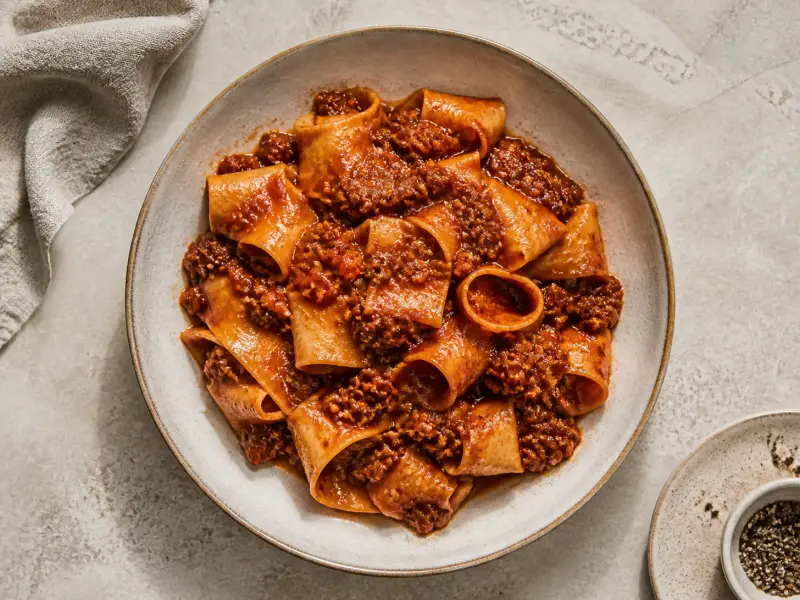 Slow-Cooked Beef Ragu
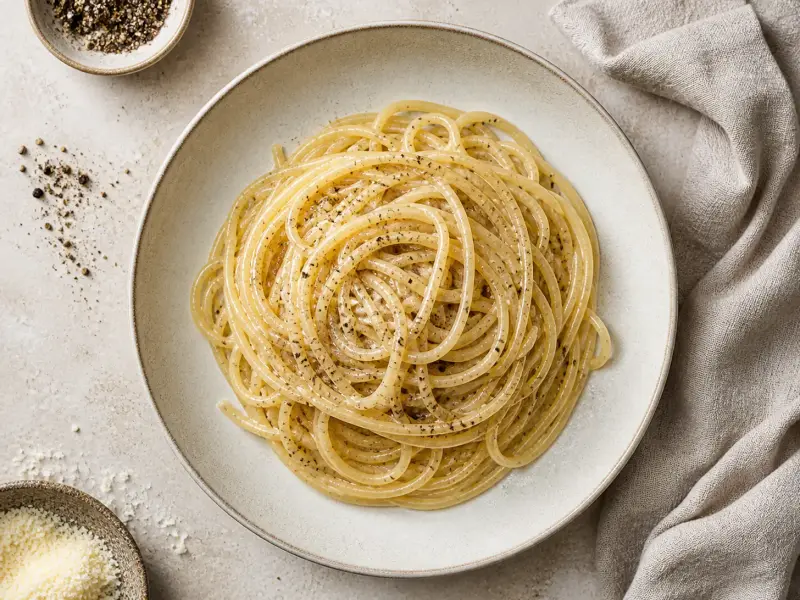 Cacio e Pepe
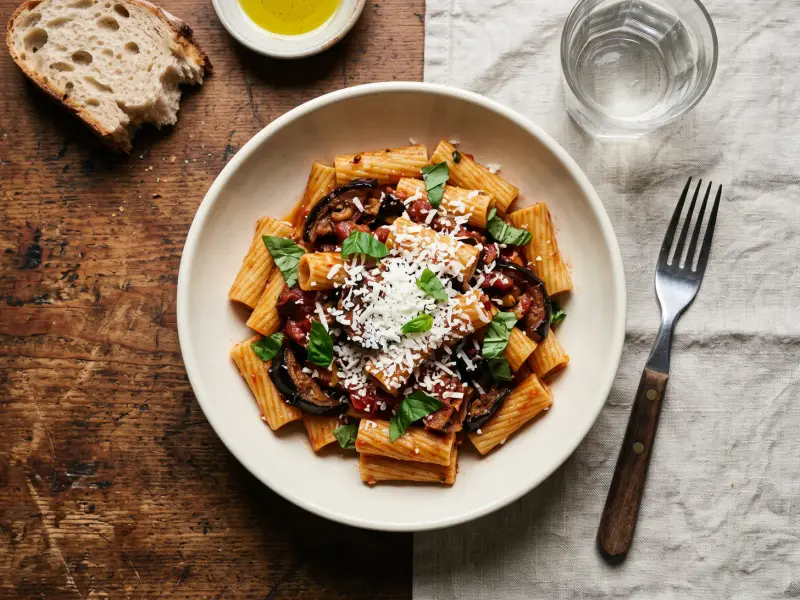 Pasta alla Norma
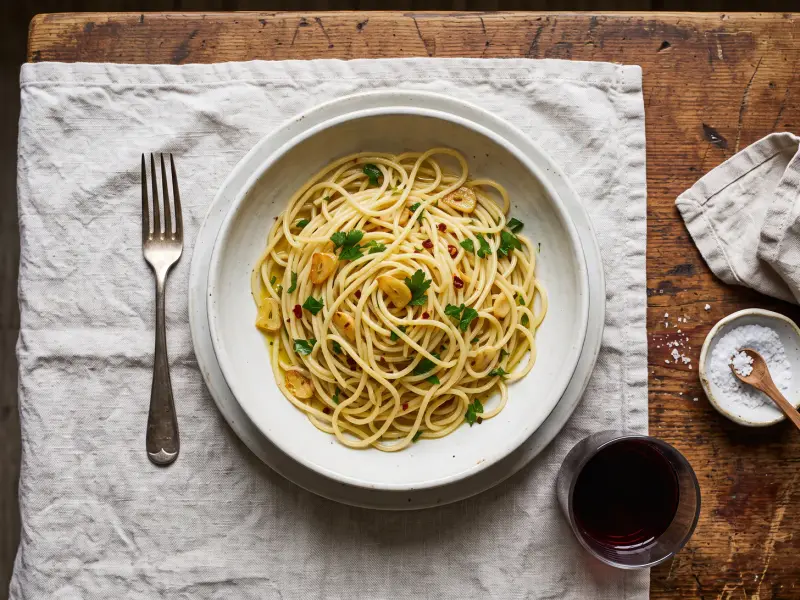 Spaghetti Aglio e Olio
 Baked Lasagne
 Classic Margherita Pizza
Categories
Cuisines
Courses & dish types
Main ingredients