Poached Eggs
Eggs slid into barely moving water, with an honest account of what the vinegar and the whirlpool do and do not fix.
- Prep
- 10 min
- Cook
- 10 min
- Total
- 20 min
- Serves
- 2
- Revisions
- 5
Allergens
- Cereals containing gluten (via Everyday White Tin Loaf)
- Eggs
- Milk
- Sulphites
Named from the ingredients as written, including those carried in from sub-recipes. This is not a guarantee — check the labels on what you actually buy, and note that a product’s recipe can change.
Ingredients
Serves
Method
Fill a wide, deep pan with the 2 litres of water and bring it to the boil.
Crack each egg into a small cup, one at a time, so a shell fragment or a broken yolk can be dealt with before it reaches the pan.
Set a fine sieve over a bowl and tip one egg into it.
Let the loose watery white run through for 10-15 seconds, until only the thick white clinging to the yolk is left in the mesh.
Slide the sieved egg back into its cup and do the same with the rest.
Do not skip the sieve on eggs more than a few days old. That thin outer white is the part that shreds into rags in the water, and taking it out is the single thing that makes a poached egg compact.
Turn the heat down until the water is barely moving, around 80-85C/175-185F: steam coming off it, a thin stream of bubbles at the base, nothing breaking the surface hard.
Hold it there. A pan left at a rolling boil batters the egg apart before the white has set, and neither vinegar nor stirring rescues it.
Stir in the vinegar.
Be clear about what the vinegar does, since it is argued about more than it deserves. Acid makes egg white set a little faster, so it firms the outside of the egg slightly. It does nothing for an egg that was already old and loose, and a tablespoon in two litres is about the most you can add before it starts to taste of it and toughen the surface.
Skip the whirlpool unless you are poaching a single egg. Stirring the water into a vortex does wrap the white around the yolk, but the second egg destroys the spin, and it is no substitute for the sieve.
Lower the lip of a cup to the surface of the water and let the egg roll out, rather than dropping it in from a height.
Add the others the same way, spacing them around the pan and remembering the order they went in.
Poach for 3 minutes for a fully liquid yolk, or 4 minutes for one that is thick but still flows.
Toast the bread and butter it while the eggs cook.
Lift each egg out with a slotted spoon in the order it went in.
Press the white with a fingertip: it should feel set and slippery all over, with the yolk shifting underneath like a soft bag.
Rest the loaded spoon on a folded tea towel for a few seconds before it goes anywhere near the plate. Water carried across on the underside of an egg soaks the toast to paste within seconds.
Trim any straggling white away with a knife.
Set two eggs on each slice of buttered toast.
Finish with the ground peppercorns and a pinch of flaky salt.
Serve straight away, since a poached egg goes on setting in its own heat.
Poach them ahead if you are feeding a crowd: cook them 30 seconds short, lift them into a bowl of cold water, refrigerate for up to a day, and reheat for 60 seconds in hot water that is nowhere near boiling.
Nobody has rated this recipe yet.
Sign in to rate this recipe. One rating per person, and you can change it.
What to expect
- Taste
Plain and clean, carrying the mild, faintly sulphurous richness of a properly fresh egg without any masking flavour — the point of the technique is protecting that plainness rather than adding anything to it, which is why butter, pepper and salt are added only at the very end.
- Aroma
A very mild, faintly savoury egg smell, barely noticeable over the smell of the warm buttered toast underneath it.
- Texture
A tender, just-set white giving way to a yolk that either flows freely or holds a soft, thick shape depending on the poaching time chosen — the contrast between the two textures within one egg is the whole appeal of the dish.
- Sound
Very quiet — the faintest simmer in the pan, and a soft give under a fork as the yolk breaks and starts to run across the toast.
- How the flavour moves
The mild, clean egg flavour of the white registers first, and the richer, more concentrated flavour of the yolk arrives once it breaks and runs, which is really the point at which the dish delivers its main flavour rather than the white doing much work on its own.
- Serve it
Served hot, immediately, since the egg continues to set in its own heat the longer it sits and a cooled poached egg is a noticeably firmer, less appealing thing.
- Goes with
Buttered toast is the classic pairing; poached eggs also sit well on dishes far from the brunch table, from Turkish çılbır to Vietnamese phở, where they contribute the same soft-yolk richness to a savoury base.
Cook's notes
- Difficulty
Easy once the sieve step is understood, though the water temperature needs real attention rather than being left to a rolling boil.
- Cost
Low — eggs and bread are the only real ingredients.
- Equipment
A wide, deep pan, a fine sieve set over a bowl, and small cups to hold each cracked egg.
- When to make it
Breakfast or brunch, whether a quick weekday version or a more considered weekend one for a few people.
- Best season
None; available year round.
- You know it is done when
The white should look uniformly set and opaque all over, with no translucent, undercooked patches remaining.
- And it feels like
Pressed gently with a fingertip, the white should feel set and slightly slippery all over, with the yolk shifting underneath like a soft, loosely held bag rather than a firm solid.
- Food safety
Using the freshest eggs available reduces the risk of a loose, watery white that trails apart in the water; standard food safety practice around lightly cooked eggs applies, particularly for anyone in a vulnerable group.
- Where it goes wrong
- Skipping the sieve on an egg that is more than a few days old, leaving ragged trails of thin white in the water.
- Poaching at a rolling boil rather than a bare simmer, which batters the egg apart before it can set.
- Relying on the vinegar or a whirlpool to fix an egg that was simply too old or under-prepared.
- Plating an egg straight from the water without draining it briefly, which soaks the toast underneath to paste.
- If it does go wrong
Ragged, trailing whites: the egg was not sieved first, or was simply too old — sieving is the fix, not more vinegar. Egg breaking apart in the water: the water is at too vigorous a simmer or boil; turn the heat down until only a thin stream of bubbles rises. Toast gone soggy under the egg: the egg was not drained on a tea towel before plating.
- Making it ahead
Eggs can genuinely be poached ahead for a crowd, cooked 30 seconds short, cooled in iced water, refrigerated for up to a day, and reheated briefly in hot but not boiling water just before serving.
- Keeping it
Best cooked fresh and eaten immediately, since a poached egg continues to set gently in its own residual heat even after it is lifted from the water.
- Reheating
Eggs can be poached slightly underdone, cooled in iced water, refrigerated for up to a day, and reheated for about 60 seconds in hot water that is nowhere near boiling — a genuine and reliable way to poach ahead for a crowd.
- Freezing
Not suitable in any form; the texture does not survive freezing.
- Leftovers
None worth keeping beyond the make-ahead method described above, since a poached egg has no useful shelf life once fully cooked and cooled to room temperature.
- Scaling it
Scales by cooking eggs in a single wide pan with room to spare for each one, spacing them out and tracking the order they went in so each can be retrieved at the right time — a whirlpool is only worth attempting for a single egg, since a second one added destroys the spin anyway.
- Substitutions
Any mild vinegar can stand in for white wine vinegar in the same small quantity; using considerably more than a tablespoon in two litres of water starts to affect the taste and toughen the egg's surface rather than improving the result further.
- Dietary swaps
Contains eggs, milk (from the butter) and sulphites (commonly in the vinegar). Can be made dairy free by leaving the butter off the toast; naturally low in other allergens beyond that.
- Shopping for it
The freshest eggs available make a genuine difference here, since a fresh egg has a much smaller proportion of loose, watery white than an older one, and poaches into a tighter, less ragged shape even before sieving.
- Keeping the cost down
One of the cheapest possible cooked breakfasts, needing only eggs and bread beyond pantry basics.
- Sustainability
Choosing free-range or higher-welfare eggs is a meaningful, low-cost decision given how few ingredients the dish otherwise needs.
- Nutrition
A good source of protein with minimal added fat beyond the butter on the toast.
- Worth it?
A simple technique let down more often by an old egg and a too-vigorous simmer than by any lack of skill, and genuinely fixable once the sieve and the temperature are both taken seriously.
Where it comes from
- Origin
Europe broadly; no single country or region can claim the technique's invention.
- Also called
Poached egg.
- What the name means
From the French pocher, to pocket, describing the way the white gathers and folds around the yolk as it cooks in water.
- History
Poaching eggs in water appears in European cookery writing from the medieval period onward with no traceable single origin, reflecting how old and widespread the basic technique of cooking an egg in hot liquid is. Eggs Benedict, the dish most responsible for making the poached egg a restaurant and brunch fixture, has two competing New York origin stories from the 1890s — one crediting Delmonico's, one crediting the Waldorf Astoria — and neither account has been settled by any documented evidence, so both should be presented as disputed claims rather than one being favoured over the other.
- Why it matters
A café and hotel breakfast fixture across Britain, Ireland, North America and Australia, usually served on toast or under hollandaise; poached eggs also appear well outside brunch food, topping dishes such as Turkish çılbır and Vietnamese phở.
- When it is eaten
Breakfast and brunch primarily, though its appearance in savoury dishes from other cuisines shows it is not tied exclusively to that meal.
- The traditional way
Cracking the egg into a cup first, sieving away the loose thin white, and sliding it gently into barely simmering rather than boiling water.
- Regional variations
Served on toast or under hollandaise in the Anglophone brunch tradition; served over çılbır, a garlicky yoghurt base, in Turkey; and floated in broth-based dishes like phở in Vietnam — the same technique applied to very different final dishes.
- Sources and credit
No individual is credited with the technique itself; the two competing claims around Eggs Benedict's invention are presented here as genuinely unresolved rather than settled in favour of either establishment.
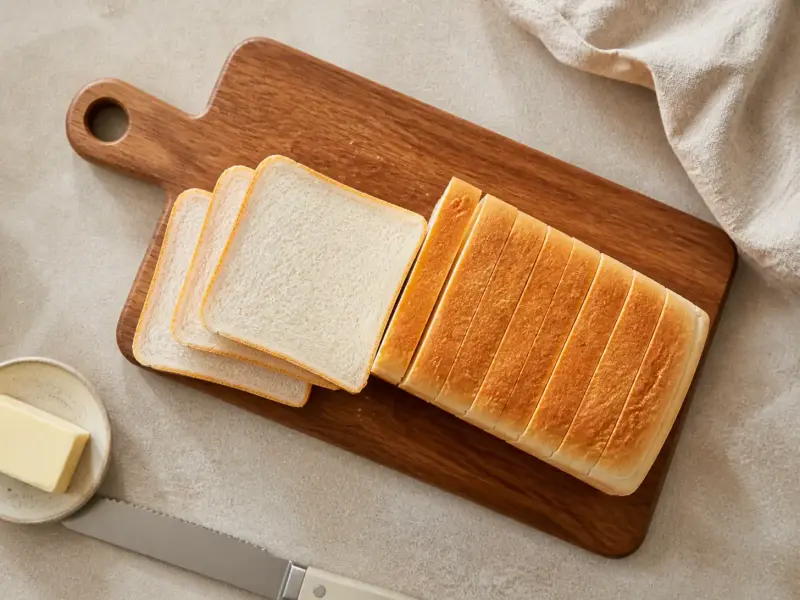 Everyday White Tin Loaf
 Classic French Omelette
 Creamy Oat Porridge
 Mushrooms on Toast
 Semolina Kasha
 Soft Scrambled Eggs
 Basil Pesto