Soft Scrambled Eggs
Eggs cooked slowly over low heat and stirred constantly, so they set as small soft curds instead of dry rubbery sheets.
- Prep
- 5 min
- Cook
- 10 min
- Total
- 15 min
- Serves
- 2
- Revisions
- 5
Allergens
- Cereals containing gluten
- Eggs
- Milk
Named from the ingredients as written, including those carried in from sub-recipes. This is not a guarantee — check the labels on what you actually buy, and note that a product’s recipe can change.
Ingredients
Serves
Method
Beat the eggs in a bowl until the colour is even and no ribbons of white are left.
Leave them unsalted for now. Fine salt sitting on raw egg starts breaking the protein down, and the curds loosen and weep water in the pan.
Toast and butter the bread before the pan goes on the heat. Curds this loose tighten to rubber in the two minutes it takes to make toast afterwards, and they cannot be brought back.
Melt half the butter in a non-stick pan over low heat, low enough that it foams without colouring.
Pour in the eggs.
Stir constantly with a spatula, scraping the base and the corners so no part of the egg sits still against the hot metal.
Lift the pan off the heat for a few seconds whenever the curds start setting quickly. Too much heat drives the water out of the egg, and you get big squeaky curds sitting in a puddle.
The vanilla custard in this collection is the same problem in liquid form, since both are egg protein setting, and both go from right to grainy in a matter of seconds.
Cook for 5-8 minutes, until the eggs come together as small soft curds with a glossy sauce still running between them.
Pull the pan off the heat while they still look slightly underdone — they carry on setting in the residual heat for another half minute.
Stir in the remaining cold butter, which cools the eggs and stops the cooking.
Season with fine salt to taste.
Tip them onto warm plates beside the toast straight away, since eggs held in the pan keep tightening.
Finish with flaky salt and the ground peppercorns.
Scatter the chives over.
The shakshuka in this collection sets its eggs on the same principle, gently and just short of done, and it fails in the same place.
A soft milk roll from this collection, split while it is still warm, takes them in place of the toast.
Nobody has rated this recipe yet.
Sign in to rate this recipe. One rating per person, and you can change it.
What to expect
- Taste
Plain, clean and genuinely eggy, since nothing masks the flavour — the slow cook and late salting are both specifically about protecting that flavour and texture rather than adding to them. The cold butter stirred in at the end adds a light, unmelted richness right at the finish, and flaky salt on top gives occasional bursts of saltiness rather than an even seasoning through the dish.
- Aroma
A warm, mild, buttery smell as the eggs cook slowly, with a fresh, faintly oniony lift from the chives scattered at the end.
- Texture
Soft, small curds suspended in a barely set, glossy liquid — genuinely different from a firm, dry British-style scramble, and the entire point of the method.
- Sound
A quiet, steady scraping of the spatula against the pan, with almost no sizzle since the heat stays low throughout.
- How the flavour moves
A mild, clean egginess is present from the first bite through to the last, with the cold butter's richness registering as a light coating right at the finish and the flaky salt delivering occasional, uneven bursts of seasoning rather than a flat, even salted taste throughout.
- Serve it
Served hot, and eaten immediately, since the curds continue tightening the longer they sit even off the heat.
- Goes with
Buttered toast, or a soft milk roll split while still warm — something plain, warm and absorbent that can carry the loose eggs without competing with them.
Cook's notes
- Difficulty
Easy in terms of ingredients, but genuinely dependent on patience and constant attention over low heat — it is easy to rush and easy to ruin by walking away.
- Cost
Low. Eggs, butter and bread.
- Equipment
A non-stick pan and a flexible spatula; nothing else.
- When to make it
Breakfast or brunch.
- Best season
None; eggs and butter are available year round.
- You know it is done when
Small, soft curds suspended in a glossy sauce that is still visibly loose and running between them, rather than a uniform, dry mass.
- And it feels like
Should feel loose and barely set when it comes off the heat — if it looks fully cooked in the pan, it will be overcooked and rubbery by the time it reaches the plate.
- Food safety
Standard care with eggs; this method, while deliberately loose, still fully cooks the eggs rather than leaving them raw — the curds are set, just softly and unevenly, rather than undercooked.
- Where it goes wrong
- Salting the eggs before cooking, which breaks down the protein early and leaves the curds weeping water.
- Cooking over heat that is too high, which sets the eggs into large, dry, rubbery curds rather than small, soft ones.
- Leaving the pan on the heat continuously rather than lifting it off whenever the curds start setting quickly.
- Letting the finished eggs sit in the pan rather than serving immediately, which lets them keep tightening.
- If it does go wrong
Rubbery or dry curds: the heat was too high, or the eggs were left too long either in the pan or before serving. Watery eggs: they were salted too early, before cooking, drawing water out of the protein. Eggs set too quickly to control: the pan was too hot to begin with — start again over genuinely low heat.
- Making it ahead
Not a make-ahead dish in any sense; it must be cooked and eaten immediately to have the intended texture.
- Keeping it
Not suitable for storing; this dish has no useful leftover form, since reheating firms the curds into something quite different from the intended texture.
- Reheating
Not recommended; the dish is specifically built to be eaten the moment it leaves the pan.
- Freezing
Not suitable in any form.
- Leftovers
None worth keeping; any leftover portion is better discarded than reheated, since reheating changes the texture entirely.
- Scaling it
Scales reasonably by simply using more eggs and a larger pan, though very large batches make the constant, careful stirring harder to manage — this dish is best kept to a few portions at a time.
- Substitutions
Any unsalted butter works the same way; there is no meaningful substitute for the cold butter stirred in at the end, since it is specifically what stops the residual heat continuing to cook the eggs once they are off the pan.
- Dietary swaps
Contains eggs and milk (from the butter and, likely, the toast). Dairy free with a neutral oil in place of the butter, accepting a slightly less rich finish; vegetarian as written.
- Shopping for it
Fresh eggs, since freshness affects both flavour and how the whites and yolks behave when beaten and cooked slowly.
- Keeping the cost down
Eggs are already one of the most economical sources of protein, and this dish needs nothing beyond eggs, butter and bread to be genuinely good.
- Sustainability
Choosing free-range or higher-welfare eggs is a meaningful, low-cost decision relative to the overall price of the dish.
- Nutrition
A good source of protein and fat, with the finishing butter adding a little further richness on top of what the eggs themselves provide.
- Worth it?
A small piece of technique — patience, constant movement, and pulling off the heat before it looks done — that separates a genuinely excellent version of an everyday dish from a mediocre one.
Where it comes from
- Origin
France, in terms of the specific slow-stirred method, though the dish is eaten across Europe and the Americas.
- Also called
Oeufs brouillés.
- History
Escoffier's 1903 Le Guide Culinaire set down this slow, constantly stirred method as standard French professional practice, and it has been taught essentially unchanged in professional kitchens since, making it one of the more precisely documented techniques in this whole collection.
- Why it matters
A standard breakfast dish across Europe and the Americas, with the French style specifically prized in professional and fine-dining contexts for its loose, custard-like texture, in deliberate contrast to the firmer, drier British and American style most home cooks default to.
- When it is eaten
Breakfast and brunch, in both home and restaurant settings.
- The traditional way
Constant, gentle stirring over low heat, with the pan lifted off the heat entirely whenever the curds threaten to set too quickly, and cold butter stirred in at the very end specifically to halt the cooking.
- Regional variations
The French style is deliberately loose and creamy, as described here; the British and American style is cooked considerably firmer and drier, generally over higher heat and with less constant stirring — the two are recognisably the same dish treated according to opposite instincts about doneness.
- Sources and credit
Auguste Escoffier is the documented codifier of this specific method, which is unusually well attributed for a dish this simple.
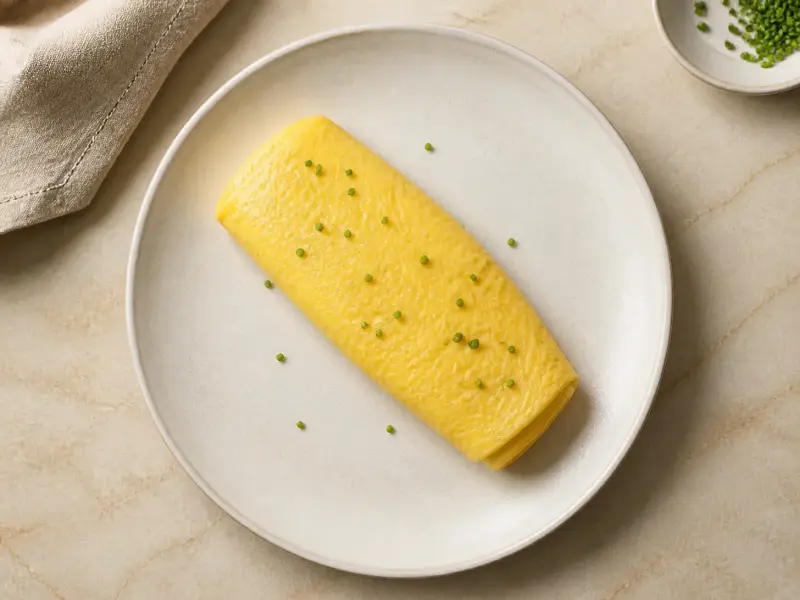 Classic French Omelette
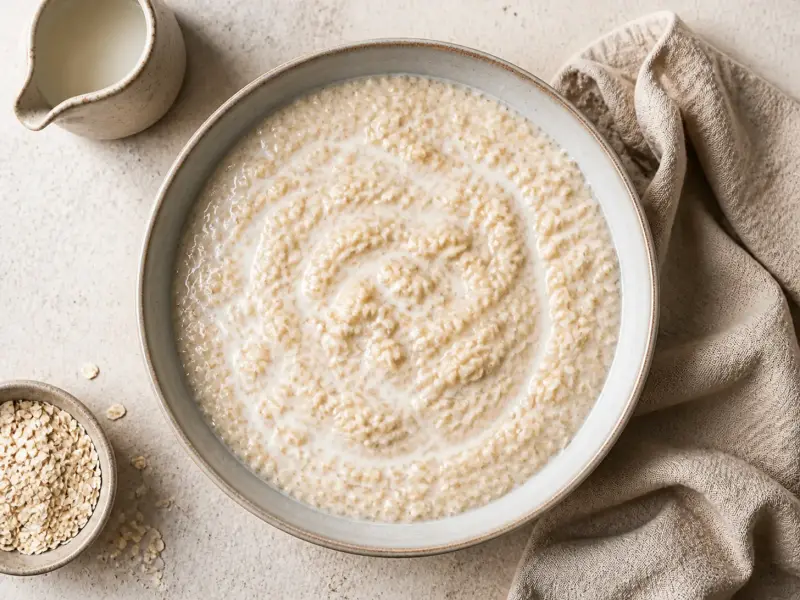 Creamy Oat Porridge
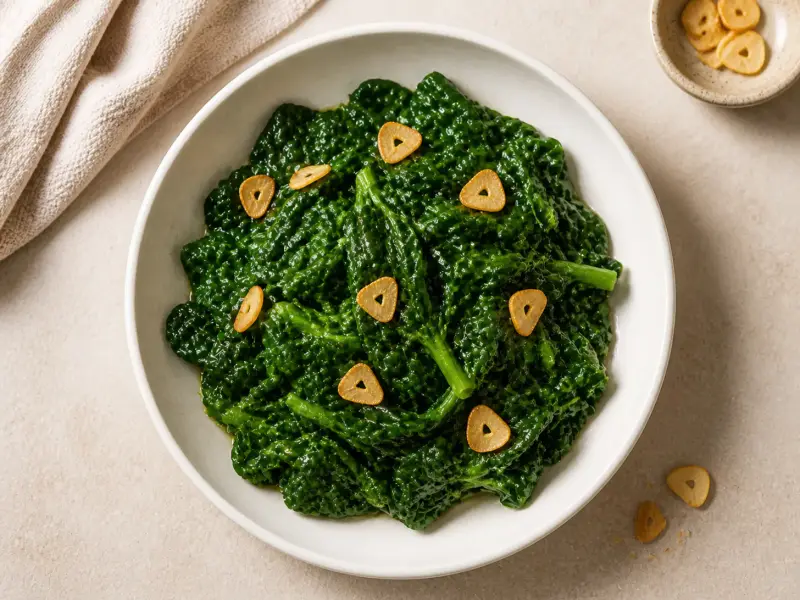 Garlicky Greens
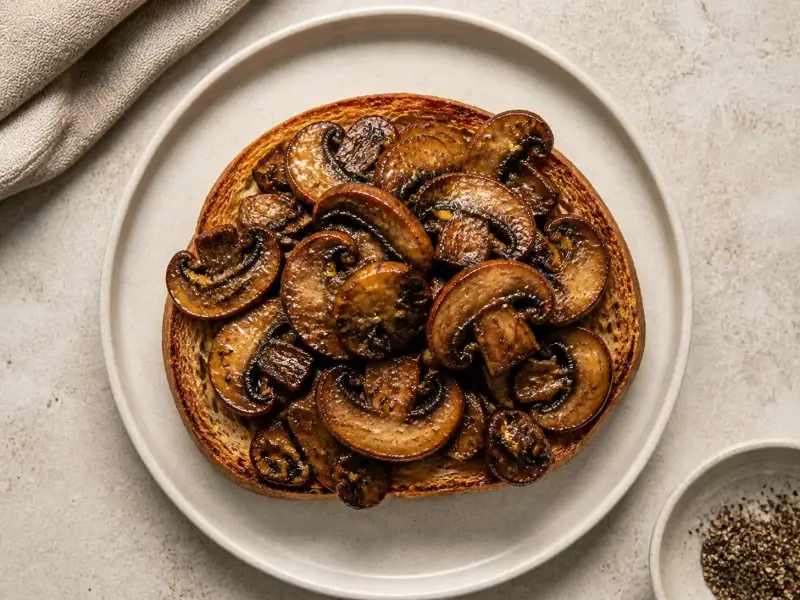 Mushrooms on Toast
 Poached Eggs
 Semolina Kasha