Braised Red Cabbage
Shredded red cabbage cooked slowly with apple, vinegar and spice, the acid going in early so the colour stays bright.
- Prep
- 20 min
- Cook
- 1 hr 30 min
- Total
- 1 hr 50 min
- Serves
- 8
- Revisions
- 5
Allergens
- Milk
- Sulphites
Named from the ingredients as written, including those carried in from sub-recipes. This is not a guarantee — check the labels on what you actually buy, and note that a product’s recipe can change.
Ingredients
Serves
Method
Melt the butter in a wide heavy pan with a lid, over medium-low heat.
Cook the sliced onion for 8-10 minutes, stirring now and then, until it is soft and translucent with no colour on it.
Add the shredded cabbage a handful at a time, turning each one through the butter before the next goes in.
Pour in the 60ml of cider vinegar and turn it through the cabbage straight away.
Get the acid in before anything else. The colour is anthocyanin, which reads pH like a dye: bright magenta in an acid pan and a flat blue-grey in a neutral one, and cabbage that has gone grey in the first ten minutes stays grey for the rest of the braise.
Stir in the grated apple, the brown sugar, the cloves, the cinnamon, the bay leaf and the 5g of fine salt.
Pour in the 150ml of water.
Bring it to a simmer, then turn the heat as low as it will go.
Cover and cook for 60-75 minutes, stirring every 20 minutes and scraping the base as you go.
Add a splash of hot water any time the base looks dry. There is sugar in this pan, a dry patch catches and burns within a minute or two, and one scorched corner flavours the whole pot.
Test a shred at the hour mark. It should collapse under the side of a spoon while still holding its shape.
Take the lid off and cook for a final 10-15 minutes, until the liquid has reduced to a glossy syrup clinging to the shreds.
Fish out the bay leaf and the cloves.
Season with the ground peppercorns.
Taste it, and add a splash more vinegar if it reads flat rather than sharp. A long braise blunts acid and brings the sweetness forward.
Serve hot, or cool it within two hours and refrigerate it. It is better on the second day, once the spice has moved through the shreds.
Reheat it in a covered pan over low heat until it is steaming hot right through.
Nobody has rated this recipe yet.
Sign in to rate this recipe. One rating per person, and you can change it.
What to expect
- Taste
Sweet and sharply sour at once, from the apple and brown sugar against the cider vinegar, with warm background notes from the clove and cinnamon rounding off what would otherwise be a purely sweet-and-sour flavour.
- Aroma
Warm spice — clove and cinnamon — rising through a base of sweet cooked apple and cabbage, with a distinct vinegar tang.
- Texture
Tender shreds that still hold together and offer a little resistance, coated in a thick, clinging syrup rather than sitting in a thin liquid.
- Sound
A slow, occasional bubble through the long covered braise, with a slightly more active simmer once the lid comes off to reduce the liquid.
- How the flavour moves
Sweetness from the apple and sugar arrives first, sharp vinegar cuts through the middle of the mouthful, and the warm spice notes of clove and cinnamon are what linger at the finish.
- Serve it
Served hot, straight from the pan, though it also reheats well and can be served the next day.
- Goes with
Roast pork, goose and game especially, and the standard partner to a British Christmas dinner alongside other traditional sides.
Cook's notes
- Difficulty
Easy — the technique is mostly about timing when the acid goes in and keeping the pan from drying out.
- Cost
Cheap — a single cabbage and a couple of apples.
- Equipment
A wide, heavy pan with a lid.
- When to make it
Christmas and winter cooking especially, though suitable alongside roast pork or game at any time of year.
- Best season
Red cabbage is available year round but is at its best and cheapest through autumn and winter.
- You know it is done when
The cabbage should stay a bright magenta throughout rather than fading to grey, and the finished liquid should look glossy and syrupy rather than thin and watery.
- And it feels like
A shred should collapse easily under the side of a spoon while still holding its shape, rather than turning to mush or staying crunchy.
- Food safety
No particular hazard beyond ordinary care with a long, covered braise; a dry patch in the pan can scorch and burn within a couple of minutes given the sugar content, so it needs checking regularly.
- Where it goes wrong
- Adding the vinegar late rather than early, letting the colour fade to grey before the acid has a chance to fix it.
- Using an aluminium or untreated iron pan, both of which dull the colour compared with enamel, stainless steel or glass.
- Letting the pan run dry during the long covered braise, risking scorching given the sugar content.
- Serving it immediately rather than making it ahead, missing the improvement a day's rest gives the flavour.
- If it does go wrong
Dull, grey-brown colour rather than bright magenta: the vinegar went in too late, or the wrong type of pan was used. Scorched flavour: the pan ran dry at some point during the covered braise and needed a splash of water. Flat flavour: taste and add a little more vinegar at the end, since a long braise blunts acid and brings sweetness forward.
- Making it ahead
One of the best make-ahead sides available — it keeps for days refrigerated and freezes well, and many consider it better after a day's rest.
- Keeping it
Keeps for several days refrigerated and is widely considered better on the second day, once the spice has had time to move through the shreds.
- Reheating
Reheat gently in a covered pan over low heat until steaming hot right through.
- Freezing
Freezes very well, making it one of the more practical make-ahead sides for a large meal such as Christmas.
- Leftovers
Good reheated as a side, and often improves in flavour rather than declining over the days after it is made.
- Scaling it
Scales up easily in a wider pan, keeping the same ratios of cabbage to apple, sugar and vinegar.
- Substitutions
Cider vinegar can be replaced with red wine vinegar for a slightly different but equally acidic result; white vinegar works but is sharper and less rounded.
- Dietary swaps
Contains milk and sulphites. Vegan if a plant-based butter substitute is used in place of the dairy butter.
- Shopping for it
Any firm red cabbage works well; no specialist sourcing is needed.
- Keeping the cost down
One of the cheapest sides in the collection, given a single cabbage feeds eight.
- Sustainability
A low-cost, long-storing vegetable that keeps well before cooking and freezes well after.
- Nutrition
A good source of fibre and vitamin C from the cabbage, with a moderate amount of sugar from the sweetened braise.
- Worth it?
A dish that rewards understanding one piece of food chemistry — when the acid goes in — more than any complex technique, and one of the few Christmas sides genuinely better made a day or two ahead.
Where it comes from
- Origin
Germany, Denmark and the Low Countries, adopted as a British Christmas side through the 20th century.
- Also called
Rotkohl in German; rødkål in Danish.
- Said out loud
Not applicable.
- What the name means
A literal, descriptive name in each language — red cabbage.
- History
No origin date exists for this dish, which is old home cooking across Germany, Denmark and the Low Countries, recorded in those countries' own culinary traditions well before it became a standard part of the British Christmas table through the 20th century.
- Why it matters
A defining winter side dish in Germany, Austria and Denmark, and now a fixture of British and Irish Christmas cooking specifically.
- When it is eaten
Winter cooking generally in its home countries, and specifically a Christmas dish in Britain and Ireland.
- The traditional way
Adding the acid early in the cook to fix the cabbage's colour, and a long, slow braise that develops sweetness from the apple and sugar against the vinegar's sharpness.
- How it changed
Little has changed about the core technique; British adoption of the dish added it firmly to the Christmas table specifically, where in its countries of origin it is more of a general winter side.
- Regional variations
German and Danish versions vary in the specific spicing used and sometimes include redcurrant jelly or a splash of red wine for added depth.
- Sources and credit
No individual is credited with the dish; it belongs to German, Danish and Low Countries home cooking generally.
 Buttery Mashed Potato
 Creamed Spinach
 Crunchy Cabbage Slaw
 Garlicky Greens
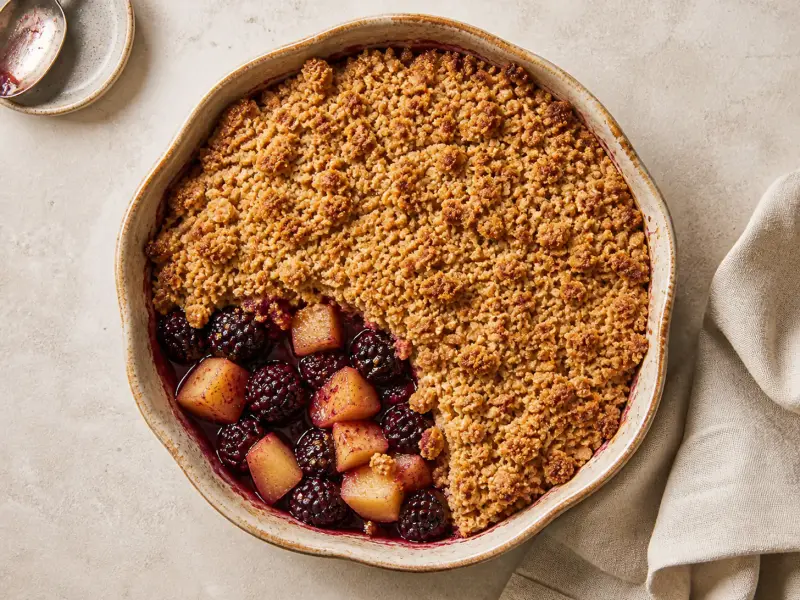 Apple and Blackberry Crumble
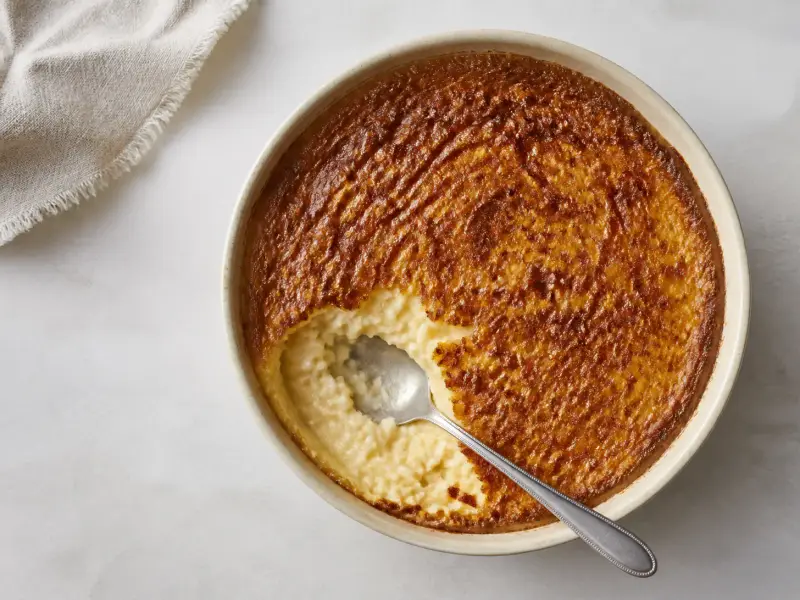 Baked Rice Pudding