Buttery Mashed Potato
Potatoes steam-dried in the pan and pushed through a ricer, then beaten with butter before the hot milk goes in.
- Prep
- 15 min
- Cook
- 30 min
- Total
- 45 min
- Serves
- 6
- Revisions
- 5
Allergens
- Milk
Named from the ingredients as written, including those carried in from sub-recipes. This is not a guarantee — check the labels on what you actually buy, and note that a product’s recipe can change.
Ingredients
Serves
Method
Put the potato pieces in a large pan and pour over the 2 litres of cold water, which should cover them by about 3cm.
Start them in cold water rather than boiling. Potatoes dropped into a boiling pan cook from the outside in, and the edges are already collapsing into the water by the time the centres are done.
Stir in the 16g of fine salt.
Bring the pan to a boil, then turn it down to a steady simmer.
Cook for 18-22 minutes, until a knife slides into a piece and the piece falls off the blade under its own weight.
Drain the potatoes in a colander.
Return them to the empty pan over the lowest heat.
Shake the pan every 30 seconds for 2-3 minutes, until the steam has stopped and the surfaces look floury and dry.
Do not skip the drying. Wet potato needs far more butter and milk before it tastes of anything, and past a point it simply turns to soup.
Warm the milk in a small pan until it steams, and keep it hot.
Pass the potatoes through a ricer or a mouli into a warm bowl.
Never use a food processor or a stick blender. The blades tear the starch granules open and release free starch, and the mash turns to grey glue inside ten seconds with no way back.
Beat in the butter a few cubes at a time with a spatula, waiting for each addition to melt before the next goes in.
Keep the butter ahead of the milk. Fat coats the starch first and holds the mash smooth when the liquid arrives; milk first gives a wetter, stickier mash for the same weight of both.
Pour in the hot milk in three additions, folding rather than beating.
Stop when the mash slumps slowly off the spoon and holds a soft peak.
Season with the nutmeg and the ground white peppercorns.
Taste and add fine salt.
Serve hot in a warm dish, since mash stiffens as it cools and a cold bowl sets it on contact.
Loosen anything that has been standing with a splash more hot milk, stirring as little as you can.
Serve it under something with sauce to spare. The slow-braised beef shin in this collection is what it is for.
Nobody has rated this recipe yet.
Sign in to rate this recipe. One rating per person, and you can change it.
What to expect
- Taste
Rich and buttery, with a clean, plain potato flavour underneath that the ricer preserves far better than a blender, and a warm, faint spice note from the nutmeg.
- Aroma
Warm milk and melted butter, with a sharp, faintly sweet lift from the freshly grated nutmeg.
- Texture
Completely smooth and lump-free, soft enough to slump gently off a spoon without being runny.
- Sound
A quiet simmer during cooking, and a soft, steady scraping sound as the ricer is worked and the butter is beaten in.
- How the flavour moves
Butter's richness arrives first, plain potato flavour fills out the middle, and nutmeg's warm spice is the last thing to register at the finish.
- Serve it
Served hot, in a warmed dish, since it stiffens noticeably as it cools.
- Goes with
Anything with a good sauce or gravy to spare — the slow-braised beef shin and other braises in this collection are exactly what it is built for.
Cook's notes
- Difficulty
Easy, though a ricer rather than a blender genuinely changes the result.
- Cost
Cheap — potatoes, butter and milk.
- Equipment
A ricer or a mouli, and a large pan.
- When to make it
Any everyday meal calling for a comforting starch side.
- Best season
None; potatoes are available year round.
- You know it is done when
The riced potato should look dry and floury before butter and milk go in, and the finished mash should hold a soft peak rather than pooling flat or standing stiffly upright.
- And it feels like
Smooth and completely lump-free from the ricer, with a soft, slumping consistency rather than either stiff or soupy.
- Food safety
No particular hazard beyond ordinary care with dairy and hot liquids.
- Where it goes wrong
- Using a food processor or stick blender instead of a ricer, which turns the mash to glue within seconds.
- Starting the potatoes in already-boiling water rather than cold, cooking them unevenly.
- Adding cold milk rather than warming it first, which can make the mash stiffer and less silky.
- Skipping the steam-drying step, leaving the potato too wet to properly take up the butter and milk.
- If it does go wrong
Gluey, gummy mash: a blender or processor was used instead of a ricer. Watery mash: the potatoes were not steam-dried enough before ricing, or too much milk was added too quickly. Uneven cooking: the potatoes were started in already-boiling water rather than cold.
- Making it ahead
Best made close to serving, though it can be kept warm briefly in a covered dish or reheated gently the next day with extra milk.
- Keeping it
Keeps for up to two days refrigerated, though it stiffens considerably and needs loosening with milk on reheating.
- Reheating
Reheat gently in a covered pan over low heat with a splash of milk, stirring as little as possible; microwaving reheats unevenly and can leave it gluey in patches.
- Freezing
Can be frozen, though the texture is noticeably softer and slightly more watery on thawing than freshly made mash.
- Leftovers
Good reheated, or reworked into potato cakes or a topping for a pie.
- Scaling it
Scales up easily by keeping the same ratios of potato to butter and milk, using a larger pan and ricing in batches if needed.
- Substitutions
Floury potatoes such as Maris Piper or King Edward are genuinely important here — a waxy variety holds together differently and gives a denser, gluier mash regardless of technique.
- Dietary swaps
Contains milk. A dairy-free butter alternative and a plant-based milk both adapt the dish reasonably, though the flavour and richness change noticeably.
- Shopping for it
Floury potatoes specifically — Maris Piper or King Edward — rather than a waxy variety, which gives a noticeably different, denser result.
- Keeping the cost down
A very cheap side dish overall, even with a generous quantity of butter, since potatoes themselves are inexpensive.
- Nutrition
A source of carbohydrate from the potato, with a significant amount of fat from the butter given its generous quantity here.
- Worth it?
A dish where the difference between good and great is almost entirely down to one piece of equipment — a ricer rather than a blender — and worth the small investment for anyone who makes mash regularly.
Where it comes from
- Origin
Britain and Ireland, with a distinct, richer French tradition running alongside it.
- Also called
Mash.
- Said out loud
Not applicable.
- What the name means
A literal, descriptive name for the technique.
- History
There is no origin date for mashed potato. English cookery books print instructions for mashing boiled potatoes from the middle of the 18th century, and it became a genuinely everyday food across Britain and Ireland through the 19th century. Joel Robuchon's celebrated restaurant purée, running at roughly one part butter to two parts potato, reset international expectations for how rich the dish could be made in the 1980s.
- Why it matters
One of the most fundamental everyday side dishes in British and Irish cooking, served under sausages, stews and roast meat as a matter of course.
- When it is eaten
Everyday home cooking, and a French restaurant side in far richer forms than most domestic versions.
- The traditional way
Ricing rather than blending the cooked potato to avoid rupturing the starch granules, and building the mash with butter before milk rather than the other way around, since fat coats the starch and holds the mash smooth before the liquid arrives.
- How it changed
Robuchon's version, at roughly one part butter to two parts potato, is dramatically richer than a typical domestic recipe and is widely cited as having changed professional expectations of what mashed potato could be.
- Regional variations
The French tradition of pommes purée pushes the butter ratio far higher than British home cooking typically does, while remaining recognisably the same basic technique.
- Sources and credit
No individual is credited with inventing mashed potato; Robuchon is specifically credited with resetting expectations of how rich a version of the dish could be, rather than inventing the dish itself.
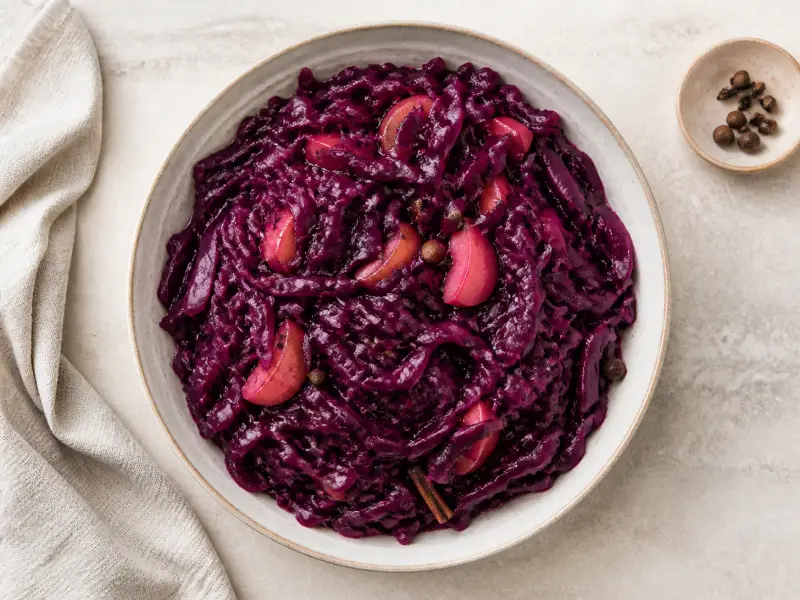 Braised Red Cabbage
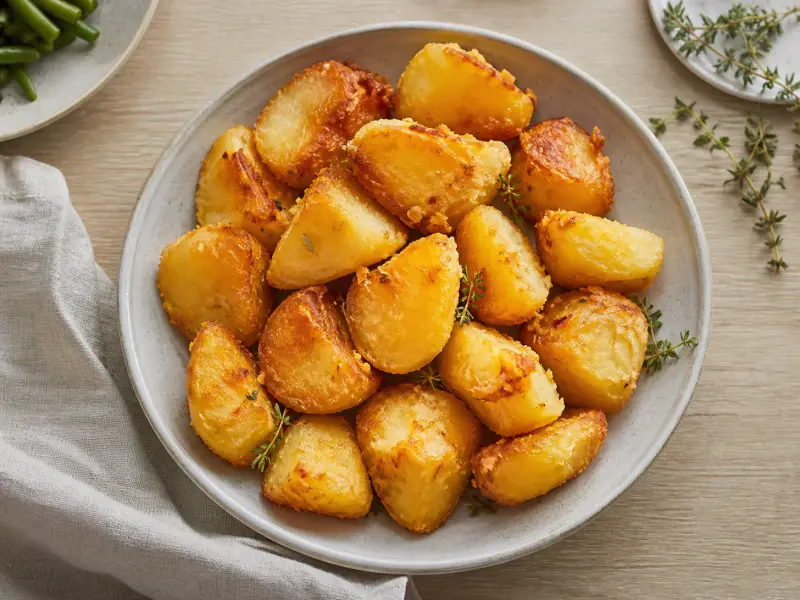 Crisp Roast Potatoes
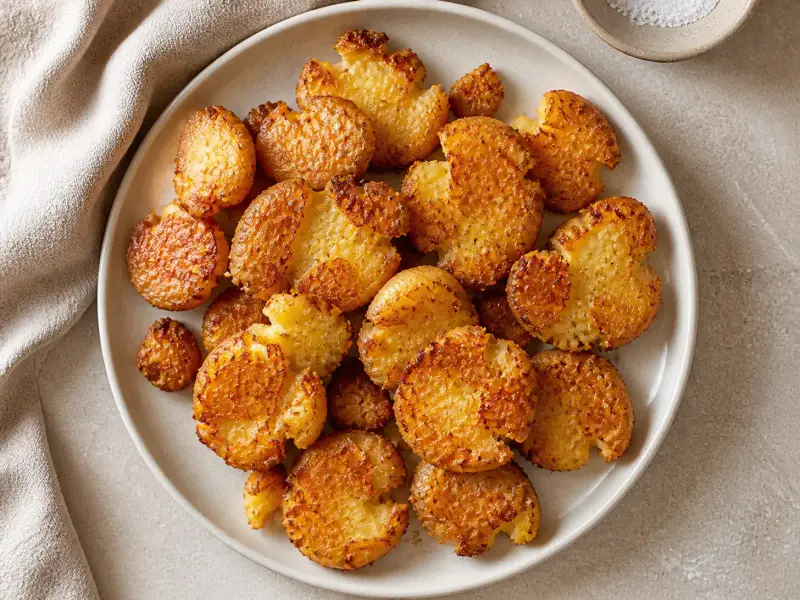 Crushed Roast Potatoes
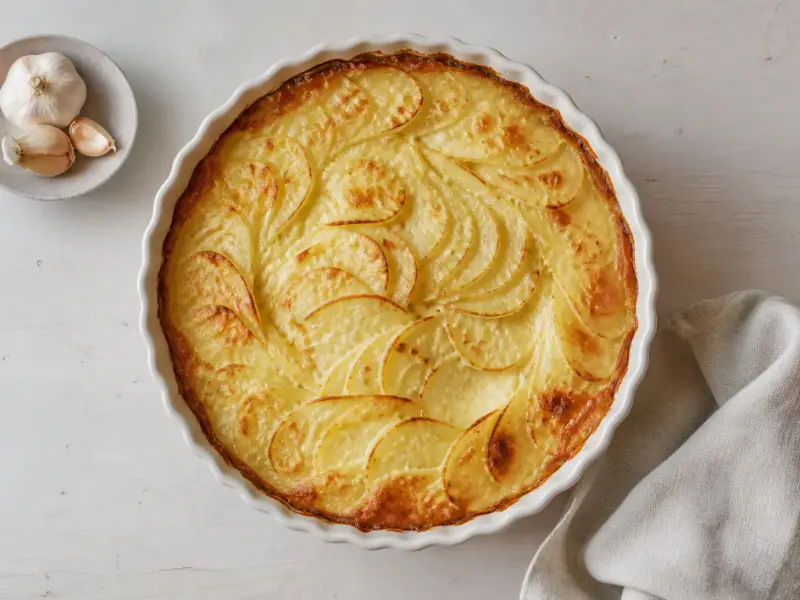 Gratin Dauphinois
 Patatas Bravas
 Vinegret