Patatas Bravas
Patatas bravas
Patatas bravas — fierce potatoes, which is a claim about the sauce and not the potato.
Twice-cooked potatoes under a smoky, faintly fierce tomato sauce — the one tapa every bar in Spain is judged on.
- Prep
- 15 min
- Cook
- 35 min
- Total
- 50 min
- Serves
- 4
- Revisions
- 5
Ingredients
Serves
Method
Put the potato chunks in cold salted water, bring to the boil and simmer for 5 minutes, then drain and leave to steam dry for 10 minutes.
While they dry, warm the olive oil in a saucepan over a low heat and cook the garlic until it is pale gold, about 2 minutes.
Take the pan off the heat before adding both paprikas and stir them through the oil. Paprika burns in seconds over direct heat and turns bitter with no way back.
Return to a low heat, add the tomatoes, vinegar, sugar and salt, and simmer for 20 minutes until thick enough to sit on a spoon.
Blend the sauce smooth and keep it warm.
Heat the sunflower oil to 140C and fry the potatoes for 8 minutes, until cooked through but still pale. Lift out and drain.
Raise the oil to 190C and fry them again for 3-4 minutes, until deep gold and crisp.
Drain on kitchen paper, salt immediately, and pile into a warm dish.
Spoon the sauce over just before they reach the table.
Nobody has rated this recipe yet.
Sign in to rate this recipe. One rating per person, and you can change it.
What to expect
- Taste
Smoke first, and it is the loudest thing in the dish. Smoked pimentón is not subtle — it tastes of woodsmoke and sweet dried pepper, and there is a tablespoon of it in a sauce for four. Behind it, tomato brings acidity and a little sweetness, sherry vinegar sharpens the whole thing, and the hot paprika gives a slow, dry heat that builds across the plate rather than hitting at the start. Garlic is sweet and mellow from its two minutes in the oil. And under all of it the potato is bland on purpose — plain, salty, fatty and crisp — which is precisely why the sauce can be as loud as it is. Salt is the seasoning that most often goes missing here: the potatoes must be salted the instant they come out of the oil, while the surface is hot and slightly oily and will take it.
- Aroma
Smoked paprika, which fills a kitchen from the moment it hits the warm oil and is the single most recognisably Spanish smell there is. Under it, frying potatoes and garlic, and a sharp vinegar note from the sauce. It is a dish that announces itself.
- Texture
The entire dish is one contrast: a crisp shell, a floury interior, and a smooth sauce over the top. Nothing else. That is why the double fry is not optional and why the sauce is blended rather than left chunky — a rough sauce competes with the crust for attention and neither wins. It is at its best for about two minutes and degrades steadily after that, which is a real argument for serving it the moment it is made.
- Sound
The frying is the whole soundtrack and it is informative. The first fry is a steady low bubbling as water leaves the potato; the second is louder and higher, and it quietens as the surface dries — when the noise drops, the crust has formed. Then the crunch, which is the point of the dish.
- How the flavour moves
Smoke first, immediately and strongly. Then vinegar and tomato acid cutting it. Then salt and fat from the potato. The chilli heat is the last thing and it accumulates — the fourth potato is hotter than the first, which is where the name comes from. The finish is smoky and dry and lasts a long time.
- Serve it
Very hot potatoes under a warm sauce. Both matter: a cold sauce on hot potatoes cools them instantly and a warm sauce does not. Earthenware helps, which is why bars serve it in a cazuela.
- Goes with
Beer, cold and plain, which is what it is drunk with in Spain. A cold fino or manzanilla. Other tapas rather than a main course — tortilla, gambas al ajillo, olives, jamón. Aioli alongside, which is standard and turns it into a different and richer dish. Where it fails is at a formal table and next to anything delicate, which the smoke obliterates.
Cook's notes
- Difficulty
Easy in technique, fiddly in logistics: a pan of boiling water, a pan of sauce and a litre of hot oil all going at once, and the potatoes have to reach the table crisp. The paprika step is the only place with a real risk of ruin.
- Cost
Low. Potatoes, tinned tomatoes and spices. The litre of frying oil is the largest outlay and it can be strained and reused.
- Equipment
A deep heavy pan for the oil and a thermometer, or a fryer. Frying twice at two different temperatures is the method, and guessing the temperature is how the first fry ends up browning and the second ends up greasy. A blender for the sauce. A pan for boiling.
- When to make it
With drinks, before dinner, any time of year.
- Best season
None.
- You know it is done when
After the first fry the potatoes should be pale — barely coloured, and soft enough to yield to a squeeze. After the second they should be deep gold with a visibly rough, blistered surface. The sauce is ready when it holds its shape on a spoon rather than running off, and it should be brick red rather than bright.
- And it feels like
A crust that gives audibly and a fluffy, almost dry interior. If the inside is dense the potato was waxy or the first fry was too short.
- Food safety
A litre of oil at 190°C is the most dangerous thing in this collection. Never fill a pan more than a third, never add wet potatoes, keep a lid within reach, and never move a pan of hot oil. Steam-dried potatoes are a safety measure as well as a texture one.
- Where it goes wrong
Paprika into a hot pan, which is the fault that ruins the sauce invisibly — it looks the same and tastes acrid. Waxy potatoes. Skipping the steam-dry, so wet potatoes hit hot oil, which is both dangerous and bad for the crust. One fry instead of two. Tossing the potatoes in the sauce rather than spooning it over. And salting the potatoes late, once the surface has cooled and stopped taking it.
- If it does go wrong
Sauce bitter: burnt paprika, and there is no fix — it is twenty minutes to make again. Sauce too sharp: a little more sugar. Potatoes soft: the second fry was too cool, or they sat too long before serving. Greasy: the oil was below temperature, so the potato absorbed instead of sealing — a thermometer solves this permanently. Not crisp despite everything: the potatoes were waxy.
- Making it ahead
The sauce, entirely — a week in the fridge or three months frozen, and it is arguably better after a day. The potatoes can be boiled, dried and given their first fry several hours ahead and left at room temperature; the second fry then takes four minutes to order, which is exactly how a bar does it.
- Keeping it
The sauce keeps a week in the fridge and freezes for three months. The potatoes keep for about four minutes and are not worth saving.
- Reheating
The sauce, yes. The potatoes, no — a reheated fried potato is a soft one.
- Freezing
Sauce only. It freezes very well.
- Leftovers
Spare brava sauce is genuinely useful: on eggs, on roast vegetables, stirred into rice, or as the base of a quick stew.
- Scaling it
The sauce scales freely. The frying does not — a fryer crowded with cold potatoes drops fifty degrees and everything goes greasy. Fry in batches of no more than a third of the oil's surface.
- Substitutions
Smoked paprika is the one ingredient with no substitute. Ordinary sweet paprika will make a perfectly nice tomato sauce that is not brava sauce; the smoke is the flavour, and it comes from the peppers being dried over oak fires in La Vera rather than from anything added. Sherry vinegar can be replaced by red wine vinegar at some cost. Sunflower oil for frying is right — olive oil is expensive at a litre and its flavour is largely destroyed at 190°C.
- Dietary swaps
Vegan, vegetarian, dairy-free, gluten-free and nut-free as written. The traditional Madrid flour-based sauce is not gluten-free; this tomato version is.
- Shopping for it
Smoked paprika from La Vera if you can find it — sweet and hot both, since they are different products. Floury potatoes: Maris Piper, King Edward, Russet, or in Spain a variety sold specifically for frying. Sherry vinegar, which is worth owning. Tinned tomatoes rather than fresh, since they are being cooked down for twenty minutes.
- Keeping the cost down
Strain the frying oil through a sieve when it cools and keep it in a jar; it will do this job three or four times before it starts to taste tired. Make double the sauce and freeze half. Buy smoked paprika in a tin from a Spanish grocer rather than a supermarket jar, where it costs several times as much for a smaller amount.
- Sustainability
Nothing notable, beyond reusing the frying oil, which is worth doing.
- Nutrition
Around 390 calories a serving. Most of it is the oil absorbed during frying, and a correctly executed double fry absorbs considerably less than a badly executed single one — hot oil seals the surface, cool oil soaks in. The sauce itself is almost calorie-free.
- Worth it?
Worth it, and worth doing properly rather than approximately. The two faults that ruin it in restaurants — soggy potatoes and a timid, scorched or sweet sauce — are entirely avoidable at home, and the sauce can be made a week ahead so that the only work on the night is four minutes of frying. Get the pimentón right and the rest follows.
Where it comes from
- Origin
Madrid, in the twentieth century. It is not an old dish.
- Also called
Patatas bravas, or papas bravas in parts of Spain and across Latin America — papa is the older Quechua-derived word and patata the Castilian one.
- Said out loud
pa-TAH-tas BRAH-bas. The Spanish v and b are the same sound.
- What the name means
Fierce potatoes. Bravas means fierce or wild and refers to the sauce rather than the potato — a bar that serves a mild version is, strictly, not serving bravas.
- History
The dish is usually traced to Madrid bars in the middle of the twentieth century, and more than one establishment has claimed it without any of the claims being settled. The substantive historical point is about the sauce. In the Madrid tradition, salsa brava contains no tomato: it is a roux of oil and flour with paprika, stock and vinegar, thickened and sharp, and its colour comes from the pimentón alone. The tomato-based version is younger, spread with the dish, and is now what most of the world means by brava sauce — including this recipe. Both are widely served in Spain and Madrid bars will argue about it.
- Why it matters
It is the dish by which a tapas bar is judged, which is a large claim for fried potatoes and is nonetheless true. Because both components are simple, there is nowhere to hide: soggy potatoes and a sweet, timid sauce are immediately obvious, and a bar that gets bravas right usually gets everything else right.
- When it is eaten
With a drink, standing up, before dinner. It is bar food and does not translate especially well to a dinner table.
- The traditional way
Double-frying, and adding the paprika off the heat. The second is the one that separates a good sauce from a bitter one, and it is the step most home recipes omit entirely.
- How it changed
Tomato arrived and largely won. Beyond that, the accompanying aioli has become close to standard in Spain, so that a plate now often carries two sauces — which is not traditional and is a real improvement.
- Regional variations
The flour-and-paprika Madrid sauce versus the tomato one is the main division. Barcelona bars frequently serve bravas with both brava sauce and aioli, sometimes striped across the plate. Some versions use a whole dried ñora pepper rehydrated and blended in, which is excellent and closer to the older style.
- How this version differs
It is the tomato version and says so rather than claiming to be the original. It splits the paprika into sweet and hot so that the smoke and the heat can be set independently, which most recipes do not, and it is explicit about taking the pan off the heat before the paprika goes in.
- Sources and credit
No settled attribution. Several Madrid bars have claimed it and none of the claims is documented.
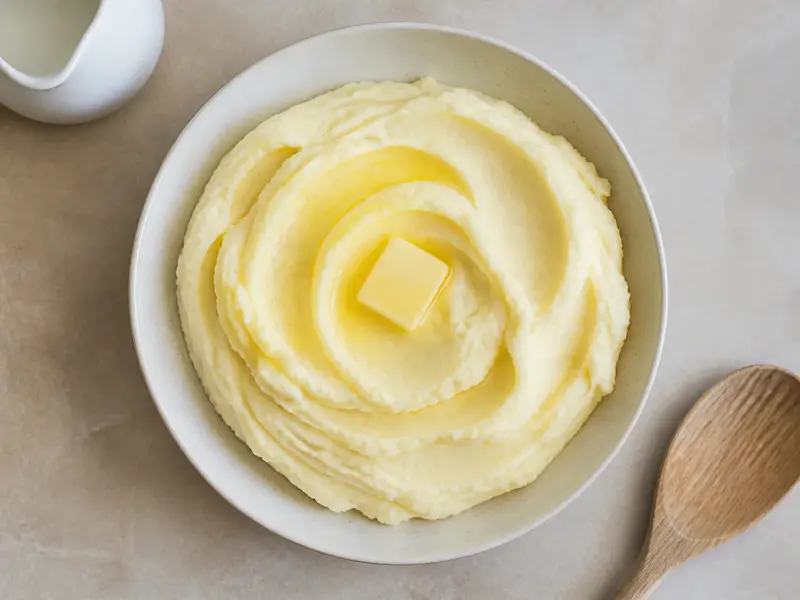 Buttery Mashed Potato
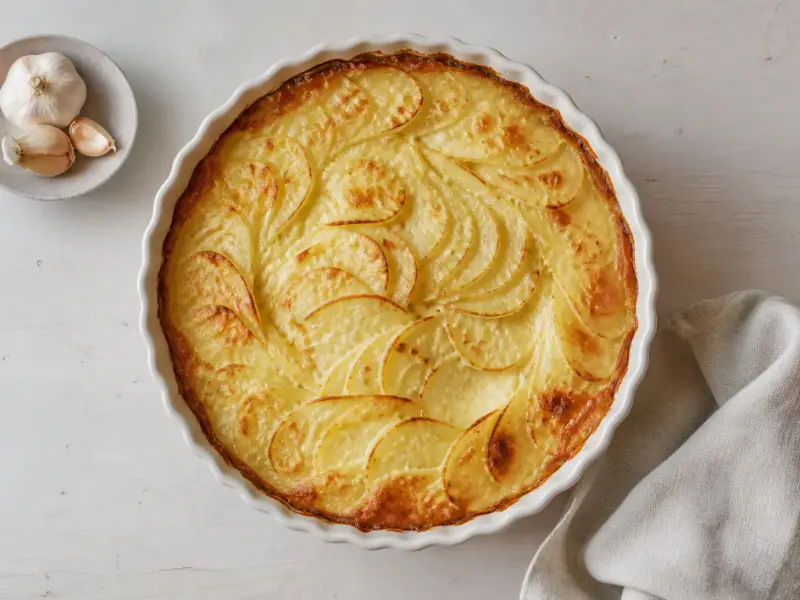 Gratin Dauphinois
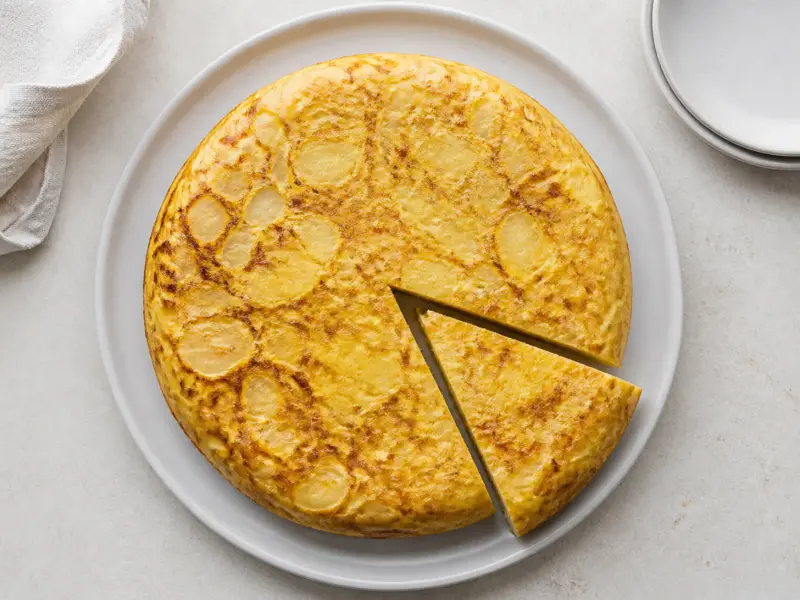 Spanish Potato Tortilla
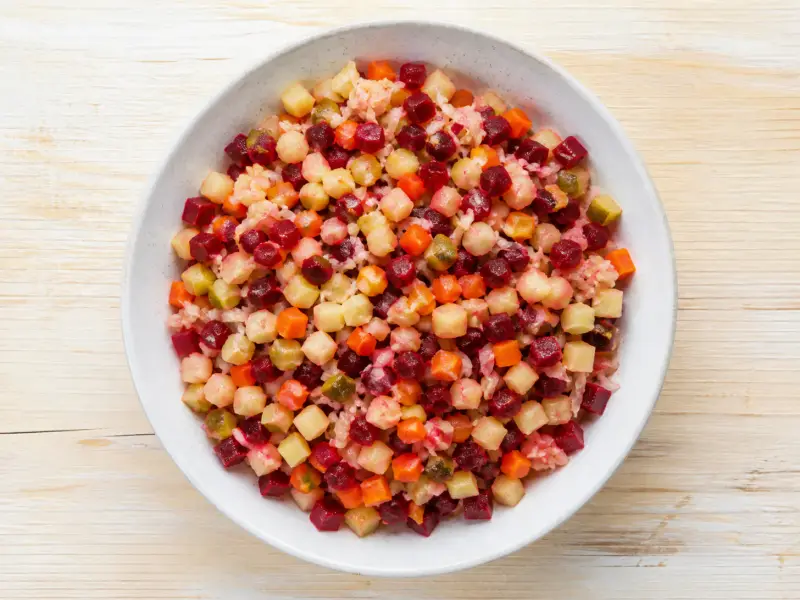 Vinegret
 Albóndigas in Almond Sauce
 Braised Red Cabbage