Albóndigas in Almond Sauce
Albóndigas en salsa de almendras
Albóndigas en salsa de almendras — albóndiga is from the Arabic al-bunduqa, the hazelnut, for the size.
Pork and beef meatballs simmered in a pale sauce thickened with fried bread and almonds rather than flour.
- Prep
- 30 min
- Cook
- 45 min
- Total
- 1 hr 15 min
- Serves
- 4
- Revisions
- 5
Allergens
- Cereals containing gluten
- Eggs
- Milk
- Nuts
Named from the ingredients as written, including those carried in from sub-recipes. This is not a guarantee — check the labels on what you actually buy, and note that a product’s recipe can change.
Ingredients
Serves
Method
Soak the breadcrumbs in the milk for 10 minutes.
Mix the pork, beef, soaked crumbs, egg, two of the garlic cloves, the parsley, salt, pepper and nutmeg with your hands until just combined. Overworking makes them springy.
Roll into walnut-sized balls and chill them for 20 minutes so they hold together.
Heat the oil in a wide pan and fry the almonds and the slice of bread until both are golden. Lift them out.
Brown the meatballs in the same oil in batches, turning until coloured all over but not cooked through. Set aside.
Cook the onion in the pan for 8 minutes until soft, then add the last garlic clove for a minute.
Pound or blend the fried almonds, bread, saffron and a splash of stock to a thick paste.
Pour the wine into the pan, scrape up everything stuck to the base and let it bubble for 2 minutes.
Stir in the almond paste, the rest of the stock and the bay leaf.
Return the meatballs, cover, and simmer gently for 25 minutes, shaking the pan occasionally.
Taste for salt. The sauce should coat a spoon; loosen with stock if it has gone past that.
Nobody has rated this recipe yet.
Sign in to rate this recipe. One rating per person, and you can change it.
What to expect
- Taste
A savoury, well-seasoned meatball against a pale, nutty sauce that tastes of toasted almond and fried bread rather than of flour or cream, with saffron giving a faint, distinct aromatic note and white wine a light acidity underneath the richness.
- Aroma
Toasted almonds and fried bread first, garlic and onion cooking down, and a faint, warm saffron note rising once the picada is stirred into the simmering sauce.
- Texture
Firm, tender meatballs in a thick, smooth sauce with real body but no graininess once properly made.
- Sound
A steady sizzle as the almonds and bread fry, then the meatballs browning, settling into a slow, gentle simmer for the final 25 minutes.
- How the flavour moves
The savoury meatball registers first, the nutty, toasted picada follows through the middle of the mouthful, and a faint saffron aroma and the wine's acidity are what linger at the finish, cutting slightly through the richness.
- Serve it
Served hot, and the sauce holds its heat well given its thickness.
- Goes with
Crusty bread to mop up the sauce, and served as a tapa alongside other small Spanish dishes or as a main course on its own.
Cook's notes
- Difficulty
Moderate — the picada technique is unfamiliar to many cooks used to a flour-based sauce, though it is not difficult once understood.
- Cost
Moderate — two minces, almonds and a modest amount of saffron.
- Equipment
A wide, deep pan and a mortar and pestle or a blender for the picada.
- When to make it
A weekend dish given the picada preparation, though it reheats well enough to make ahead for a weeknight.
- Best season
None; every ingredient is shelf-stable or standard fresh produce available year round.
- You know it is done when
The sauce should be a pale, warm colour flecked with the ground almond and bread of the picada, thick enough to coat a spoon rather than sit thin around the meatballs.
- And it feels like
The meatballs should be firm but tender rather than springy, and the sauce should have no graininess once the picada is properly pounded or blended.
- Food safety
Cut a meatball open at the end of the simmer to confirm it is cooked through with no pink remaining, since it was only browned rather than fully cooked in the frying stage.
- Where it goes wrong
- Using dry breadcrumbs in the meat mixture rather than soaking them first, giving a denser meatball.
- Cooking the meatballs through in the frying pan rather than only browning them, which leaves the sauce with none of the fond that gives it flavour.
- Skipping the picada and thickening with flour instead, which changes the character of the sauce entirely.
- Overworking the meat mixture, which makes the meatballs springy rather than tender.
- If it does go wrong
Dense, heavy meatballs: the breadcrumbs were not properly soaked, or the mixture was overworked. Thin sauce: the picada was not pounded finely enough, or too little bread and almond were used relative to the liquid. Grainy sauce: the picada needs to be blended or pounded further before it goes into the pan.
- Making it ahead
Keeps and reheats well, and is a genuinely good make-ahead dish for entertaining.
- Keeping it
Keeps for up to three days refrigerated, and the flavour is generally considered to improve after a day.
- Reheating
Reheat gently on the hob, loosening with a splash of stock or water if the sauce has thickened too much on standing.
- Freezing
Freezes well for up to three months.
- Leftovers
Good reheated as is, or the sauce alone can be used again over other simply cooked meat or vegetables.
- Scaling it
Scales up well in a wider pan; the picada quantities scale proportionally without difficulty.
- Substitutions
A mix of pork and beef mince gives more depth than either used alone, though an all-beef or all-pork version is a reasonable substitution if that is what is on hand. The fried bread and almonds in the picada have no real substitute — this is what replaces flour as the thickener, and using flour instead changes the dish's texture and character.
- Dietary swaps
Contains nuts, cereals containing gluten, eggs and milk. Not suitable for a nut allergy given the almonds are structural to the sauce rather than a garnish.
- Shopping for it
Blanched almonds and a genuine pinch of saffron are both worth sourcing specifically rather than substituting, since both give the sauce qualities nothing else quite replicates.
- Keeping the cost down
A relatively inexpensive main course given that mince and bread make up the bulk of it, with almonds and saffron as the main cost additions.
- Sustainability
A moderate amount of meat relative to the size of the finished dish, stretched by the bread and almond in the sauce.
- Nutrition
A good source of protein from the two minces, with a meaningful amount of fat from the almonds and olive oil.
- Worth it?
A dish that introduces a genuinely useful technique — the picada — that is worth learning well beyond this one recipe.
Where it comes from
- Origin
Spain, generally, with the picada technique specifically rooted in the Moorish period of Spanish cooking.
- Also called
Albóndigas en salsa de almendras.
- Said out loud
al-BON-dee-gas en SAL-sah deh al-MEN-dras.
- What the name means
Albóndiga comes from Arabic al-bunduqa, meaning hazelnut, describing the small, rounded size of the meatball; salsa de almendras means almond sauce.
- History
The picada technique that thickens this sauce — fried bread, nuts and garlic pounded to a paste — predates the widespread use of flour-thickened sauces in Spain and is generally traced to the Moorish period of the country's culinary history. The word for the meatball itself carries the same Arabic root, reflecting how deeply that period shaped Spanish cooking vocabulary as well as technique.
- Why it matters
Eaten across the whole of Spain, in small portions as a tapa and in larger ones as a main course, making it one of the more flexible dishes in everyday Spanish cooking.
- When it is eaten
Everyday tapas bars and home cooking rather than a dish tied to any particular occasion.
- The traditional way
Browning the meatballs and finishing them in the sauce rather than cooking them through in the pan, and thickening the sauce with a pounded picada rather than a flour-based roux.
- How it changed
The core technique has changed little; variation is mostly in the ratio of pork to beef and how much saffron is used.
- Regional variations
Some regions favour an all-pork version, and the amount of saffron used varies considerably depending on cost and local availability.
- Sources and credit
No individual is credited with the dish; it belongs to everyday Spanish home and tapas cooking with a documented Moorish technique at its centre.
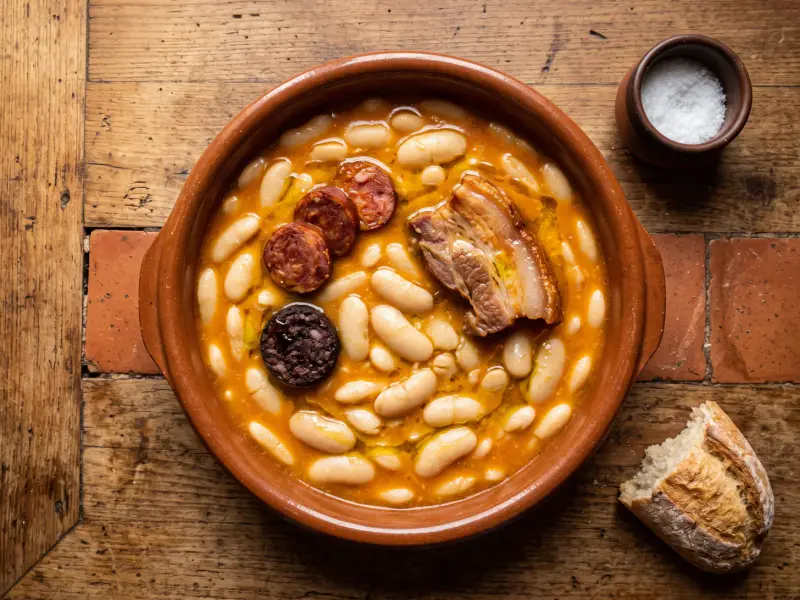 Fabada Asturiana
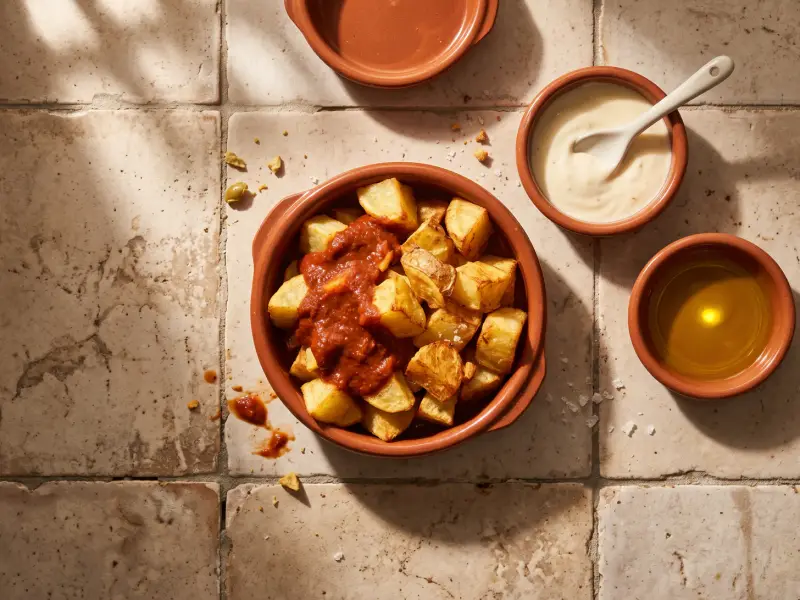 Patatas Bravas