Spanish Potato Tortilla
Tortilla de patatas
Potatoes and onion softened slowly in olive oil, then set with beaten egg in a small pan and turned out on a plate to finish.
- Prep
- 20 min
- Cook
- 40 min
- Resting
- 25 min
- Total
- 1 hr 25 min
- Serves
- 4
- Revisions
- 5
Allergens
- Eggs
Named from the ingredients as written, including those carried in from sub-recipes. This is not a guarantee — check the labels on what you actually buy, and note that a product’s recipe can change.
Ingredients
Serves
Method
Break the potato slices apart with your fingers so none of them are stuck together.
Pour the olive oil into a 20cm frying pan, which should be deep enough to cover the potatoes once they go in.
Warm the oil over medium-low heat to about 130C/265F, where a slice dropped in sits still and gives off a slow stream of small bubbles rather than sizzling hard.
Slide in the potatoes and the sliced onion.
Cook for 20-25 minutes, moving them gently with a slotted spoon every few minutes, until a slice crushes against the side of the pan with no resistance in the middle.
Keep the oil below a fry the whole time. This is a poach in oil rather than a chip pan, and browned potatoes stay firm and taste of chips where what you want is a slice soft enough to collapse into the egg.
Tip the potatoes into a colander set over a bowl and leave them to drain for 5 minutes.
Keep the drained oil. It has taken up the flavour of the potato and onion and will do the next tortilla or a pan of fried eggs.
Beat the eggs with the 6g of fine salt in a large bowl until the colour is even.
Fold the hot potatoes and onion into the eggs.
Stand the mixture for 10 minutes, stirring once, until the potatoes have drunk some of the egg and the whole thing has thickened. Skip the stand and you get a tortilla in two layers, egg around potato, rather than one thing.
Wipe the pan out and set it over medium heat with 2 tbsp of the reserved oil.
Pour the mixture in once the oil shimmers.
Stir it three or four times in the first 30 seconds, which sets the egg evenly through the potato.
Stop stirring after that and draw the setting edge away from the side of the pan with a spatula, tilting the pan so the loose egg runs underneath.
Cook for 4-5 minutes, until the sides are set, the base is pale gold when you lift an edge and only the middle still moves.
Take the pan off the heat.
Set a plate wider than the pan face down over it.
Hold the plate flat with one hand and the handle with the other, and turn the whole thing over in one committed movement, away from you.
Do it in one go. A slow, hesitant flip is how a tortilla ends up on the floor, and hot oil comes over the rim if the plate is not held flat against the pan.
Slide the tortilla back into the pan, cooked side up.
Tuck the edge under all the way round with the spatula, which is what gives it its cushion shape.
Cook for a further 3-4 minutes, until the second side is gold and the tortilla slides freely when you shake the pan.
Press the middle with a fingertip: it should give like a set custard rather than spring back. A tortilla cooked firm to the centre is dry, and juicy is the whole argument in Spain.
Slide it onto a board and rest it for 10 minutes.
Finish with flaky salt.
Cut it into wedges and serve warm or at room temperature, never straight from the fridge.
Nobody has rated this recipe yet.
Sign in to rate this recipe. One rating per person, and you can change it.
What to expect
- Taste
Egg, potato, olive oil and salt, and nothing else at all — there is no herb, no cheese and no pepper in a plain tortilla, and that austerity is why the oil matters so much. A good one tastes strongly of olive oil, sweet from the onion if it is in, and salted a little harder than seems right when hot because it is often eaten cool.
- Aroma
Warm olive oil above all, then egg. Very little carries across a room, which is part of why it is bar food eaten beside you rather than a dish announced from the kitchen.
- Texture
THE POINT OF THE WHOLE THING. The inside should be barely set and slightly loose — a wedge cut from a good tortilla slumps a little at the cut face rather than standing rigid. The potato has no bite left in it at all; it collapses. Outside, a thin pale skin, never a crust.
- Sound
None. The absence of a sizzle is how you know the oil is at the right temperature.
- How the flavour moves
Salt and olive oil arrive first, then the sweetness of the onion, then a long plain potato finish. Nothing surprises after the first bite, which is why it is eaten in quantity rather than admired.
- Serve it
Excellent hot, better at room temperature, and genuinely fine cold — one of very few egg dishes that is.
Cook's notes
- Difficulty
Two things are hard: keeping the oil below a fry, and the flip.
- Cost
Very low, apart from the olive oil — and the oil is not consumed, it is borrowed.
- Equipment
A 20cm non-stick or well-seasoned pan, a plate wider than the pan, a colander
- Where it goes wrong
Oil too hot. Skipping the stand. Under-salting because it will be eaten cool.
- Making it ahead
Made hours ahead and left at room temperature is the normal way to eat it, not a compromise.
- Scaling it
Scale by pan size rather than by quantity. A 20cm pan and six eggs is the ratio; a bigger pan needs a bigger flip and the flip is the hard part.
- Substitutions
Waxy potatoes only. Floury ones disintegrate into the oil rather than collapsing into slices.
- Dietary swaps
There is no version without egg; it is an egg dish with potato in it.
Where it comes from
- Origin
Spain, in general use by the nineteenth century. The Zumalacárregui attribution is folklore — see core.history.
- Said out loud
tor-TEE-ya in Spanish, and the double L is a Y sound. Worth noting because an English speaker may reach for tor-TILL-a, and because the Mexican flatbread of the same spelling is a different thing entirely — a film that says 'Spanish Tortilla' rather than 'Tortilla' removes the ambiguity for free.
- History
Widely eaten across Spain since at least the nineteenth century. A frequently repeated origin story credits a Carlist general, Tomás de Zumalacárregui, with inventing it in the 1830s as a cheap filling food for troops; there is no contemporary evidence for it and food historians generally treat it as folklore. Earlier written references to potato-and-egg dishes exist. Treat the general as a story people tell rather than a fact.
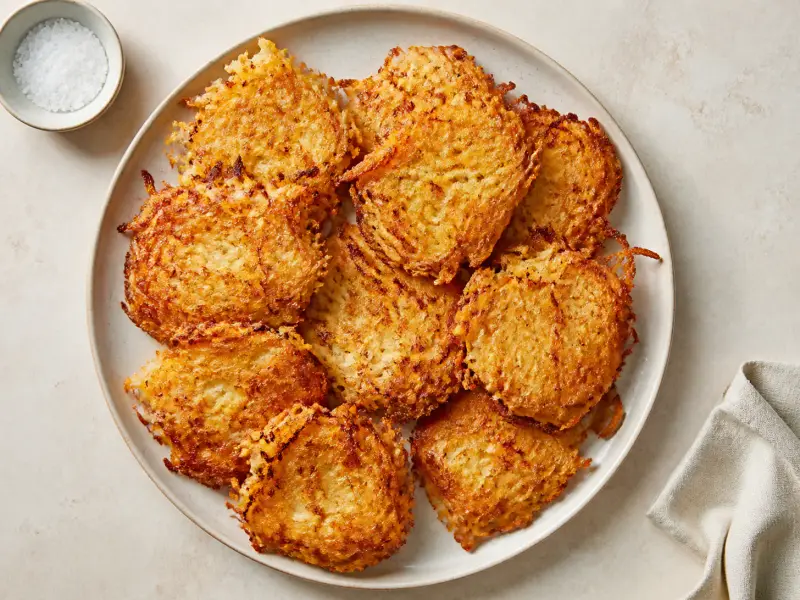 Crisp Hash Browns
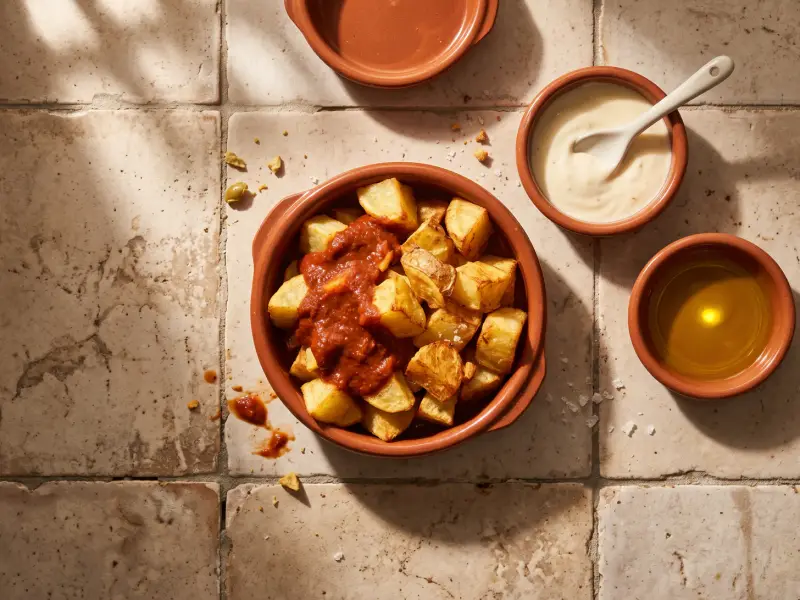 Patatas Bravas
 Buttermilk Pancakes
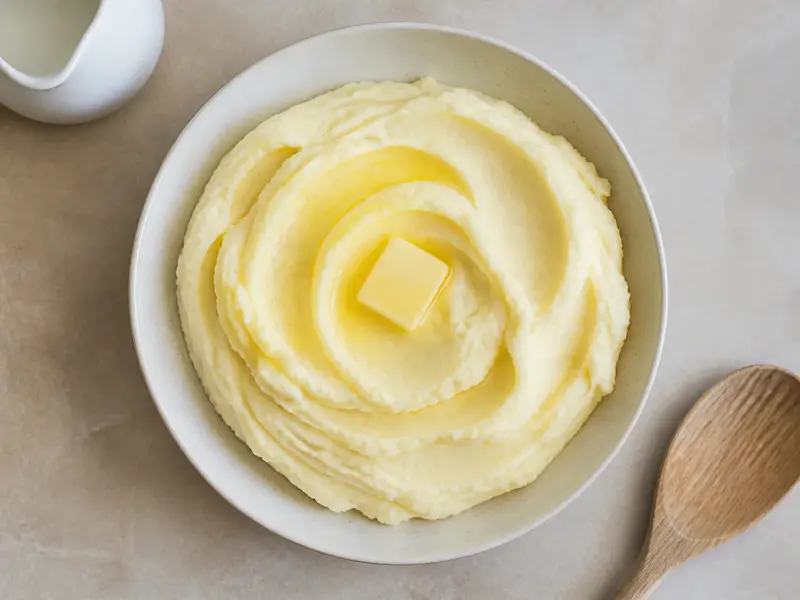 Buttery Mashed Potato
 Chickpea and Spinach Stew
 Cinnamon Bun Concoction