Brown Stew Fish
Fried whole fish simmered briefly in a dark sweet-savoury gravy built on browning, onion and thyme, and served with the sauce spooned over.
- Prep
- 20 min
- Cook
- 30 min
- Total
- 50 min
- Serves
- 4
- Revisions
- 6
Ten seconds, if you are in a hurry
The whole dish, carried in and set down, with the one thing worth knowing about it said out loud. No method, no measuring — just what it should look like when it arrives.
Watch on YouTubeAllergens
- Cereals containing gluten
- Fish
Named from the ingredients as written, including those carried in from sub-recipes. This is not a guarantee — check the labels on what you actually buy, and note that a product’s recipe can change.
Ingredients
Serves
Method
Slash the fish twice on each side, season with the salt and pepper and leave for 10 minutes.
Pat dry and dust lightly with the flour.
Heat the oil in a wide pan until it shimmers and fry the fish two at a time, 4-5 minutes a side, until golden and crisp.
Lift them out onto a plate.
Pour off all but 2 tbsp of the oil.
Add the sugar to the hot pan and let it melt and darken, 60-90 seconds, until it is deep mahogany and smells almost burnt.
Add the onion and red pepper straight away, which stops the sugar going further, and cook for 5 minutes.
Add the garlic, spring onions, thyme and the whole scotch bonnet and cook for 2 minutes.
Stir in the ketchup, soy sauce and water and bring to a simmer.
Simmer for 5 minutes, until the gravy has thickened a little and tastes savoury rather than raw.
Slide the fish back in, spoon the sauce over, and simmer gently for 5 minutes.
Lift out the scotch bonnet, add the lime juice, and serve with the gravy spooned over.
Nobody has rated this recipe yet.
Sign in to rate this recipe. One rating per person, and you can change it.
What to expect
- Taste
Deep, dark, sweet-savoury from the browned sugar, with a genuine bitterness at its edge that keeps the whole gravy from tasting like a dessert sauce. The fish itself stays plainly savoury under the gravy, with ketchup's tang and the soy sauce's saltiness rounding out the middle, and the whole scotch bonnet lending fruity warmth rather than sharp heat.
- Aroma
The sharp, almost burnt-sugar smell of the browning stage is the most distinctive note in the whole dish, followed by frying onion and garlic and the greener smell of thyme.
- Texture
Crisp fish skin holding up under a clinging sauce, with tender flaking flesh beneath and softened but still distinct vegetables through the gravy.
- Sound
A sharp sizzle and hiss as the sugar melts and darkens in hot oil, settling to a gentle simmer once the liquid goes in.
- How the flavour moves
The dark sweetness of the browning arrives first, a savoury tang from the ketchup and soy sauce follows close behind, and the scotch bonnet's fruity heat builds in at the finish rather than announcing itself early.
- Serve it
Served hot, with the gravy holding its heat well due to its thickness.
- Goes with
Rice and peas or boiled green banana and other ground provisions, which are the standard starches served under a Jamaican brown stew of any kind.
Cook's notes
- Difficulty
Moderate — frying a whole fish cleanly and taking the sugar exactly as far as it needs to go without burning it outright are the two points that need attention.
- Cost
Moderate. Whole small fish and a short list of pantry staples for the gravy.
- Equipment
A wide frying pan capable of both frying the fish and then building the sauce in the same fat.
- When to make it
Sunday dinner, and any evening meal wanting a substantial, saucy fish main.
- Best season
None; the ingredients are available year round.
- You know it is done when
The fish should be golden and crisp from frying before it ever meets the gravy; the finished sauce should be a deep, glossy brown, thickened just enough to cling rather than run thin.
- And it feels like
Crisp-edged fish that still flakes cleanly, sitting in a sauce with real body from the reduced browning and vegetables.
- Food safety
Standard care with hot oil and with the sugar-browning stage specifically, since sugar taken this dark is genuinely close to burning and can scorch a hand as readily as it can a pan.
- Where it goes wrong
- Stopping the sugar at golden rather than dark mahogany, which leaves the gravy sweet rather than properly deep and savoury.
- Letting the sugar go all the way to black and acrid, past the point of recovery.
- Simmering raw fish in the gravy from the start rather than frying it first, which lets it fall apart.
- Oil not hot enough for the initial fry, which sticks and tears the fish.
- If it does go wrong
Gravy tastes sweet rather than deep: the sugar was not browned dark enough — take it further next time, watching closely rather than by the clock. Gravy tastes burnt: the sugar went too far; there is no saving that batch, only starting the browning stage again. Fish falling apart: it went into the gravy raw, or simmered too long once it was back in the pan.
- Making it ahead
The gravy base can be made ahead and reheated; the fish is best fried fresh and only briefly reunited with the gravy just before serving.
- Keeping it
Keeps 2 days refrigerated.
- Reheating
Gently, covered, over low heat with a splash of water so the sauce does not catch.
- Freezing
Not ideal — the fried fish loses its crisp edge on freezing and reheating, though the flavour holds up reasonably.
- Leftovers
The gravy on its own is good spooned over rice even without the fish, if any is left over separately.
- Scaling it
Scales by frying in batches so the pan is never crowded; the gravy itself scales up easily in a single larger pot.
- Substitutions
Any small whole white fish can stand in for snapper or bream. Molasses in place of dark brown sugar for the browning stage gives a slightly deeper, more bitter result and is a legitimate regional variation.
- Dietary swaps
Contains fish and gluten, from both the flour dusting and the soy sauce. Swap tamari for soy sauce and omit the flour dusting for a gluten-free version; dairy free and nut free as written.
- Shopping for it
Whole small snapper, bream or a comparable reef fish; a good dark brown sugar for the browning stage.
- Keeping the cost down
Whole small fish are cheaper per portion than fillets, and the gravy is built from inexpensive pantry staples.
- Sustainability
As with escovitch fish, reef species like snapper carry real sustainability concerns in parts of the Caribbean, worth considering when sourcing.
- Nutrition
A fried fish dish with a sugar-based gravy; moderate fat from the oil and a meaningful amount of sugar from the browning stage.
- Worth it?
A rich, deeply flavoured fish stew that turns on one piece of technique — the browning — done with real attention.
Where it comes from
- Origin
Jamaica.
- Also called
Brown stew fish.
- What the name means
The name describes the dish plainly: a stew, coloured and flavoured by browning.
- History
Browning as a technique — sugar cooked past caramel and stopped with liquid before it turns to carbon — arrived in Jamaica with West African cooking and underlies the whole family of Jamaican brown stews, applied equally to oxtail, chicken and fish depending on what was affordable in a given household.
- Why it matters
A standard Sunday dinner dish and a fixture of everyday Jamaican cook shops, usually served with rice and peas or boiled ground provisions.
- When it is eaten
Sunday dinner, and everyday eating at cook shops across the island.
- The traditional way
Fish fried first for texture, then finished briefly in a browning-based gravy, rather than being stewed from raw — a sequence that protects the fish from falling apart over the time it takes the gravy to come together.
- Regional variations
The same browning technique, applied to chicken or oxtail instead of fish, produces brown stew chicken and browned oxtail, which are the more commonly eaten meat versions of the same underlying method.
- Sources and credit
No individual is credited with the dish; browning is a broadly shared Jamaican technique rather than a single recipe's invention.
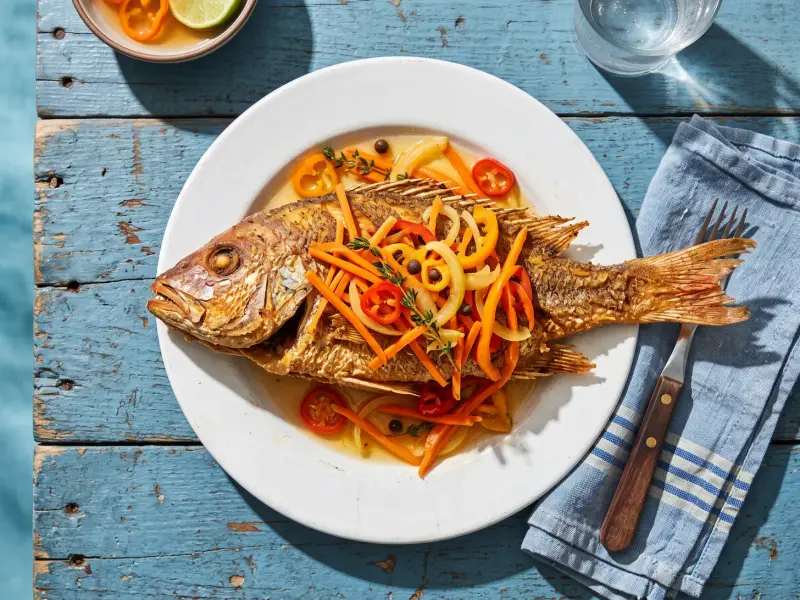 Escovitch Fish
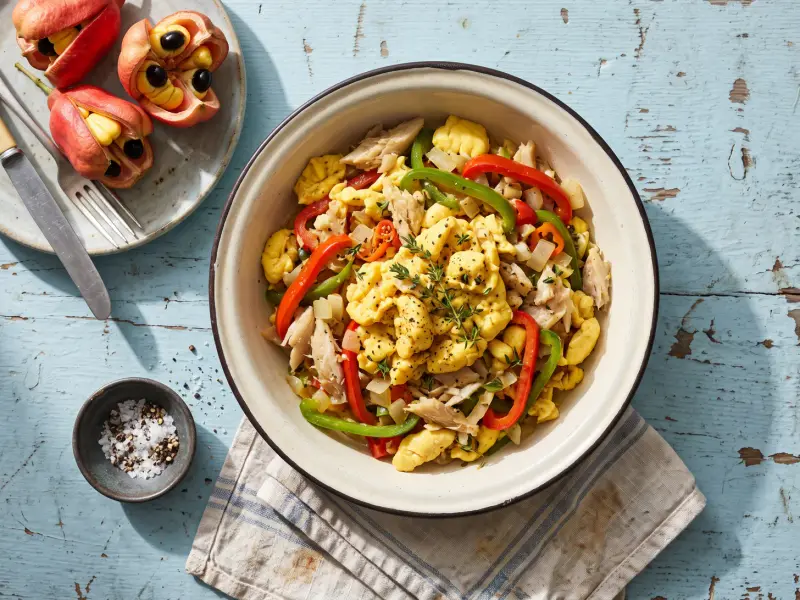 Ackee and Saltfish
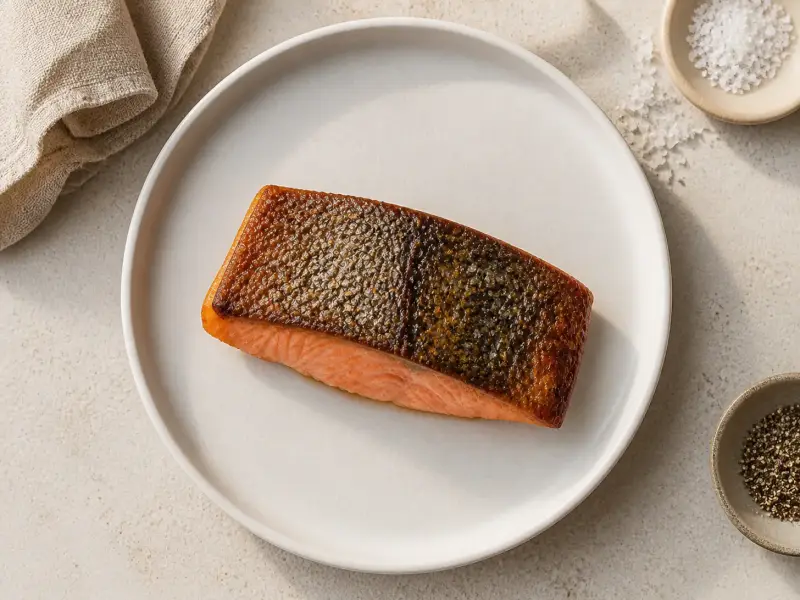 Crisp-Skinned Salmon
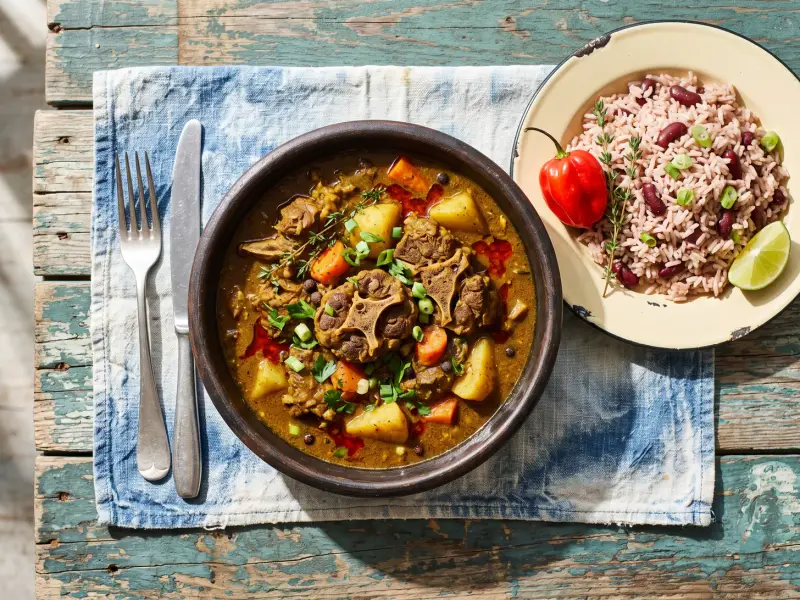 Curry Goat
 Goan Fish Curry
 Jerk Chicken