Classic Scones
Plain scones brought together in under a minute and cut straight down with a floured cutter, so they rise tall and split cleanly.
- Prep
- 20 min
- Cook
- 12 min
- Resting
- 15 min
- Total
- 47 min
- Serves
- 8
- Revisions
- 5
Allergens
- Cereals containing gluten
- Eggs
- Milk
Named from the ingredients as written, including those carried in from sub-recipes. This is not a guarantee — check the labels on what you actually buy, and note that a product’s recipe can change.
Ingredients
Serves
Method
Whisk the flour, baking powder, fine salt and caster sugar together in a large bowl.
Rub in the cold butter with your fingertips until the mixture looks like fine breadcrumbs and no lumps of butter are left.
Pour in the 175ml of cold milk all at once.
Cut it through with a table knife, turning the bowl as you go, until the dough comes together soft and slightly sticky with no dry flour left.
Stop the moment it holds together. Scone dough has no long prove to soften the gluten you develop, so a worked dough bakes out tough, tight and close-grained.
Tip the dough onto a floured worktop.
Pat it out with your hands to a slab 3cm thick, rather than rolling it. Scones cut from a 2cm slab never get tall.
Fold the slab in half and pat it back to 3cm once, which builds the seam the baked scone splits along.
Cut rounds with a floured 6cm cutter, pressing straight down and lifting straight up.
Never twist the cutter. Twisting drags and seals the cut edge, and a sealed edge rises in a lean instead of straight up.
Push the offcuts together with as little handling as you can manage and cut the last two.
Set the scones on a lined tray with about 3cm between them.
Chill them for 15 minutes while the oven heats to 220C/425F.
Beat the egg with the tablespoon of milk.
Brush the tops only, keeping the glaze off the cut sides. Egg running down the side glues the seam shut and the scone cannot open there.
Bake for 10-12 minutes, until they have risen to about twice their height and the tops are deep gold.
Lift one off the tray and knock the base. It should feel light for its size and sound hollow.
Cool on a rack for 10 minutes.
Split them by pulling them apart at the seam with your thumbs rather than cutting them.
Serve with the jam and the clotted cream.
Eat them the day they are baked. A chemically raised dough carries no fat to speak of and stales within hours, and by tomorrow they are only good toasted.
Nobody has rated this recipe yet.
Sign in to rate this recipe. One rating per person, and you can change it.
What to expect
- Taste
Plain and lightly sweet, with a clean, buttery flavour that is deliberately restrained so the jam and clotted cream can do the more indulgent work on top — this is a base built to carry toppings rather than to be a rich dessert in its own right.
- Aroma
A warm, faintly sweet, buttery smell as they bake, without any of the deeper toasted or caramelised notes of a longer-baked cake.
- Texture
A light, slightly crumbly interior with a soft, faintly moist crumb, contained by a thin, tender crust — the contrast between a good scone and a poor one is almost entirely in this texture rather than in flavour, since the ingredients are so plain.
- Sound
A soft, dry crumbling sound when split by hand, and a light, hollow-sounding tap on the base when checking for doneness.
- How the flavour moves
The plain, faintly sweet scone registers first and briefly, and the jam's fruit sweetness and the clotted cream's dense richness both arrive on top of it rather than the scone itself carrying much flavour progression on its own — the toppings are doing the flavour work by design.
- Serve it
Best eaten warm, close to fresh from the oven, though also good once fully cooled the same day.
- Goes with
Strawberry or raspberry jam and clotted cream, with a pot of tea, forming the traditional British cream tea — the scone itself is rarely eaten without at least one of the two toppings.
Cook's notes
- Difficulty
Easy, but genuinely dependent on speed and a light hand — this is a dough that punishes overworking more than almost anything else baked in this collection.
- Cost
Low — flour, butter and milk are all inexpensive; clotted cream is the main variable cost.
- Equipment
A mixing bowl, a 6cm round cutter, and a lined baking tray.
- When to make it
Afternoon tea, or any occasion calling for a quick, classic British bake.
- Best season
None; every ingredient is available year round, though fresh summer berries can supplement the traditional jam.
- You know it is done when
The scones should have risen to roughly double their original height with deep gold tops; a scone that has spread sideways more than it has risen upward was likely handled too roughly, twisted when cut, or baked in too cool an oven.
- And it feels like
Should feel light for its size and sound hollow when the base is tapped, with a soft, slightly moist crumb inside rather than a dense, tight one — over-handling the dough produces a tough, close-grained scone rather than a light one.
- Food safety
No particular hazard beyond standard care with raw egg in the glaze before baking.
- Where it goes wrong
- Overworking the dough, which develops gluten this dough has no long prove to relax, and bakes out tough and close-grained.
- Rolling rather than patting the dough out, which tends to produce a thinner slab and a shorter, less impressive rise.
- Twisting the cutter when cutting rounds, which seals the cut edge and causes the scone to rise leaning to one side.
- Letting egg glaze run down the cut sides, which glues the seam shut and stops the scone from splitting cleanly as it rises.
- If it does go wrong
Scones came out short and dense: the dough was likely overworked, or patted out thinner than the recommended 3cm. Scones rose lopsided: the cutter was twisted when cutting, or glaze ran down the sides and sealed them. Scones stale quickly: this is normal for a scone, which carries little fat compared to a cake and is genuinely best eaten the day it is baked.
- Making it ahead
The cut, unbaked scones freeze well and can go straight from the freezer into a hot oven with a few extra minutes added, which is the most reliable way to have genuinely fresh scones without baking on the day itself.
- Keeping it
Best eaten the day they are baked; a chemically leavened dough carries very little fat relative to a butter-heavy cake, so it stales within hours rather than days.
- Reheating
A brief warm in the oven can revive a same-day scone slightly, though by the following day they are generally better split and toasted than reheated whole.
- Freezing
Freezes well, either baked or as unbaked shaped rounds ready to go straight into a hot oven from frozen with a few extra minutes added.
- Leftovers
Best used the next day toasted rather than eaten plain, since the lack of fat in the dough means they stale faster than most other baked items in the collection.
- Scaling it
Scales up cleanly by simply making more dough and cutting more rounds, keeping the same slab thickness and the same brief handling regardless of batch size.
- Substitutions
Baking powder already contains a dry acid alongside the bicarbonate of soda, which is why this recipe needs no buttermilk to react against, unlike a soda bread; using buttermilk in place of the milk here would not meaningfully improve the rise, since the reaction is already built into the baking powder itself.
- Dietary swaps
Contains gluten, eggs and milk. Can be made egg free by using an all-milk glaze instead of egg wash, though the tops will brown less deeply; not easily made dairy free without changing the character of both the dough and the traditional clotted cream topping.
- Shopping for it
Cold butter, straight from the fridge, is worth being strict about — softened butter rubs into the flour differently and produces a denser, less flaky result.
- Keeping the cost down
Own-brand butter and flour work perfectly well here, since the plain flavour of the dough depends more on technique than on ingredient quality; clotted cream is the one component worth spending on.
- Nutrition
A moderate treat on its own; the clotted cream and jam served alongside contribute considerably more fat and sugar than the scone itself.
- Worth it?
A short, simple bake where the main skill is restraint, and one of the more forgiving recipes in the collection to get right once the handling rules are understood.
Where it comes from
- Origin
Scotland, for the word and the earliest form of the dish; the risen version eaten today is a later British development more broadly.
- Also called
Scone.
- Said out loud
Either "skon" (to rhyme with gone) or "skohn" (to rhyme with bone) — both pronunciations are in genuine, widespread use across Britain and neither has settled the argument between them.
- What the name means
The word's earlier history is uncertain, though it is Scots in origin and was first used for a large flat griddle bread rather than the small, individually cut and risen version eaten now.
- History
The word appears in Scots writing from the early 1500s for a large flat bannock, cut into wedges after baking on a girdle rather than shaped and cut before baking. The small, chemically risen individual scone could not exist before bicarbonate of soda entered kitchen use in the 1840s and baking powder was patented in the 1850s, so the scone now generally understood by the name is a 19th-century development rather than a direct continuation of the earlier bannock.
- Why it matters
The centrepiece of the British cream tea, strongest as a tradition in Devon and Cornwall, and served as a standard afternoon-tea item across Ireland, Australia and New Zealand.
- When it is eaten
Afternoon tea, and any occasion calling for a British cream tea specifically.
- The traditional way
A quick rub-in method with minimal handling, cut with a straight-down, non-twisting motion, and glazed on top only to avoid sealing the sides shut.
- How it changed
The plain oven scone eaten today is a considerably later, chemically leavened development from the older flat griddle bannock the word originally named; the American scone, richer and often cut into wedges, developed as a separate, sweeter relative rather than a direct descendant of the British version.
- Regional variations
The order of jam and cream is the most famous regional dispute: Devon puts the clotted cream on first, and Cornwall puts the jam on first, and both sides remain firmly and genuinely committed to their own order.
- Sources and credit
No individual is credited with inventing the scone; it developed as a natural consequence of chemical leavening reaching home and bakery kitchens in the 19th century.
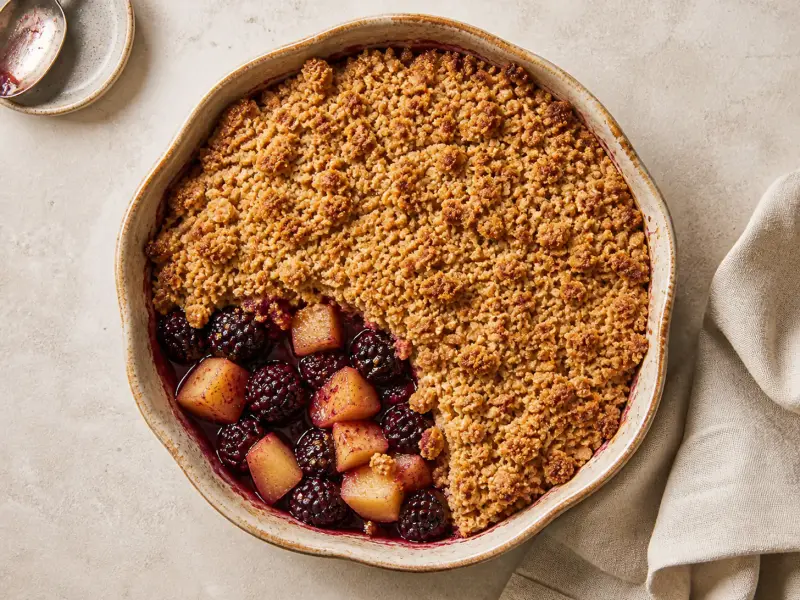 Apple and Blackberry Crumble
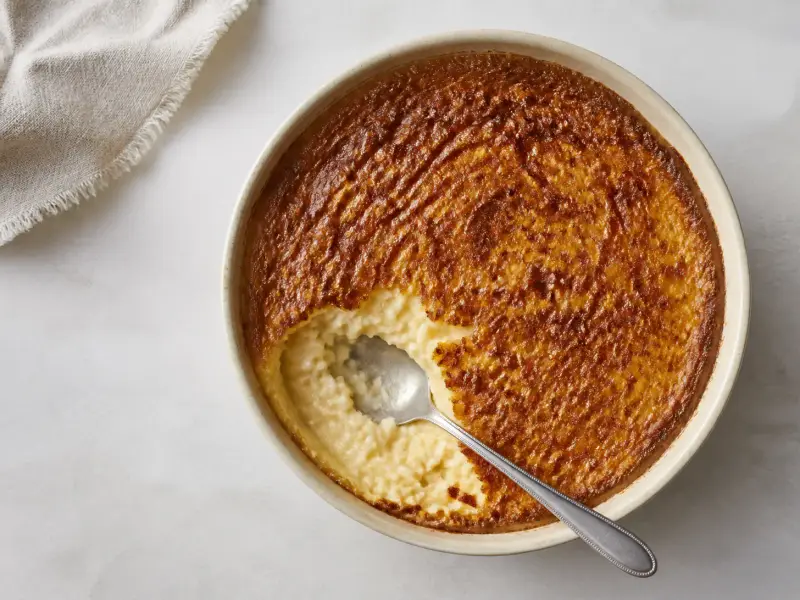 Baked Rice Pudding
 Lemon Drizzle Loaf Cake
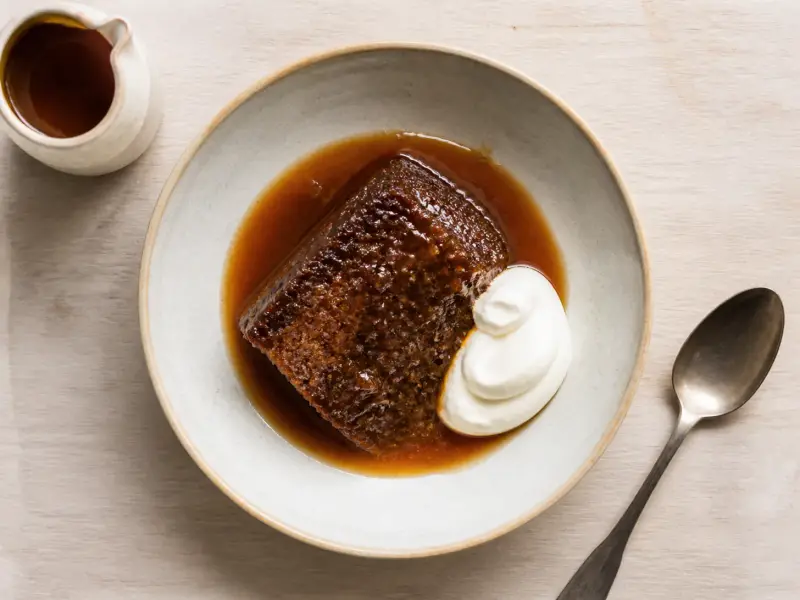 Sticky Toffee Pudding
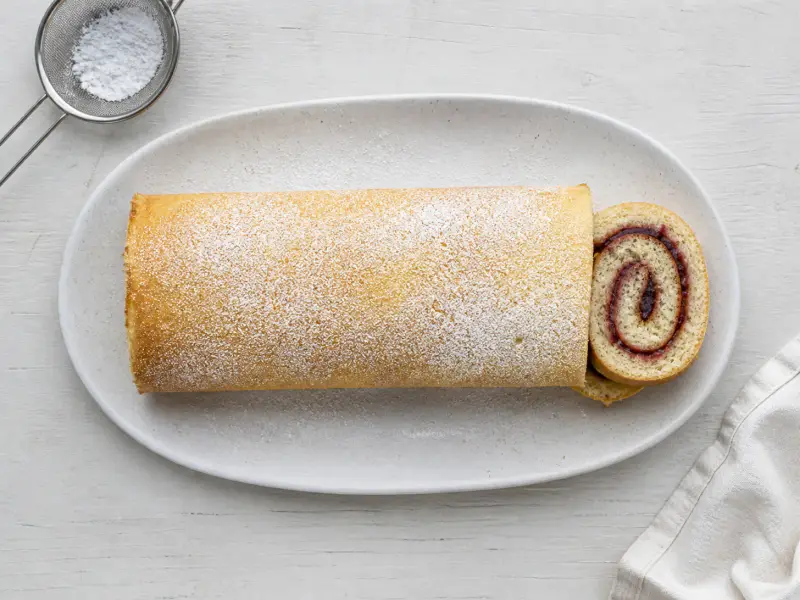 Swiss Roll
 Vanilla Custard