Sticky Toffee Pudding
A dark date sponge skewered and soaked with hot toffee sauce the moment it leaves the oven, then served with the rest of the sauce.
- Prep
- 25 min
- Cook
- 40 min
- Resting
- 10 min
- Total
- 1 hr 15 min
- Serves
- 9
- Revisions
- 5
Allergens
- Cereals containing gluten
- Eggs
- Milk
- Sulphites
Named from the ingredients as written, including those carried in from sub-recipes. This is not a guarantee — check the labels on what you actually buy, and note that a product’s recipe can change.
Ingredients
Serves
Method
Heat the oven to 180C/350F.
Butter a 20cm square tin and line the base with baking paper.
Put the chopped dates in a bowl and pour the boiling water over them.
Stir in the bicarbonate of soda and leave the bowl for 15 minutes. The mixture foams and darkens as the bicarbonate breaks the date skins down, and that is where the sponge gets its colour and its texture.
Mash the softened dates roughly with a fork, leaving some pieces whole.
Whisk the flour, baking powder and the 3g of fine salt together in a bowl.
Beat the 80g of softened butter with the 150g of muscovado for the sponge for 3-4 minutes, until the mixture has lightened and looks fluffy rather than grainy.
Beat in the eggs one at a time, adding a spoonful of the flour mixture if the batter starts to curdle.
Beat in the vanilla.
Fold in the flour mixture in two additions, stopping as soon as the dry streaks go.
Fold in the dates with all their soaking liquid.
Expect a batter closer to a thick soup than a cake mixture. That is right, and it is where the pudding's moisture comes from; thickened up with more flour it bakes as an ordinary dry sponge.
Pour the batter into the tin.
Bake for 30-35 minutes, until the sponge is risen and very dark, springs back in the middle, and a skewer comes out with crumbs but no wet batter.
Put the 150g of muscovado for the sauce, the 100g of butter and the 2g of fine salt into a pan while the pudding bakes.
Melt over low heat, stirring, until the sugar has dissolved and no grains rasp against the base of the pan.
Pour in the double cream and bring it to a bare simmer.
Simmer for 3-4 minutes, until the sauce is glossy and thick enough to coat the back of a spoon.
Keep the heat low and do not walk away from it. Boiled hard, the sauce splits into a butter slick sitting over a grainy syrup and will not come back together.
Prick the hot sponge all over with a fine skewer as soon as it comes out of the oven, going most of the way down.
Pour about a third of the hot sauce over the surface.
Leave it for 10 minutes to soak in, until the top looks wet and lacquered rather than pooled.
Cut into 9 squares.
Reheat the rest of the sauce and pour it over the squares at the table, with cream or the vanilla custard in this collection.
Nobody has rated this recipe yet.
Sign in to rate this recipe. One rating per person, and you can change it.
What to expect
- Taste
Dark caramel and malt, with a bitterness underneath from the muscovado that keeps it from being sickly. There is no fruit flavour at all if the dates have done their job — the sweetness is deep and slightly burnt rather than bright. The sauce is the same flavour concentrated, and salted it reads more of butter than of sugar. Cream or ice cream is not decoration: it is what stops the second mouthful being too much.
- Aroma
Hot butter and dark sugar, closer to the smell of caramel being made than of cake being baked. Faint malt. The sauce hitting the hot sponge is when it is strongest.
- Texture
The reason to make it. The sponge is open, damp and unusually light for how dark it looks — people expect something heavy and it is not. The sauce soaks into the top third and leaves it wet, so a spoonful has three states in it: soaked, cake, and pooled sauce underneath.
- Sound
The sauce being poured, and the sponge giving under a spoon with no resistance.
- How the flavour moves
Sweetness arrives immediately and would be too much on its own; the malt and the faint bitterness of the dark sugar come in behind it, and the cold cream cuts the finish. Held in the mouth, the last thing left is salt and butter rather than sugar.
- Serve it
Hot, with something cold beside it. The contrast is most of the pleasure and it is why it is rarely served cold even though it keeps well.
Cook's notes
- Difficulty
Easy. The only step that can go wrong is the dates.
- Cost
Low. Dates, butter, sugar, flour and cream.
- Equipment
A 20cm square tin, a saucepan for the sauce, a bowl
- Where it goes wrong
Under-soaking the dates. Using light brown sugar. Boiling the sauce until it splits.
- Making it ahead
Better the next day. The sauce goes on reaching further into the sponge overnight; reheat covered, and make fresh sauce for pouring.
- Scaling it
Doubles into a 20x30cm tin with about ten more minutes.
- Substitutions
Black treacle for a spoonful of the muscovado deepens the colour and the malt note. Do not substitute light brown sugar for dark — the colour and half the flavour go with it.
- Dietary swaps
Works with a plant butter and oat cream in the sauce; the sponge is more fragile and the sauce sets softer.
Where it comes from
- Origin
The Lake District in the 1970s, at Sharrow Bay, with a reported chain back through Coniston and possibly to wartime Canadian airmen. See core.history — the chain is reported rather than documented.
- History
DISPUTED, and more recently than most. The version everyone copies is credited to the Sharrow Bay Country House Hotel on Ullswater in the 1970s, where Francis Coulson served it as 'Icky Sticky Toffee Sponge'. Coulson himself said he had it from Patricia Martin at the Old Hall Hotel in Coniston, and Martin was said to have had it from Canadian air force officers billeted in Lancashire during the war. Each step of that chain is reported and none of it is documented. Treat the Sharrow Bay attribution as the earliest reliable point rather than the invention.
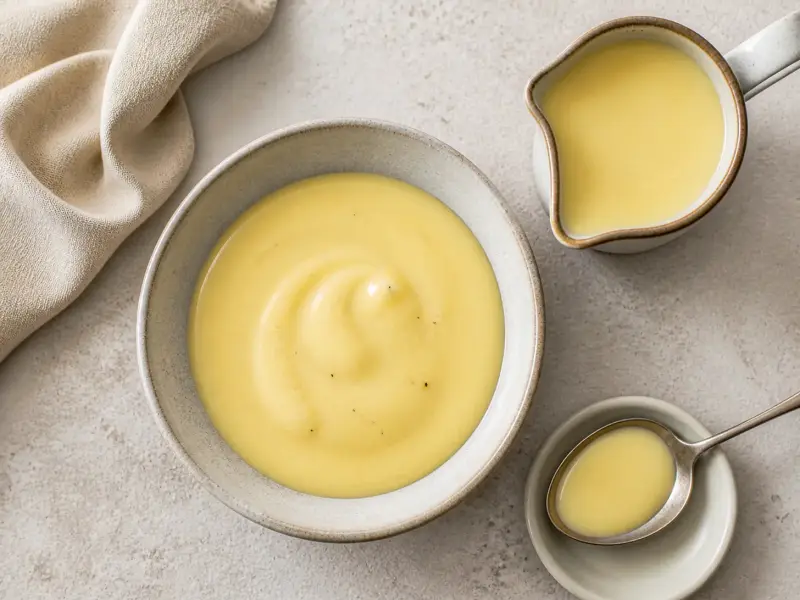 Vanilla Custard
 Apple and Blackberry Crumble
 Baked Rice Pudding
 Classic Scones
 Lemon Drizzle Loaf Cake
 Swiss Roll
 Apple and Almond Tart