Festival
Slightly sweet cornmeal dumplings rolled long, fried until crisp outside and cakey within, and eaten with anything fried or jerked.
- Prep
- 15 min
- Cook
- 15 min
- Resting
- 30 min
- Total
- 1 hr
- Serves
- 6
- Revisions
- 6
Allergens
- Cereals containing gluten
Named from the ingredients as written, including those carried in from sub-recipes. This is not a guarantee — check the labels on what you actually buy, and note that a product’s recipe can change.
Ingredients
Serves
Method
Whisk the flour, cornmeal, sugar, baking powder and salt together in a bowl.
Add the vanilla and most of the milk and bring it together into a firm, slightly stiff dough.
Add the last of the milk only if it will not come together.
Knead it in the bowl for a minute, until smooth.
Cover and leave to rest for 30 minutes.
Divide the dough into 12 pieces and roll each into a sausage about 10cm long, tapered at the ends.
Heat the oil in a deep pan to 165C - a piece of dough should sizzle steadily rather than fiercely.
Fry four at a time for 5-6 minutes, turning, until deep golden all over and firm to the touch.
Lift onto kitchen paper.
Let the oil come back up between batches.
Serve hot.
Nobody has rated this recipe yet.
Sign in to rate this recipe. One rating per person, and you can change it.
What to expect
- Taste
Mildly sweet, with the cornmeal giving a distinct, slightly grainy corn flavour under the vanilla and sugar — closer to a savoury-leaning cornbread than a doughnut, despite the sugar in the dough.
- Aroma
Warm, sweet fried dough with a faint vanilla note and the specific toasted-corn smell that cornmeal brings when it hits hot oil.
- Texture
A firm, slightly crisp exterior giving way to a soft, faintly cakey crumb inside, distinctly different from the smoother crumb of a plain wheat-flour fried dumpling because of the cornmeal running through it.
- Sound
A steady, moderate sizzle through the frying time, quieter than a high-heat fry because the oil is kept relatively cool on purpose.
- How the flavour moves
A mild sweetness arrives first from the crust, the cornmeal's grainy corn flavour follows through the middle of the bite, and the finish is plain and slightly savoury rather than sugary, which is what lets it sit comfortably alongside salty fried fish or jerked meat.
- Serve it
Served hot, straight from the fryer, alongside the rest of a hot plate of fish or meat.
- Goes with
Escovitch fish, ackee and saltfish, fried fish generally — festival is the standard sweet-savoury counterpart to salty, spicy or acidic Jamaican mains.
Cook's notes
- Difficulty
Easy — the dough comes together quickly and the only judgement is oil temperature and shape.
- Cost
Low. Flour, cornmeal and pantry staples.
- Equipment
A deep pan for frying; nothing specialised.
- When to make it
Alongside fried or jerked fish and meat, at any meal.
- Best season
None; every ingredient is a shelf-stable staple available year round.
- You know it is done when
Deep golden all over, with the tapered ends slightly darker than the thicker middle.
- And it feels like
Firm to the touch on the outside, giving way to a soft, slightly cakey, faintly sweet interior.
- Food safety
Standard deep-frying care, and the same crowding caution as any fried dough — too many in the pan at once drops the oil temperature and undercooks the centre before the outside browns.
- Where it goes wrong
- Skipping the resting time, leaving the cornmeal gritty in the finished dumpling.
- Rolling them round rather than tapered, leaving the thick centre raw when the outside is done.
- Frying at too high a temperature, which darkens the crust before the middle cooks through.
- Overcrowding the pan, which drops the oil temperature and slows cooking unevenly.
- If it does go wrong
Gritty texture: the dough was not rested long enough for the cornmeal to hydrate. Raw centre: they were rolled too thick or round rather than long and tapered, or the oil was too hot and darkened the outside before the middle finished. Too pale: the oil was not hot enough, or the frying time was cut short.
- Making it ahead
The dough can be made and rested, then shaped and fried closer to serving time; not recommended to fry far in advance since the crust softens on standing.
- Keeping it
Best eaten the same day; keeps overnight at room temperature but the crust softens.
- Reheating
A few minutes in a hot oven brings back some of the crust; not recommended in a microwave, which leaves them soft throughout.
- Freezing
Freezes reasonably well cooked; reheat from frozen in a hot oven rather than thawing first.
- Leftovers
Good split and reheated with butter the next morning, closer to a cornbread roll at that point than a fresh-fried festival.
- Scaling it
Scales linearly; fry in batches of four to avoid crowding regardless of total quantity.
- Substitutions
Water can fully replace the milk for a dairy-free version with only a slightly less tender crumb. Fine cornmeal is important; a coarse polenta-style cornmeal will not hydrate the same way in the resting time given and leaves a grittier result.
- Dietary swaps
Vegetarian as written; dairy free if made with water rather than milk. Not suitable for gluten intolerance, since both the flour and, to a lesser extent, the cornmeal's gluten-free status does not change that the flour component carries gluten.
- Shopping for it
Fine cornmeal rather than a coarse polenta-style one, since the finer grind hydrates properly in the given resting time.
- Keeping the cost down
Flour and cornmeal are both inexpensive pantry staples and the dish stretches a small quantity of each a long way.
- Nutrition
A carbohydrate-heavy side, moderately sweet, with the fat picked up from frying.
- Worth it?
A simple, reliable side whose only real trick — the tapered shape — is worth doing properly rather than skipping.
Where it comes from
- Origin
Jamaica.
- Also called
Festival.
- What the name means
Undocumented — no source explains why this particular fried dumpling carries the name festival rather than any other.
- History
Fried dumplings of this general kind run through West African and Caribbean cooking broadly, and festival specifically — distinguished by its cornmeal and sugar — is a twentieth-century Jamaican development of that wider tradition rather than an ancient dish in its own right.
- Why it matters
A standard roadside and beach food across Jamaica, almost always sold and eaten alongside fried or jerked fish and meat rather than on its own.
- When it is eaten
Everyday roadside eating, and beach outings specifically.
- The traditional way
Dough rested to hydrate the cornmeal, then hand-rolled into tapered logs and fried at a moderate rather than high heat, both details aimed at cooking the centre through before the outside overcooks.
- Regional variations
Plain fried dumplings without cornmeal or sugar are the base form found across the wider Caribbean and West Africa; festival's addition of cornmeal and sweetness is the specifically Jamaican variation.
- Sources and credit
No individual is credited with the dish or its name.
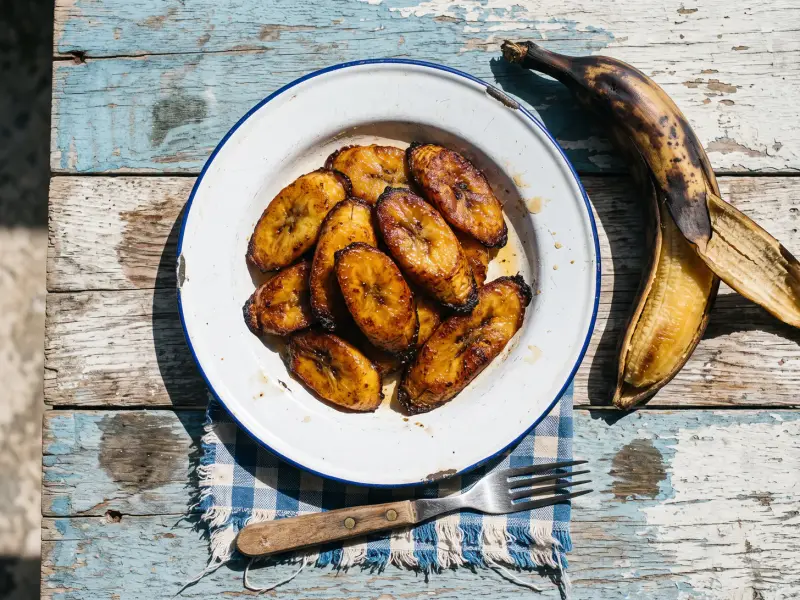 Fried Plantain
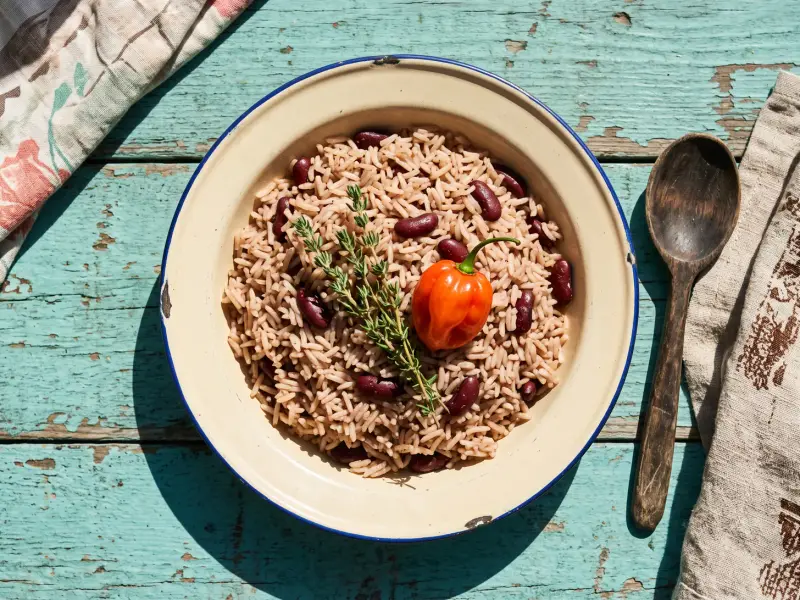 Rice and Peas
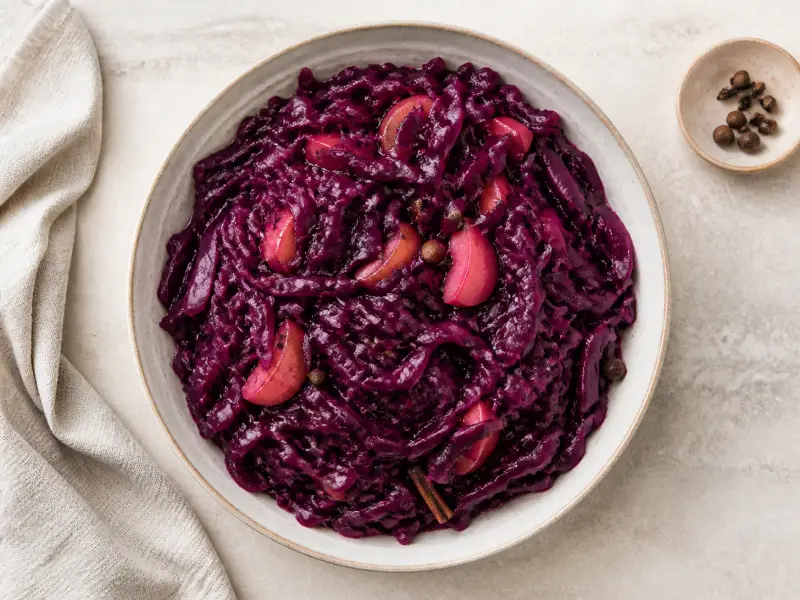 Braised Red Cabbage
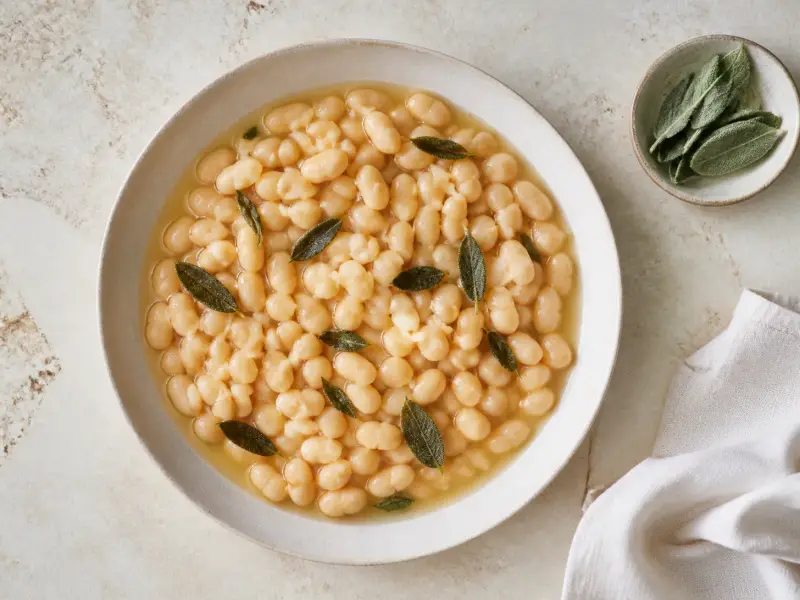 Braised White Beans with Sage
 Buttery Mashed Potato
 Creamed Spinach