Rice and Peas
Rice cooked in coconut milk with kidney beans, thyme and a whole scotch bonnet left in the pot and never broken.
- Prep
- 10 min
- Cook
- 35 min
- Resting
- 10 min
- Total
- 55 min
- Serves
- 6
- Revisions
- 6
Ten seconds, if you are in a hurry
The whole dish, carried in and set down, with the one thing worth knowing about it said out loud. No method, no measuring — just what it should look like when it arrives.
Watch on YouTubeIngredients
Serves
Method
Tip the beans and their liquid into a heavy pan with a tight-fitting lid.
Add the coconut milk, the water, the spring onions, thyme, garlic, allspice and salt.
Bring it to the boil and let it bubble for 5 minutes.
Lower the scotch bonnet in whole and do not pierce it.
Add the rinsed rice and stir once, which is the last time it gets stirred.
Bring it back to the boil, then turn the heat as low as it goes and put the lid on.
Cook for 25 minutes without lifting the lid.
Take the pan off the heat and leave it to stand, still covered, for 10 minutes.
Lift out the scotch bonnet, the thyme stalks and the spring onions.
Fork the rice through gently and serve.
Nobody has rated this recipe yet.
Sign in to rate this recipe. One rating per person, and you can change it.
What to expect
- Taste
Rich and coconut-forward, with the kidney beans reading earthy and slightly sweet against it. Allspice sits in the background as a warm, clove-like note rather than a sharp spice, and the whole scotch bonnet, left unburst, contributes real fruity perfume without any of its capsaicin heat reaching the rice at all.
- Aroma
Coconut is the dominant smell as the lid comes off, with thyme and the faint warmth of allspice underneath, and a bright, fruity top note from the scotch bonnet that is entirely aromatic rather than pungent.
- Texture
Tender, distinct grains with a faint creaminess clinging to the outside of each one from the coconut milk, rather than the wetness of a risotto or the dryness of a plain boiled rice.
- Sound
A steady, muffled bubble under the lid during cooking, and a soft hiss of released steam when the lid finally comes off.
- How the flavour moves
Coconut richness arrives first and coats the whole mouth, the beans follow with an earthy, slightly sweet undertone, and the finish is warm with allspice and a faint, non-fiery scotch bonnet perfume rather than any lingering heat.
- Serve it
Served hot, straight from the pot.
- Goes with
Jerk chicken, curry goat, brown stew fish, fried plantain — this is the standard starch under almost everything else on a Jamaican plate.
Cook's notes
- Difficulty
Easy — the method is almost entirely about leaving the pot alone once the lid goes on.
- Cost
Low. Tinned beans, coconut milk and rice are all inexpensive pantry staples.
- Equipment
A heavy pan with a tight-fitting lid; nothing else is needed.
- When to make it
Sunday dinner, and any meal built around a substantial stewed or grilled main.
- Best season
None; every ingredient is a shelf-stable pantry staple available year round.
- You know it is done when
The rice should look separate and fluffed rather than clumped, tinted a pale dusky pink to brown from the bean liquid and coconut milk.
- And it feels like
Each grain tender through but distinct, never mushy or sticking in a solid mass.
- Food safety
The one real hazard is the scotch bonnet bursting in the pot — check it has not split before lifting it out, and warn anyone serving themselves that it has been in there whole rather than chopped.
- Where it goes wrong
- Piercing or chopping the scotch bonnet, which makes the entire dish too hot to eat.
- Lifting the lid during the covered cook, which lets steam escape and can leave the rice undercooked at the top.
- Using coconut cream in place of coconut milk without adjusting the liquid, which makes the dish far richer and can leave the rice under-hydrated.
- Stirring the rice more than the single specified time, which releases starch and turns the dish gluey.
- If it does go wrong
Rice too wet or mushy: too much liquid for the quantity of rice, or the lid was lifted and steam escaped, needing longer to finish. Rice undercooked at the top: not enough liquid, or the heat was too high and it evaporated before the rice was done — add a splash of hot water and re-cover. No pink colour: tinned bean liquid was drained away rather than kept.
- Making it ahead
Cooks well ahead and reheats cleanly with a splash of water; not a dish that needs to be made at the last minute.
- Keeping it
Keeps 3-4 days refrigerated in a sealed container.
- Reheating
A splash of water and a few minutes covered over low heat, or in the microwave covered, brings it back without drying it out.
- Freezing
Freezes well for up to 2 months; thaw and reheat gently with a little extra liquid.
- Leftovers
Good cold in a rice salad with lime and chopped pepper, or reheated as a side to a completely different meal the next day.
- Scaling it
Scales up cleanly by keeping the same ratios; a wider pan is more useful than a deeper one so the rice cooks in an even layer.
- Substitutions
Dried kidney beans, cooked from scratch, are worth the extra time because the starchy cooking liquid is what traditionally tints the rice its characteristic dusky pink — tinned beans and their liquid get most of the way there with far less effort. A light vegetable stock can replace some of the water for a little more savoury depth.
- Dietary swaps
Vegan and vegetarian as written, and dairy free, since the richness comes entirely from coconut milk. Gluten free as written.
- Shopping for it
A good-quality tinned coconut milk with a high coconut solids content makes a noticeably richer dish than a thin, mostly-water one.
- Keeping the cost down
Tinned beans and coconut milk are both inexpensive and the dish stretches a small amount of each across a large batch of rice.
- Nutrition
A carbohydrate-and-fibre-rich side, with meaningful fat from the coconut milk and modest protein from the beans.
- Worth it?
A simple side that earns its place through one small piece of technique — the intact scotch bonnet — rather than a long ingredient list.
Where it comes from
- Origin
Jamaica, built on a West African pattern of cooking rice with beans and coconut.
- Also called
Rice and peas.
- What the name means
"Peas" refers to beans generally rather than green peas specifically — in Jamaica usually kidney beans, in much of the eastern Caribbean pigeon peas, which is the origin of the name.
- History
Rice cooked together with beans and coconut milk is a technique that reflects West African cooking patterns carried across the Atlantic during the slave trade and rebuilt in the Caribbean using the beans, rice and coconut that were locally available rather than the specific ingredients used in West Africa.
- Why it matters
The standard Sunday dinner side across Jamaica and much of the wider Caribbean, served alongside a stewed or roasted meat as the meal's anchor starch.
- When it is eaten
Sunday dinner specifically, and any everyday meal built around a main stew or roast.
- The traditional way
Rice cooked directly in the seasoned bean and coconut liquid, rather than boiled separately and combined afterwards, so the grains take on colour and flavour as they cook.
- Regional variations
Pigeon peas rather than kidney beans across much of the eastern Caribbean; some households add Scotch bonnet pepper sauce at the table rather than cooking the whole chilli into the pot, which changes the dish from aromatic to genuinely hot.
- Sources and credit
No individual is credited with the dish, which developed as a regional adaptation of a broader West African cooking pattern.
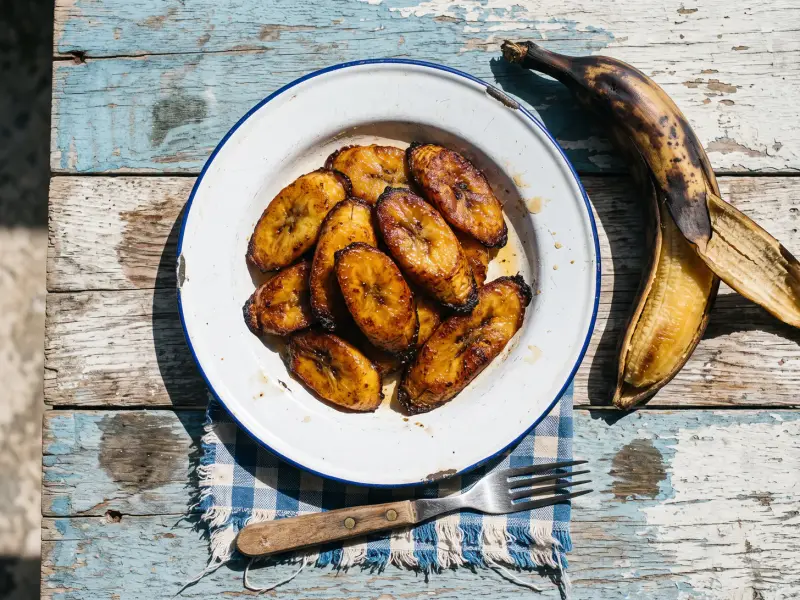 Fried Plantain
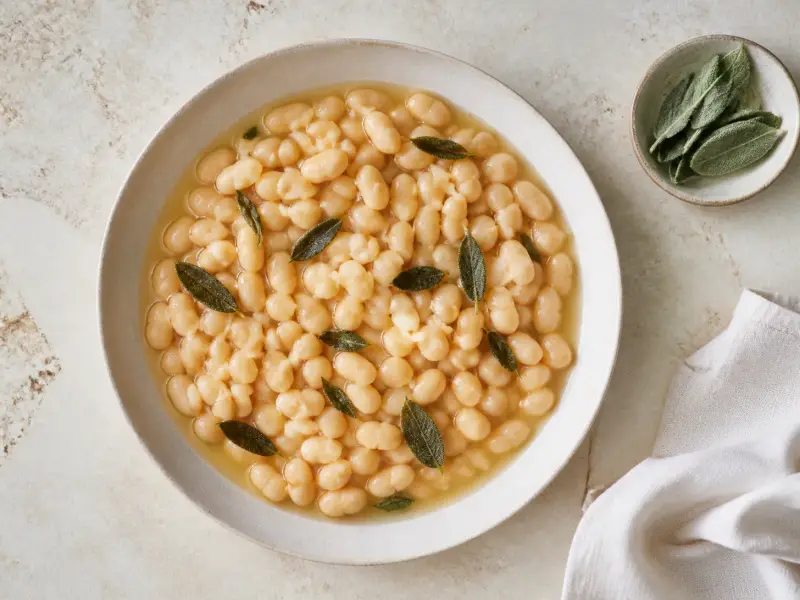 Braised White Beans with Sage
 Festival
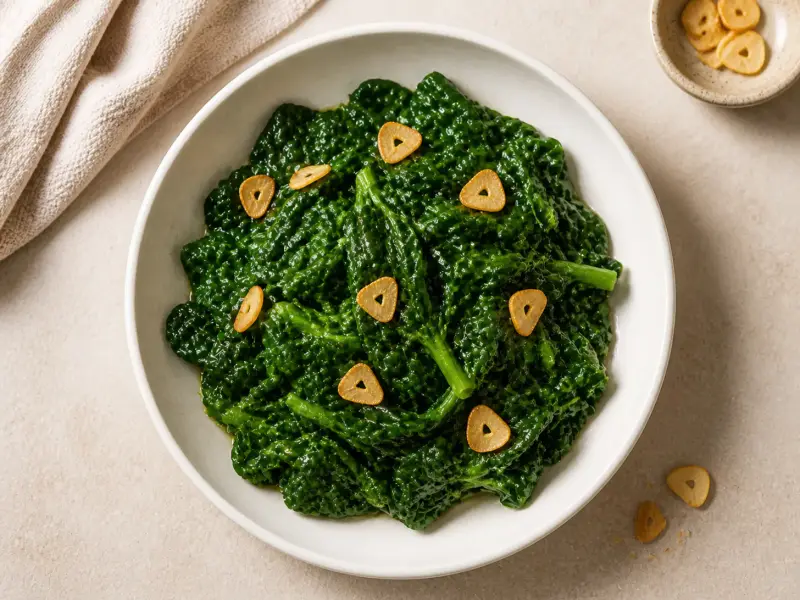 Garlicky Greens
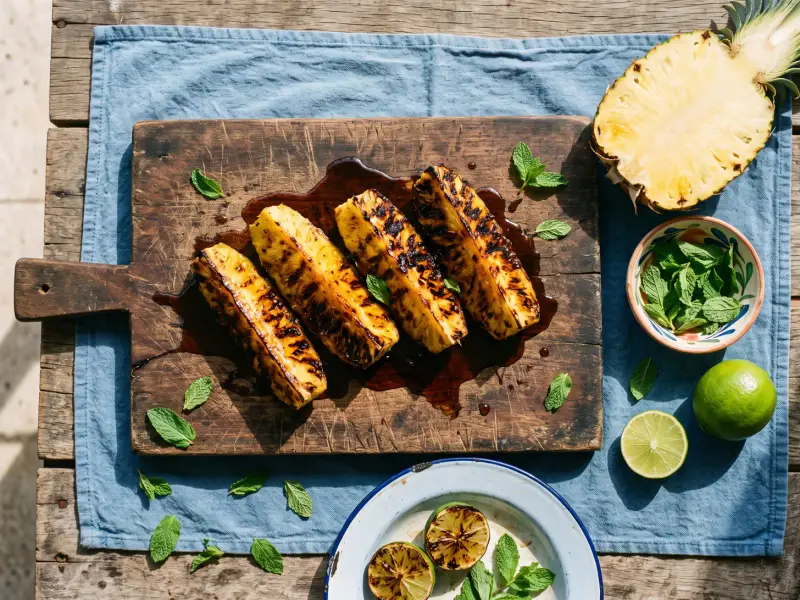 Grilled Pineapple with Rum Syrup
 Herbed Farro Salad