Okroshka
Окрошка
Окрошка — from kroshit, to crumble, for how the vegetables are cut.
A cold soup of raw vegetables, ham and egg poured with sour kvass at the table, so nothing in the bowl goes soft.
- Prep
- 30 min
- Cook
- 20 min
- Total
- 50 min
- Serves
- 4
- Revisions
- 6
Allergens
- Cereals containing gluten
- Eggs
- Milk
- Mustard
- Sulphites (via Kvass)
Named from the ingredients as written, including those carried in from sub-recipes. This is not a guarantee — check the labels on what you actually buy, and note that a product’s recipe can change.
Ingredients
Serves
Method
Boil the potatoes whole in their skins in salted water for 18-20 minutes, until a knife tip goes to the centre with no resistance.
Drain them and leave them to cool completely before they are peeled and cut.
Boil the eggs for 9 minutes from the moment the water returns to the boil, which gives a set yolk that will crumble rather than smear.
Cool the eggs under cold running water and peel them.
Separate the yolks from the whites.
Chop the whites into 5mm dice and put them with the rest of the vegetables.
Mash the yolks in a small bowl with the mustard and the smetana until you have a smooth loose paste.
That yolk paste is the dressing and it is not optional. Egg yolk emulsifies, and it is what stops the kvass and the soured cream separating into a curdled-looking bowl within a minute of being poured.
Put the sliced spring onions in a bowl with the 5g of fine salt.
Crush them against the side of the bowl with the back of a spoon for about a minute, until they bruise, darken and go wet. Salting and crushing takes the harsh raw-onion note out, and untreated they dominate the bowl.
Peel the cold potatoes and cut them into 1cm dice.
Combine the potato, ham, cucumber, radishes, egg whites, spring onions, dill and parsley in a large bowl.
Fold the yolk dressing through until everything is lightly coated.
Cover the bowl and chill it, with the kvass alongside, for at least an hour, until both are properly cold rather than merely cool.
Divide the dressed solids between four bowls.
Pour the cold kvass over at the table, about 250ml a bowl.
Pour it at the last moment and never in advance. Cucumber and radish go limp within twenty minutes of being submerged, the radish bleeds its pink into the liquid and the whole point of the dish, which is cold crunch, is gone.
Use sour kvass rather than the sweetened bottled kind, which makes a soup that tastes of sweet bread and ham.
Whisk the kefir with the cold mineral water and use it in place of the kvass for the other standard version. Kefir on its own is too thick and too heavy to drink from a spoon.
Season each bowl with the ground peppercorns and fine salt at the table, tasting first, since the ham is already salty.
Keep the dressed solids and the kvass in separate covered containers in the fridge, below 5C/41F.
Eat the solids within a day and pour fresh kvass each time. A bowl already poured does not keep at all.
Nobody has rated this recipe yet.
Sign in to rate this recipe. One rating per person, and you can change it.
What to expect
- Taste
Sour first, and the character of that sourness depends entirely on which liquid you chose. Kvass is fermented from rye bread and is malty, yeasty and bready-sour, with a faint sweetness underneath; kefir is lactic, tangy and much closer to a thin yoghurt. Against either, the vegetables are cold, mild and mostly textural — cucumber is watery and green, radish is peppery, potato is bland and starchy. Ham brings salt and savoury depth. Dill is the defining herb and is unmistakable. Mustard sharpens the dressing. And smetana rounds everything. It is not a strongly flavoured soup and is not supposed to be; it is a cold, sour, crunchy thing eaten in heat, and the pleasure is in the temperature and the texture rather than in intensity.
- Aroma
Dill above everything, which is what makes it smell Russian. Under it, the yeasty bready smell of kvass or the lactic tang of kefir, and a green note from the cucumber. It is a cold dish and it smells quiet.
- Texture
The entire point. Everything in the bowl should crunch or give firmly — cucumber, radish and spring onion snapping, potato soft, egg white firm, ham chewy — in a cold thin liquid. There is no soft element at all except the potato and the dressing. A bowl that has stood is uniformly soft and is a different and much worse dish.
- Sound
The crunch, and it should be audible. That is unusual for a soup and is the reason the pour is delayed.
- How the flavour moves
Sourness and cold together first. Then dill and cucumber, green and fresh. Then salt from the ham, and the mustard's heat at the back. The finish is short and clean and makes you want another spoonful, which is what a hot-weather dish should do. Across a bowl the liquid picks up flavour from the solids and gets better rather than worse — provided it has not been sitting long enough for them to soften.
- Serve it
Cold, and it is the whole point. This is a soup for genuinely hot weather and it is one of very few dishes in this collection that would be actively unpleasant warm.
- Goes with
Dark rye bread. Cold vodka, in the Russian manner. Nothing else — it is a complete meal and a light one. Where it fails is at any temperature above cold, and against anything rich.
Cook's notes
- Difficulty
Easy, and it is a dish about assembly and timing rather than cooking.
- Cost
Low.
- Equipment
Two pans, a sharp knife, and enough fridge space to chill a bowl of solids and a litre of liquid. Nothing else.
- When to make it
Summer, and only summer.
- Best season
Entirely seasonal. Radishes and cucumbers are summer crops and this is a summer dish in every sense.
- You know it is done when
The yolk dressing should be a smooth loose paste with no lumps. The spring onions should have visibly bruised, darkened and gone wet after their minute of crushing. The finished bowl should look cloudy rather than separated.
- And it feels like
Everything in the bowl should still snap when the liquid goes on. That is the whole test.
- Food safety
It contains cooked meat, egg and dairy and is served cold, so keep everything below 5°C and eat it the day it is made. A bowl that has already been poured does not keep at all.
- Where it goes wrong
Pouring the liquid in advance, which is the fault and which softens everything within twenty minutes. Assembling while the potatoes are still warm. Using sweetened bottled kvass. Skipping the yolk dressing, after which the bowl separates and looks curdled. Not salting and crushing the spring onions, which then dominate. And under-chilling, since cool is not cold.
- If it does go wrong
Separated and curdled-looking: no yolk emulsifier. Limp: it was poured too early. Pink liquid: the radishes have been sitting in it. Too sweet: the kvass was the bottled sweetened kind, and there is no fixing it. Harsh and oniony: the spring onions were not treated. Bland: salt at the table, and check the mustard went in.
- Making it ahead
The solids can be prepared and dressed a day ahead and kept covered and cold. The liquid is poured at the last moment, always.
- Keeping it
The dressed solids keep a day in the fridge, covered, with the kvass separately.
- Reheating
Never.
- Freezing
No.
- Leftovers
The dressed solids the next day, with fresh kvass poured over. That works perfectly.
- Scaling it
Freely. It is chopping.
- Substitutions
This is where the great division lies. Sour kvass is the traditional liquid; kefir thinned with cold mineral water is the other standard version and makes a completely different soup — creamier, tangier, less bready. Both are correct and people have firm preferences. What must be avoided is sweetened bottled kvass, which produces a soup tasting of sweet bread and ham. Boiled beef or roast chicken can replace the ham.
- Dietary swaps
Vegetarian without the ham. Not vegan — the eggs and soured cream are structural. Contains cereals containing gluten from the kvass, eggs, milk and mustard, all declared.
- Shopping for it
Sour kvass from an eastern European shop, and read the label for sugar. Kefir from anywhere. Smetana if you can get it. Fresh dill in quantity, since it is the defining flavour and a supermarket packet is not enough.
- Keeping the cost down
It is cheap already and is an excellent use of leftovers — cold boiled potatoes, the end of a ham, radishes going soft in the drawer.
- Sustainability
Low impact — mostly raw vegetables, a small amount of meat, and no cooking beyond boiling potatoes and eggs.
- Nutrition
Around 310 calories a bowl. It is largely vegetables, egg and a modest amount of ham, and the liquid contributes very little — it is one of the lighter complete meals in this collection.
- Worth it?
Worth it in hot weather and pointless in cold, which is an unusually honest thing for a recipe to admit. It costs very little, it uses up leftovers, and it is genuinely refreshing in a way almost nothing else here is. Pour it at the table, use unsweetened kvass, and make the yolk dressing.
Where it comes from
- Origin
Russia, and it is old enough to have no date.
- Also called
Okroshka — окрошка.
- Said out loud
a-KROSH-ka.
- What the name means
From kroshit, to crumble or chop into small pieces. It means, roughly, the chopped-up thing, which is an accurate and unglamorous name.
- History
The ancestor is simpler than the dish now is: kvass poured over chopped raw vegetables, eaten cold by people working outdoors in summer. Kvass itself is the key to understanding it — a low-alcohol fermented drink made from rye bread, ubiquitous in Russia and eastern Europe for centuries, sour and slightly sweet and bready. It was a household staple long before it was a bottled product, and okroshka is one of several dishes built on having a large quantity of it in the house. Meat, egg and soured cream are later additions that turned a peasant refresher into a substantial meal. The kefir version is more recent still and is now at least as common.
- Why it matters
It is summer food in a country whose summers are short and hot, and it carries the same emotional weight that a cold soup does anywhere — it means the weather has turned. The kvass-versus-kefir question is a genuine and enjoyable domestic argument.
- When it is eaten
Hot weather, and only hot weather.
- The traditional way
Pouring at the table. Everything else is chopping.
- How it changed
Kefir arrived as an alternative base in the twentieth century and now splits the dish in two. Bottled sweetened kvass has also done real damage, since it is what most people outside Russia can buy and it makes a poor okroshka.
- Regional variations
The kvass and kefir versions are the main split. Some households use whey or a mixture of soured cream and water. Ukrainian and Belarusian versions are close relatives. Lithuanian šaltibarščiai — cold beetroot soup with kefir — is a different dish built on the same idea and is a startling shade of pink.
- How this version differs
It gives both liquids as equals rather than choosing. The egg-yolk emulsifier and the crushed spring onions are both traditional and both frequently omitted, and this recipe explains what each is for.
- Sources and credit
None. Traditional and unauthored.
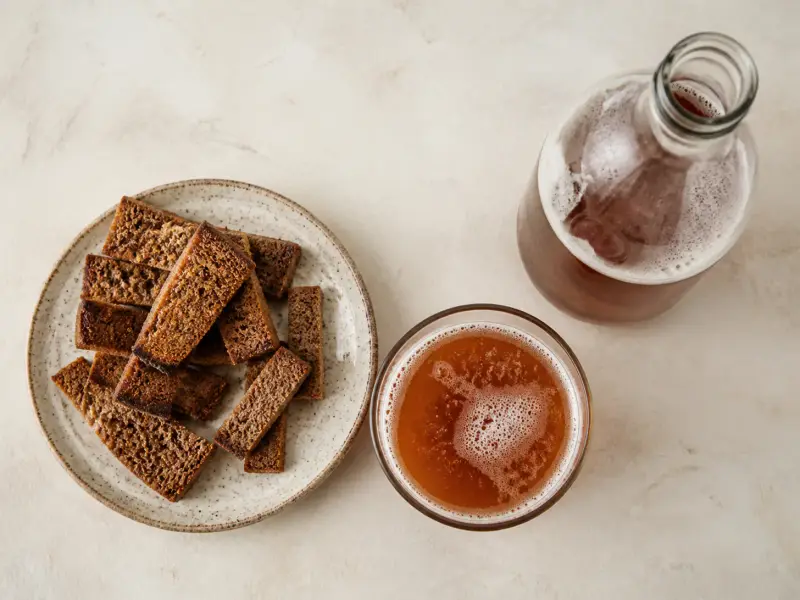 Kvass
Kvass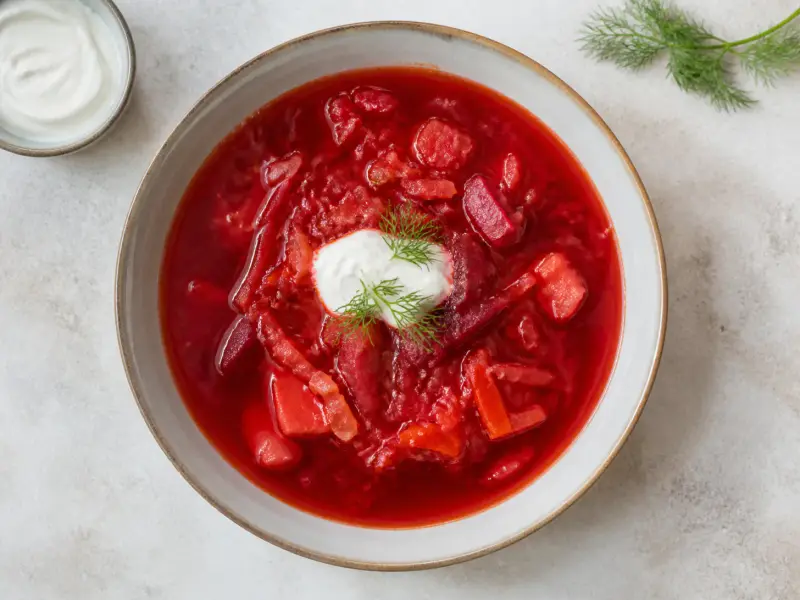 Borscht
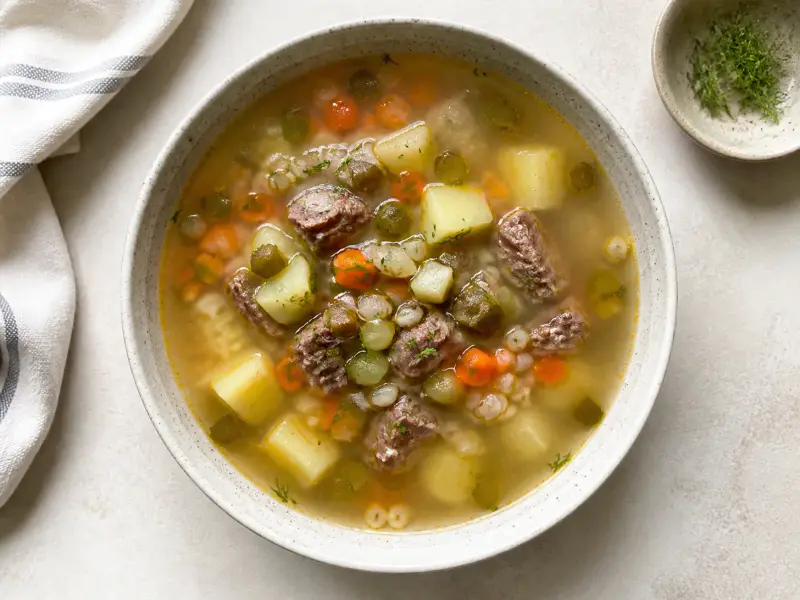 Rassolnik
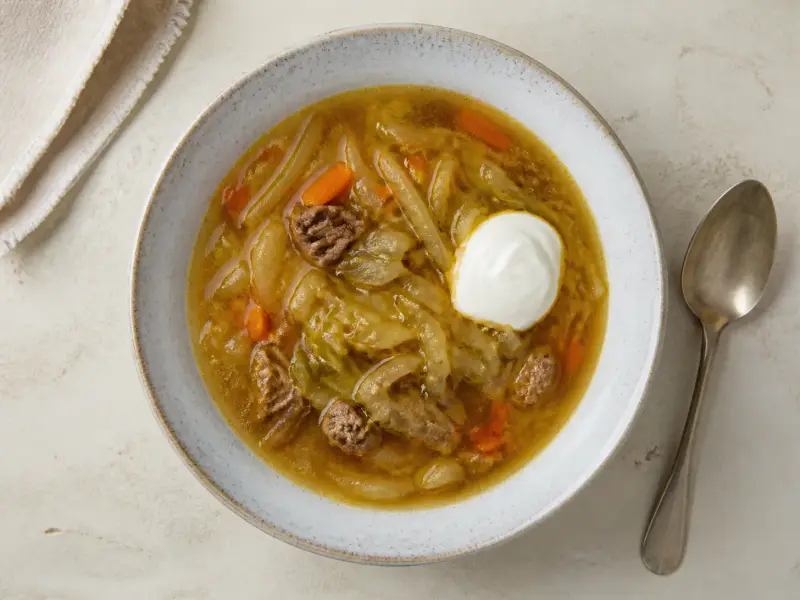 Shchi
Shchi Mushroom and Barley Soup
 Solyanka
 Ukha
Ukha