Weeknight Red Lentil Dal
मसूर दाल
Masoor dal
Red lentils simmered down to a loose puree with turmeric, then finished with cumin, mustard seed and garlic bloomed in hot ghee.
- Prep
- 10 min
- Cook
- 35 min
- Total
- 45 min
- Serves
- 4
- Revisions
- 5
Allergens
- Cereals containing gluten (via Skillet Flatbreads)
- Milk
- Mustard
Named from the ingredients as written, including those carried in from sub-recipes. This is not a guarantee — check the labels on what you actually buy, and note that a product’s recipe can change.
Ingredients
Serves
Method
Bring the lentils, water and turmeric to a boil. Skim off the foam that rises in the first few minutes.
Simmer partly covered for 20-25 minutes, stirring now and then, until the lentils collapse into a loose puree.
Season with salt. Loosen with hot water if it has gone thicker than you want.
Heat the ghee in a small pan until it shimmers.
Add the cumin and mustard seeds and wait for them to pop, about 30 seconds.
Add the garlic and chilli. Fry until the garlic is pale gold — seconds, not minutes, and it burns fast.
Pour the tempering over the dal and stir it through once.
Stir in the lemon juice off the heat.
Serve with steamed rice or warm flatbread.
Nobody has rated this recipe yet.
Sign in to rate this recipe. One rating per person, and you can change it.
What to expect
- Taste
The base is much gentler than the look of it suggests. Cooked red lentils are mild, faintly sweet and slightly nutty, closer to a savoury porridge than to anything you would call spiced, with a soft mineral, earthy undertone. The turmeric does almost nothing you can taste directly — it is doing the colour and a faint bitter-earthy backbone, musky and slightly medicinal, and its absence is more noticeable than its presence. Then the tempering arrives on top of all of that, and it arrives as three separate things rather than one: toasted cumin, which is warm, resinous and a little smoky and is the loudest flavour in the bowl; fried black mustard seed, which is nutty and toasted rather than hot — frying is precisely what takes the burn OUT of mustard, because the pungency needs an enzyme reaction with water and hot fat destroys the enzyme; and garlic gone gold in fat, which is sweet and nutty rather than sharp. Salt is doing more work than in most dishes because there is nothing else savoury in the pot, and an under-salted dal reads as bland rather than as under-seasoned. The lemon at the end lifts the whole thing about a semitone — without it the bowl tastes heavy and closed, and the difference between the spoonful before the lemon and the spoonful after is the most convincing thing anybody has ever tasted in this recipe. The chilli is not heat so much as a low warmth that shows up at the very back, after everything else has gone.
- Aroma
Cumin is the entire first impression and it is unmistakable — cuminaldehyde, warm and sweaty and resinous, the smell most Western noses actually mean when they say 'curry'. Under it the mustard seed is nutty and toasted, close to sesame. Garlic in hot ghee is the third layer and the most immediately appetising: sweet, buttery, not remotely sharp. Ghee itself has a smell butter does not, a cooked, caramelised, faintly nutty note that comes from the milk solids browning during its making. The dal underneath smells much quieter — warm, earthy, faintly of hot straw — and the turmeric gives it something musky and slightly gingery, which makes sense because turmeric is a rhizome and a relative of ginger. The important thing about all of it is the timing: a dal that has been simmering for half an hour smells of almost nothing, and the entire aroma of the dish is created in the last thirty seconds and arrives at the table with the bowl. It is the strongest at the moment of serving and it fades as the fat cools.
- Texture
Smooth, thick and slightly clinging, with no grain in it at all if it has been cooked far enough — the closest common comparison is a very loose custard or a thin porridge. It coats a spoon and it coats the tongue, and the coating is the point: the tempered fat is suspended through it, and fat clings to the mouth in a way that water-based liquid does not, which is physically why the flavour of a dal lasts and the flavour of a lentil soup does not. Against that softness the tempering provides the only contrast in the dish and it is a small one — cumin and mustard seeds are slightly crunchy for the first mouthful and then soften, and the garlic slices are silky. This dish has no crunch, no chew and no structure, and it should not pretend to; the bread or the rice is where the texture comes from, which is why it is never served alone.
- Sound
The best sound in this recipe is one a service film cannot have, and it is worth saying out loud so that nobody goes looking for it: hot tempering hitting the surface of the dal is a violent two-second hiss, a hundred degrees of difference turning water instantly to steam, and it is the reason cooks stand and listen to it. Nor can we have the mustard seeds popping, which is a fast dry rattle against a metal lid. What is left at the table is quiet and real: the thick, heavy, slightly sucking sound of a ladle going through dal and coming out, which is a much lower and wetter noise than any thinner liquid makes; the soft knock of a brass bowl set down on a brass tray; the small tear of a flatbread. And the dish keeps ticking faintly as the fat cools on the surface if the room is quiet enough and the microphone is close.
- How the flavour moves
It runs from top to bottom, and it is unusual in that the last thing added is the first thing you taste. Toasted cumin and ghee arrive first, off the surface, before the spoon is in the mouth. Then the body — mild, sweet, earthy lentil, thick and warm and quiet, which is the largest part of the mouthful and the least assertive. The garlic comes through the middle, sweet rather than sharp. The lemon arrives late and high and cuts across everything, which is why it goes in off the heat rather than being cooked in — heat would blunt exactly the sharpness that does the job. And it finishes long and warm and low: the chilli warmth at the back of the throat, cumin still there after the swallow, and a coating of fat that keeps all of it on the tongue for a surprisingly long time. Across a whole bowl the arc goes the other way — the spice on the surface is spent in the first few spoonfuls, and the last third of the bowl is milder, thicker and cooler than the first, which is a good argument for stirring the tarka in rather than leaving it all on top.
- Serve it
Served hot and eaten hot, and it holds heat unusually well because it is thick — a bowl of dal is still properly hot ten minutes after a bowl of soup has gone tepid, and it is quite capable of scalding somebody who assumed otherwise. The one thing to know is that it stiffens as it cools, and fast: something that poured cleanly off a ladle in the kitchen can be sitting up on the spoon by the time it reaches a table across a room. Cook it looser than you want it. Cold dal from the fridge is a solid, and that is not a fault.
- Goes with
Steamed basmati is the default and the best of them, because plain rice contributes nothing and is meant not to. Flatbread — roti, chapati, naan — turns it into something you eat with your hands, which changes the meal more than it sounds. Beyond starch, what dal wants is contrast, because the dish itself has none: something crunchy, something sharp and something raw. Sliced red onion with lemon and salt; a plain cucumber and tomato salad; yoghurt or a raita, whose acidity and coolness work against the fat exactly as they are supposed to; a lime pickle or a mango pickle, which are sharp and salty enough to reset the palate between spoonfuls; a poppadom. A dry spiced vegetable alongside — potatoes, cauliflower, green beans — makes it a full plate. What it does not want is another soft, rich, mild thing next to it.
Cook's notes
- Difficulty
Easy, with one genuinely difficult ten seconds in it. The lentils cannot really be got wrong — they are either collapsed or they are not, and more time fixes it. The tempering is the opposite: the window between the garlic turning pale gold and the garlic turning bitter and brown is about five seconds, over a heat high enough that you cannot pause to think. Everything for the tarka should be cut, measured and beside the hob before the fat goes on.
- Cost
Among the cheapest hot meals it is possible to make. 250g of dry red lentils feeds four people and costs less than a single portion of almost anything else on a menu; the ghee, the spices and the garlic are pennies per serving once bought, and the spices keep for a year. This is the recipe to point at when somebody says eating well is expensive.
- Equipment
A heavy-based saucepan — the base matters more here than usual, because lentil starch settles and a thin pan scorches it on the bottom while the top looks fine. A sieve for rinsing. A small frying pan or steel ladle for the tempering; the traditional tool is a tarka pan, a tiny long-handled steel pan that exists for nothing else and holds two tablespoons of fat. A lid for whatever you temper in, because popping mustard seeds genuinely jump out of the pan. A spoon for skimming, and a ladle.
- When to make it
Weeknights, which is in the name and is the honest answer. Also the end of a month, the day before a shop, and any evening where the alternative is a takeaway. It is a cold-weather dish in the sense that it is thick and hot, but it is eaten year-round in much hotter countries than this one, so that is a preference rather than a rule.
- Best season
None. Every ingredient is a dry store cupboard item apart from the garlic and the lemon, both of which are available all year. Lentils are harvested and dried, so the crop's own season is invisible to the cook. It is eaten more in cold weather here purely because it is thick and hot.
- You know it is done when
There should be no lentils left. Not soft lentils — no lentils. The surface goes from a suspension of visible orange grains to a single opaque golden mass that is the same all the way through, and the give-away is the edge of the spoon: when you drag it across the base, the trail it leaves should close slowly rather than instantly. The colour changes too and it surprises people the first time — dry red lentils are bright orange, and cooked they are a soft mustard yellow. The dal is never red.
- And it feels like
The tilt test is the real one, and it is better than any timer: tip the pan a few degrees and the dal should move as one slow mass and then settle flat again, like very loose custard. If it slides like soup it needs longer or less water; if it moves as a slab and holds a slope, it is over-thick and wants hot water stirred in. In the mouth it should be completely smooth with no grain at all — a slight chalkiness on the tongue means it was pulled off the heat early.
- Food safety
Nothing here carries the risks that make dried beans worth worrying about — red lentils contain none of the phytohaemagglutinin that makes undercooked kidney beans dangerous, and they need no soaking and no hard boil for safety. The ordinary rules apply to the leftovers: cool it within a couple of hours, refrigerate it, and reheat it once and properly to steaming rather than warm. A thick starchy dal left standing at room temperature all evening is exactly the sort of thing Bacillus cereus likes, and a pot of dal is very easy to leave on the hob and forget.
- Where it goes wrong
- Burning the garlic. It is the single commonest failure and it is unrecoverable: burnt garlic is bitter, the bitterness goes through the entire bowl the moment you pour, and there is no seasoning that hides it. Start again with two more tablespoons of ghee — it costs less than the dal does.
- A tarka pan that is not hot enough. Warm fat stews the spices instead of blooming them; the result is greasy, raw-tasting and flat, and leaving them in longer makes it worse rather than better. The mustard seeds should start popping within about thirty seconds. If they are sitting there quietly, the pan is too cool.
- Using ground spice instead of whole. Ground cumin in fat at 190°C burns in a second or two, and there is no popping to time it by.
- Adding the lemon early. Acid stiffens the pectin in the lentils' cell walls and stops them breaking down — a squeeze of lemon at the start and they will still be grainy an hour later. The same juice off the heat at the end is the best thing in the dish. Tomato does this too, which is why tomato-heavy dal recipes add it after the lentils are soft.
- Not skimming the foam, which leaves a faint soapy bitterness from the saponins and often a boiled-over hob as well.
- Not rinsing, which makes the dal gluey rather than creamy.
- Stopping while there are still recognisable lentils. 'Soft' is not the target; gone is the target. Grainy dal is undercooked dal and the only fix is more time.
- Serving it at the consistency you wanted. It thickens as it cools and as it travels; take it off the heat looser than the bowl should look.
- Letting it catch on the base. Lentil starch settles, and a pan left unstirred over a lively heat scorches underneath while the top looks perfect — and once it has caught, the smell is in the whole pot.
- If it does go wrong
Too thick: hot water, a splash at a time, stirred in over a low heat — this is normal and expected rather than a fault. Too thin: simmer it uncovered for another five or ten minutes; it thickens as it goes and it will thicken again in the bowl. Grainy or chalky: undercooked, keep simmering, and check nothing acidic went in early. Bland even after salting: it is almost always the acid rather than the salt, so add the lemon before you add more salt. Bitter: burnt garlic or unskimmed foam, and the garlic is the more likely of the two. Tastes of raw spice: the tarka fat was too cool. Catching on the bottom: move to a heavier pan, lower the heat, and do not scrape the burnt layer up into the dal — decant the good dal off the top instead. Gluey: not rinsed.
- Making it ahead
Very well indeed. It is arguably better made in advance than to order, and the practical route is to cook the dal fully and hold it, then make the tempering fresh at the moment of serving — that takes under a minute and restores everything that a night in the fridge takes off. If you must make it entirely ahead, expect to thin it with hot water and consider a fresh spoon of ghee and cumin over the top.
- Keeping it
Three to four days covered in the fridge, and it sets solid in there — the gelatinised lentil starch stiffens as it cools into something you could slice. That is normal and completely reversible with hot water.
- Reheating
Gently, with a splash of hot water stirred in, over a low heat or in short bursts in a microwave, stirring each time. It will look wrong and separated for the first thirty seconds and then come back together. Many cooks give reheated dal a fresh half-tempering — a spoon of ghee, a few cumin seeds, thirty seconds — which costs nothing and restores the top note that a night in the fridge takes off.
- Freezing
Freezes very well, better than most things in this collection, and for up to about three months. Freeze it slightly thinner than you would serve it. It is worth freezing in portions rather than a block, because a block has to be thawed entirely to get one meal out of it.
- Leftovers
The most useful leftover in the repertoire. Thinned with stock it is a soup; thickened by reduction and cooled it is a filling for a wrap or a stuffed flatbread; spread on toast under a fried egg it is breakfast. It is widely said to be better the next day, and part of that is true and testable — the tempered fat has had time to distribute, and the raw-garlic edge mellows — while the rest is the ordinary way people talk about anything reheated. What is definitely true is that it is THICKER the next day, and that is not the same as better.
- Scaling it
Scales cleanly in both directions on the 1:4 ratio of lentils to liquid by weight. Two things do not scale linearly: a bigger pot loses less to evaporation, so a doubled batch comes out looser than a single one and wants slightly less water; and the tempering should be made in more than one batch past about double, because a small pan is what gets the fat hot enough and crowding it with garlic drops the temperature exactly when you need it high.
- Substitutions
Ghee is not interchangeable with butter here even though it is made from it: ghee has had its water and milk solids removed, which takes its smoke point to somewhere around 250°C against butter's roughly 150°C, and you need 180 to 200°C to pop mustard seed. Butter would be black before the seeds moved. A neutral oil — sunflower, groundnut, rapeseed — works perfectly and makes the dish vegan; coconut oil is the South Indian choice and pushes the dish somewhere sweeter; mustard oil is pungent and excellent if you are used to it. Yellow mustard seed can replace black but is milder and less nutty. Other split pulses are NOT drop-in substitutes for masoor: moong dal behaves similarly but stays paler and sweeter, chana dal and toor dal hold their shape and take two to three times as long, and green or brown lentils will not collapse at all. Stock in place of water is a small improvement and not a necessary one — the dal makes its own body.
- Dietary swaps
Swap the ghee for a neutral oil and the whole dish is vegan, and nothing is lost except a little richness. It is naturally gluten-free if served with rice rather than bread. It is nut-free and egg-free as written. The two allergens present are both worth knowing about: ghee is a milk product and must be declared as one even though the milk solids have been removed, and MUSTARD is one of the fourteen allergens declarable in the UK and EU, which surprises almost everybody. There is no meaningful low-fat version — the fat is the delivery mechanism for the entire flavour of the dish, and taking it out leaves boiled lentils.
- Shopping for it
The one thing that genuinely matters is that the lentils are not old. Pulses that have sat in a warehouse for years take dramatically longer to soften and sometimes never do properly — it is the commonest reason a legume recipe fails for someone who followed it exactly — so buy from somewhere with turnover rather than from the back of a cupboard. Look for even colour and no dust. Whole spices should smell strongly when you crush one between your fingers; if a cumin seed smells of nothing, it will taste of nothing in the pan. Black mustard seeds are properly dark brown-black and small; the larger yellow ones are a different, milder spice.
- Keeping the cost down
Buy the lentils in a large bag from a South Asian grocer rather than a small box from a supermarket — the price difference is severalfold for the identical product, and red lentils keep well over a year in a sealed jar. The same shop will sell whole cumin and mustard seed at a fraction of the supermarket spice-rack price, and whole spices keep their aroma far longer than ground ones do. Ghee is expensive per tub and cheap per portion, and neutral oil is a perfectly good substitute if it is not. There is no ingredient in this recipe worth trading up on except, arguably, the lentils being fresh.
- Sustainability
This is one of the better arguments a food writer has. Pulses are nitrogen-fixing legumes — they take nitrogen from the air and put it into the soil through root nodules, which means they need little or no nitrogen fertiliser and leave the ground better than they found it, so they are used as break crops in rotation. Their greenhouse-gas footprint per gram of protein is among the lowest of any food, an order of magnitude below ruminant meat, and they are dry, light and shelf-stable, so shipping and storing them costs comparatively little. The ghee is the only animal product in the dish and the only meaningful part of its footprint; swapping it for oil removes almost all of that.
- Nutrition
Roughly 280 to 300 kcal per serving of dal alone, calculated from the quantities rather than measured — about 220 of them from the lentils and about 60 from the ghee — plus roughly another 220 if it is served with the rice. It carries around 15g of protein and 7 to 8g of fibre per serving, which is a lot of both for the price, and it is naturally low in saturated fat if oil is used in place of ghee. Two things worth being careful about. Lentils and rice together give a better amino-acid profile than either alone, because pulses are low in methionine and grains are low in lysine — but the once-standard advice that they must be eaten in the SAME MEAL was withdrawn decades ago and is not supported; the body maintains its own pool. And curcumin, turmeric's active compound, is fat-soluble, so a dal finished with ghee gets more of it into you than a fat-free one would — that much is true, and the amounts involved are nowhere near those used in supplement studies, so it is a pleasant footnote rather than a health claim.
- Worth it?
The most useful recipe in this collection, and it earns that on the arithmetic: 45 minutes, four servings, pennies each, one pan and a small one, and nothing in it that goes off. It is also the clearest demonstration in the whole set of a single principle — that flavour lives in fat, not in water — which is a thing worth understanding well beyond this dish. Make it once and the technique transfers to everything.
Where it comes from
- Origin
The Indian subcontinent, and no more precisely than that. Dal is eaten daily across India, Pakistan, Bangladesh, Nepal and Sri Lanka and has been for as long as there is any record of it. Masoor — the lentil used here — is grown across northern India and Nepal and is one of the country's staple pulses. There is no town, no cook and no century that can honestly be attached to this dish, and any claim otherwise should be treated as invention.
- Also called
Masoor dal (मसूर दाल) — literally the lentil, and by extension the dish made from it. The version finished with a tempering is often called dal tadka or dal tarka; a dal fry is the same idea with the aromatics cooked into the body of the dal rather than poured over it at the end.
- Said out loud
Dal is 'dahl', with the long open a of 'father' — it does not rhyme with 'pal', and the frequent English spelling 'dhal' exists mostly to stop people saying it that way. Masoor is muh-SOOR, stress on the second syllable. Tadka is TUD-kuh, tarka TUR-kuh; the two are the same word travelling through different languages.
- What the name means
Dal comes from the Sanskrit root dal-, 'to split', from a Proto-Indo-European root meaning to split or divide — the same idea underneath. It refers to the physical act of splitting the pulse in half, which is what makes it a dal rather than a bean, and then to the dish made from it. So 'dal' names a whole category of split pulses and their preparations, not a recipe, which is why there are hundreds of dals and no single one of them.
- History
Lentils are among the very oldest domesticated crops anywhere — the Fertile Crescent, roughly eight to ten thousand years ago — and they were carried east into South Asia in prehistory, appearing in the archaeological record of Indus Valley sites. Pulses became the protein backbone of a largely vegetarian food culture, and dal with rice or bread is one of the oldest continuously eaten meals on earth. Tempering as a technique is likewise old and geographically enormous. What is NOT documented is any moment at which this particular arrangement — masoor, turmeric, a cumin-mustard-garlic tarka — became a named dish, because it never did; it is a domestic default rather than a composition.
- Why it matters
Dal-chawal (dal and rice) and dal-roti are the everyday meal of hundreds of millions of people and a genuine shorthand for home cooking, in the same slot in the culture that soup or a roast occupies elsewhere. It carries a strong association with comfort, with convalescence and with what a household eats when nobody is trying to impress anybody. It is also the food of frugality without any of frugality's stigma — an expensive restaurant will serve dal and nobody thinks it is a compromise. The one caution for anyone writing about it: it is easy to reach for 'humble' and 'peasant food', and both are patronising about a dish that is on the table in every kind of household there is.
- When it is eaten
Ordinary days, almost by definition. It is a weeknight dish and a lunchbox dish and the thing made when the fridge is empty. It is also, in many households, the dish for someone who is ill or off their food, because it is soft, warm, mild and easy to digest. It is not a celebration dish; a feast would call for something richer, and the ceremonial dal is a different one — dal makhani, black lentils and cream cooked overnight, which shares a name and almost nothing else.
- The traditional way
Tempering, which is the technique the dish is built around, and it has a different name in almost every Indian language for the same operation: tadka or tarka in Hindi and Punjabi, chaunk or chhonk across the Hindi belt and Bengal, baghar in Urdu and Hyderabadi kitchens, phodni in Marathi, phoron in Bengali, oggarane in Kannada, popu or talimpu in Telugu, thaalithal in Tamil. Whole spices are dropped into fat hot enough to bloom them, in a strict order — the ones that need longest first, seeds before aromatics, garlic and chilli last because they burn — and the whole thing is poured over the dish at the very end. The order is not tradition for its own sake; it is a list of ingredients sorted by how fast they burn.
- How it changed
Two shifts worth knowing. The first is the restaurant version: a dal in a British or American Indian restaurant is usually far richer, thicker and more heavily built than a home dal, with onion, tomato, ginger, cream or butter, and often two temperings, because a home dal alone tastes thin to a palate expecting a restaurant curry. The second is the reverse move that produced this recipe — the Western weeknight red lentil dal, which strips out the aromatics that take time and keeps only the tempering, and has become a staple of vegetarian cooking well outside any Indian context. Both are real; neither is more authentic than the other, and the household version was always the plainer one.
- Regional variations
The lentil changes and the dish changes with it: toor or arhar dal (split pigeon peas) is the northern and western default and takes far longer, chana dal is nuttier and holds its shape, moong dal is the lightest and mildest, urad dal is the base of dal makhani. The tempering changes by region too — curry leaves and asafoetida and dried chilli in the south, panch phoron (a five-seed mix) in Bengal, nothing but cumin and garlic in much of the north, and mustard oil rather than ghee where mustard oil is the cooking fat. Sri Lankan parippu takes red lentils in a different direction entirely with coconut milk, pandan and cinnamon.
- How this version differs
It is deliberately reduced. There is no onion, no ginger, no tomato, no garam masala and no second tempering, which is a fair description of what most published dal recipes have and this one does not. What that buys is time — 45 minutes with 25 of them unattended — and what it costs is depth in the body of the dal, which the tempering is being asked to carry on its own. That is a defensible trade because the tempering is where most of the flavour was coming from anyway. It also mixes tempering conventions, putting black mustard seed and cumin in the same pan, which is a home-kitchen combination rather than a regional one.
- Sources and credit
Nobody. This dossier deliberately credits no inventor, no region and no first recipe, because none can be evidenced. The technical claims here are the ones with support behind them: dal's Sanskrit etymology, red lentils as hulled and split masoor, the fat-solubility of whole-spice aromatics, the deactivation of mustard's pungency enzyme by heat, and the effect of acid on legume cell walls. Where something is contested — most notably when salt should go in — it is marked as contested in the field rather than resolved.
Related recipes
This recipe uses
Made from scratch here, or buy it — either works.
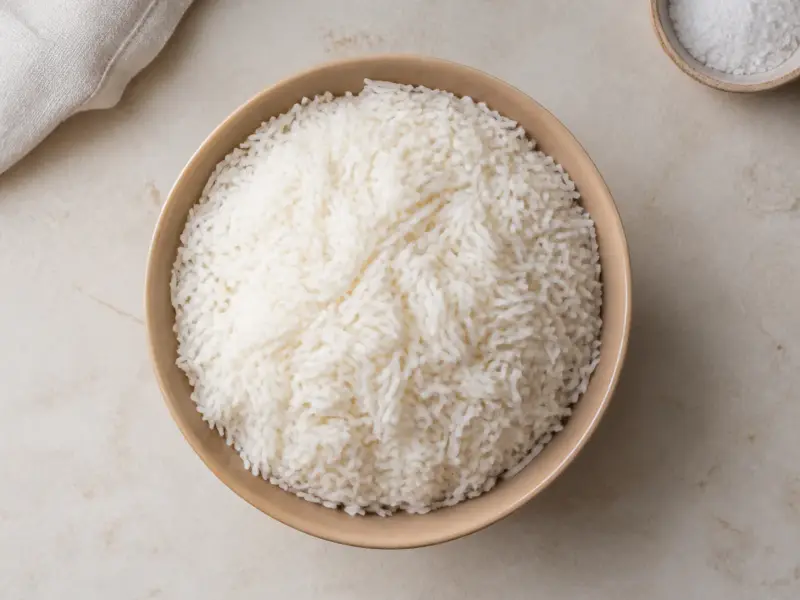 Steamed Basmati Rice
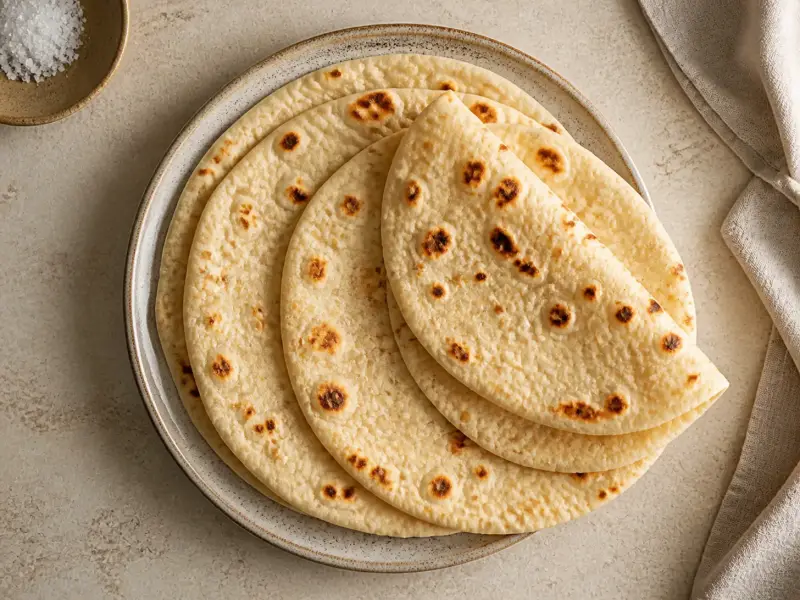 Skillet Flatbreads
 Cacio e Pepe
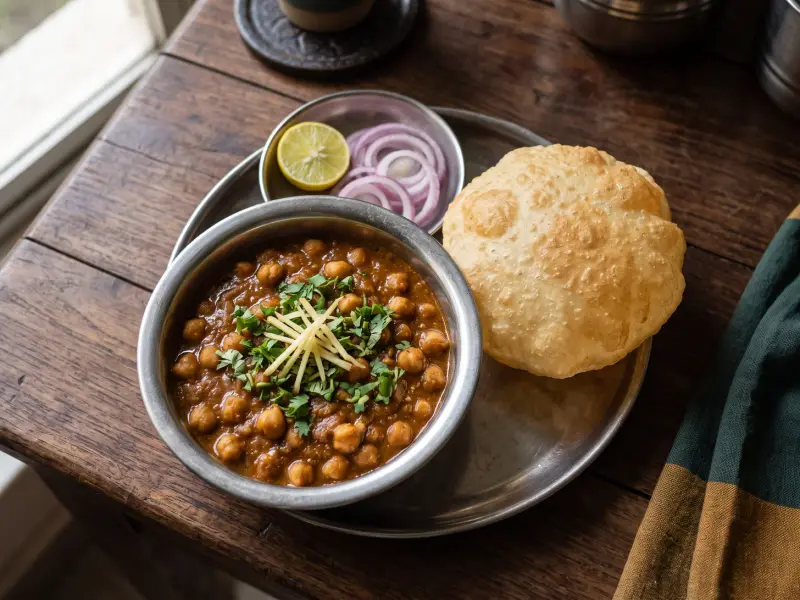 Chana Masala
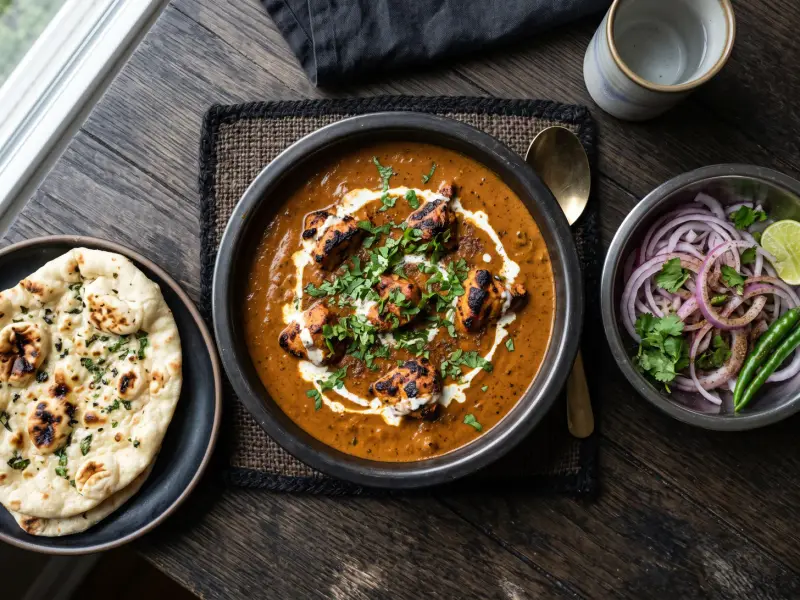 Chicken Tikka Masala
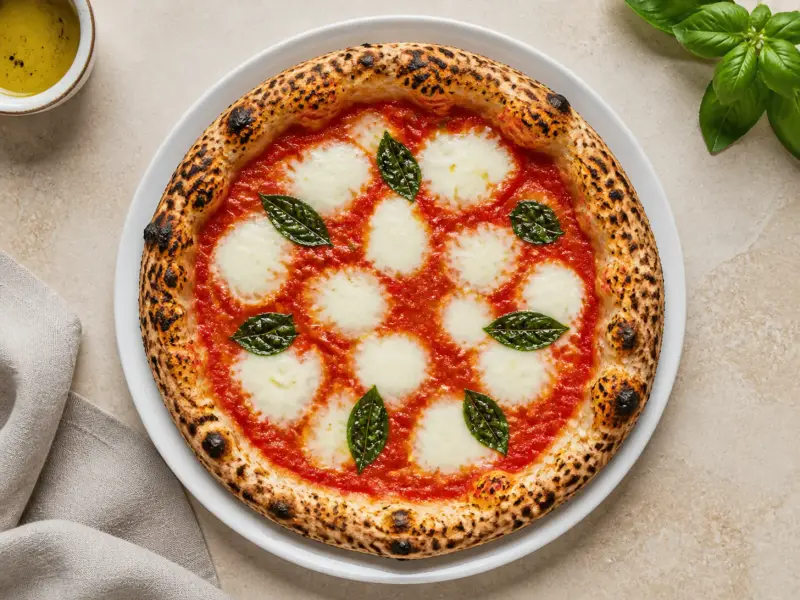 Classic Margherita Pizza
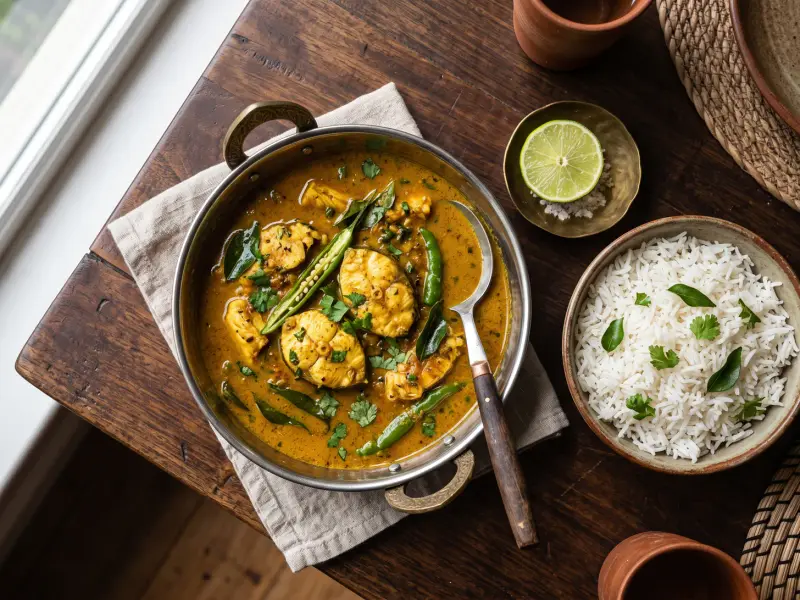 Goan Fish Curry
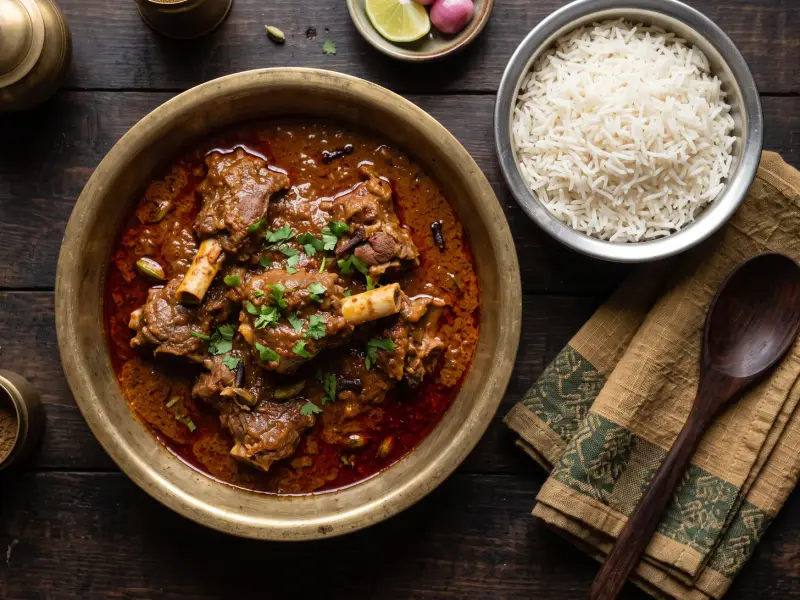 Lamb Rogan Josh