Dark Chocolate Brownies
Fudgy brownies built on melted dark chocolate and eggs whisked to a foam, which is what gives them their paper-thin crackled top.
- Prep
- 20 min
- Cook
- 30 min
- Resting
- 10 min
- Total
- 1 hr
- Serves
- 16
- Revisions
- 5
Ten seconds, if you are in a hurry
The whole dish, carried in and set down, with the one thing worth knowing about it said out loud. No method, no measuring — just what it should look like when it arrives.
Watch on YouTubeAllergens
- Cereals containing gluten
- Eggs
- Milk
- Soya
Named from the ingredients as written, including those carried in from sub-recipes. This is not a guarantee — check the labels on what you actually buy, and note that a product’s recipe can change.
Ingredients
Serves
Method
Heat the oven to 180C/350F.
Oil a 20cm square tin and line it with baking paper, leaving the paper standing proud on two sides as handles.
Melt the 200g of chopped chocolate with the butter in a heatproof bowl set over a pan of barely simmering water, stirring until it is smooth and glossy.
Lift the bowl off the pan and leave it for about 10 minutes, until the mixture is warm to the touch rather than hot. Chocolate still hot from the pan cooks the eggs into grainy threads the moment the two meet.
Whisk the eggs, caster sugar and vanilla together for 4-5 minutes, until the mixture is pale, thick and holds a ribbon on the surface for two or three seconds before it sinks back. This is the step people skip: the dissolved sugar rises during baking and sets as the paper-thin crackled top, and a batter that was only stirred together bakes out matte.
Pour the warm chocolate into the eggs in a slow stream, whisking as it goes.
Sift the flour, cocoa powder and fine salt over the batter.
Fold until the last dry streaks disappear, and no further.
Fold through the 100g of chocolate shards.
Scrape the batter into the tin.
Level the top with a spatula.
Bake for 25-30 minutes, until the top is set and dull with a papery sheen and the centre still wobbles faintly when you nudge the tin.
Push a skewer into the middle: it should come out with thick, damp crumbs stuck to it, and a skewer that comes out clean means they are already overbaked. This is the same underbake call as the brown butter cookies, except a hot tin holds its heat far longer than a tray, so the margin is narrower.
Scatter over the flaky salt while the surface is still hot.
Cool the brownies in the tin for at least 2 hours. They genuinely need the full time, because a warm brownie has not finished setting and the knife drags it into a smear.
Lift the slab out by the paper handles.
Cut into 16 squares, wiping the knife clean between cuts.
A square warmed through under the vanilla custard in this collection turns them from something eaten with coffee into a pudding.
Nobody has rated this recipe yet.
Sign in to rate this recipe. One rating per person, and you can change it.
What to expect
- Taste
Deep, dark and intensely chocolatey from the 70% chocolate used both melted through the batter and folded in as shards, with the cocoa powder adding further depth without extra sweetness — this reads as a genuinely bittersweet brownie rather than a purely sugary one, balanced rather than cloying.
- Aroma
A rich, warm, slightly bitter chocolate smell fills the kitchen as they bake, deepening into something closer to dark cocoa and toasted sugar right at the crackled top.
- Texture
Dense and fudgy rather than cakey, with a thin, slightly crisp top layer giving way immediately to a soft, almost molten-feeling crumb — this contrast between the papery top and the dense interior is the entire textural identity of the dish.
- Sound
Almost none; the more relevant sound is the faint tap on the tin during baking, listening for whether the centre still moves.
- How the flavour moves
The dark, slightly bitter chocolate flavour is present from the very first bite through to the last, with the folded-in shards delivering brief, more concentrated bursts of chocolate wherever a piece is bitten into directly, and the flaky salt on top cutting the richness right at the very start of each bite.
- Serve it
Good at room temperature, and arguably even better served slightly warm, when the interior is at its most fudgy and soft.
- Goes with
Vanilla custard or a scoop of vanilla ice cream, both of which contrast the dense, rich brownie with something cold, smooth and considerably less sweet.
Cook's notes
- Difficulty
Easy, though it depends on whisking the eggs and sugar properly and on pulling the tin from the oven before it looks fully done.
- Cost
Moderate — a reasonable quantity of dark chocolate is the main cost.
- Equipment
A heatproof bowl and pan for melting the chocolate, a whisk or mixer, and a 20cm square tin.
- When to make it
Everyday baking, bake sales, or a warm dessert served under custard or ice cream.
- Best season
None; every ingredient is available year round.
- You know it is done when
The top should look set and dull with a distinct papery sheen — the crackled surface — while the centre of the tin still visibly wobbles as a whole when nudged, rather than looking fully firm.
- And it feels like
A skewer pushed into the centre should come out with thick, damp crumbs still stuck to it; a skewer that comes out completely clean means the brownies are already overbaked and will be dry rather than fudgy once cooled.
- Food safety
The batter contains raw egg before baking, so it should not be eaten in quantity uncooked, though the finished brownie is fully cooked through despite its deliberately soft, underbaked-looking centre at the point it leaves the oven.
- Where it goes wrong
- Adding hot melted chocolate directly to the whisked eggs, which cooks them into grainy threads.
- Only stirring the eggs and sugar together rather than whisking to a real foam, which loses the crackled top entirely.
- Baking until the centre looks fully set, which means the brownies are already overbaked and will be dry rather than fudgy.
- Cutting into the brownies before they have had the full 2-hour cool, which drags the knife through an unset centre.
- If it does go wrong
No crackled top formed: the eggs and sugar were not whisked to a proper thick, pale foam before the chocolate went in. Brownies dry rather than fudgy: they were baked past the point where a skewer still came out with damp crumbs attached. Brownies won't cut cleanly: they need longer cooling in the tin — a warm brownie is not yet fully set, whatever it looks like.
- Making it ahead
Bakes and keeps well a day or more ahead; the flavour and texture are, if anything, easier to judge once fully cooled and rested than straight from the oven.
- Keeping it
Keeps in an airtight container at room temperature for 4-5 days, and the texture holds up well over that time.
- Reheating
A brief warm in a low oven or a few seconds in a microwave brings back a just-baked softness, and is specifically good under a scoop of custard or ice cream as a warm pudding rather than a room-temperature treat.
- Freezing
Freezes very well, whole or cut into individual squares, wrapped tightly; thaws quickly at room temperature or can be warmed from frozen.
- Leftovers
Keeps well for several days and freezes cleanly, making this an easy recipe to make ahead of when it is actually needed.
- Scaling it
Scales up in a larger tin, though a bigger, deeper tin needs a longer bake and the same underbake judgement by skewer and wobble rather than by a simple multiple of the original time.
- Substitutions
A 70% dark chocolate gives the balance of bitterness and sweetness this recipe is built around; a milk or lower-cocoa chocolate would make the finished brownie considerably sweeter and softer-set, since less of its sugar is coming from cocoa solids and more from the chocolate itself.
- Dietary swaps
Contains gluten, eggs, milk and soya (commonly present in commercial chocolate). Not easily made dairy free without changing both the butter and the chocolate used, since both are structural to the texture.
- Shopping for it
A genuine 70% dark chocolate, checked on the label, rather than a chocolate-flavoured baking bar, which behaves differently both in melting and in final flavour.
- Keeping the cost down
A reasonably priced 70% chocolate works as well here as a premium one, since the flavour is carried by quantity and cocoa percentage rather than by a particular brand.
- Nutrition
A rich, dense treat; the dark chocolate content means less added sugar is needed relative to a milk-chocolate version for the same depth of flavour.
- Worth it?
A reliably fudgy, intensely chocolatey brownie once the whisking and underbaking rules are trusted, and one of the easier make-ahead bakes in the collection.
Where it comes from
- Origin
The United States.
- Also called
Brownie.
- What the name means
Named simply for its dark brown colour.
- History
Brownie recipes appear in American cookbooks and mail-order catalogues in the decade either side of 1900, with no individual credited as the inventor. Chicago's Palmer House Hotel claims a brownie created for the 1893 World's Columbian Exposition, a story repeated widely in popular food writing but with no contemporary documentation to support it — it should be treated as an attractive but unverified claim rather than settled history. The dense, fudgy, crackle-topped style now considered the standard is a later 20th-century preference, developed well after the earliest documented recipes.
- Why it matters
A staple of American home baking and a fixture of cafés, school fêtes and bake sales across Britain, Europe and Australasia.
- When it is eaten
Everyday baking, bake sales, lunchboxes and casual entertaining rather than any specific occasion.
- The traditional way
Melting chocolate and butter together, whisking eggs and sugar to a real foam before combining the two, and folding in the dry ingredients minimally — the same fundamental method whether the result is cakey or fudgy.
- How it changed
Cakey and fudgy brownies differ mainly in the ratio of flour to fat rather than in the chocolate used, which means the same basic technique produces either style depending on small adjustments to that ratio rather than a wholly different method.
- Regional variations
The Palmer House still sells a brownie made to its own 19th-century specification, glazed with apricot — a genuinely different, older style from the dense, crackle-topped modern version most people now expect.
- Sources and credit
No individual is credited with inventing the brownie; the Palmer House's 1893 claim is widely repeated but unverified by contemporary evidence.
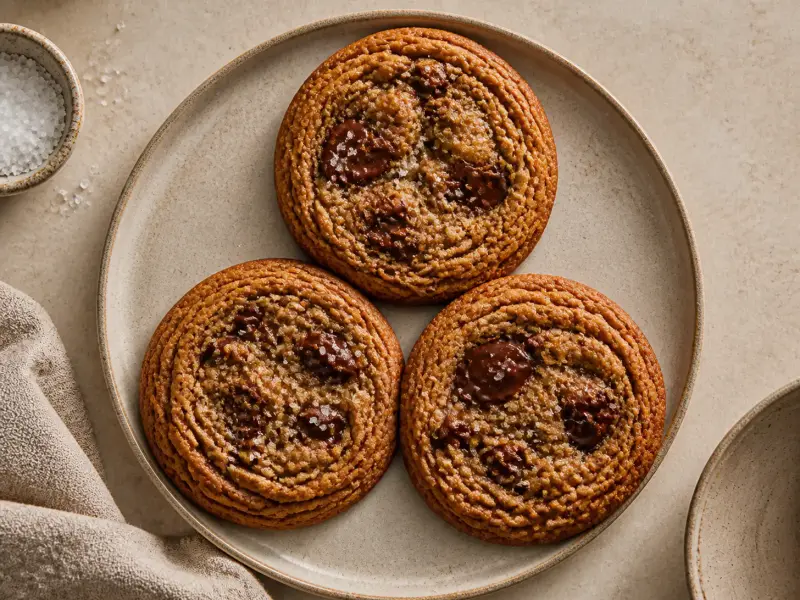 Brown Butter Chocolate Chip Cookies
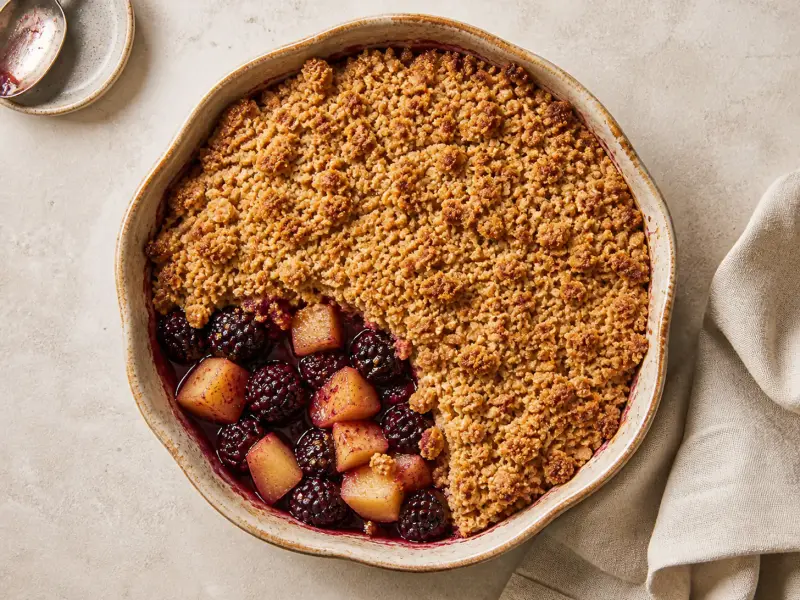 Apple and Blackberry Crumble
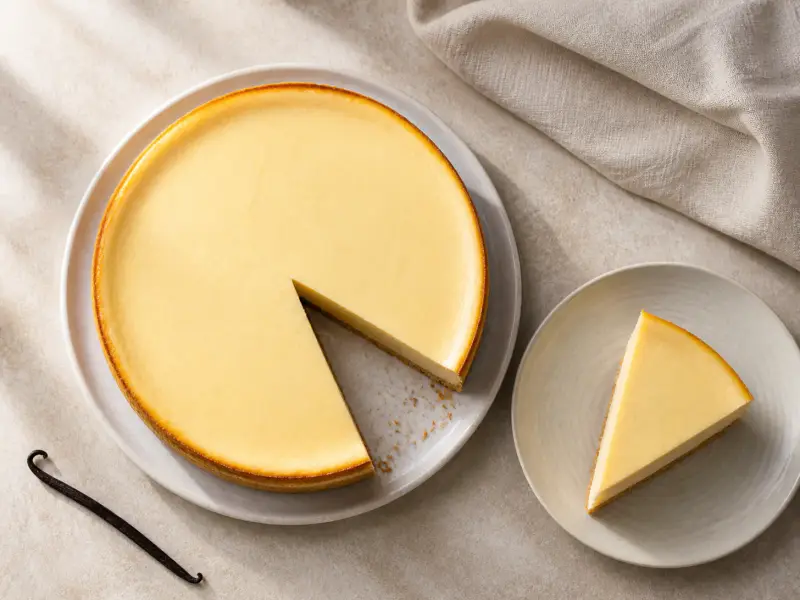 Baked Vanilla Cheesecake
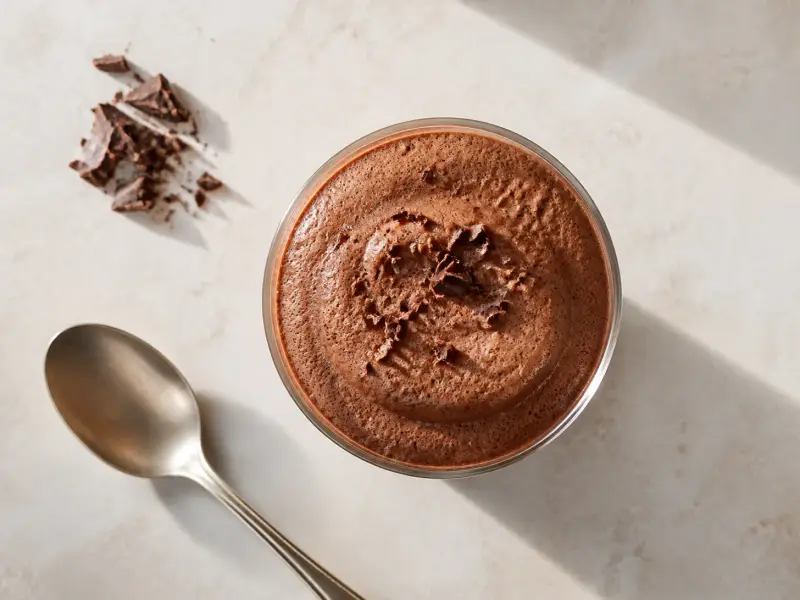 Dark Chocolate Mousse
 Double-Crust Apple Pie
 Lemon Drizzle Loaf Cake