Mapo Tofu
麻婆豆腐
Mápó dòufu
麻婆豆腐 — pockmarked old woman's tofu, for the cook who first sold it.
Silken tofu in a fierce red sauce of fermented bean paste and Sichuan pepper, with just enough pork to season it.
- Prep
- 10 min
- Cook
- 15 min
- Total
- 25 min
- Serves
- 4
- Revisions
- 6
Allergens
- Cereals containing gluten
- Soya
Named from the ingredients as written, including those carried in from sub-recipes. This is not a guarantee — check the labels on what you actually buy, and note that a product’s recipe can change.
Ingredients
Serves
Method
Bring a pan of lightly salted water to a bare simmer, slide in the tofu and leave it for 2 minutes, then drain carefully. This firms it just enough to survive the sauce.
Heat the oil in a wok over a high heat and fry the pork, breaking it up, until it is dry and beginning to crisp — about 4 minutes.
Turn the heat down to medium, push the pork aside and add the doubanjiang. Fry it for a full minute until the oil turns red.
Add the black beans, garlic, ginger and spring onion whites and fry for 30 seconds.
Pour in the stock, soy sauce and sugar and bring to a simmer.
Slide the tofu in and shake the wok rather than stirring. Simmer for 4 minutes.
Stir the cornflour slurry and add it in two goes, moving the tofu with the back of a ladle, until the sauce clings rather than pools.
Take the wok off the heat.
Scatter over the ground Sichuan pepper, the spring onion greens and the chilli oil, and serve at once with rice.
Nobody has rated this recipe yet.
Sign in to rate this recipe. One rating per person, and you can change it.
What to expect
- Taste
Fiercely savoury and fermented from the doubanjiang and black beans, with a building chilli heat and, distinctly, the tingling numbness of Sichuan pepper scattered on at the end — two separate sensations rather than one intensified spiciness. The pork adds a savoury backbone rather than dominating, and the tofu itself is mild, taking on the sauce almost entirely.
- Aroma
A fermented, faintly funky depth from the doubanjiang and black beans as they hit the hot oil, garlic and ginger underneath, and a sharp, fragrant lift from the Sichuan pepper once it is scattered on at the very end.
- Texture
Silken, barely-there tofu against a thick, clinging sauce, with small bursts of crisped pork throughout.
- Sound
A hard sizzle as the pork renders, softening to a gentle simmer once the tofu goes in, and near silence from then on since the pan is shaken rather than stirred.
- How the flavour moves
Savoury, fermented depth arrives first from the doubanjiang, chilli heat builds through the middle of the mouthful, and the tingling numbness of the Sichuan pepper is the last, lingering sensation once the heat has already registered.
- Serve it
Served hot, straight from the wok, and best eaten promptly — the tofu keeps absorbing the sauce and softening the longer it sits.
- Goes with
Plain steamed rice, which is not an optional side here but the thing the whole dish is built to be eaten with.
Cook's notes
- Difficulty
Easy — the technique that matters most is restraint, not skill.
- Cost
Cheap — tofu, a small amount of pork and pantry Sichuan pastes.
- Equipment
A wok, and a ladle rather than a spoon or spatula for moving the tofu.
- When to make it
A fast weeknight dinner that comes together almost entirely in one pan.
- Best season
None; every ingredient is shelf-stable or standard fresh produce available year round.
- You know it is done when
The oil should visibly turn red once the doubanjiang has fried properly, and the finished sauce should look glossy and thick enough to cling to the tofu rather than sit as a thin, watery pool underneath it.
- And it feels like
The tofu should hold its cube shape with only the faintest give under a spoon, and the sauce should coat rather than drown it.
- Food safety
The pork needs to be cooked through and visibly dry and starting to crisp before anything else goes in, which the initial four minutes of high heat is there to ensure.
- Where it goes wrong
- Stirring the tofu with a spoon or spatula, which breaks it into scraps within seconds.
- Cooking the Sichuan pepper into the sauce rather than scattering it on at the end, which burns off most of its numbing quality.
- Under-frying the doubanjiang, which leaves the dish tasting raw and one-dimensional rather than deep and savoury.
- Using firm tofu and expecting the same silky texture silken tofu gives.
- If it does go wrong
Flat or one-dimensional sauce: the doubanjiang was not fried long enough for the oil to turn red. No numbing sensation: the Sichuan pepper was cooked in rather than added raw at the end, or was old and had lost its potency. Broken tofu: it was stirred rather than shaken and moved with the back of a ladle.
- Making it ahead
The sauce base can be made a little ahead, but the tofu should go in and be finished close to serving, since it continues to soften the longer it sits.
- Keeping it
Keeps for 2-3 days refrigerated, though the tofu continues to soften slightly and is never quite as intact as freshly made.
- Reheating
Reheat gently over low heat, without stirring hard, so the tofu does not break up further.
- Freezing
Not recommended — tofu's texture changes considerably once frozen and thawed, turning spongier and less silky.
- Leftovers
Good over rice the next day, though gentler handling than usual is needed since the tofu is more fragile after a night in the fridge.
- Scaling it
Scales reasonably well, though a wider pan is needed to keep the tofu in a shallow enough layer to shake rather than stir.
- Substitutions
Doubanjiang has no real substitute — it is fermented, salty, and gives the dish both its colour and much of its savoury depth, and a generic chilli paste in its place makes a differently flavoured dish. Firm tofu can be used in place of silken for a sturdier, less silky result if silken feels too fragile to work with.
- Dietary swaps
Contains soya and cereals containing gluten from the doubanjiang and soy sauce. Vegetarian if the pork is omitted; not naturally vegan given some doubanjiang brands, so check the label if that matters.
- Shopping for it
Doubanjiang and real Sichuan peppercorns are both worth seeking from a specialist Chinese grocer or online rather than substituting, since neither has a close equivalent.
- Keeping the cost down
One of the cheapest substantial dishes in Sichuan cooking, since a small amount of pork seasons a large pan of inexpensive tofu.
- Sustainability
A largely plant-based dish with meat used sparingly as seasoning rather than bulk.
- Nutrition
A good source of plant protein from the tofu alongside a modest amount of meat, and a spicy, high-flavour dish relative to its actual fat content.
- Worth it?
A dish where confidence not to overwork the tofu matters more than any other single skill, and the reward is a sauce with real depth from genuinely fermented ingredients.
Where it comes from
- Origin
Chengdu, Sichuan province, China.
- Also called
Mápó dòufu (麻婆豆腐).
- Said out loud
mah-po doe-foo.
- What the name means
Ma means pockmarked and po means old woman; dofu is tofu — a description of the restaurant's proprietor attached affectionately to the dish she made.
- History
The dish is traditionally credited to a Chengdu restaurant of the 1860s run by a woman known for a pockmarked face, whose cooking became known by that description. As with much restaurant-origin folklore from this period, the account is widely repeated and accepted rather than independently documented at the time it is said to have happened.
- Why it matters
One of the defining dishes of Sichuan cuisine and among the clearest examples of málà, the combined numbing-and-hot sensation the region's cooking is known for.
- When it is eaten
Everyday Sichuan home and restaurant cooking rather than a dish tied to a specific occasion.
- The traditional way
Frying the fermented chilli bean paste in oil until it turns red before anything else goes in, handling the tofu as little as possible once it is in the pan, and finishing with raw ground Sichuan pepper rather than cooking it into the sauce.
- How it changed
Versions outside Sichuan, and often outside China altogether, are frequently milder and built with more meat relative to tofu, and commonly omit or reduce the Sichuan pepper that gives the dish its numbing half.
- Regional variations
The ratio of pork to tofu and the intensity of the chilli vary considerably between restaurants even within Sichuan, but the fried doubanjiang base and the finishing Sichuan pepper are consistent markers of a genuine version.
- How this version differs
This recipe keeps the pork to a seasoning role rather than making it a main component, staying closer to the tofu-forward balance of the traditional dish than to meat-heavy adaptations.
- Sources and credit
Credited to an unnamed Chengdu restaurant proprietor known only by the pockmarked description that became the dish's name; no further individual attribution exists.
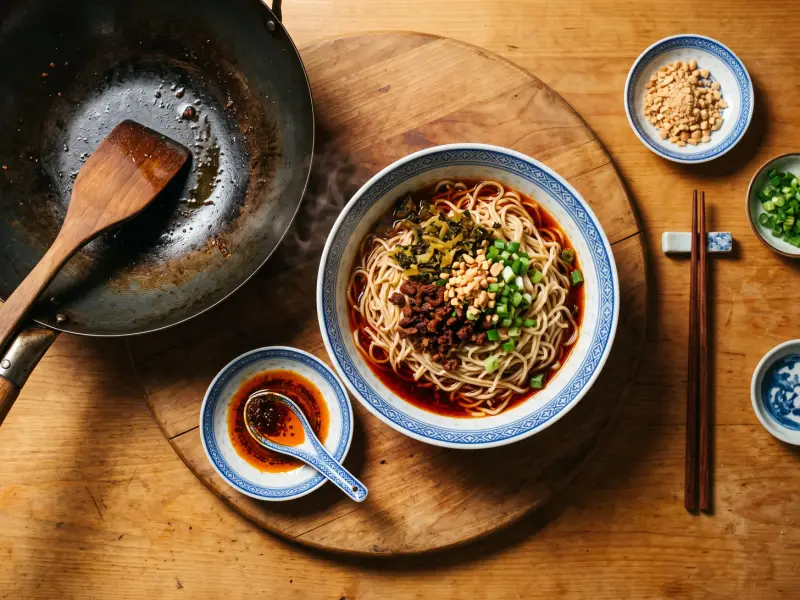 Dan Dan Noodles
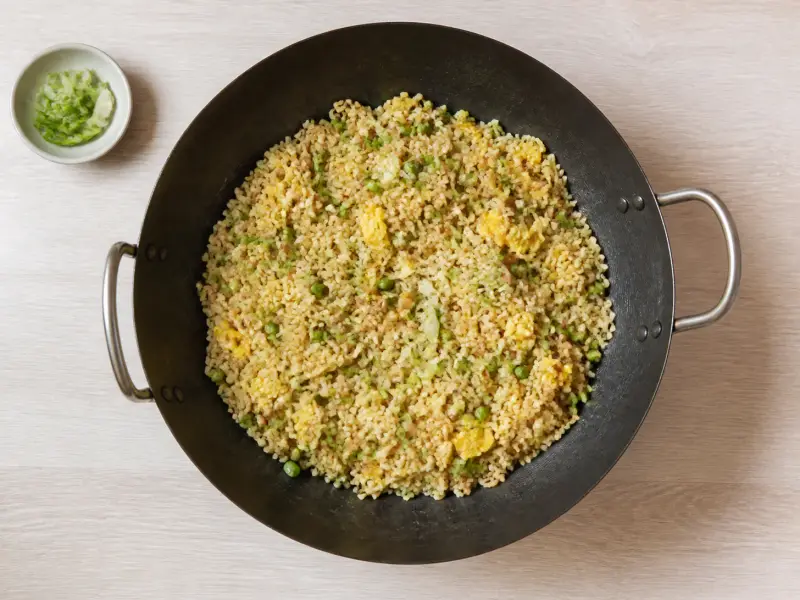 Egg Fried Rice
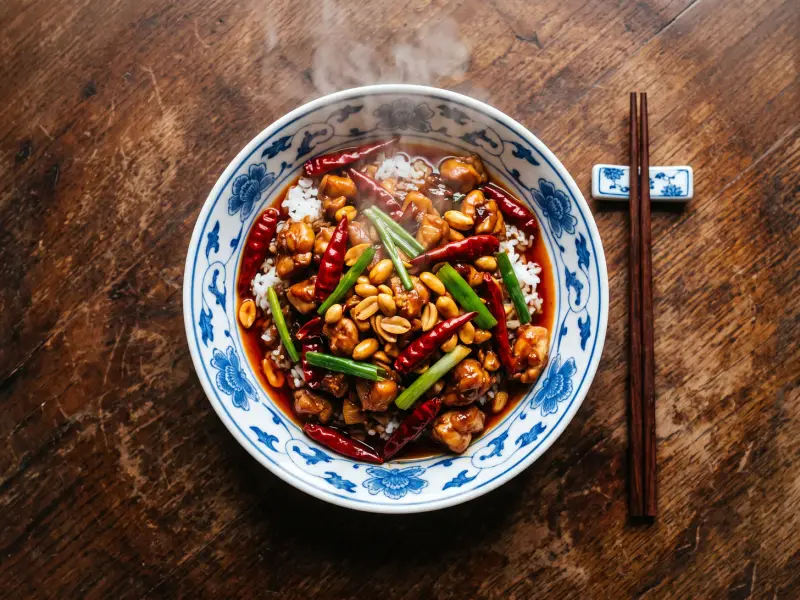 Kung Pao Chicken
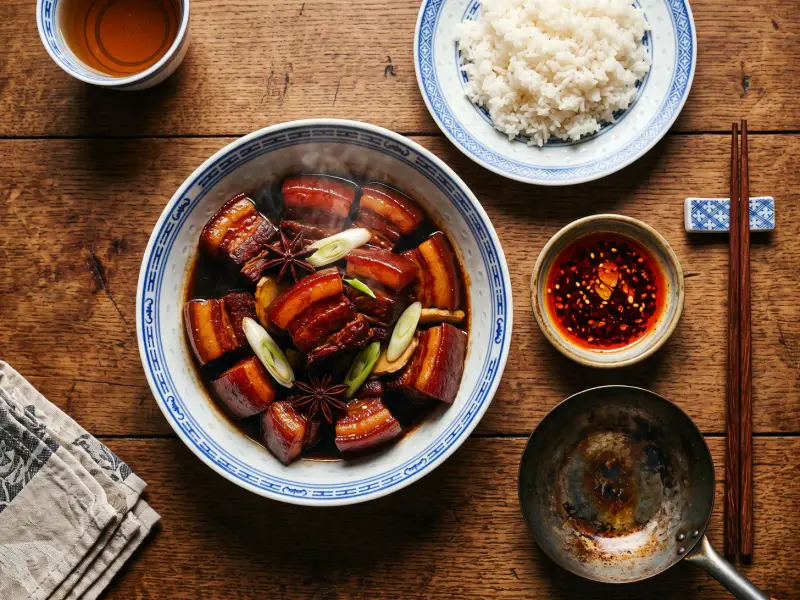 Red-Braised Pork Belly
 Steamed Sea Bass with Ginger and Spring Onion