Dan Dan Noodles
擔擔麵
Dàndàn miàn
擔擔麵 — carrying-pole noodles, for the shoulder pole hawkers sold them from.
Noodles over a pool of chilli oil, sesame paste and vinegar, topped with crisp fried pork and preserved vegetable.
- Prep
- 15 min
- Cook
- 15 min
- Total
- 30 min
- Serves
- 2
- Revisions
- 5
Allergens
- Cereals containing gluten
- Peanuts
- Sesame
- Soya
Named from the ingredients as written, including those carried in from sub-recipes. This is not a guarantee — check the labels on what you actually buy, and note that a product’s recipe can change.
Ingredients
Serves
Method
Heat the oil in a wok over a high heat and fry the pork, breaking it up, for 5-6 minutes until it is dry, brown and crisp at the edges.
Add the Shaoxing wine and dark soy and let them cook away.
Add the ya cai and fry for another 2 minutes, then tip it all into a bowl.
In each serving bowl, stir together half the sesame paste, chilli oil, light soy, vinegar, sugar, garlic and ground Sichuan pepper.
Loosen each with the warm stock until it is the consistency of single cream. Sesame paste seizes if you add liquid all at once, so go in stages.
Boil the noodles until just tender, keeping them slightly firmer than you would want to eat, since they carry on softening in the hot sauce.
Drain and pile them straight onto the sauce without mixing.
Top with the crisp pork, spring onions and crushed peanuts.
Take them to the table unmixed, and tell people to stir from the bottom.
Nobody has rated this recipe yet.
Sign in to rate this recipe. One rating per person, and you can change it.
What to expect
- Taste
Three things at once and none of them is what a Western palate expects from noodles. First the sesame paste, which is thick, roasted, faintly bitter and does the job cream does elsewhere. Then the sour — Chinkiang vinegar is malty and dark and much rounder than a wine vinegar, and there is more of it than people anticipate. Then chilli heat from the oil. And underneath all of it, the thing that makes the dish Sichuan rather than merely spicy: Sichuan pepper, which is not heat at all but a physical tingling numbness across the lips and tongue. Ya cai is the salty, funky, fermented note that ties it together and is the ingredient most people cannot identify and would miss immediately. The pork is savoury and crisp. Garlic is raw and sharp. It is a loud, complicated bowl and the balance is between numbing, hot, sour, salty and nutty rather than between sweet and sour.
- Aroma
Toasted sesame first and strongest. Then chilli oil, then vinegar, which is sharp and malty in the nose. Sichuan peppercorns smell citrusy and faintly of pine — nothing like black pepper — and the smell is much more floral than the sensation they produce. Frying pork underneath all of it.
- Texture
The contrast is the dish. Slippery noodles, a thick clinging sauce, and crisp granular pork that stays crunchy because it was fried dry. Peanuts add a second, harder crunch. If the pork is soft the bowl loses most of its interest, which is why five to six minutes of frying matters.
- Sound
The pork frying is the main sound and it is a good cue: it goes from a wet spitting to a dry crackle as the moisture leaves, and the change is clearly audible. Everything after that is quiet — noodles into a bowl, and then the sound of somebody stirring.
- How the flavour moves
Sesame and salt first. Then sourness arriving sharply, then chilli heat building. And then, about five seconds in, the Sichuan pepper starts — a buzzing, vibrating numbness on the lips that has nothing to do with taste and is caused by a compound that stimulates touch receptors directly. It builds over the bowl rather than fading. The finish is nutty, sour and numb all at once, and it is genuinely unlike anything else in this collection.
- Serve it
Hot noodles onto a room-temperature sauce, which is how the dish is built and why it works fast. The heat of the noodles and the splash of warm stock bring the sauce up to temperature; nothing is cooked together.
- Goes with
Cold light beer, which is what Chengdu drinks with it. Plain cucumber, smashed and dressed with vinegar and garlic, which is the standard cooling side. Chinese tea. Where it fails is with wine, which the vinegar and the numbing both destroy, and next to anything delicate.
Cook's notes
- Difficulty
Easy, with one moment that catches people out: sesame paste seizes into a stiff lump if liquid goes in all at once, exactly like tahini does. Adding the stock in stages solves it completely.
- Cost
Low per bowl, moderate to set up. Ya cai, Chinese sesame paste, Chinkiang vinegar and Sichuan peppercorns are four specialist purchases and all four keep for a long time.
- Equipment
A wok or heavy frying pan, a pan for the noodles, and two bowls. Something to grind the Sichuan peppercorns — a mortar or a spice grinder.
- When to make it
Any time. It is fast enough for a weeknight and interesting enough not to feel like one.
- Best season
None.
- You know it is done when
The pork should be dark brown, separated into small dry crumbs, and visibly crisp at the edges rather than sitting in liquid. The sauce should be the consistency of single cream — if a spoon dragged through it leaves a channel that holds, it is too thick and the noodles will not coat.
- And it feels like
Sauce should coat a noodle rather than cling in clumps. Pork should be crunchy.
- Food safety
Nothing unusual. Minced pork fried for six minutes is well past cooked.
- Where it goes wrong
Not frying the pork long enough, so it is soft and stewed rather than crisp. Adding all the stock to the sesame paste at once, which seizes it into a stiff ball. Taking chilli oil from the top of the jar and leaving the sediment behind, which is where the flavour is. Using tahini and expecting the same depth. Overcooking the noodles, which keep softening in the hot sauce. And mixing the bowl before it reaches the table, which is a small thing and loses the moment the dish is built around.
- If it does go wrong
Sauce seized into a lump: keep adding warm liquid a teaspoon at a time and whisking; it comes back. Too thick to coat: more stock. Too sharp: half a teaspoon of sugar. Not numbing: the Sichuan peppercorns are old — they lose their potency within a year and a stale batch does nothing at all. Bland: more ya cai and more salt, in that order. Pork soggy: it needed several more minutes of frying.
- Making it ahead
The pork topping, up to three days ahead or frozen, and it is the only part that takes any real time. The sauce can be mixed a day ahead and kept in the fridge. Noodles to order.
- Keeping it
The pork topping keeps three days in the fridge and is worth making in double quantity. The assembled bowl keeps for about four minutes.
- Reheating
The pork, in a dry pan, which crisps it again. The bowl, no.
- Freezing
The pork topping freezes for two months.
- Leftovers
Spare crisp pork is excellent on rice, in a lettuce wrap, or over plain noodles with nothing else.
- Scaling it
Freely, since almost nothing is cooked together. The only constraint is a pan big enough to fry the pork in a single layer, which matters for crispness.
- Substitutions
Chinese sesame paste and tahini are not the same thing and the difference is real: Chinese paste is made from fully roasted seeds and is dark, thick and strongly nutty, where tahini is made from raw or lightly toasted seeds and is paler and more bitter. Tahini will work and the bowl will taste noticeably less deep. Ya cai — Sichuan preserved mustard stem — has no good substitute; zha cai is the nearest and is saltier and crunchier. Chinkiang vinegar is malty and slightly sweet and a good balsamic is closer to it than any wine vinegar.
- Dietary swaps
Not vegetarian as written, though a version with crumbled firm tofu or finely chopped mushrooms in place of the pork is a genuine Sichuan variation rather than a compromise. Contains sesame, soya, cereals containing gluten and peanuts — four declarable allergens, all declared. Not gluten-free: the noodles are wheat and the soy sauce contains wheat.
- Shopping for it
Ya cai in vacuum packets, Chinese sesame paste in jars, Chinkiang black vinegar, and whole Sichuan peppercorns — buy those last from somewhere with turnover, because they lose their numbing power with age and a stale batch is the commonest reason this dish disappoints. Chilli oil with visible sediment, or make your own.
- Keeping the cost down
The four specialist ingredients are the whole cost and all four keep for months to years, so the second bowl costs a fraction of the first. Chinese supermarkets sell all of them for a fraction of what a Western supermarket charges for approximate substitutes. Make double the pork topping and freeze half.
- Sustainability
Nothing notable. 200g of pork feeding two is a modest amount of meat for a substantial meal.
- Nutrition
Around 780 calories a bowl, which is substantial — sesame paste, chilli oil and pork are all fatty. It is also high in protein. In Chengdu the portion would be half this, which is worth knowing if it seems like a lot.
- Worth it?
Worth it, and worth the shopping trip. The four specialist ingredients between them unlock a whole region's cooking and cost less than a takeaway; after that this is twenty minutes and about two pounds a bowl. It is also the best introduction to Sichuan pepper there is, because the numbing is unmistakable against a background this simple.
Where it comes from
- Origin
Chengdu, in Sichuan province, as street food.
- Also called
Dàn dàn miàn — 担担面.
- Said out loud
dahn dahn myen, with both dàn on a falling tone.
- What the name means
Carrying-pole noodles. A dàn is the shoulder pole with baskets at each end that hawkers used; the vendor carried the noodles in one basket and the sauce, toppings and bowls in the other, and made the dish up wherever a customer stopped him. The name is a description of the delivery method, which is unusual and is why the dish is portioned small.
- History
The dish is usually credited to a Chengdu street vendor in the nineteenth century, and the name has stuck to a format rather than to a single recipe. Two things about the original are worth knowing because they are so often lost. First, it was dry — a small amount of intensely flavoured sauce at the bottom of a small bowl, not noodles in soup. The soupy version widespread in Chinese restaurants abroad, and in some parts of China, is a later adaptation. Second, the portions were small: this was a snack bought from a man walking past, not a meal. The Sichuan peppercorn in it is not a peppercorn at all — it is the dried husk of a citrus relative, and the numbing sensation comes from a compound that acts directly on the nerves rather than on the taste buds.
- Why it matters
It is one of the handful of Sichuan dishes that carried the concept of málà — numbing-hot — out of the province, and it is a standard by which a Sichuan restaurant is judged. The pole itself has become an emblem: the dish is named after a piece of equipment nobody uses any more, which fixes a moment of street-food history in the language.
- When it is eaten
Any time. It is a snack in Chengdu and a meal everywhere else.
- The traditional way
Building the sauce in the bowl rather than cooking it. Nothing in the sauce is heated — the noodles bring the heat — which keeps the raw garlic sharp, the vinegar bright and the Sichuan pepper's volatile aromatics intact.
- How it changed
It got wetter and bigger. Adding stock to make a soup, doubling the portion, and in some places adding peanut butter and sugar until it resembles a satay sauce, are all departures from the Chengdu dish. The version here is closer to the original than most restaurant versions outside China.
- Regional variations
The dry Chengdu version and the soupy version are the main division. Some versions use no sesame paste at all and are simply chilli oil, soy and vinegar, which is leaner and sharper. Northern Chinese versions tend milder and sweeter.
- How this version differs
It is a middle position — a small amount of stock to loosen the sauce, which is not the bone-dry original and is far from a soup. The instruction to serve it unmixed is the traditional one and is usually omitted.
- Sources and credit
None documented. The street-vendor origin and the meaning of the name are the standard account.
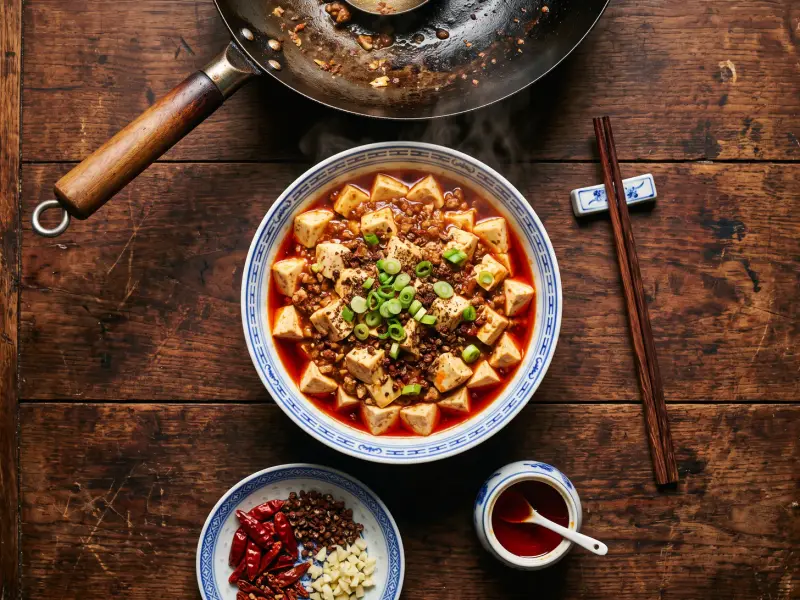 Mapo Tofu
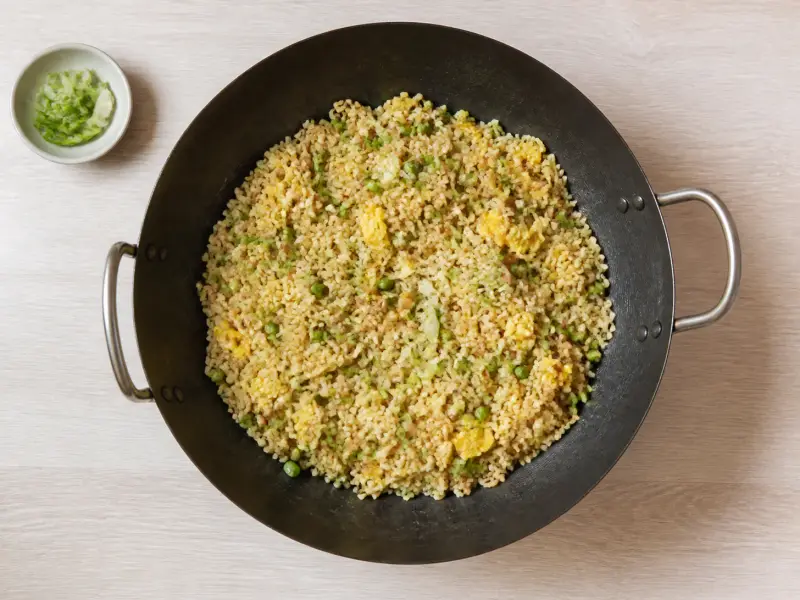 Egg Fried Rice
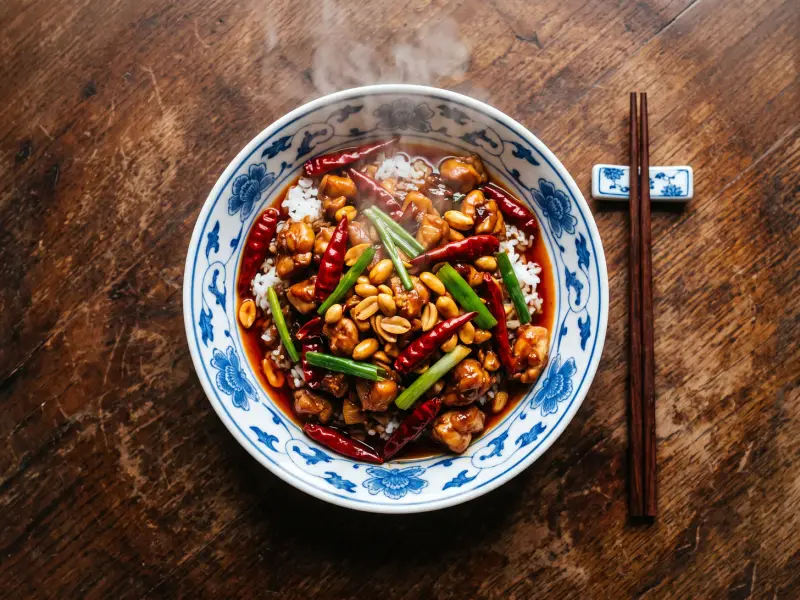 Kung Pao Chicken
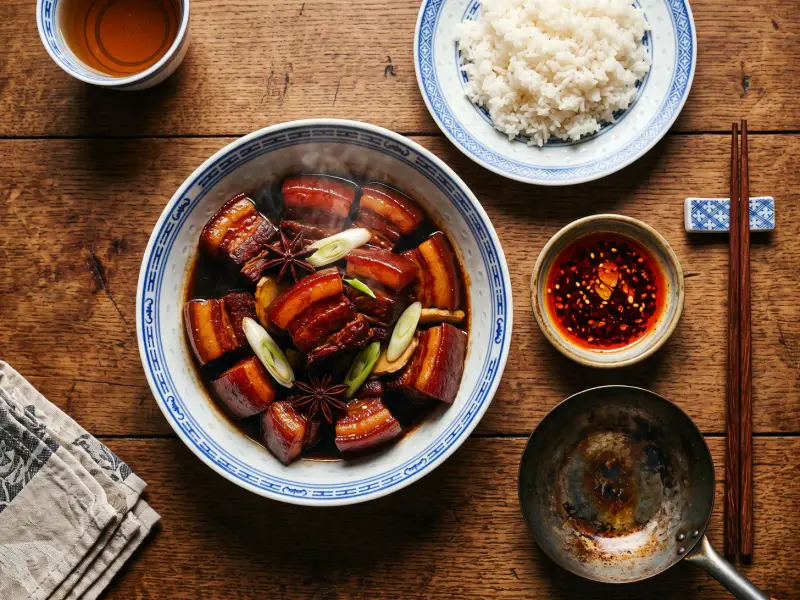 Red-Braised Pork Belly
 Steamed Sea Bass with Ginger and Spring Onion