No-Knead Sourdough Focaccia
Focaccia
A slow sourdough focaccia fermented overnight in the fridge, dimpled deep so the pockets fill with olive oil and flaky salt.
- Prep
- 15 min
- Cook
- 25 min
- Resting
- 12 hr 45 min
- Total
- 13 hr 25 min
- Serves
- 8
- Revisions
- 5
Allergens
- Cereals containing gluten
Named from the ingredients as written, including those carried in from sub-recipes. This is not a guarantee — check the labels on what you actually buy, and note that a product’s recipe can change.
Ingredients
Serves
Method
Mix flour, water and starter until no dry flour remains. Rest 45 minutes.
Add the fine salt and squeeze it through the dough. It will feel slack — that is correct.
Over the next 2 hours, perform four sets of stretch-and-folds spaced 30 minutes apart.
Cover and refrigerate 12-18 hours.
Oil a 23x33cm tin generously, corners included.
Tip the dough into the tin and turn it once to coat.
Pour 40ml of the olive oil over the dough and spread it to the edges with your palm.
Let the dough come to room temperature for 2-3 hours, until it has slackened out to fill the tin and wobbles when you shake it.
Drizzle over the remaining 20ml of oil.
Dimple deeply with oiled fingertips, right down to the base of the tin. Press straight down rather than dragging the dough sideways, which tears the bubbles you have spent two days building.
Scatter with flaky salt and the rosemary leaves.
Bake at 230C/450F for 20-25 minutes until deep gold. Lift it out of the tin straight away so the base stays crisp.
Cut it into thick pieces for the minestrone in this collection, which wants a bread with enough crumb to hold the broth.
The seeded rye loaf in this collection is the other bread here that is mixed rather than kneaded, though rye is left alone because it has almost no gluten to develop, not because time is doing the work for you.
Nobody has rated this recipe yet.
Sign in to rate this recipe. One rating per person, and you can change it.
What to expect
- Taste
A faint, genuine sourness runs through the crumb from the long, cold sourdough ferment, against the richness of the olive oil pooled in the dimples and the sharp, resinous bite of rosemary and flaky salt on top — noticeably more complex and less flatly yeasty than a same-day, commercial-yeast focaccia.
- Aroma
Warm, faintly tangy baked bread first, olive oil frying gently in the dimples, and rosemary's sharp, resinous scent rising as soon as it hits the oven's heat.
- Texture
A crisp, almost fried base where the oil has pooled, giving way to an open, airy, well-holed crumb — the contrast between the crisp bottom and the soft interior is a large part of the appeal.
- Sound
A distinct crackle when the base is cut or torn, from the crust that develops where oil has pooled and effectively shallow-fried the dough.
- How the flavour moves
A faint sourdough tang arrives first from the crust, olive oil's richness follows through the middle of the bite, and rosemary and salt land at the very end and linger longest, since they sit only on the surface rather than through the crumb.
- Serve it
Best served warm rather than hot, once the oil in the dimples has settled slightly but the crumb is still soft.
- Goes with
Minestrone or any hearty soup that wants a substantial bread for dipping, or simply eaten alone as a snack with more olive oil for dipping.
Cook's notes
- Difficulty
Moderate. There is no kneading and no difficult shaping, but the timing across a long, multi-stage fermentation needs to be respected rather than rushed.
- Cost
Low. Flour, water, a sourdough starter and olive oil.
- Equipment
A 23x33cm tin, and nothing beyond a bowl and your hands — no mixer, no rolling pin.
- When to make it
Alongside soup, as a snack, or as the bread course for any casual meal.
- Best season
None; every ingredient is a shelf-stable pantry staple available year round.
- You know it is done when
Deep gold all over, with the dimples showing darker, slightly caramelised pools where the olive oil has pooled and fried gently in the heat.
- And it feels like
A crisp base and a light, open, well-holed crumb — the dimples should still be visibly wet with oil rather than dry.
- Food safety
No particular hazard; standard care with raw dough and an active starter, which should smell pleasantly sour and yeasty rather than off.
- Where it goes wrong
- Dragging the fingers sideways while dimpling rather than pressing straight down, which tears the bubbles the long ferment has built.
- Rushing or skipping the stretch-and-fold stage, leaving the dough without enough structure to hold its bubbles.
- Not oiling the tin generously enough, causing the dough to stick and tear when it is turned out.
- Cutting into the bread before letting it cool at all, losing structure while it is still setting.
- If it does go wrong
Dense, flat crumb: the stretch-and-folds were skipped or rushed, or the dough was under-proved before baking. Sticking to the tin: not enough oil was used to coat it. Dimples closing back up rather than staying open: the dough was under-proved at the room-temperature stage and had not slackened enough to hold the impressions.
- Making it ahead
Almost the entire process is make-ahead by design — the long cold ferment happens overnight in the fridge, and the dough can wait there somewhat longer than the stated 12-18 hours if needed, developing more sourness the longer it sits.
- Keeping it
Best eaten the day it is baked; keeps a day at room temperature, wrapped, though the crust softens.
- Reheating
A few minutes in a hot oven restores a good amount of the crust's crispness.
- Freezing
Freezes well, whole or in pieces, wrapped tightly; reheat from frozen in a hot oven rather than thawing at room temperature first.
- Leftovers
Good toasted, or torn into cubes and fried or baked into croutons for soup.
- Scaling it
Doubling the recipe for two trays is straightforward; splitting across multiple smaller tins changes the ratio of crust to crumb and shortens the bake time slightly.
- Substitutions
Commercial yeast can replace the sourdough starter in a pinch, though the flavour and the length of the ferment both change considerably, since the whole point of the slow cold prove here is the acid production a starter contributes.
- Dietary swaps
Vegan and vegetarian as written. Contains gluten. Not straightforwardly adaptable to gluten free, since the dough's structure depends on a properly developed gluten network from the stretch-and-folds.
- Shopping for it
A strong white bread flour with good protein content; a well-established, genuinely active starter rather than a sluggish or newly created one.
- Keeping the cost down
An active sourdough starter, once established, costs nothing beyond the flour used to feed it, making this one of the cheaper baked goods in the whole collection.
- Nutrition
A carbohydrate-rich bread with meaningful fat from the generous olive oil, more than a lean everyday loaf would carry.
- Worth it?
A genuinely rewarding bread for very little active effort, provided the long fermentation is respected rather than rushed.
Where it comes from
- Origin
Liguria, Italy.
- Also called
Focaccia.
- Said out loud
foh-KAH-chah.
- What the name means
From the Latin panis focacius, meaning bread of the hearth, describing how it was originally baked directly on or near a hot hearthstone.
- History
Focaccia has no single traceable origin point; flatbreads baked on hot stone are ancient and widespread, and Liguria's specific version, brushed traditionally with a salt-water emulsion to keep the dimples moist rather than crisp, is a regional refinement of that much older, broader practice.
- Why it matters
Eaten all day in Liguria — as breakfast dipped in coffee or milk, split and filled at lunch in Genoa specifically — and now a standard bakery item across Europe, North America and Australia.
- When it is eaten
Everyday eating, and specifically an accompaniment to soup or a simple meal.
- The traditional way
Genoese focaccia is traditionally brushed with a salt-water emulsion before baking, which is what keeps the dimples moist rather than letting them crisp and dry out; a long, cold fermentation of any kind builds flavour through acid production, standing in for the physical work of kneading.
- How it changed
The rise of home sourdough baking in 2020 brought techniques like this one — a long cold ferment doing structural work that would otherwise require kneading — to a much wider home-baking audience than had previously used them.
- Regional variations
Toppings vary by region and household — olives, sliced potato, onion and cherry tomatoes are all common Ligurian additions beyond the plain rosemary-and-salt version given here.
- How this version differs
This version leans on a sourdough starter and a long cold ferment for both flavour and structure rather than the salt-water brushing technique of a traditional Genoese focaccia, and skips kneading entirely in favour of stretch-and-folds.
- Sources and credit
No individual is credited with focaccia itself; the specific no-knead method popularised for home baking is documented to Jim Lahey's 2006 recipe.
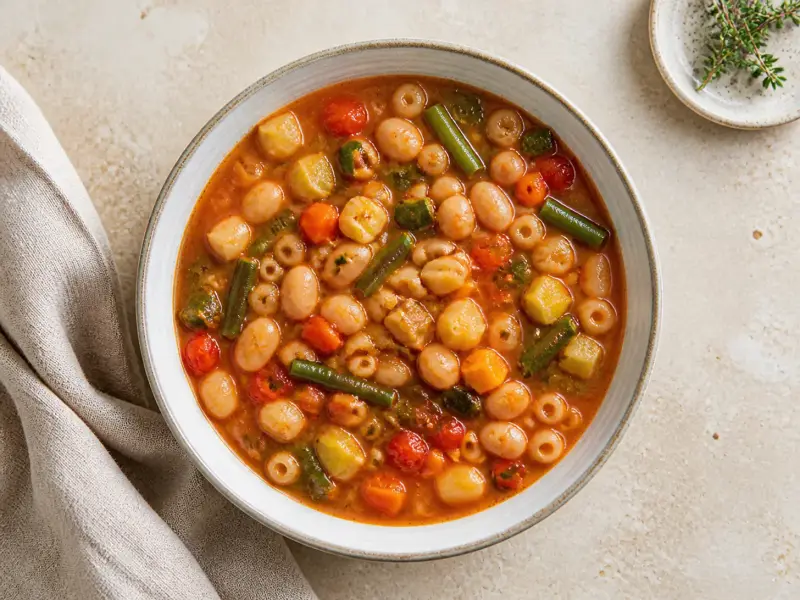 Minestrone
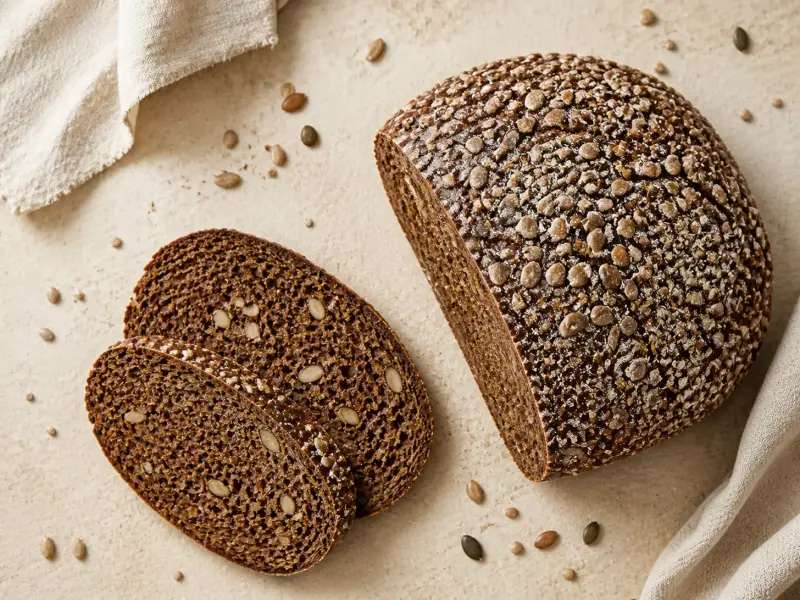 Seeded Rye Loaf
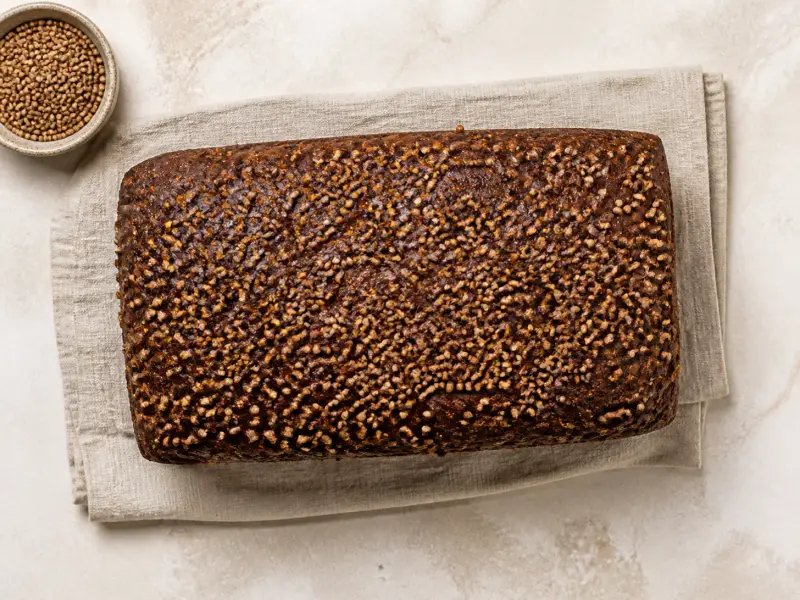 Borodinsky Rye Bread
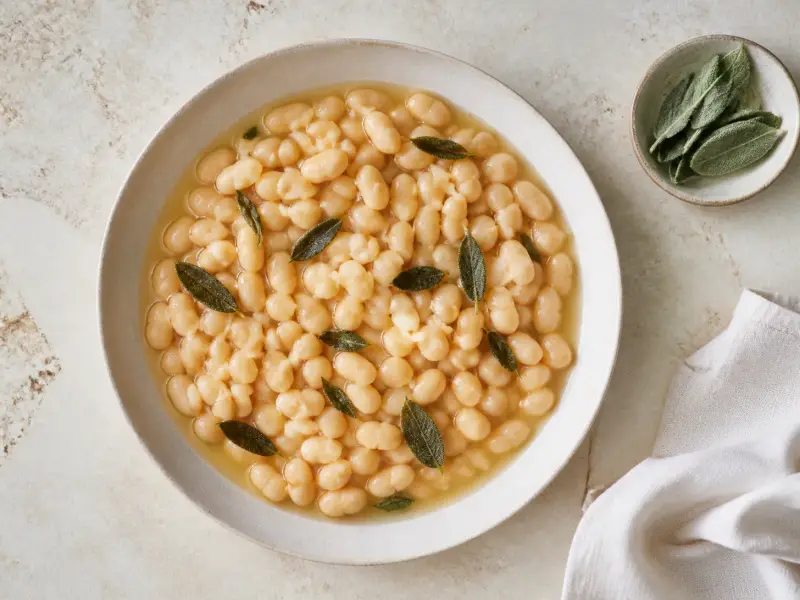 Braised White Beans with Sage
 Buttermilk Soda Bread
 Hand-Rolled Bagels
 Herbed Farro Salad