Buttermilk Soda Bread
A yeast-free loaf leavened with bicarbonate of soda and buttermilk, in the oven ten minutes after you start and cooling within the hour.
- Prep
- 10 min
- Cook
- 45 min
- Total
- 55 min
- Serves
- 8
- Revisions
- 5
Allergens
- Cereals containing gluten
- Milk
Named from the ingredients as written, including those carried in from sub-recipes. This is not a guarantee — check the labels on what you actually buy, and note that a product’s recipe can change.
Ingredients
Serves
Method
Heat the oven to 220C/425F.
Slide a heavy baking tray in to heat with it, so the loaf meets a hot surface from the first minute.
Whisk both flours, the sieved bicarbonate of soda and the fine salt together in a large bowl.
Wait until the oven is fully up to temperature before you go any further. The bicarbonate starts reacting the moment it meets the buttermilk, and a dough left standing on the worktop has spent most of its lift before it ever reaches the heat.
Pour in the cold buttermilk all at once.
Stir it through with a cupped hand, turning the bowl as you go, until no dry flour is left and the dough is shaggy and wet.
Tip the dough onto a floured worktop.
Pat it into a round about 18cm across and 5cm deep, using four or five movements and no more. Do not knead it like a yeast dough — soda bread has no long rise to soften the gluten you develop, so a worked dough bakes out tough and close-grained.
Lift the round onto the hot tray.
Cut a cross deep into the loaf, most of the way down to the tray, so the dense centre can open out and cook through.
Bake for 15 minutes.
Turn the oven down to 200C/400F.
Bake for a further 25-30 minutes, until the crust is dark brown and the base sounds hollow when you knock it, the same test as the tin loaf.
Cool on a rack for at least 30 minutes.
Eat it the day it is baked. Where the focaccia trades a day of your patience for its texture, this loaf gives everything it has in the first hour and is only good for toast by tomorrow.
Nobody has rated this recipe yet.
Sign in to rate this recipe. One rating per person, and you can change it.
What to expect
- Taste
Distinctly tangy in a way a yeasted loaf never is — that sourness is the buttermilk itself, not fermentation, and it sits over a plain, faintly sweet wheat flavour from the white flour and a deeper, nuttier, slightly bitter note from the wholemeal half. There is a very faint mineral, almost soapy edge if the bicarbonate has not been distributed evenly, which is the one flavour fault this bread can have and the reason for sieving it in carefully. Salt is doing real work holding the tang and the wheat together; under-salted, the buttermilk note tips toward sourness with nothing to round it off.
- Aroma
Warm toasted wheat and a faint yeasty-adjacent smell that is not actually yeast — browning crust chemistry produces some of the same aromatic compounds a fermented loaf does, which is part of why this bread smells more like 'bread' than its ten-minute preparation time would suggest. Underneath that is a light dairy tang from the buttermilk, more noticeable warm than cold.
- Texture
Dense and close-crumbed compared with a yeasted bread, with a slightly coarse, almost gritty bite from the wholemeal flour, and a thick, substantial crust that gives real resistance before it cracks. It is moist rather than airy — there are no large holes and no open crumb structure, because there was never a long fermentation to build one.
- Sound
A hard, dry crack when the crust is broken or cut, and a low, hollow knock when the base is struck — that knock is the actual doneness test, not decoration, so it is one of the few times in this collection where a sound is functional rather than just atmospheric.
- How the flavour moves
Crust first — dry, toasted, slightly bitter from the deep colour — then a soft, warm, faintly sour crumb that is milder than the crust suggests. The wholemeal nuttiness builds through the chew rather than announcing itself at the first bite, and the tang from the buttermilk is more a background hum than a sharp top note.
- Serve it
Best eaten warm, within the first hour or two, when the crumb still carries the moisture of baking and the crust is at its most crisp. Cold, it firms up considerably and reads as a different, denser bread.
- Goes with
Butter, and plenty of it, melting into the warm crumb. Also very good with soup — this is the bread the recipe itself is built to sit beside a bowl of stew or chowder — and with smoked fish, sharp cheese, or jam for a plainer teatime version.
Cook's notes
- Difficulty
Very easy, and forgiving of an unpractised hand — there is no gluten window to hit and no shaping beyond patting the dough into a rough round. The one thing that can go wrong is over-handling it.
- Cost
Very cheap. Flour, bicarbonate of soda, salt and buttermilk, all pantry-cupboard items.
- Equipment
A large bowl, a baking tray heated with the oven, and a sharp knife for the cross. No mixer, no proving basket, no tin.
- When to make it
Any day, since it asks for no advance planning. It is particularly suited to being made just before a meal, since it is genuinely faster than most side dishes.
- Best season
None. Every ingredient is available year-round.
- You know it is done when
A dark, floury, matte crust, deeply cracked open along the cut cross where the four quarters have risen apart and pulled away from each other.
- And it feels like
The base should sound hollow and drum-like when knocked with a knuckle — a dull, dense thud means it needs another five minutes, out of the tray if it was in one.
- Food safety
Nothing perishable beyond the buttermilk, which should be properly cold when it goes in and the bread eaten within a couple of days. No eggs, no meat, no particular hazard beyond ordinary kitchen hygiene.
- Where it goes wrong
- Kneading it like a yeasted dough. There is no long rise ahead to relax an over-worked gluten structure, so a kneaded soda bread bakes out tough and close rather than tender.
- Letting the mixed dough stand around before it goes in the oven. The reaction between the bicarbonate and the buttermilk starts the moment they meet, and standing time is lift being spent before the heat can set it.
- An unheated tray, which means the loaf sits and slowly comes up to temperature rather than meeting a hot surface immediately.
- Skipping or under-cutting the cross, which leaves the dense centre without a way to open out and cook through evenly.
- Cutting into it while it's still hot, which tears the crumb into a gummy mess that does not recover.
- If it does go wrong
Dense and gummy in the centre: cut the cross deeper next time and check the oven was fully heated before the bread went in. Tastes soapy or metallic: the bicarbonate was not sieved or mixed through evenly. Flat and spread rather than domed: the dough was over-worked or too wet — buttermilk brands vary in thickness, so hold back a splash if the dough looks very slack. Pale crust: oven not hot enough, or the tray was not preheated.
- Making it ahead
Not really an ahead-of-time bread — it is designed to be made and eaten within the hour, and its whole appeal is that there is nothing to prepare in advance.
- Keeping it
Best the day it is baked. It keeps a further day wrapped in a cloth at room temperature, turning firmer and better suited to toasting than to eating plain.
- Reheating
A few minutes in a low oven revives the crust; it does not really revive the crumb, which dries rather than stales in the usual sense.
- Freezing
Freezes well whole or sliced for up to a month, and is arguably better thawed and toasted than eaten fresh from thawing, since toasting restores some of the crust's character.
- Leftovers
Thick-cut and toasted is the best use for it after the first day. It does not make good breadcrumbs or croutons — the crumb is too dense and moist rather than dry and open.
- Scaling it
Doubles reasonably well as two smaller loaves rather than one very large one, since a single oversized round struggles to cook through in the middle before the crust burns.
- Substitutions
Real buttermilk is worth seeking out rather than substituting, because its acidity and thin, tangy body are what the whole method is built on. In its absence, whole milk soured with a tablespoon of lemon juice or white vinegar per 250ml, left to stand for ten minutes until it thickens slightly, will react with the bicarbonate in the same way and gets close. Plain yoghurt thinned with a little milk is another workable stand-in. Self-raising flour is not a substitute for the bicarbonate here — the two leaveners are not dosed the same way, and the recipe is built around bicarbonate meeting an acid it can react against fully, not a slow-release raising agent.
- Dietary swaps
Vegetarian as written. A dairy-free version needs an acidic plant-based liquid — a plant milk soured with lemon juice or cider vinegar the same way as the milk substitution above — though the flavour will not carry buttermilk's own tang. It is not naturally vegan-friendly to make a convincing version of, because buttermilk's acidity and body are hard to replace exactly. It contains gluten throughout and there is no meaningful gluten-free adaptation of a bread built on wheat's structure being deliberately left undeveloped.
- Shopping for it
Buttermilk from a dairy counter rather than the cultured 'buttermilk' sometimes sold as a drink flavouring is what this wants — thin, properly sour, pourable.
- Keeping the cost down
About as cheap as bread gets to make at home — no yeast, no long proving time using energy, and the ingredients are all inexpensive staples.
- Sustainability
A low-impact bread by the standards of baking — no long oven time relative to its size, no enrichment with animal fat or eggs beyond the buttermilk.
- Nutrition
A plain, modestly enriched bread — no fat, no sugar beyond what is naturally in the buttermilk, and a meaningful amount of fibre from the wholemeal half of the flour.
- Worth it?
The fastest genuinely good bread it is possible to make from scratch, and one of the few where 'ten minutes to the oven' is not an exaggeration for effect.
Where it comes from
- Origin
Rural Ireland, from the 1830s onward, following the commercial availability of bicarbonate of soda.
- Also called
Soda bread, or in Irish arán sóide.
- Said out loud
Plain English throughout.
- What the name means
Named directly for its leavening agent, bicarbonate of soda — one of the more literally named breads there is.
- History
Ireland's wet, cool climate favours a soft, low-protein wheat that does not develop the strong gluten a kneaded yeasted loaf depends on. Bicarbonate of soda solved that problem by removing the need for gluten development altogether, and the bread was baked on a griddle over an open turf or peat fire in households that had no oven, long before it moved to the oven-baked round shape familiar today.
- Why it matters
It is still baked daily in many Irish and Northern Irish households and treated as a marker of home cooking rather than a special-occasion dish — closer in status to daily white bread elsewhere than to a festival food.
- When it is eaten
An everyday bread rather than a celebration one, though a fruited version studded with raisins and caraway, sometimes called spotted dog or curranty bread, appears at teatime and on more festive tables.
- The traditional way
Mixed briefly and shaped with as few movements as possible, baked either on a griddle over direct heat in the older tradition or in a hot oven in the more recent one, with the cross always cut into the top before baking.
- How it changed
The move from open-hearth griddle baking to oven baking is the major shift, alongside the modern habit of using part or all white flour where a traditional loaf leaned more heavily on wholemeal and coarser-milled flour.
- Regional variations
Brown soda bread made with a higher proportion of wholemeal flour is the everyday version; wheaten bread is common in Northern Ireland; a flatter, griddle-cooked version called a farl is cut into quarters before cooking rather than after, and is closely associated with Ulster fry breakfasts. Spotted dog or curranty bread adds dried fruit and sometimes caraway seed for a sweeter, teatime loaf.
- How this version differs
This recipe splits the flour evenly between plain white and wholemeal, which gives a middle-ground crumb between a light white soda loaf and a dense fully wholemeal one, and keeps the method as fast as the chemistry allows by heating the tray with the oven rather than adding it cold.
- Sources and credit
No inventor can be credited, and none should be. It is a household technique that spread rapidly once the ingredient that makes it possible became available, not a dish with a traceable creator.
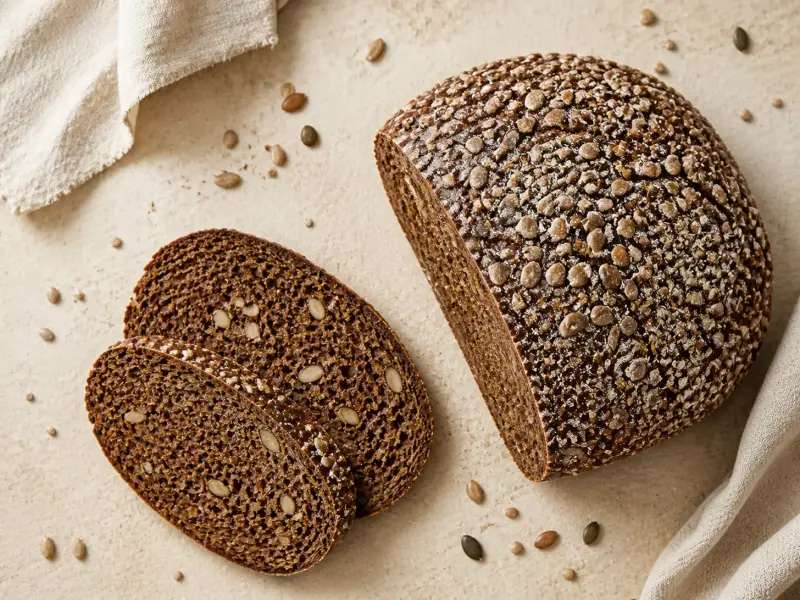 Seeded Rye Loaf
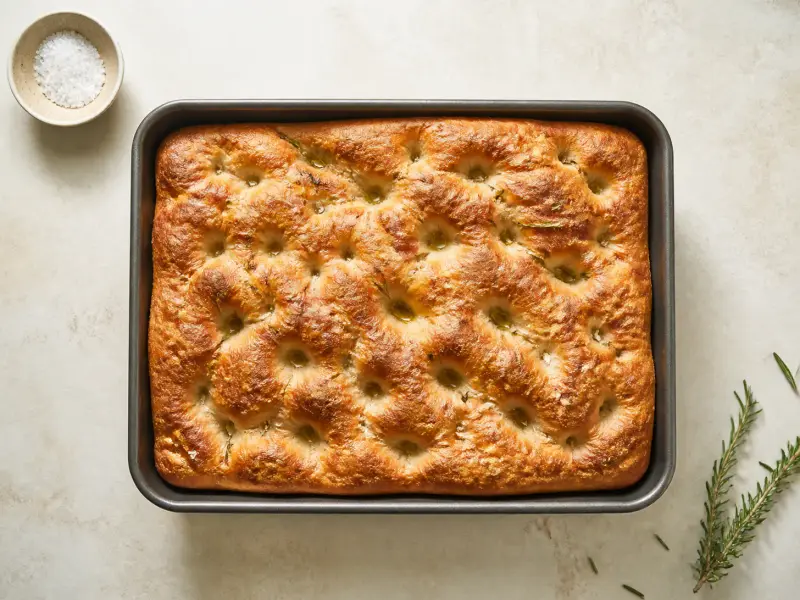 No-Knead Sourdough Focaccia
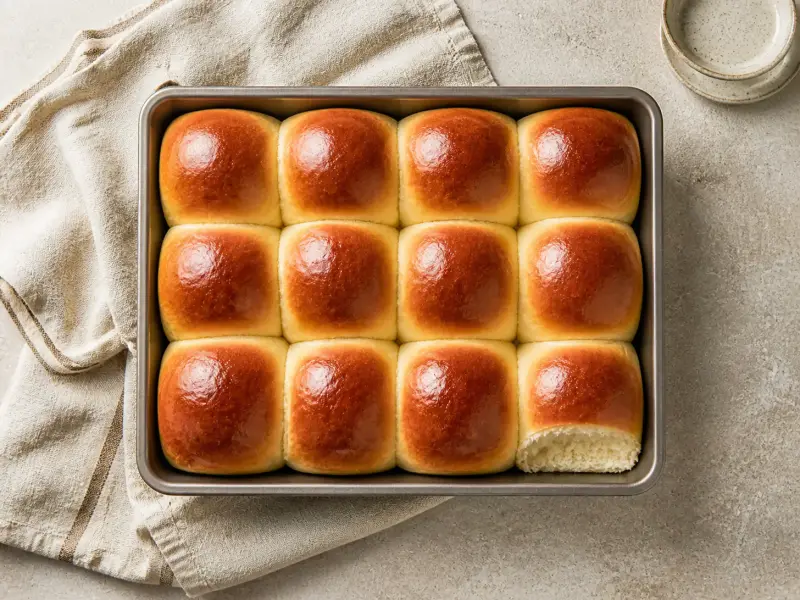 Soft Milk Rolls
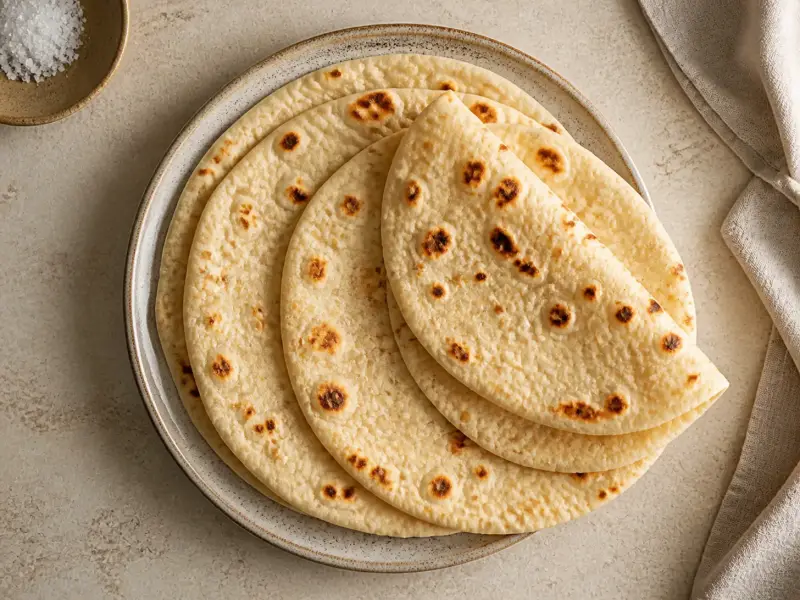 Skillet Flatbreads
 Everyday White Tin Loaf
 Apple and Blackberry Crumble