Planter's Punch
One of sour, two of sweet, three of strong, four of weak — the old rhyme, built on dark Jamaican rum and drunk long over ice.
- Prep
- 5 min
- Total
- 5 min
- Serves
- 1
- Revisions
- 5
Ten seconds, if you are in a hurry
The whole dish, carried in and set down, with the one thing worth knowing about it said out loud. No method, no measuring — just what it should look like when it arrives.
Watch on YouTubeIngredients
Serves
Method
Fill a tall glass to the top with ice.
Put the lime juice, sugar syrup, rum and orange juice into a shaker with a scoop of ice.
Shake for 10 seconds.
Strain into the ice-filled glass.
Add the bitters over the surface, where they will sit as a dark line before they sink.
Garnish with the orange slice and cherry and serve with a straw.
Nobody has rated this recipe yet.
Sign in to rate this recipe. One rating per person, and you can change it.
What to expect
- Taste
Built on the rhyme's own logic, so the four elements are meant to be tasted almost in sequence rather than blended into one flavour: lime's sourness first, sugar syrup's sweetness close behind, dark Jamaican rum's molasses depth and funk underneath both, and orange juice's mellower fruit sweetness diluting and rounding out the whole thing rather than dominating it.
- Aroma
Orange and lime together up front, a warm, spiced note from the Angostura bitters, and the rum's own molasses-and-funk character underneath.
- Texture
Medium-bodied and juicy rather than thin, owing to the generous proportion of orange juice relative to the spirit.
- Sound
A short, fairly gentle shake, then the settling clink of ice as it is poured over a full glass.
- How the flavour moves
Sour and sweet arrive together at the front in a bright, citrus-forward opening, the rum's depth builds in through the middle, and the finish is warmed by the Angostura's spice, which keeps a fairly juice-heavy drink from tasting simply like fruit punch.
- Serve it
Served cold, and it holds its chill reasonably well thanks to the volume of ice and juice.
- Goes with
Jerk chicken, grilled fish, or any spiced Caribbean main — a long, fruit-forward punch of this kind is built to be an easy, repeatable drink alongside food rather than a single, considered sipping cocktail.
Cook's notes
- Difficulty
Easy.
- Cost
Low. Rum, orange juice, sugar syrup and lime.
- Equipment
A cocktail shaker, a jigger, and a tall glass.
- When to make it
Daytime and casual gatherings, and any occasion calling for a punch that can be made quickly by feel.
- Best season
None; every ingredient is available year round.
- You know it is done when
A bright orange-red colour, with the bitters visible as a dark streak across the surface for the first few seconds before they sink through.
- And it feels like
Should taste balanced across sour, sweet, strong and weak in roughly the proportions the name promises, rather than any one of the four dominating.
- Food safety
No particular hazard.
- Where it goes wrong
- Using a light or gold rum rather than a dark Jamaican style, which loses the depth the ratio is built to showcase.
- Skipping the Angostura bitters, which is what stops the drink tasting like plain fruit punch with rum in it.
- Ignoring the ratio and eyeballing the drink sweeter or weaker than the rhyme intends.
- Over-shaking a drink that already carries a large volume of juice, which leaves it thin.
- If it does go wrong
Tastes like fruit juice with no depth: add the bitters, or check the rum is a genuinely dark, funky Jamaican style. Too sweet: reduce the syrup slightly relative to the lime. Too weak: this is meant to be a long, lower-proof drink by design — if it needs more strength, add rum in the same three-parts proportion rather than adjusting a single measure.
- Making it ahead
Batches well; combine the lime, syrup, rum and juice ahead of time and add the bitters and ice at serving time.
- Keeping it
Does not keep once shaken; the rum, syrup and juices can be pre-batched and refrigerated for same-day use.
- Reheating
Not applicable.
- Freezing
Not suitable in its finished form.
- Leftovers
None worth keeping.
- Scaling it
Scales cleanly using the rhyme's ratio directly — multiply each part by however many drinks are needed.
- Substitutions
Pineapple juice can stand in for some or all of the orange juice for a more tropical, less citrus-forward result.
- Dietary swaps
Vegan, vegetarian, dairy free, egg free, nut free and gluten free as written.
- Shopping for it
A genuinely dark, funky Jamaican pot-still rum rather than a clean, light column-still one, and fresh rather than bottled orange juice where possible.
- Keeping the cost down
A mid-priced dark Jamaican rum is entirely sufficient, since the drink's balance comes from the ratio rather than from a particularly refined spirit.
- Nutrition
Moderate in calories relative to other cocktails here, most of it from the sugar syrup and the natural sugar in the orange juice.
- Worth it?
A simple, dependable punch whose real interest is in the rhyme behind it — a working bartender's shorthand that survived long enough to become the drink's whole identity.
Where it comes from
- Origin
Jamaica.
- Also called
Planter's Punch.
- What the name means
The name refers directly to the Caribbean plantation economy — worked historically by enslaved and later indentured labour — that produced the rum the drink is built on.
- History
The one-two-three-four rhyme is documented in print from the nineteenth century, predating any single named recipe for a drink called Planter's Punch, and functioned as an oral or written mnemonic for building a rum punch by ratio in an era before bartenders routinely used precise measures.
- Why it matters
The rhyme and ratio behind Planter's Punch underlie most of the rum punches served across the Caribbean, making it less a single fixed drink than a template that a great many other punches, including the Caribbean Rum Punch elsewhere in this collection, are built on.
- When it is eaten
Casual daytime drinking, and any gathering calling for an easy, juice-forward punch rather than a spirit-forward cocktail.
- The traditional way
Built by ratio rather than precise measure originally, though the modern version given here uses fixed quantities for consistency.
- Regional variations
Versions across the Caribbean vary the juice (orange, pineapple or a blend) and the rum style used, though the underlying one-two-three-four ratio remains broadly recognisable across most of them.
- Sources and credit
No individual is credited with inventing the drink; it developed as a folk ratio rather than a single bartender's recipe.
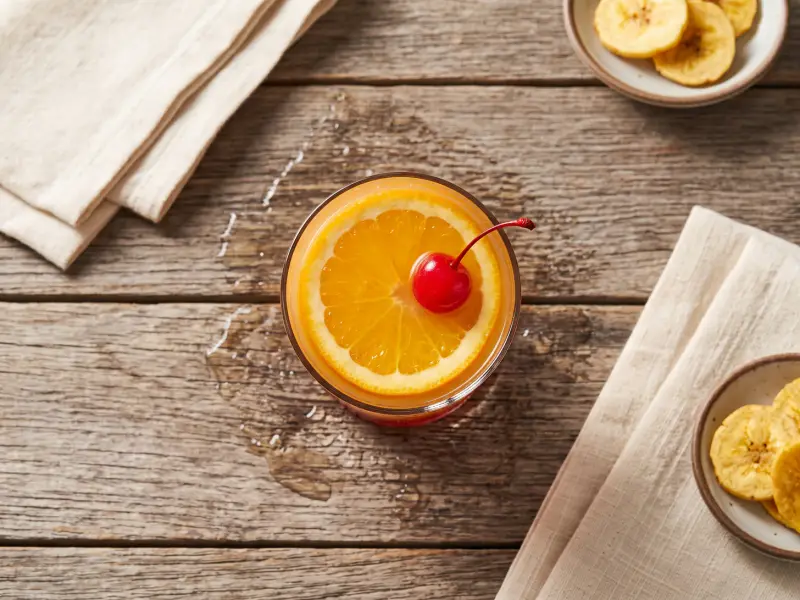 Bahama Mama
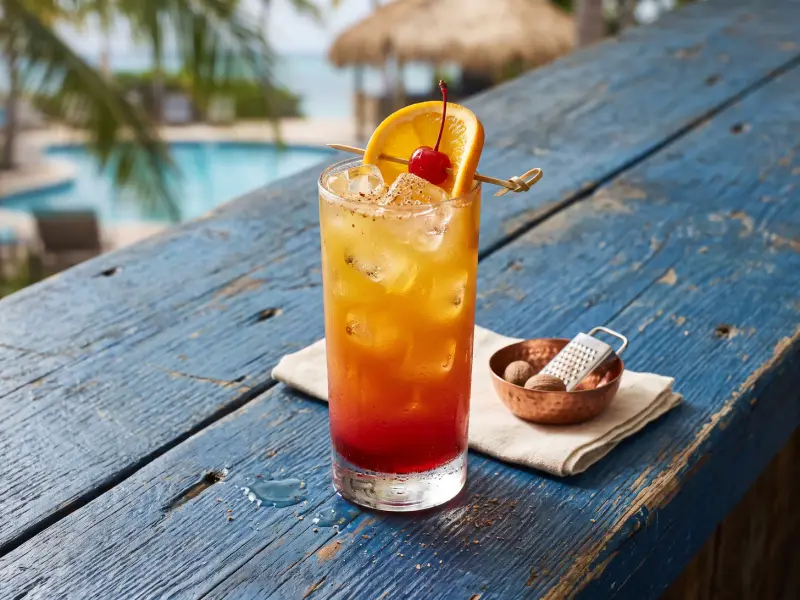 Caribbean Rum Punch
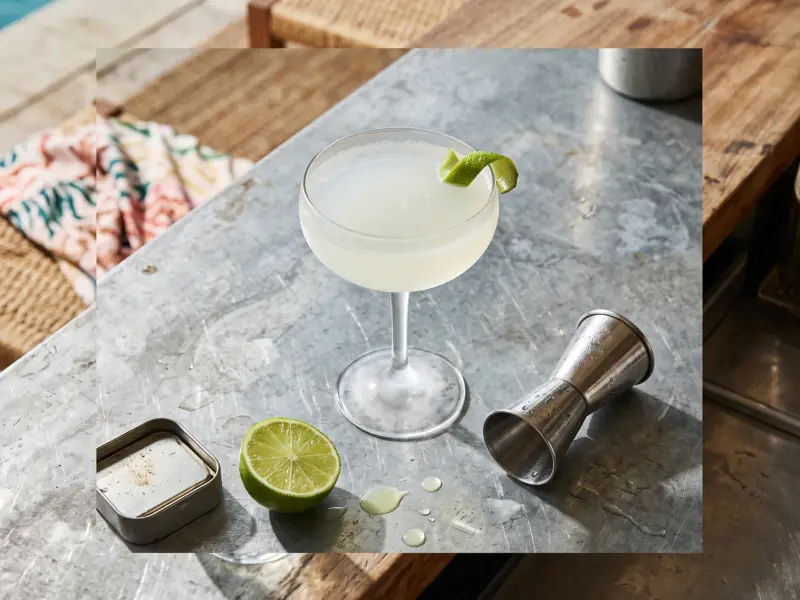 Daiquiri
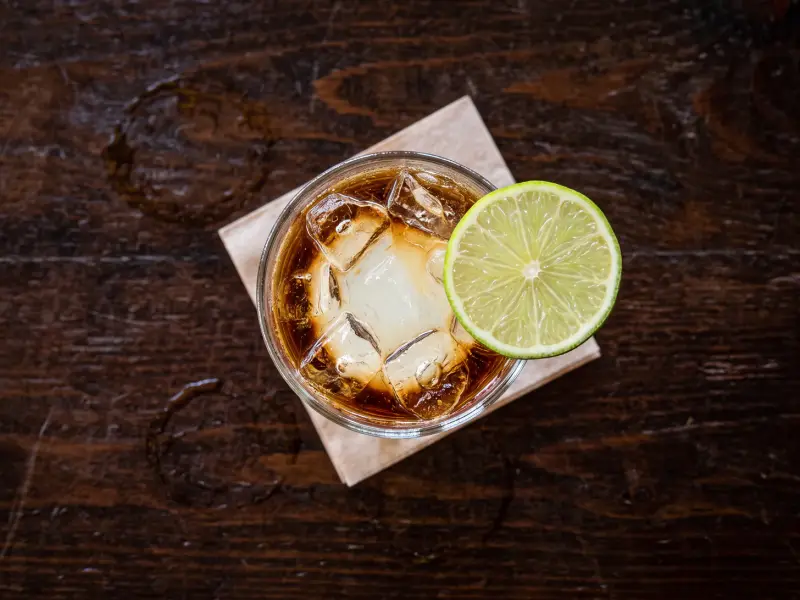 Dark and Stormy
 Frozen Melon Colada
 Frozen Strawberry Daiquiri