Pork Vindaloo
विंदालू
Vindalu
विंदालू — from the Portuguese vinha d'alhos, wine and garlic — and nothing to do with aloo, potato.
Pork marinated in vinegar, garlic and dried chillies, then cooked slowly until sharp, dark and much more sour than hot.
- Prep
- 25 min
- Cook
- 1 hr 30 min
- Resting
- 8 hr
- Total
- 9 hr 55 min
- Serves
- 6
- Revisions
- 5
Ingredients
Serves
Method
Soak the chillies in the vinegar for 30 minutes.
Toast the cumin, peppercorns, cloves and cinnamon on a dry pan for 30 seconds, then grind them.
Blend the soaked chillies and their vinegar with the garlic, ginger, ground spices, turmeric, sugar and salt to a smooth paste.
Turn the pork through the paste, cover, and refrigerate for at least 8 hours and up to 24.
Heat the oil in a heavy pot and fry the onions over a medium heat for 15 minutes until deep brown. This is slow and it is where the sweetness comes from.
Add the pork with all its marinade and cook over a high heat for 5 minutes, stirring.
Add the water, bring to a simmer, cover and cook very gently for 75-90 minutes, until the pork is completely tender.
Uncover for the last 15 minutes so the sauce reduces and darkens around the meat.
Taste for salt and sourness. It should make you notice the vinegar.
Leave it overnight if you can — it is a marked improvement on the second day.
Nobody has rated this recipe yet.
Sign in to rate this recipe. One rating per person, and you can change it.
What to expect
- Taste
Sour first, and it should be unmistakable — this is the thing that distinguishes a real vindaloo and the thing British versions removed. The vinegar arrives immediately and sharply, and it never quite goes away. Against it, fifteen minutes of browned onion gives a deep caramelised sweetness, and the teaspoon of sugar is a correction rather than a flavour. The whole spices are the middle of the dish: toasted cumin is nutty, black pepper is genuinely hot in a way that is different from chilli heat — sharper, more at the front of the mouth — and cloves and cinnamon are warm and slightly medicinal. Garlic, at ten cloves, is enormous and mellowed by the long cook. The chillies contribute colour and a warm, fruity, moderate heat. And under all of it, pork shoulder that has been cooking in acid for ninety minutes, which is soft and rich and very slightly cured at the edges.
- Aroma
Vinegar and garlic, and the marinade is genuinely pungent before it goes anywhere near heat. Cooked, it changes: the sharpness recedes and what dominates is toasted spice — clove and cinnamon in particular — over browned onion and pork fat. It is one of the more complex smells in the collection and it fills a house for two hours.
- Texture
Soft meat that yields completely, in a sauce that is thick and slightly grainy from the ground spices rather than smooth. There is nothing crunchy anywhere and nothing to break the texture, which is why plain rice or bread matters — they are the structure of the meal.
- Sound
Barely anything for ninety minutes, and silence is correct: an audible boil means the heat is too high. Before that, the whole spices in a dry pan give a faint crackle over thirty seconds and start to smell before they make any noise, so the nose is the better guide. The pork going into the hot pot with its marinade produces a violent hiss and a great deal of vinegar steam, which is worth standing back from.
- How the flavour moves
Sourness first and immediately, then sweetness from the onions catching it, then the toasted spices across the middle. Black pepper shows up sharply at the front of the mouth and chilli heat builds slowly behind it. The finish is long, sour and warm, with the clove still audible. Across a bowl the heat accumulates and the sourness stays constant, which is why the dish reads as sharp rather than fiery even when it is both.
- Serve it
Hot, with hot rice. It holds heat exceptionally well and is also good at room temperature, which is a property of its acidity.
- Goes with
Plain rice, or Goan pao. Something cooling: plain yoghurt, or a simple salad of raw onion and tomato with lime. A cold lager, which handles the acid and the heat better than anything else. Where it fails is with wine, which the vinegar destroys, and next to anything else sour.
Cook's notes
- Difficulty
Easy and long. There is no technique beyond browning onions and maintaining a gentle simmer. The judgement is at the end, where you taste for the balance of salt, sourness and sugar.
- Cost
Low. Pork shoulder and a bag of dried chillies. The vinegar is the only unusual purchase.
- Equipment
A blender or spice grinder for the paste. A heavy pot with a lid. A dry pan for toasting whole spices. Nothing else.
- When to make it
Cold weather, weekends, and always the day before.
- Best season
None. It is a winter dish by temperament and a Christmas one by tradition.
- You know it is done when
The onions must be deep brown before the pork goes in. At the end the sauce should be dark brick-red and glossy, reduced enough to coat the meat rather than pool around it, with a visible sheen of separated oil at the edges.
- And it feels like
The pork should give completely to a spoon and pull apart along the grain without being shredded.
- Food safety
Marinate in the fridge, not on the counter — eight hours at room temperature with raw pork is not acceptable however acidic the marinade is. Ninety minutes of simmering puts the meat far past any safety threshold.
- Where it goes wrong
Rushing the onions. Boiling rather than simmering, which makes the pork stringy. Using pre-ground spices, which gives a flat, dusty paste. Not seeding the chillies and then finding it inedibly hot. Skipping the final uncovered reduction, which leaves a thin sauce. And correcting the sourness away at the end, which is the most common instinct and the one to resist — it is supposed to be sour.
- If it does go wrong
Too sour: half a teaspoon of sugar at a time, and salt, both of which suppress the perception of acid. Do not add water, which dilutes everything else too. Too hot: there is no way to remove chilli heat; serve with more rice and yoghurt. Pork tough after ninety minutes: it was boiling — another thirty minutes at a proper tremble usually rescues it. Sauce thin: reduce uncovered for longer. Flat: it needs salt, and probably needed browner onions.
- Making it ahead
Strongly recommended and historically the point. It is better on day two and keeps four days; the vinegar is doing what it was originally there to do. It also freezes well.
- Keeping it
Four days in the fridge and it improves for two of them. The vinegar is a preservative and this dish keeps unusually well, which is exactly what it was designed to do.
- Reheating
Very well, gently, with a splash of water. This is a dish that expects to be reheated.
- Freezing
Three months and it survives well.
- Leftovers
Excellent, and better than the first day. In a bread roll, or with fried eggs.
- Scaling it
Doubles easily in a large enough pot. The onions are the only stage that takes disproportionately longer.
- Substitutions
Palm vinegar is the authentic choice and cider vinegar is the standard substitute — both are fruit vinegars with some sweetness, which malt vinegar and white wine vinegar are not. Kashmiri chillies can be replaced by a mixture of a mild chilli for colour and a hot one for heat, but the colour is the harder part to reproduce. Pork can be replaced with lamb or beef, both of which are made in Goa; chicken needs far less time and is a lesser version.
- Dietary swaps
Not vegetarian and not sensibly adapted. Dairy-free, gluten-free and nut-free as written.
- Shopping for it
Dried Kashmiri chillies, which are worth seeking out specifically — they are the reason the dish is that colour. Palm vinegar from a Goan or Indian grocer, cider vinegar otherwise. Pork shoulder with the fat on. Whole cumin, peppercorns, cloves and cinnamon rather than ground.
- Keeping the cost down
Pork shoulder is among the cheapest cuts in the shop. Dried Kashmiri chillies are inexpensive by the bag at an Indian grocer and keep for a year, where a supermarket packet costs several times as much for a handful. Whole spices likewise.
- Sustainability
Pork shoulder is a well-used cut and this is a good use of it. The dish also keeps for four days and freezes, which is a real point in its favour.
- Nutrition
Around 520 calories a serving. Pork shoulder is fatty and a good deal renders into the sauce; chilling overnight and lifting off the set fat removes a substantial amount if you want it leaner. Otherwise it is meat, onions and spices.
- Worth it?
Worth it, and it is the most misunderstood dish in the collection. Made properly it is sour, dark, deeply spiced and only moderately hot, and it bears almost no relation to what the name means on a British menu. It costs very little, it improves for two days, and it is the best possible argument that a curry-house heat scale is a poor guide to anything.
Where it comes from
- Origin
Goa, on India's Konkan coast, from a Portuguese preserve.
- Also called
Vindaloo, from vinha d'alhos. In Goa it is also written vindalho.
- Said out loud
vin-da-LOO in English. In Goa, closer to vin-DAHL-yo.
- What the name means
This is the interesting part and it is almost universally got wrong. Vinha d'alhos is Portuguese for wine and garlic, and the name is a phonetic corruption of it. The resemblance of the second half to aloo, the Hindi word for potato, is a coincidence — and a persistent one, since a number of British restaurants add potatoes to the dish on exactly that reasoning.
- History
Portugal held Goa from 1510 until 1961, and this dish is one of the clearest culinary results. Portuguese ships preserved pork in wine and garlic for long voyages, because acid slows spoilage and a hot climate makes that urgent. In Goa the wine was replaced by palm vinegar, which was local and abundant, and the dish gained chillies, cinnamon, cloves and pepper. The chillies themselves are part of the same story: they are American plants, brought to India by the Portuguese in the sixteenth century, and Indian food before that was hot with black pepper rather than with capsicum. There is a second historical point worth making: pork is central here and unusual in India, and it reflects Goa's large Catholic population, for whom neither Hindu nor Muslim dietary restrictions applied.
- Why it matters
In Goa it is a celebration dish, made for Christmas and for weddings, and the vinegar means it can be made days ahead — which is precisely why it suits a feast. Outside India its name became, in British curry houses, a synonym for the second-hottest thing on the menu, which has almost nothing to do with the dish and has done its reputation considerable damage.
- When it is eaten
Christmas, weddings and celebrations in Goa. Elsewhere, a weekend cook.
- The traditional way
The vinegar marinade, which is the entire structural idea, and browning the onions properly before the meat goes in. Traditionally the paste is ground on a stone rather than blended, which gives a slightly coarser texture.
- How it changed
Twice, and in opposite directions. In Goa it changed from a Portuguese preserve into a spiced curry over four centuries. In Britain it changed from a sour dish into a hot one over about fifty years, as curry-house menus arranged themselves into a heat ladder and vindaloo was assigned a rung near the top.
- Regional variations
Goan Catholic households each have their own paste and the differences are real. Some versions include a little tamarind, some more sugar, some a great deal more chilli. Portuguese carne de vinha d'alhos still exists in Portugal and in Madeira, where it is a Christmas dish, and tasting the two side by side is the clearest possible demonstration of what four centuries did.
- How this version differs
It uses Kashmiri chillies specifically, which prioritises colour over heat and is the Goan preference. It also says plainly what the dish should taste like at the end — sour enough to notice — because that is the instruction that separates it from the curry-house version.
- Sources and credit
The Portuguese origin and the etymology are well established and are the standard account in Indian food history.
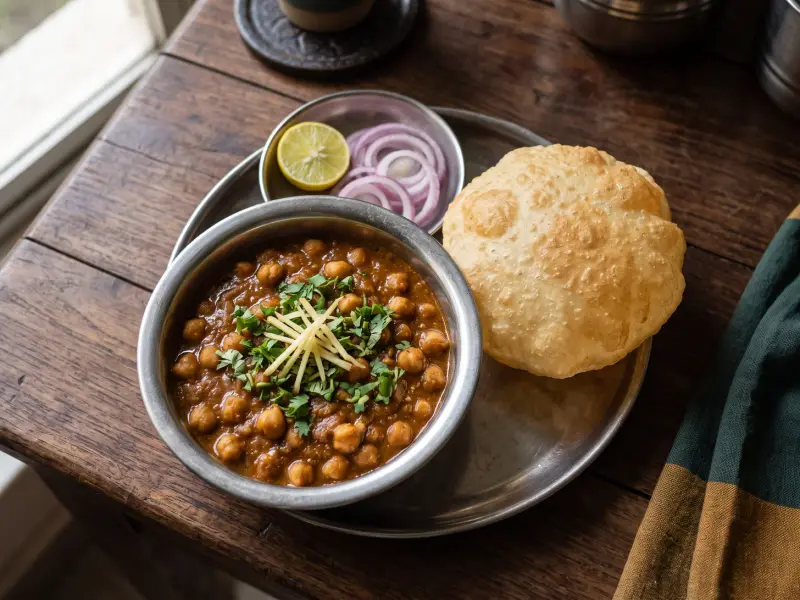 Chana Masala
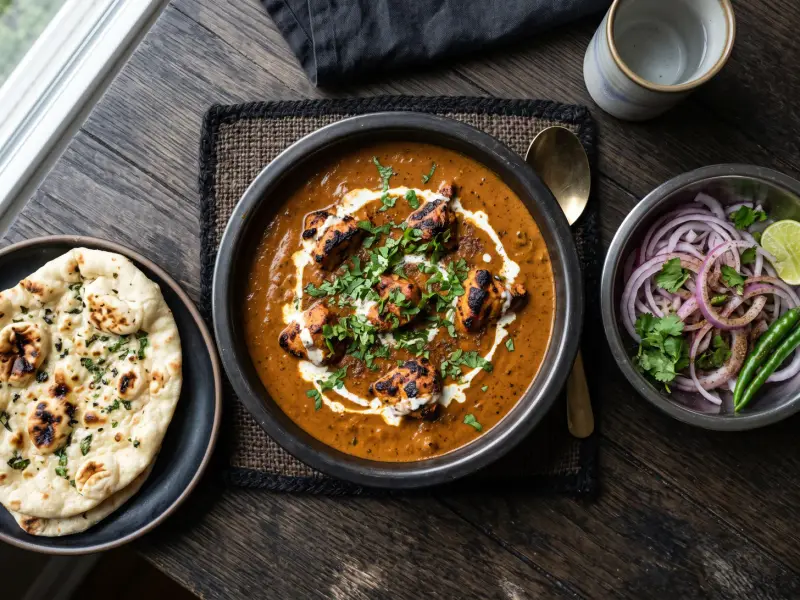 Chicken Tikka Masala
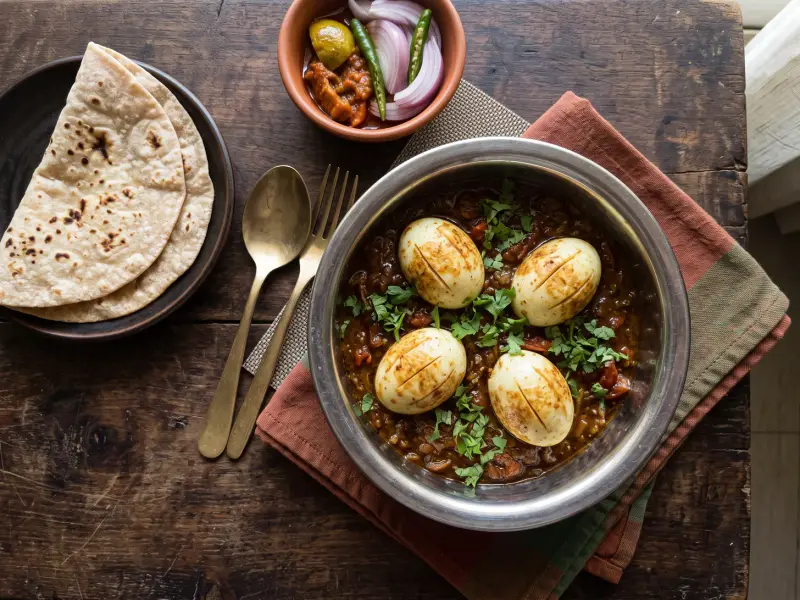 Egg Curry
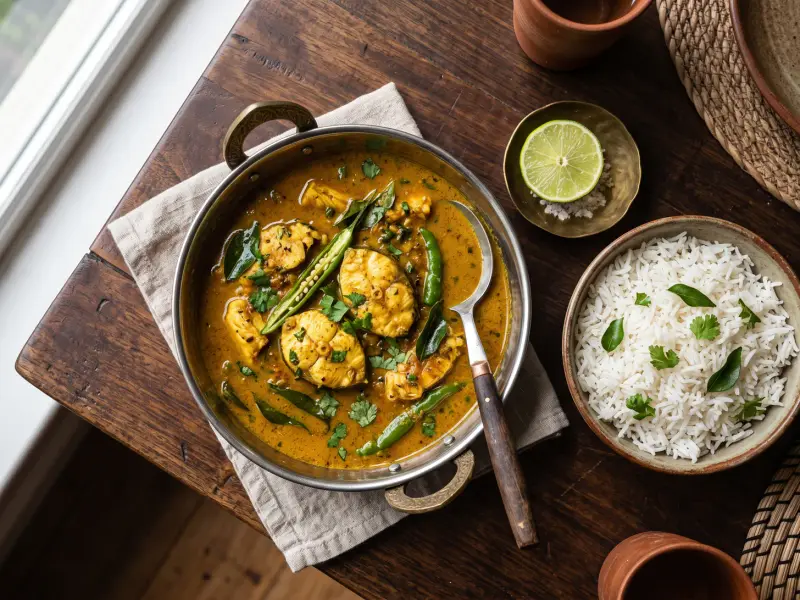 Goan Fish Curry
 Lamb Rogan Josh
 Malai Kofta