Sausage and Bacon Breakfast Bap
Sausages cooked slowly from a cold pan, bacon crisped in their fat, and the roll toasted on its cut face so it holds together.
- Prep
- 10 min
- Cook
- 30 min
- Total
- 40 min
- Serves
- 4
- Revisions
- 5
Allergens
- Cereals containing gluten
- Eggs (via Soft Milk Rolls)
- Milk
- Sulphites
Named from the ingredients as written, including those carried in from sub-recipes. This is not a guarantee — check the labels on what you actually buy, and note that a product’s recipe can change.
Ingredients
Serves
Method
Lay the sausages in a cold heavy frying pan with the oil.
Set the pan over medium-low heat.
Cook for 18-20 minutes, turning them every 3-4 minutes, until they are browned all over and firm when pressed.
Keep the heat moderate the whole way through. A hot pan splits the skins and drives the fat out early, which leaves the sausage dry inside while the outside is close to black.
Move the sausages to a warm plate.
Lay the bacon in the fat the sausages have left behind.
Cook over medium heat for 3-4 minutes a side, turning once, until the fat has gone glassy and the edges are crisp.
Leave the rashers where they land. Bacon pushed around the pan never gets long enough against hot metal to crisp anywhere.
Move the bacon onto the plate with the sausages.
Split the rolls and butter the cut faces.
Lay them butter-side down in the pan and toast for 30-60 seconds, until gold.
Do not skip the toasting. That thin crisp face is the only thing between soft bread and the fat and sauce coming at it, and an untoasted bap is paste before it reaches the table.
Split each sausage lengthways so it lies flat and the bap will close.
Pile two split sausages and two rashers into each roll.
Add brown sauce or ketchup.
Eat it straight away and standing up. A bap wrapped in foil to keep it warm steams itself soft inside a minute.
Nobody has rated this recipe yet.
Sign in to rate this recipe. One rating per person, and you can change it.
What to expect
- Taste
Salt and fat, and the whole thing is a study in two kinds of each. Bacon is sharply, directly salty with a cured tang, and its fat is clean and slightly smoky. Sausage is milder, sweeter and more herbal — most British pork sausages carry white pepper, sage, mace or nutmeg — and its fat is softer and more porky. Between them, the roll is faintly sweet, enriched with milk, and it is the only sweetness in the sandwich until the sauce arrives. Brown sauce brings tamarind, dates, molasses and a vinegar sharpness; ketchup brings straightforward sugar and tomato acidity. Butter is doing more than lubrication: it is salt and dairy fat against pork fat, and the sandwich is noticeably flatter without it.
- Aroma
The best smell in the collection and it needs no elaboration. Rendering pork fat and frying bacon, for half an hour, in a house. The toasted cut face of a buttered roll is the last note and is the one people do not expect.
- Texture
Four textures and the roll is doing the work of holding them apart. Soft bread on the outside, a thin crisp toasted layer inside it, then bacon that snaps at the edge and yields in the middle, then a sausage that is firm outside and coarse and yielding inside. The toasting is what stops the whole thing collapsing into one soft mass, which is why the recipe is emphatic about it.
- Sound
Half an hour of quiet frying, changing character as it goes — sausages start almost silent in a cold pan, build to a steady sizzle as their fat renders, and the bacon going into that fat is the loudest moment. Then the crackle of a buttered roll against hot metal for thirty seconds. And then the sandwich itself, which should give slightly at the edge under a bite.
- How the flavour moves
Sauce first, sharp and sweet. Then salt from the bacon, immediately and strongly. Then the sausage arriving underneath, milder and fattier and more savoury. Butter is throughout. The finish is fat and salt, and it is why the traditional accompaniment is very strong tea — the tannin cuts it in a way nothing else at breakfast does.
- Serve it
Very hot and eaten at once. This is not a fussy preference: a hot bap wrapped in foil steams itself, the toasted face goes soft within a minute, and what you have is a different and much worse sandwich. The recipe says to eat it standing up and it is right.
- Goes with
Strong tea with milk, which is not a joke and is genuinely the correct pairing — builder's tea is tannic enough to cut through the fat and nothing else at that hour does. Black coffee works. Orange juice does not, and the acid against the salt is unpleasant. Nothing else on the plate is needed and adding a fried egg, which is common, changes it into a different and messier sandwich.
Cook's notes
- Difficulty
The easiest savoury recipe in the collection, and the one where the most people get one detail wrong. There is no technique in it beyond patience with a moderate heat.
- Cost
Low. Sausages, bacon and four rolls.
- Equipment
One heavy frying pan and a plate. Nothing else, and everything happens in the one pan in sequence, which is the point.
- When to make it
Weekend mornings. It is a poor weekday breakfast because it takes half an hour.
- Best season
None.
- You know it is done when
Sausages browned evenly all over — not dark on two faces and pale on the others — and firm when pressed. Bacon with its fat gone from white and opaque to glassy and translucent, and the edges just beginning to catch. The rolls should be gold on the cut face and still soft everywhere else.
- And it feels like
A cooked sausage is firm and springs back; an undercooked one is soft and gives. Bacon should snap at the edges and still bend in the middle, which is the British preference — crisp all the way through is an American one and is a different thing.
- Food safety
Sausages are minced meat and must be cooked through — unlike a whole cut of pork, which can be served pink, mince has had its surface bacteria distributed throughout. Twenty minutes at a moderate heat does this comfortably. Firm to the press and no pink in the middle is the test.
- Where it goes wrong
A hot pan for the sausages, which splits the skins and gives a black outside and a raw middle. Wet-cured bacon, which boils rather than fries. Moving the bacon around, so no part of it stays against hot metal long enough to crisp. Not toasting the roll, which is the difference between a sandwich and a paste. Wrapping it in foil to keep it warm, which steams it soft. And leaving the sausages whole, so the bap will not close.
- If it does go wrong
Sausages split: the pan was too hot. Bacon grey and swimming in white liquid: it is wet-cured, and the only thing to do is pour the liquid off and keep going on a higher heat once it has gone. Sausages black outside and raw inside: too hot, and they need turning more often. Bap gone soggy: not toasted. Nothing tastes of much: the butter was left out.
- Making it ahead
Nothing. This is a dish that exists in the ten minutes after it is made.
- Keeping it
None. This is not a dish that keeps and the recipe is right to say so.
- Reheating
No.
- Freezing
No.
- Leftovers
The fat left in the pan is worth keeping — it is rendered pork and bacon fat and it will make the best fried bread or roast potatoes you are likely to eat this month.
- Scaling it
Straightforwardly, limited by pan size — the sausages need room to be turned and the bacon needs to lie flat. For more than four, do the bacon in two rounds after the sausages come out.
- Substitutions
Streaky bacon instead of back gives more fat and more crispness and less meat. A different roll is fine as long as it is soft — a crusty roll fights the filling and tears the roof of your mouth. Butter can be left out if the sauce is going on thickly, and should not be.
- Dietary swaps
Not adaptable in any serious way. Contains cereals containing gluten, milk and sulphites, all declared — the sulphites are in the sausages, where they are a standard preservative and catch people out.
- Shopping for it
Sausages with a high meat content, ideally from a butcher; the difference between a 70 per cent and a 97 per cent pork sausage is enormous and is mostly rusk and water. Dry-cured back bacon. Soft milk rolls or floury baps, fresh that day.
- Keeping the cost down
Buy good sausages and ordinary rolls rather than the other way round — the sausage is most of the sandwich. Dry-cured bacon costs more per pack and less per usable gram, since wet-cured bacon loses a substantial proportion of its weight as water in the pan.
- Sustainability
Nothing notable beyond the general point about pork. Keeping the rendered fat rather than pouring it away is a small genuine saving.
- Nutrition
Around 780 calories a bap, and it is high in saturated fat and very high in salt — cured bacon and sausages together will account for a substantial share of a day's sodium in one sandwich. It is a weekend breakfast rather than a habit, and there is no honest way to present it otherwise.
- Worth it?
Worth it, and worth being unhurried about. Everything that makes a café bacon roll better than a home one comes down to three unglamorous decisions — cold pan, dry-cured bacon, toasted cut face — and none of them costs anything. Buy the better sausages and eat it standing at the counter.
Where it comes from
- Origin
Britain, everywhere, and it has no birthplace.
- Also called
This is the interesting part. The roll is a bap in Scotland and much of the north; a barm or barm cake in Manchester and Lancashire; a batch in Coventry; a cob in the East Midlands; a bread roll or a bun in the south; a teacake in parts of West Yorkshire; and a muffin in Bolton. The sandwich itself is a bacon butty, a sausage sarnie, or simply a roll depending on the same geography. It is one of the most reliably contested pieces of vocabulary in British English and the argument is genuinely regional rather than class-based.
- Said out loud
As it looks. The argument is over the noun, not the vowels.
- What the name means
A bap is a soft roll, from a Scots word of uncertain origin recorded since the sixteenth century. Butty is from butter — a buttered slice of bread — and is northern English.
- History
There is nothing to document about the sandwich, which is what happens when you have bread, a pan and pigs. What does have a date is the sauce. HP Sauce was developed in Nottingham in the late nineteenth century by Frederick Gibson Garton, registered in 1895 and sold on soon after; the name refers to the Houses of Parliament, on Garton's claim that a restaurant there was serving it, and the building has been on the label ever since. Its rivalry with tomato ketchup on a bacon sandwich is the closest thing British food has to a religious schism.
- Why it matters
It is the food of transport cafés, building sites, Saturday mornings and hangovers, and it is one of very few things eaten identically across every part of Britain and every social class. The bacon sandwich in particular has an unusual political dimension: photographs of politicians eating one badly are a recurring feature of British public life, which says something about how seriously it is taken.
- When it is eaten
Breakfast, late breakfast, and the morning after. It is not a lunch and it is certainly not a dinner.
- The traditional way
Nothing formal. The three things a good café does — cold-pan sausages, undisturbed bacon, toasted cut faces — are craft rather than tradition, and are exactly what most home versions skip.
- How it changed
Bacon got wetter. Wet-curing by brine injection became standard in industrial production in the second half of the twentieth century because it is faster and adds weight, and it is the reason a great deal of supermarket bacon foams in the pan instead of frying. Dry-cured bacon is now the specialist product, which is a reversal.
- Regional variations
The roll, as above. In Scotland a square lorne sausage often replaces the link. Northern Ireland adds soda bread and potato bread. Some places will put both sauces on and nobody minds.
- How this version differs
It does not differ; it simply states the three steps. The insistence on toasting the cut face is the one thing here that most recipes and most kitchens leave out.
- Sources and credit
The HP Sauce dating is a matter of record. Nothing else here has an author.
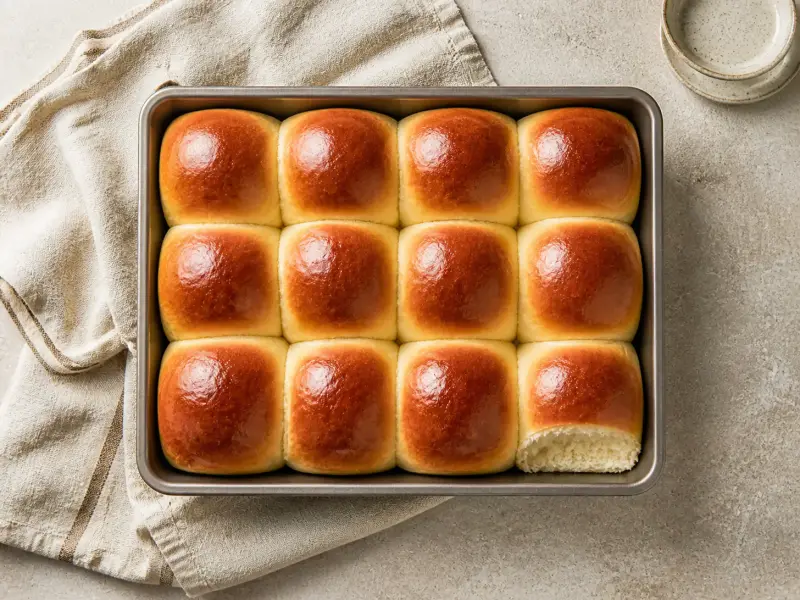 Soft Milk Rolls
 Beef and Ale Stew with Herb Dumplings
 Creamy Oat Porridge
 Mushrooms on Toast
 Shakshuka
 Smoked Haddock Kedgeree