Smoked Haddock Kedgeree
खिचड़ी
Khichri
खिचड़ी — the rice-and-pulse dish the Anglo-Indian breakfast was built on.
Smoked haddock poached in milk, the rice then cooked in that same liquid, folded together with boiled eggs and curry spices.
- Prep
- 20 min
- Cook
- 35 min
- Resting
- 15 min
- Total
- 1 hr 10 min
- Serves
- 4
- Revisions
- 5
Allergens
- Eggs
- Fish
- Milk
Named from the ingredients as written, including those carried in from sub-recipes. This is not a guarantee — check the labels on what you actually buy, and note that a product’s recipe can change.
Ingredients
Serves
Method
Lay the haddock in a wide pan and pour the milk and the 300ml of water over it.
Tuck in the bay leaves.
Bring it up over medium-low heat for 6-8 minutes, until the surface trembles and steam comes off it steadily.
Take it off the heat before it simmers. Milk splits at a boil, and smoked haddock held at one goes from silky to rubbery inside a minute.
Cover the pan and leave the fish in the hot liquid for 5 minutes, until it flakes when pushed with a spoon.
Lift the fish onto a plate with a slotted spoon.
Strain the poaching liquid through a sieve into a jug and measure out 480ml, keeping the rest back in case the rice runs dry.
Lower the eggs into a pan of boiling water and cook for 8 minutes.
Lift them straight into cold water for 2 minutes, which stops them cooking on and makes them peel cleanly.
Peel the eggs and cut each into quarters.
Melt the butter in a wide heavy pan with a tight-fitting lid, over medium-low heat.
Cook the onion for 8-10 minutes, stirring now and then, until it is soft and translucent with no colour on it.
Stir in the curry powder and turmeric and cook for 1 minute, until they smell toasted rather than dusty.
Add the rinsed rice and turn it through the butter for 1-2 minutes, until every grain is coated and glossy.
Pour in the 480ml of measured poaching liquid.
Bring it to a boil.
Turn the heat as low as it will go and put the lid on.
Cook for 10-12 minutes, until the liquid has gone and only a faint hiss of steam escapes at the rim.
Use a heavy pan and the lowest setting you have. The milk sugars in the poaching liquid catch on the base far more readily than plain water would, and scorched milk taints the whole dish.
Take the pan off the heat and stand it, lid on, for 10 minutes.
Flake the haddock into large pieces while the rice stands, pulling the skin away and feeling for pin bones as you go.
Lift the lid and loosen the rice with a fork.
Add the fish, the quartered eggs and most of the parsley.
Fold it all together with two or three turns of a spoon and stop there. Any more and the fish shreds to threads and the yolk smears yellow through the rice.
Taste before seasoning, since smoked haddock brings a good deal of salt of its own.
Season with fine salt and the ground peppercorns.
Scatter over the rest of the parsley.
Serve with the lemon wedges, with a squeeze over each plate.
Nobody has rated this recipe yet.
Sign in to rate this recipe. One rating per person, and you can change it.
What to expect
- Taste
Smoke first, and it runs through everything because the rice was cooked in the poaching liquid. Smoked haddock is salty, smoky and distinctly of the sea, and it is the dominant flavour by a distance. Under it, the rice is buttery and mildly spiced — the curry powder here is a seasoning rather than the point, warm and earthy rather than hot. Turmeric contributes colour and a faint bitterness. Onion cooked slowly without colour brings sweetness. Egg is rich and mild and is the softest thing on the plate. And lemon at the table is the correction the whole dish depends on: there is no acid anywhere in the pot, and a squeeze over each plate lifts a dish that is otherwise smoky, buttery and slightly heavy. Salt has to be judged at the end, because smoked fish carries a great deal of its own.
- Aroma
Smoked fish and warm milk from the first pan, which is a distinctly British smell and a strong one. Then curry powder toasting in butter, which is the moment the dish smells like it is going somewhere. Parsley and lemon at the end are the fresh notes. It is a breakfast smell that fills a house.
- Texture
Separate grains of rice, large soft flakes of fish, and the give of a just-set egg yolk. Nothing crunches, which is why it wants nothing else on the plate but lemon. Overworked it becomes a homogeneous yellow mass, which is the commonest fault and is entirely a matter of how many times it is stirred.
- Sound
The most useful cue is the rice pan, and it is audible rather than visible: while there is liquid in it the pot bubbles quietly under the lid, and when the liquid has gone the sound changes to a faint dry hiss of steam at the rim. That change is the moment to take it off, and it is more reliable than the clock.
- How the flavour moves
Smoke and salt first. Then butter and the warm spices across the middle. Egg is the soft note underneath. Then the lemon, which arrives at the end and clears everything — without it the finish is fatty and stays. Across a plate the smokiness accumulates, which is another argument for the lemon.
- Serve it
Hot, or warm, or at room temperature — and unusually, all three are legitimate. It was designed as a sideboard dish and it holds up.
- Goes with
Lemon, which is part of the dish. Mango chutney, which is not traditional and is very good. A poached egg on top instead of boiled, which some people prefer. Strong tea, or a glass of something cold and sharp if it is supper. Where it fails is next to anything else smoked or salty, and next to wine, which smoked fish generally defeats.
Cook's notes
- Difficulty
Easy, with two heat controls. Nothing here needs skill and both faults — split milk and scorched rice — are heat rather than technique.
- Cost
Moderate. Smoked haddock is the cost and the rest is store cupboard.
- Equipment
A wide pan for poaching and a heavy pan with a tight lid for the rice. The tight lid matters: the rice is absorbing a measured amount of liquid and steam escaping means it runs dry.
- When to make it
Weekend breakfast, brunch, or supper. Cold weather suits it.
- Best season
None.
- You know it is done when
The fish flakes when pushed with a spoon. The rice is done when the liquid has gone and only a faint hiss of steam escapes at the rim of the lid — that change in sound is the cue rather than the clock.
- And it feels like
Rice in separate grains, fish in large flakes, egg quartered and intact. The whole dish should be loose rather than compacted.
- Food safety
Smoked haddock is cured and cold-smoked, not cooked, and it needs cooking through — the five minutes in hot liquid does that. Feel for pin bones as you flake it, since haddock fillets frequently carry them. Eggs boiled for eight minutes are fully cooked.
- Where it goes wrong
Letting the poaching liquid simmer, which splits the milk and toughens the fish. Cooking the rice over anything but the lowest heat, which scorches the milk sugars on the base and taints the whole pot. Not rinsing the rice. Over-folding, which shreds the fish and smears the yolk. Salting before tasting, when the smoked fish has already brought plenty. And using dyed haddock, which is bright orange and no better.
- If it does go wrong
Sticky rice: not rinsed, or too much liquid — measure it. Scorched: the heat was too high; pour the top off without scraping and lose the bottom layer. Rubbery fish: it simmered. Bland: lemon first, then salt. Dry: a splash of the reserved poaching liquid, which is why the recipe tells you to keep some back. Yellow smeared mush: over-folded.
- Making it ahead
The fish can be poached and the eggs boiled a day ahead. The rice is best cooked fresh, and the whole dish reheats acceptably.
- Keeping it
Two days in the fridge.
- Reheating
Gently, covered, with a splash of water. Rice reheated must be piping hot throughout.
- Freezing
It freezes acceptably for a month. The egg suffers.
- Leftovers
Genuinely good cold, which is worth knowing — kedgeree was originally a sideboard dish and sat out at breakfast at whatever temperature it happened to be.
- Scaling it
Doubles, with a pan wide enough that the rice sits no more than a few centimetres deep — a deep bed cooks unevenly.
- Substitutions
Smoked cod or smoked pollock work. Hot-smoked salmon is a different dish and a good one. Any long-grain rice will do and basmati is better. A homemade curry powder or a mixture of cumin, coriander, turmeric and a little chilli is an improvement over a commercial blend, most of which are heavy on turmeric and light on everything else.
- Dietary swaps
Pescatarian. Contains eggs, fish and milk, all declared. Gluten-free and nut-free. Not vegetarian, vegan or dairy-free — the milk is structural, since the rice is cooked in it.
- Shopping for it
Undyed smoked haddock, skin on, from a fishmonger if possible. Basmati rice. A curry powder you have tasted, or better, your own mix.
- Keeping the cost down
Smoked pollock and smoked coley cost considerably less than haddock and work well. Buying a whole side and freezing half is cheaper than buying fillets. The poaching liquid left over is a good base for a fish soup rather than something to pour away.
- Sustainability
Haddock stocks vary substantially by fishery and some North Sea and Icelandic sources are well managed while others are not. Smoked pollock and coley are cheaper and generally the better choice. Ask.
- Nutrition
Around 620 calories a serving. It is a genuinely well-balanced plate: around 40g of protein from the fish and eggs, complex carbohydrate from the rice, and the fat is mostly the butter. Smoked fish is high in salt, which is the one figure worth watching.
- Worth it?
Worth it, and it is one of the best breakfast dishes there is. An hour produces a complete meal for four out of one piece of fish, and the single idea that makes it work — cook the rice in the poaching liquid — is worth taking to every other fish dish you make. Keep both pans below a simmer and squeeze the lemon.
Where it comes from
- Origin
India for the ancestor; Britain for this dish.
- Also called
Kedgeree, from khichri or khichdi.
- Said out loud
KEJ-uh-ree.
- What the name means
An anglicisation of khichri, the Hindi and Urdu name for a dish of rice cooked with pulses. The English word preserves the sound and almost none of the substance.
- History
Khichri is genuinely ancient and genuinely ubiquitous — rice and lentils cooked together, seasoned simply, eaten across the subcontinent as everyday food and as the first food given to invalids and small children. It is documented for many centuries and travellers to India have been describing it since at least the fourteenth. What happened in British colonial households was a substitution: the lentils went, fish and hard-boiled eggs arrived, and the result travelled back to Britain with returning families. By the Victorian period it had become a breakfast dish of the country house sideboard, kept warm in a chafing dish alongside the devilled kidneys, which is a very specific and now almost entirely extinct institution. The smoked haddock is a British addition and probably a Scottish one — the finnan haddie tradition of Aberdeenshire is the obvious source.
- Why it matters
It is one of the clearest surviving examples of Anglo-Indian cooking, a whole cuisine that developed in colonial households and produced mulligatawny, coronation chicken and a great deal else. That history is not a comfortable one and the food is worth understanding as a product of it rather than as a quaint borrowing.
- When it is eaten
Breakfast and brunch, traditionally. Supper, in practice, for most people who make it now.
- The traditional way
Poaching the fish and cooking the rice in its liquid. Victorian recipes vary enormously and many simply combine cooked rice with cooked fish; the one-liquid method is the one worth keeping.
- How it changed
The lentils disappeared entirely, which is the whole transformation. In the other direction, khichri in India is unchanged and is still eaten daily by an enormous number of people.
- Regional variations
Some British versions include cream, some a great deal more spice, some none at all. Victorian recipes often used leftover fish of any kind rather than smoked haddock specifically. Indian khichdi has hundreds of regional forms and none of them contains fish.
- How this version differs
It is a fairly standard modern British kedgeree. Where it is more explicit than most is the two temperature limits and the instruction to fold two or three times and stop.
- Sources and credit
None. The descent from khichri is the settled account.
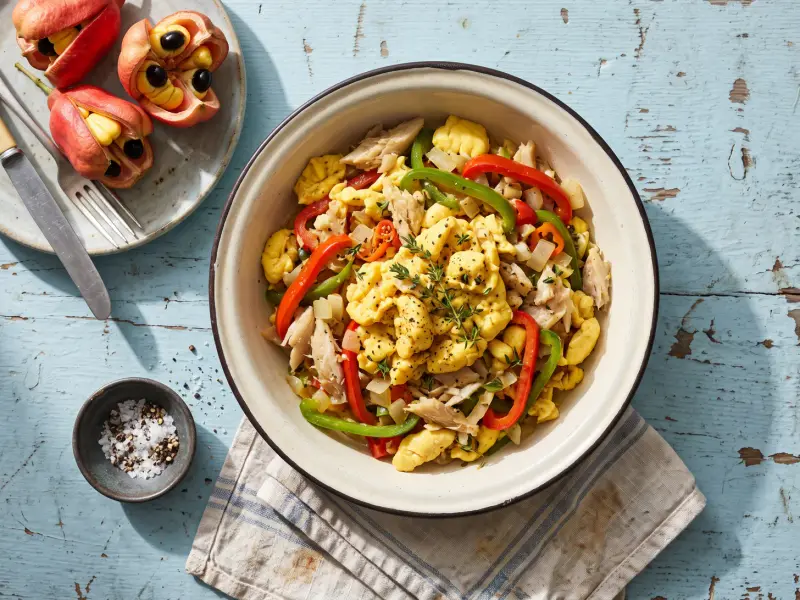 Ackee and Saltfish
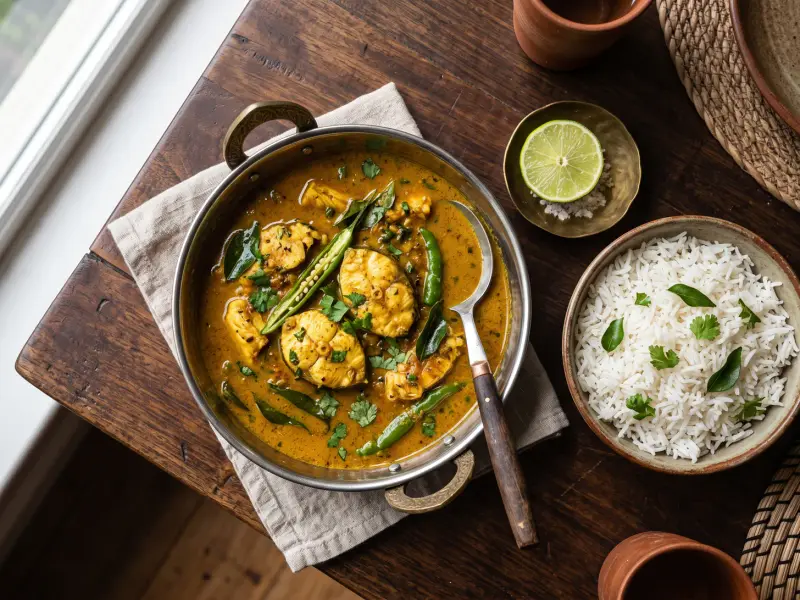 Goan Fish Curry
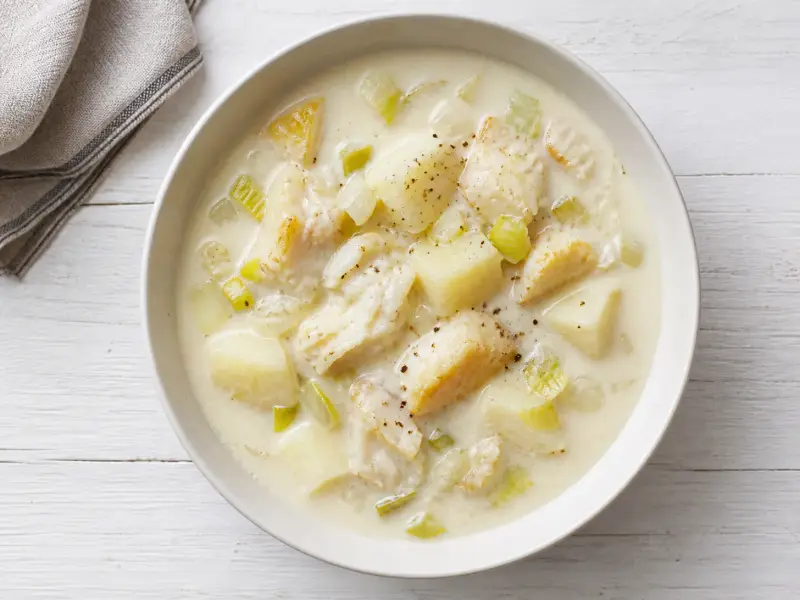 Smoked Haddock Chowder
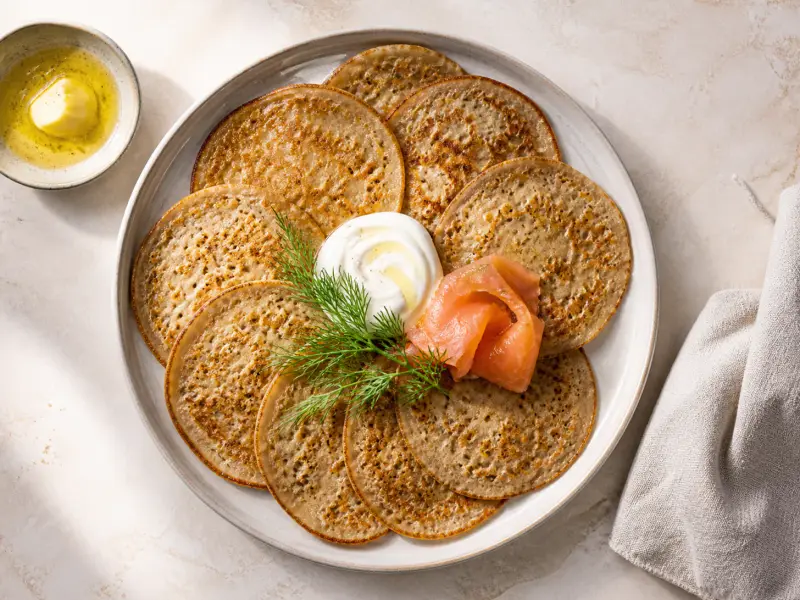 Blini
Blini Brown Stew Fish
 Creamy Oat Porridge