Spaghetti alla Puttanesca
Spaghetti alla puttanesca
A store-cupboard sauce of anchovies, olives, capers and chilli melted into tomato, salty enough that it needs no cheese and barely any salt.
- Prep
- 10 min
- Cook
- 30 min
- Total
- 40 min
- Serves
- 4
- Revisions
- 5
Allergens
- Cereals containing gluten
- Fish
Named from the ingredients as written, including those carried in from sub-recipes. This is not a guarantee — check the labels on what you actually buy, and note that a product’s recipe can change.
Ingredients
Serves
Method
Tip the tomatoes and their juice into a bowl and crush them one at a time in your fist, keeping your hand below the surface so they do not spray.
Do not blend them, for the reason the simple tomato sauce in this collection sets out: a blender aerates the pulp and shears it too fine for the sauce ever to gain body.
Pour the olive oil into a wide pan and add the sliced garlic and the chopped anchovies while the pan is still cold.
Set the pan over medium-low heat and cook for 3-4 minutes, pressing the anchovies against the base with a wooden spoon, until they have broken down completely and no recognisable piece is left.
Watch the garlic rather than the clock here. It should go no further than pale gold; browned garlic turns bitter and the whole sauce sits in that bitterness afterwards.
Stir in the chilli flakes and cook for 20 seconds.
Pour in the crushed tomatoes, standing back as they go in.
Bring to a simmer where bubbles break slowly in two or three places rather than pattering across the whole surface.
Cook uncovered for 15-20 minutes, stirring every few minutes, until the sauce has darkened and a spoon dragged through the middle leaves a trench that holds for a second.
Bring the 3 litres of water to the boil in a large pan and stir in the 12g of fine salt.
Add the olives and capers to the sauce and cook for 5 minutes more, no longer.
Keep them out until this point. Olives and capers simmered from the start give up their salt into the sauce and go dull and leathery, and there is no way to take the salt back out.
Cook the spaghetti for 1 minute less than the packet says, until it still has a firm core when you bite a strand.
Ladle 300ml of the cooking water into a jug before anything is drained.
Taste the sauce now and only now. Between the anchovy, the capers, the olives and the pasta water it will usually need no salt at all, and a pan seasoned before they went in is beyond saving.
Lift the spaghetti straight into the sauce with tongs, letting it drip but not draining it dry.
Toss over medium heat for 1-2 minutes, adding the reserved water a splash at a time, until the sauce coats every strand and slides rather than sitting still.
Stir the parsley through off the heat.
Serve into warm bowls, with no cheese.
Nobody has rated this recipe yet.
Sign in to rate this recipe. One rating per person, and you can change it.
What to expect
- Taste
Salty first, and the salt has three different characters in it: the mineral, almost meaty depth of the dissolved anchovy, the sharp floral hit of the capers, and the fruity bitterness of torn black olives. Under all three the tomato is genuinely sweet, and that sweetness is what stops the bowl reading as a salt bomb. There is no fishiness at all — anchovies cured for months and melted into warm oil read as savoury depth, and someone who does not know they are in there will not identify them.
- Aroma
Garlic warming in cold oil is the first and best smell of the dish, and it happens before anything is really cooking. Then a brief sharp brininess as the anchovies break down, which passes. Once the tomatoes are in it smells simply of a tomato sauce, and the capers and olives only announce themselves in the last five minutes.
- Texture
Slippery strands with oil and starch holding the sauce onto them rather than a sauce sitting separately in the bowl. Against that, three different soft things that are not the same softness: torn olive, which is meaty, capers, which burst rather than yield, and tomato that has broken down but not gone smooth. Nothing in it crunches.
- Sound
Almost nothing until the end. The sauce should blip slowly in two or three places rather than patter, and if the pan is loud the heat is wrong. The one real sound is the last minute — the wet pasta going in and being tossed hard against the sides of the pan.
- How the flavour moves
Salt and savoury arrive first and immediately. The tomato's sweetness comes in behind them and sits through the middle of the mouthful. The chilli is the slowest thing in the dish and it accumulates rather than resets, so the last forkful is noticeably hotter than the first, and the heat is still there when the bowl is empty. The parsley reads as a green top note that only registers on the mouthfuls it happens to be in.
- Serve it
Hot and eaten quickly. The sauce holds together on the strands while it is hot and starts to sit apart from them as it cools, so this is not a bowl to leave standing while everybody sits down.
- Goes with
Bread for the bowl, and nothing on top — this is one of the few Italian pasta dishes served without cheese, because anchovy and pecorino pull in the same salty direction and cancel each other out. A sharp green salad afterwards. Water more than wine, given how salty it is.
Cook's notes
- Difficulty
Easy, with two moments that decide it: the garlic going no further than pale gold, and not salting the pan.
- Cost
Cheap once the cupboard is stocked. Anchovies and salt-packed capers are the outlay and both keep for a long time.
- Equipment
A wide pan for the sauce and a large pan for the pasta. Tongs are worth having for lifting the spaghetti wet into the sauce.
- When to make it
A weeknight, and specifically a weeknight where nothing was bought.
- Best season
None. It is built entirely on preserved ingredients, which is the point of it.
- You know it is done when
The sauce darkens from bright red to a deep brick, and a spoon dragged through the middle of the pan leaves a trench that holds its shape for a second before closing. The finished bowl should look glossed rather than wet, with the sauce clinging to the strands rather than pooling under them.
- And it feels like
The pasta still firm at the core when a strand is bitten, since it finishes cooking in the sauce. The sauce should slide when the bowl is tilted rather than sitting still.
- Food safety
Nothing unusual. Anchovies in oil are cured and ready to eat.
- Where it goes wrong
- Letting the garlic go past pale gold, which turns it bitter and the whole sauce sits in that bitterness afterwards.
- Salting the sauce before the anchovies, capers and olives have gone in, which cannot be undone.
- Blending the tomatoes instead of crushing them by hand, which aerates the pulp and leaves a sauce that never gains body.
- Adding the olives and capers at the start, so they go leathery and give their salt to the pan.
- Draining the pasta dry and discarding the water, which loses the starch that binds the sauce to the strands.
- Serving it with grated cheese.
- If it does go wrong
Too salty: it was seasoned before tasting, and the only real repair is more pasta and more tomato. Bitter: the garlic browned. Watery sauce sitting under the pasta rather than on it: not enough starchy cooking water, or the two were not tossed hard enough together over heat. Thin, sharp tomato flavour: the sauce needed longer — the trench test is the cue.
- Making it ahead
The sauce is a genuinely good make-ahead and improves overnight. Cook the pasta to order.
- Keeping it
The sauce alone keeps 4 days refrigerated and is better on the second day. Dressed pasta does not keep well.
- Reheating
Reheat the sauce in a pan with a splash of water and cook fresh pasta into it.
- Freezing
The sauce freezes well for 3 months, though the capers soften.
- Leftovers
Leftover sauce is good on gnocchi, spooned over grilled fish, or baked with eggs dropped into it.
- Scaling it
Scales up easily, but keep the sauce pan wide — a deep pan of doubled sauce steams rather than reduces and takes far longer to reach the trench stage.
- Substitutions
Salt-packed capers keep their perfume where the ones in vinegar mostly taste of the brine, and the difference is worth the extra rinsing. Anchovies packed in salt are the older form and want soaking and filleting; the ones in oil are the practical substitute and the recipe is written for them. Gaeta or Kalamata olives both work; avoid the pitted black ones sold in tins, which have neither fruit nor bitterness left in them.
- Dietary swaps
Contains fish and cereals containing gluten. There is no vegetarian version of this dish as such — take the anchovies out and you have a different sauce, since they are most of the savoury depth. Gluten-free pasta works, though it wants more of the reserved cooking water at the tossing stage because it gives up less starch of its own.
- Shopping for it
Salt-packed capers from an Italian grocer if you can find them, good tinned whole plum tomatoes rather than pre-chopped, and olives with their stones still in that you pit yourself.
- Keeping the cost down
One of the cheapest full meals in the collection. A tin of anchovies is the only ingredient that feels like an outlay and it stretches across two or three cooks.
- Sustainability
Anchovy is a small, fast-reproducing forage fish and among the lower-impact sources of animal protein, though it is also a species other fish and seabirds depend on — a traceable source is worth choosing.
- Nutrition
Mostly carbohydrate and olive oil, with a small amount of protein from the anchovy. Salt is the number to be aware of.
- Worth it?
The best argument in this collection for keeping a proper cupboard, and a dish that gets worse with almost every addition anybody makes to it.
Where it comes from
- Origin
Naples and the island of Ischia, in the region of Campania.
- Also called
Spaghetti alla puttanesca.
- Said out loud
spa-GET-tee alla poot-ta-NES-ka, roughly.
- What the name means
Contested, and worth being straight about. The word derives from puttana, a coarse Italian word for a prostitute, and every popular explanation builds outwards from that — the smell carrying down a street, a dish cooked fast between customers, a late-night meal for people working late. None of these is documented; they are undated folklore that arrived after the name did. Other accounts have the word used loosely to mean something thrown together from whatever is around, which fits a store-cupboard sauce better and is equally unproven.
- History
The name is not recorded in Italian cookery writing until the 1960s, which is very recent for a dish whose components are old. Sandro Petti, who ran a restaurant on Ischia, claimed to have improvised it in the 1950s for late guests when he was almost out of ingredients; that is one account among several and cannot be checked. What can be said with confidence is that salted anchovy, capers and olives cooked with tomato is ordinary Campanian cooking that considerably predates any of the stories about the name.
- Why it matters
The standard argument-starter of Italian store-cupboard cooking, and one of the most-cooked pasta dishes outside Italy precisely because nothing in it needs a shop.
- When it is eaten
A weeknight dish rather than an occasion one, and traditionally a dish for when the cupboard is the only supplier.
- The traditional way
Anchovies started in cold oil and pressed to nothing, and salting the sauce only at the very end, if at all.
- How it changed
Versions with tuna, with more chilli, or finished with breadcrumbs all circulate. The most common modern change is adding cheese, which the dish is specifically built without.
- Regional variations
Neapolitan versions tend towards more tomato and a longer simmer; the Lazio version served in Rome is often drier and hotter. Some cooks leave the olives whole and some leave the anchovy out entirely, which is a different sauce with the same name on it.
- How this version differs
The olives and capers go in for the last five minutes rather than at the start, which keeps them as distinct pieces with their own salt rather than letting them give it all up into the pan.
- Sources and credit
Sandro Petti's claim is the only named one and it is unverified. The dish otherwise belongs to Campanian home cooking with no author.
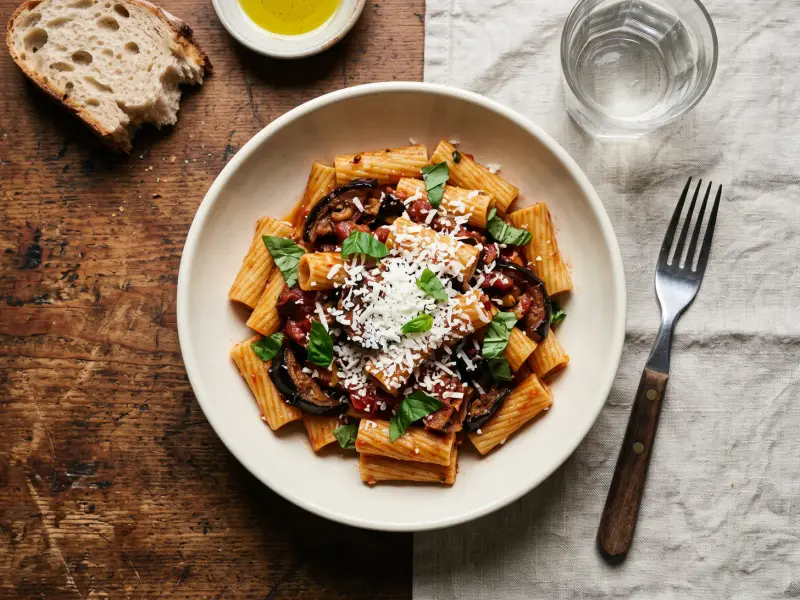 Pasta alla Norma
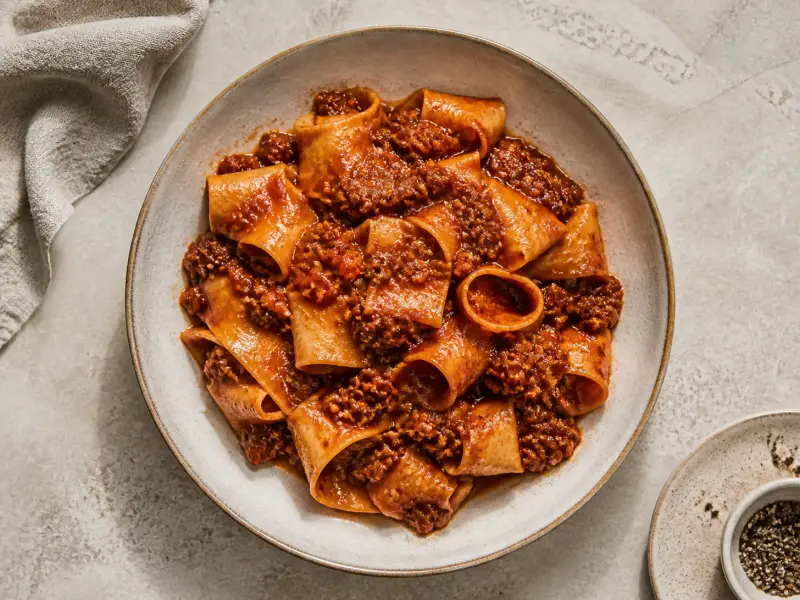 Slow-Cooked Beef Ragu
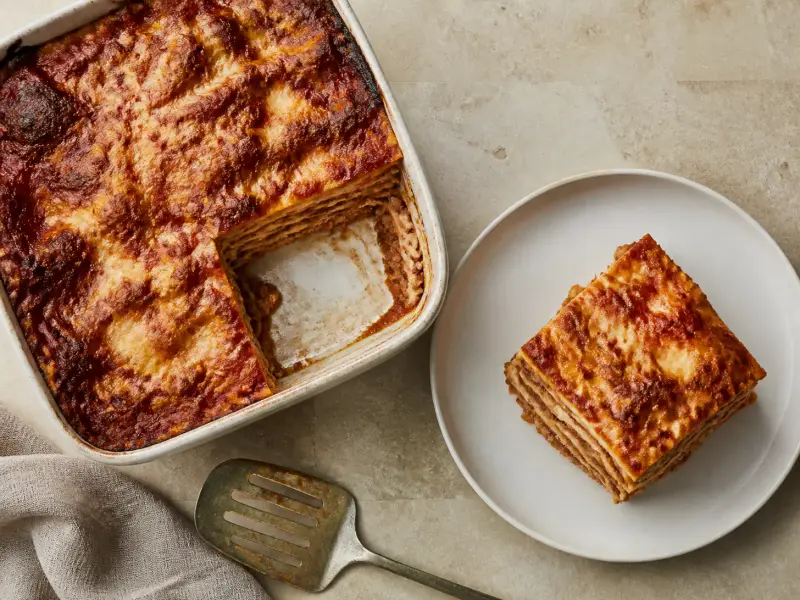 Baked Lasagne
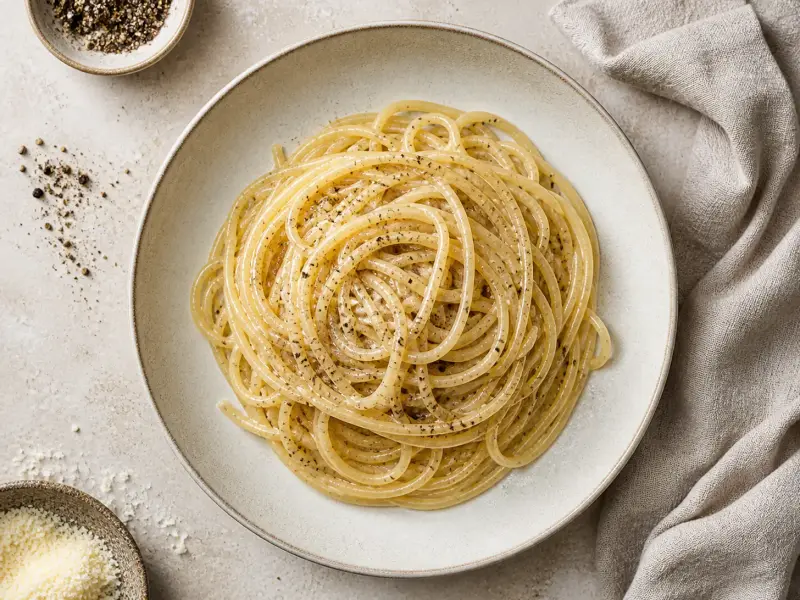 Cacio e Pepe
 Classic Margherita Pizza
 Minestrone