Hurricane
Dark and light rum with passion fruit and citrus, sweet and red and considerably stronger than it looks.
- Prep
- 5 min
- Total
- 5 min
- Serves
- 1
- Revisions
- 5
Ten seconds, if you are in a hurry
The whole dish, carried in and set down, with the one thing worth knowing about it said out loud. No method, no measuring — just what it should look like when it arrives.
Watch on YouTubeIngredients
Serves
Method
Fill a hurricane glass or a tall glass with ice.
Put both rums, the passion fruit syrup, lemon juice, orange juice and grenadine into a shaker.
Add ice and shake hard for 12 seconds.
Strain into the ice-filled glass.
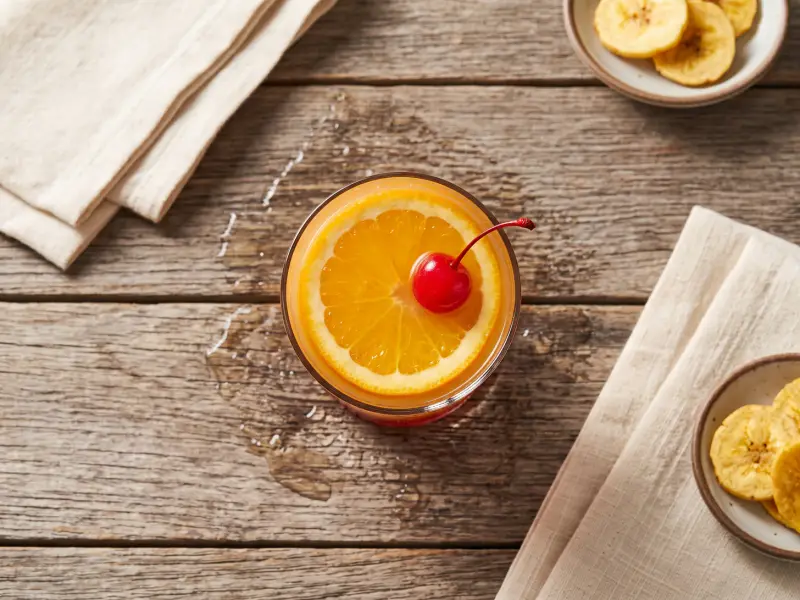
Garnish with the orange slice and the cherry.
Serve with a straw.
Nobody has rated this recipe yet.
Sign in to rate this recipe. One rating per person, and you can change it.
What to expect
- Taste
Sweet and fruity up front, led by passion fruit's distinctive tart-sweet, slightly floral flavour, with lemon and orange both contributing real acidity rather than letting the drink turn purely sugary. Underneath the fruit, both rums bring genuine warmth and depth — the dark rum's molasses richness and the white rum's cleaner sweetness together — though they are easier to miss on first taste than in almost any other rum drink in this collection, which is exactly the drink's reputation for hiding its own strength.
- Aroma
Passion fruit's tart, tropical scent leads, with orange and lemon zest close behind and a warm, faintly caramel note from the dark rum underneath.
- Texture
Medium to full-bodied, thanks to the passion fruit syrup and grenadine both adding real sweetness and a slight viscosity beyond what the citrus and rum alone would give.
- Sound
A hard, sustained shake, longer than a purely citrus-and-spirit drink needs, reflecting the heavier syrup content.
- How the flavour moves
Passion fruit and citrus arrive together at the front, sweet and tart in roughly equal measure, and the two rums build in gradually underneath through the middle and finish, becoming steadily more noticeable the further into the glass you go — which is precisely how a drink this strong manages to feel deceptively easy to drink.
- Serve it
Served cold, and its sweetness and syrup content help it hold its chill a little longer than a purely spirit-and-citrus drink would.
- Goes with
Fried seafood, po'boys, and other classic New Orleans bar food — it is built as a French Quarter drinking-house cocktail rather than a considered food pairing exercise.
Cook's notes
- Difficulty
Easy.
- Cost
Low to moderate. Two rums, passion fruit syrup, citrus and grenadine.
- Equipment
A cocktail shaker, a jigger, and a hurricane glass or any tall glass.
- When to make it
Warm evenings, celebrations, and specifically Mardi Gras.
- Best season
None; every ingredient is shelf-stable or available year round.
- You know it is done when
A deep orange-red colour, cloudy from the citrus, served with visible ice through a tall or curved glass.
- And it feels like
Should feel well chilled and lightly frothed on the first sip from the shake, settling into a fuller-bodied, syrupy texture from the passion fruit and grenadine.
- Food safety
The genuinely important note is strength: with two full rum measures, this reads considerably sweeter and less alcoholic than it actually is, and it is worth treating with the same caution as any strong punch that disguises its own proof.
- Where it goes wrong
- Underestimating its strength because of how sweet and fruity it tastes.
- Using fresh passion fruit juice rather than syrup, which gives a thinner, sharper result than the classic recipe intends.
- Using a generic red sugar-syrup grenadine rather than a genuine pomegranate one, which loses real depth.
- Serving it without ice, which lets it warm quickly given its sugar content.
- If it does go wrong
Tastes flat or artificial: check the grenadine is genuinely pomegranate-based rather than plain red syrup. Too sweet: add a touch more lemon juice for acidity. Stronger or weaker than expected: check both rum measures were used at full strength rather than one being halved, which is the basis of the common tourist variant.
- Making it ahead
Batches well; combine both rums, the syrup, juices and grenadine ahead of time and pour over fresh ice at serving.
- Keeping it
Does not keep once shaken; the rums, syrup and juices can be pre-batched and refrigerated for same-day use.
- Reheating
Not applicable.
- Freezing
Not suitable in its finished form.
- Leftovers
None worth keeping.
- Scaling it
Scales cleanly for a jug or punch bowl, which is how it is often served during large gatherings and Mardi Gras specifically.
- Substitutions
Real grenadine, made from pomegranate, is a genuinely different product from most supermarket grenadine, which is usually red sugar syrup with no pomegranate in it at all — the difference is clear side by side, and the real thing is worth seeking out.
- Dietary swaps
Vegan, vegetarian, dairy free, egg free, nut free and gluten free as written.
- Shopping for it
A genuine passion fruit syrup rather than a passion-fruit-flavoured artificial one, and a pomegranate-based grenadine rather than plain red syrup.
- Keeping the cost down
Mid-priced dark and white rums are both entirely sufficient, since the fruit and syrup dominate the flavour profile.
- Nutrition
One of the higher-sugar drinks in this collection, from the combination of passion fruit syrup and grenadine alongside two full rum measures.
- Worth it?
A drink whose reputation for being a tourist trap is not entirely fair — made properly, with real passion fruit syrup and genuine grenadine, it is a well-built, if genuinely strong, sour.
Where it comes from
- Origin
New Orleans, Louisiana, specifically the French Quarter.
- Also called
Hurricane.
- What the name means
Named for the shape of the glass it is traditionally served in, itself shaped like a hurricane lamp.
- History
Pat O'Brien's account of wartime whisky shortages forcing bars to take on unwanted rum in bulk, and inventing a drink to use it, situates the Hurricane specifically in the supply constraints of the 1940s rather than any older Caribbean rum tradition, which makes it a distinctly American, New Orleans-born cocktail despite its tropical, tiki-adjacent flavour profile.
- Why it matters
Closely associated with Mardi Gras and the French Quarter's drinking culture generally, sold in enormous quantities during Mardi Gras itself, often in souvenir hurricane-shaped plastic cups taken to the street rather than drunk at the bar.
- When it is eaten
Mardi Gras specifically, and French Quarter bar culture more generally.
- The traditional way
A hard shake and a straightforward pour over ice, with no particular technical refinement beyond the specific choice of passion fruit syrup over juice.
- How it changed
A weaker, more tourist-oriented version at roughly half the original's rum content is commonly served across the French Quarter today, which is a genuine and reasonable accommodation to how strong the full recipe actually is, rather than simply a cheaper substitute.
- Regional variations
Passion fruit syrup brands and grenadine quality vary considerably between bars, which changes the drink's sweetness and colour more than its fundamental structure.
- Sources and credit
Credited to Pat O'Brien's as an establishment rather than to a single named bartender.
 Aviation
 Mai Tai
 Whisky Sour
 Zombie
 Bahama Mama
 Blue Hawaii