Mai Tai
Aged rum, lime, orange curaçao and almond orgeat, shaken over crushed ice — a rum drink with no fruit juice in it beyond the lime.
- Prep
- 5 min
- Total
- 5 min
- Serves
- 1
- Revisions
- 7
Ten seconds, if you are in a hurry
The whole dish, carried in and set down, with the one thing worth knowing about it said out loud. No method, no measuring — just what it should look like when it arrives.
Watch on YouTubeAllergens
- Nuts
Named from the ingredients as written, including those carried in from sub-recipes. This is not a guarantee — check the labels on what you actually buy, and note that a product’s recipe can change.
Ingredients
Serves
Method
Put both rums, the lime juice, curaçao and orgeat into a shaker.
Add a scoop of crushed ice.
Shake hard for 8-10 seconds — shorter than usual, because crushed ice dilutes fast.
Pour the whole contents, ice included, into a rocks glass.
Top with more crushed ice to form a mound.
Float the spent lime shell on top, cut side up, and tuck the mint sprig against it.
Serve with a straw.
Nobody has rated this recipe yet.
Sign in to rate this recipe. One rating per person, and you can change it.
What to expect
- Taste
Rich and layered rather than fruity — the two rums bring funk, molasses and a grassy, vegetal note from the rhum agricole, orange curaçao adds a bittersweet citrus edge, and orgeat contributes a distinct, faintly floral almond sweetness that is unlike any other syrup used in this collection. Lime cuts across all of it with real sourness. There is no pineapple, and the absence is noticeable if you have only had the corrupted, fruitier version most bars serve.
- Aroma
Rum funk and orange peel lead, with a soft, marzipan-like almond note from the orgeat underneath — this is a more spirit-forward, less fruity nose than almost any other tiki drink in this collection.
- Texture
Cold and lightly diluted from the crushed ice, with a faint viscosity from the orgeat that gives it slightly more body than a purely spirit-and-citrus drink.
- Sound
A shorter, sharper shake than most citrus cocktails get, and a soft crunch of crushed ice being mounded into the glass afterward.
- How the flavour moves
Lime's sourness and the rum's funk arrive together at the front, the curaçao's bitter-orange edge follows through the middle, and the orgeat's almond sweetness lingers longest at the finish, rounding off what would otherwise be a fairly dry, spirit-forward drink.
- Serve it
Served very cold, and it warms relatively quickly since crushed ice melts faster than cubes — this is a drink meant to be worked through steadily rather than nursed for a long time.
- Goes with
Grilled or barbecued meats, and the wider tiki food repertoire generally — it was built as a bar drink to be sipped over a long evening rather than paired precisely with any one dish.
Cook's notes
- Difficulty
Easy to make, but genuinely dependent on sourcing the right rums and a real almond orgeat rather than an artificial substitute.
- Cost
Moderate to high — two different aged rums plus a specialist orgeat and curaçao add up more than most cocktails on this list.
- Equipment
A cocktail shaker, a jigger, and access to crushed ice.
- When to make it
Evening drinking, and any occasion calling for a visually striking, tropical-themed cocktail.
- Best season
None; every ingredient is shelf-stable and available year round.
- You know it is done when
The finished drink should be a warm amber-brown from the rum and curaçao, with a mound of crushed ice rising above the rim.
- And it feels like
Should taste cold and well-diluted but not watery — the balance between the two aged rums and the orgeat's nutty sweetness should still be clearly distinguishable rather than flattened by ice melt.
- Food safety
No particular hazard beyond declaring the nut allergen clearly, since orgeat is not always an obvious source of almond to someone unfamiliar with the ingredient.
- Where it goes wrong
- Adding pineapple or orange juice, which turns it into the corrupted modern version rather than the classic drink.
- Using an artificial, almond-extract-flavoured orgeat rather than a proper one, which tastes noticeably synthetic.
- Over-shaking, which over-dilutes a drink that is about to be poured over more crushed ice regardless.
- Forgetting to declare the nut content of the orgeat to anyone with an allergy.
- If it does go wrong
Tastes thin or fruity: pineapple or another juice has crept in — check the recipe and remove it. Tastes artificial or overly sweet: the orgeat is a synthetic almond-extract version rather than a genuine almond syrup. Too watery: it was shaken too long, or too much crushed ice was used in the shake itself rather than saved for topping.
- Making it ahead
The rums, lime, curaçao and orgeat can be pre-batched and refrigerated; shake to order with fresh crushed ice.
- Keeping it
Does not keep once built; the spirits, lime, curaçao and orgeat can be pre-batched without ice and refrigerated for same-day use.
- Reheating
Not applicable.
- Freezing
Not suitable in its finished form.
- Leftovers
None worth keeping.
- Scaling it
Scales cleanly for a batch, though the crushed-ice mounding at the end is a per-glass presentation detail that does not really scale.
- Substitutions
A genuine almond orgeat is not really substitutable — it carries an allergen the drink cannot do without and gives a flavour no other syrup replicates. Where the original aged Jamaican rum blend Bergeron used is unavailable, which it always is, a mix of a funky, funky-forward Jamaican pot-still rum and a grassier rhum agricole is the standard modern approximation of what he was working with.
- Dietary swaps
Contains nuts, from the orgeat, and this is one of only two cocktails in this collection with a genuine allergen beyond alcohol itself. Dairy free, egg free and gluten free as written.
- Shopping for it
A genuine, nut-based orgeat rather than an artificially flavoured syrup; a real orange curaçao rather than a generic triple sec, though the difference is smaller than with the orgeat.
- Keeping the cost down
Buying a single bottle of a well-regarded aged Jamaican rum and a single bottle of rhum agricole covers a great many drinks between them; the orgeat and curaçao, used in small measures, last a long time.
- Nutrition
Roughly 180-200 calories per drink from the pours, most of it from the two rums and the orgeat's sugar content; it carries a meaningful amount of alcohol from the two full rum measures combined.
- Worth it?
A considerably more interesting and better-balanced drink than its fruit-punch reputation suggests, and worth making properly at least once before deciding what you think of it.
Where it comes from
- Origin
Oakland, California — the American mid-century Polynesian-themed tiki bar movement, not the Pacific islands the movement referenced.
- Also called
Mai Tai.
- Said out loud
MY-tie.
- What the name means
From Tahitian maita'i, meaning good; the fuller phrase maita'i roa ae is closer to "out of this world" or "the best", as Bergeron's own account of the naming has it.
- History
The Mai Tai belongs to the American tiki bar movement of the 1930s through the 1960s, invented almost entirely in California and built on a romanticised, largely imagined idea of Polynesia rather than any dish or drink actually made there. Bergeron's Trader Vic's and Beach's Don the Beachcomber were the two defining establishments of that movement and its two founders were genuine, long-running commercial rivals.
- Why it matters
One of the two or three most internationally recognised tiki cocktails, and a large part of why rum-and-tropical-fruit drinks became associated with a whole genre of American restaurant design and entertainment from the 1940s onward.
- When it is eaten
Evening drinking in a tiki or tropical-themed setting, historically; more generally now, any warm-weather occasion calling for something visually striking.
- The traditional way
A brief shake over crushed ice, poured whole rather than strained, and garnished with the spent lime shell — a presentation detail specific to this drink among the ones in this collection.
- How it changed
The most significant change is the near-total replacement of orgeat and curaçao with pineapple and orange juice in the version served at most bars and restaurants from the mid-twentieth century onward — a sweeter, fruitier, and considerably less complex drink that nonetheless became what most people now mean when they order a Mai Tai.
- Regional variations
Countless "tropical" Mai Tai variants exist built around pineapple and other fruit juices; the version given here restores the original, pre-corruption formula rather than following the more commonly served modern one.
- How this version differs
We follow Bergeron's original formula rather than the pineapple-juice version most bars now serve, using a split of aged rums as the modern approximation of the seventeen-year-old Jamaican rum his own recipe specified and which no longer exists.
- Sources and credit
Victor Bergeron is the more widely credited inventor and the one whose account is generally repeated as the primary history, but Donn Beach's competing claim is genuine and well documented rather than a footnote, and this file presents both rather than resolving the dispute.
 Aviation
 Hurricane
 Whisky Sour
 Zombie
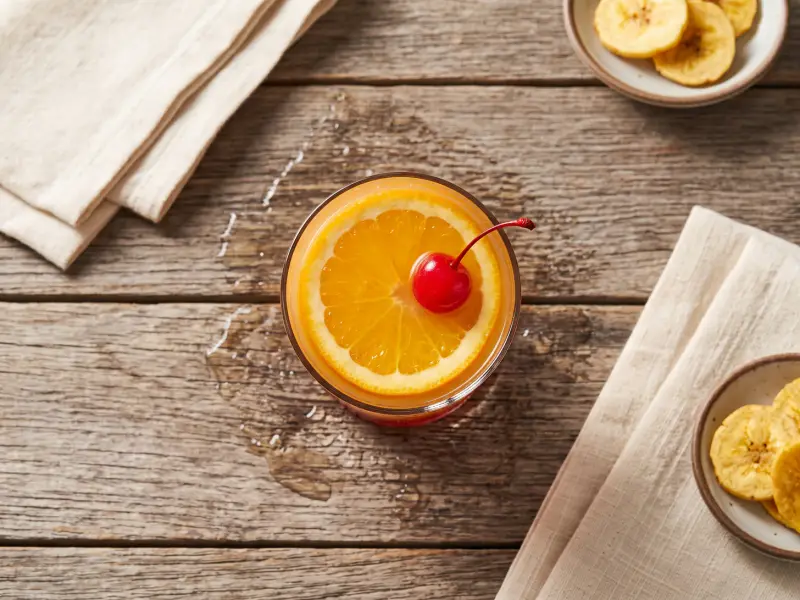 Bahama Mama
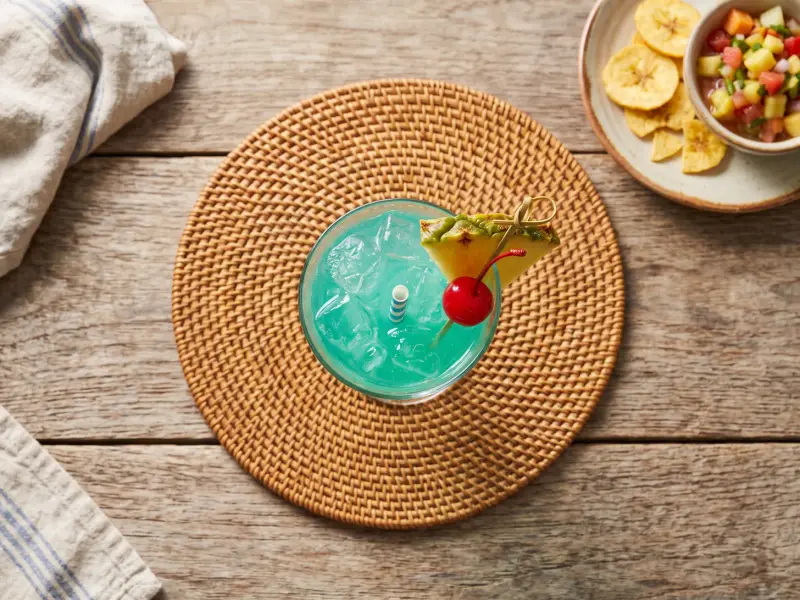 Blue Hawaii