Rum Swizzle
Two rums, two juices and bitters churned with crushed ice until the glass frosts and the drink turns cloudy and cold.
- Prep
- 7 min
- Total
- 7 min
- Serves
- 1
- Revisions
- 5
Ingredients
Serves
Method
Fill a tall glass three-quarters with crushed ice.
Pour in both rums, the pineapple, orange and lime juices, and the falernum.
Add the bitters last, over the top.
Put a swizzle stick or a long bar spoon into the glass, hold it between your palms and spin it rapidly back and forth for about ten seconds.
Stop when the outside of the glass has frosted and the drink has gone opaque.
Top up with more crushed ice to fill the glass, since the churning will have dropped the level.
Garnish with the orange slice and cherry.
Nobody has rated this recipe yet.
Sign in to rate this recipe. One rating per person, and you can change it.
What to expect
- Taste
Sweet and sour at the front and much darker underneath than it looks. Pineapple and orange lead, sweet and tropical, and the lime cuts across them immediately. Then the black rum arrives with the flavour that makes this drink what it is: molasses, treacle, burnt sugar, a faintly smoky depth that no light rum has. The golden rum sits between the two and rounds it. Falernum threads through the middle with lime zest, clove and a marzipan note that is easy to miss and impossible to unnotice once you have. The Angostura is on top and mostly aromatic. There is no bitterness to speak of and no great complexity — this is a straightforwardly delicious drink rather than a challenging one — but the dark rum stops it being merely sweet.
- Aroma
Angostura first, because it was poured last and is sitting on the surface: clove and cinnamon over everything. Then pineapple and orange, then the rum, which smells of molasses and dried fruit and a little vanilla. Falernum contributes clove and almond to the same part of the nose as the bitters, so the two reinforce each other. The crushed ice suppresses a good deal of it, and the drink smells noticeably louder five minutes in.
- Texture
Thick, cold and slightly granular. Crushed ice makes the drink partly a slush — the first mouthful carries ice fragments — and the pineapple juice gives it a real body underneath. There is a genuine aeration from the swizzling that a shaken drink does not have: it is lighter and foamier through the middle than the same ingredients poured over cubes. As the ice melts it thins and lengthens, which is what it is designed to do.
- Sound
The swizzle is unlike anything else in the collection — a fast, dry, grinding rattle as the spokes drive through crushed ice, held for ten seconds, quite loud and quite unmistakable. It is the sound the drink is named after. Afterwards the glass ticks and settles for several minutes as the ice compacts, and there is a faint continuous fizz from the aeration.
- How the flavour moves
Clove and cinnamon in the nose. Then cold, hard, before any flavour. Sweet fruit arrives first and briefly, then lime cutting it, then the black rum coming up from underneath — the arc runs from bright to dark across a single mouthful, which is unusual. The finish is molasses and spice and lasts well. Over the glass the dilution is fast and the drink gets progressively lighter and more refreshing and less interesting, which is why it is topped up with ice rather than left to melt.
- Serve it
Extremely cold, and the coldest thing here at the moment it is made — below zero within ten seconds. It then stays cold for a very long time because the glass is packed with crushed ice, which is the trade-off: rapid dilution in exchange for a drink that is still cold twenty minutes later. It is designed for heat and it does not work indoors in winter.
- Goes with
Heat, salt and grilled food. Jerk chicken. Grilled fish. Salt cod fritters. Fried plantain. Salted nuts. It handles chilli well because of the sugar, and it stands up to smoke from a barbecue better than most fruit drinks. Where it fails is against anything sweet — it is already sweet — and at any kind of formal meal, where it is simply the wrong register.
Cook's notes
- Difficulty
Easy, and the technique is the fun part. Swizzling is not difficult but it is unfamiliar, and getting a glass to frost on the outside in ten seconds is genuinely satisfying the first time you manage it.
- Cost
Moderate. Two rums and a bottle of falernum is a real shopping list, though all three keep indefinitely and none is expensive. The juices cost very little.
- Equipment
A swizzle stick if you can get one, and a long bar spoon or a wooden spoon handle if you cannot — the technique works with any of them, just less efficiently. Crushed ice, which means either a bag of it, an ice crusher, or cubes in a clean tea towel and a rolling pin. A tall glass. A citrus squeezer.
- When to make it
Heat, daytime, outdoors. It is a poor indoor drink and a very poor winter one.
- Best season
None in the ingredients; entirely seasonal in temperament.
- You know it is done when
Two things happen together and both are the marker. The outside of the glass frosts over — visibly, in real time, which is the most satisfying thing in this collection — and the drink turns from translucent to opaque as air and ice fragments are driven through it.
- And it feels like
It should be slightly slushy at the top and thick on the stick. If the drink is still clear and thin after ten seconds, the ice was not crushed finely enough.
- Food safety
Nothing raw and nothing to manage. Worth noting the strength: 60ml of rum in a glass that drinks like a fruit punch.
- Where it goes wrong
Using cubes instead of crushed ice, which is the fault that stops the drink working — no frost, no opacity, no aeration, and a much slower chill. Stirring in a circle rather than spinning the stick between the palms. Not topping up the ice afterwards, so the drink sits halfway down a tall glass. Leaving out the falernum, which removes the thing that makes it taste like a swizzle rather than like rum punch. And using only one rum, which flattens it.
- If it does go wrong
No frost on the glass: the ice was not fine enough, or the swizzle was too gentle. Both are fixable in the glass — crush more ice, add it and go again. Drink is clear rather than opaque: same cause. Too sweet: more lime, 5ml at a time. Too sharp: a little more falernum rather than more juice. Watery within five minutes: the ice was wet — ice straight from a bag that has partly thawed melts far faster than ice from a freezer.
- Making it ahead
Bermuda batches it by the jug and so can you: mix the rums, juices, falernum and bitters in proportion and keep it cold. Swizzle each glass individually over crushed ice to order, because swizzling is per-glass by nature. The mix keeps a day before the lime dulls.
- Keeping it
None.
- Reheating
Not applicable.
- Freezing
No.
- Leftovers
None from a single drink. The juices are the practical leftover and both keep a couple of days.
- Scaling it
The liquid scales cleanly. The swizzling does not — it is a single-glass technique, and a jug swizzled once does not chill or aerate the way six glasses swizzled separately do.
- Substitutions
Any dark, molasses-heavy rum will do the black rum's job; Bermudian tradition points at one particular brand and the drink is not ruined by another. Falernum is the one that matters — it is a Barbadian syrup or liqueur of lime, almond, clove and ginger, and there is no substitute that gets you to the same place. If you cannot find it, a mixture of sugar syrup, a little lime zest and a pinch of ground clove and ginger is a rough approximation and better than leaving it out. Fresh pineapple juice is noticeably better than tinned, as it is in every drink that uses it.
- Dietary swaps
Vegan, dairy-free and gluten-free as written. Falernum is usually almond-flavoured rather than almond-containing — the flavour typically comes from almond essence or from clove — but anyone with a nut allergy must check the specific bottle, because some brands do use real almonds.
- Shopping for it
A black or dark molasses-forward rum and a golden one. Falernum, which is a specialist item in most countries and worth ordering. Fresh pineapple juice if you can, tinned if you cannot. Crushed ice, or a bag of cubes and a rolling pin. A real swizzle stick is a pleasant thing to own and entirely optional.
- Keeping the cost down
Falernum can be made at home from lime zest, sugar, clove, ginger and a little rum, and homemade is better than most bottles as well as cheaper. Buy the black rum for its molasses character rather than its age — this is not a sipping application and an expensive aged rum is wasted under pineapple juice.
- Sustainability
The pineapple and the imported rum are the footprint. Nothing much to be done except finish the pineapple.
- Nutrition
Around 280 calories and roughly 2.4 UK units. Most of the calories are the rum and the fruit sugar in roughly equal measure.
- Worth it?
Worth it, and it is the most fun thing to make in the collection. The technique is genuinely different from anything else here, the frost appearing on the outside of the glass in ten seconds is a small piece of theatre that never gets old, and the drink is very good. The only barrier is falernum, which is worth ordering or making.
Where it comes from
- Origin
The Caribbean for the technique; Bermuda for this particular drink.
- Also called
Rum Swizzle. The category is simply a swizzle, of which there are many — the Queen's Park Swizzle, from Trinidad by way of a Port of Spain hotel, is the other well-known member.
- Said out loud
As it looks.
- What the name means
From the swizzle stick, and the swizzle stick is a plant. The traditional one is cut from the dried flower stalk of a small Caribbean tree, Quararibea turbinata, which grows with several branches radiating from a single point — trim the branches short and you have a purpose-built whisk with five or six spokes. The tree is commonly called the swizzlestick tree for this reason. Every plastic stirrer in every airline drink is a descendant of it.
- History
The technique comes first and the drink follows. Churning a rum drink with a stick over ice is a West Indian practice of long standing, and its purpose was practical: it chills and aerates simultaneously and much faster than stirring, which mattered a great deal in a hot climate. The Queen's Park Swizzle, from the Queen's Park Hotel in Trinidad, is the most documented early example of a named swizzle. Bermuda's rum swizzle is a twentieth-century national institution, associated above all with the Swizzle Inn at Bailey's Bay, and it is the version that has travelled.
- Why it matters
It functions as Bermuda's national drink in the way the Singapore Sling functions for Singapore, with the same consequence: a great many people's experience of it is a sweet premixed jug rather than the drink described here. The swizzle stick itself has had a much larger cultural life than the drink — the plastic stirrer is one of the most widely distributed objects in the world and almost nobody who uses one knows it is a copy of a plant.
- When it is eaten
Hot afternoons, outdoors, and holidays. It is unashamedly a holiday drink.
- The traditional way
Swizzling, which is the whole identity of the thing. The stick goes into the glass, is held between flat palms and spun rapidly back and forth — not stirred in a circle — so the spokes churn the crushed ice through the liquid. Ten seconds does what thirty seconds of stirring cannot, because the fragments of ice are being driven through the drink rather than moved around in it.
- How it changed
It got sweeter and got batched. The Bermudian tradition of making it by the jug for a group is genuine and long-standing; the consequence is that much of what is served is pre-mixed, over-sweetened and swizzled once for six people rather than made per glass. The falernum has also become optional in many versions, which is a real loss.
- Regional variations
The Queen's Park Swizzle, from Trinidad, is rum, lime, sugar and mint with a heavy float of Angostura and is drier and more herbal. Barbados, Martinique and Guadeloupe all have swizzled rum drinks of their own with local rums and local sweeteners. Bermuda's version is the fruitiest of them.
- How this version differs
In using two rums rather than one, which is the traditional Bermudian approach and is worth keeping. It also puts the bitters in last and over the top rather than in with everything else, so they are the first thing you smell.
- Sources and credit
The Swizzle Inn's association with the Bermudian drink is the standard account. The botanical origin of the swizzle stick is well documented.
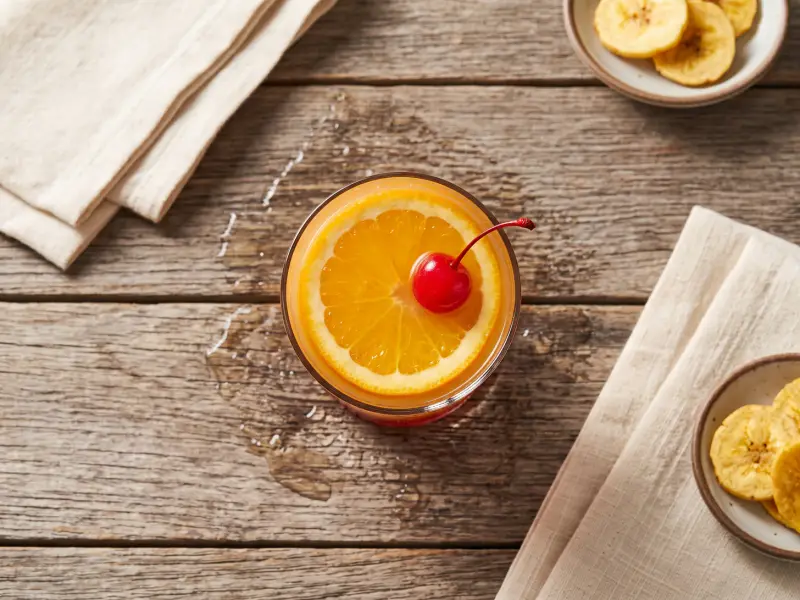 Bahama Mama
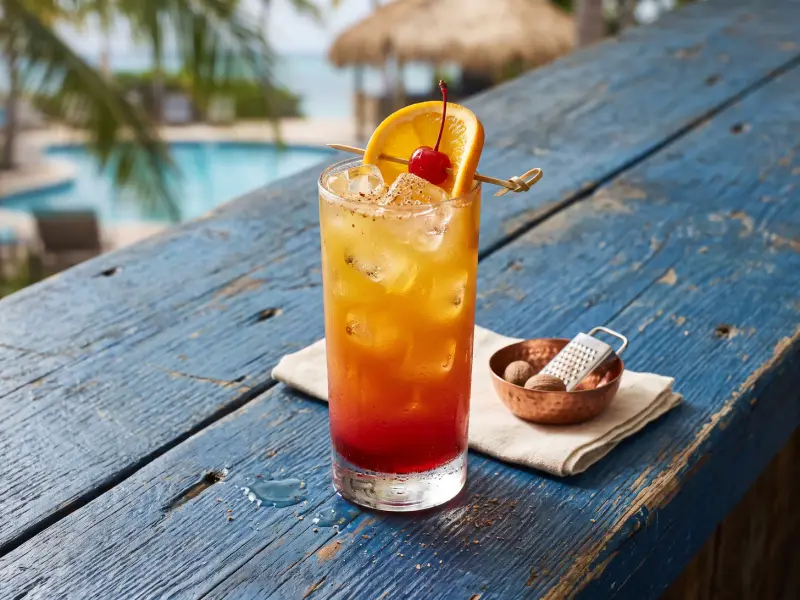 Caribbean Rum Punch
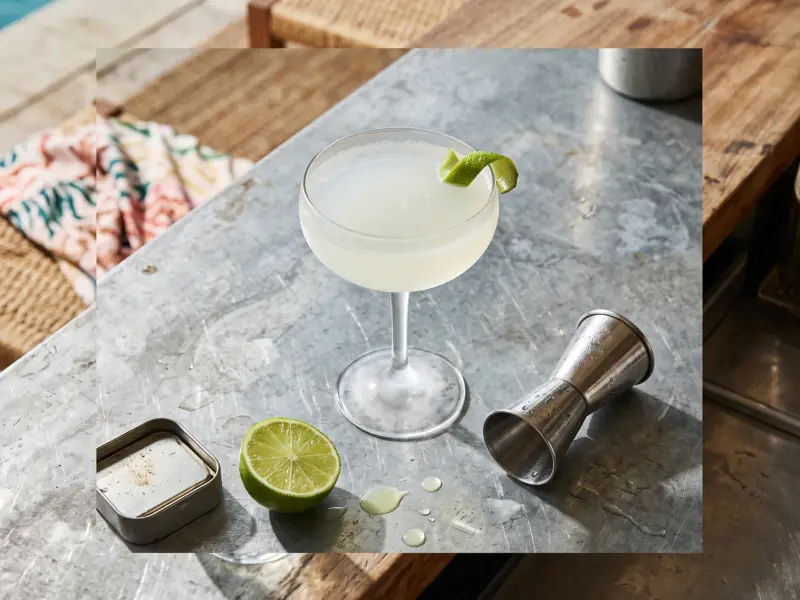 Daiquiri
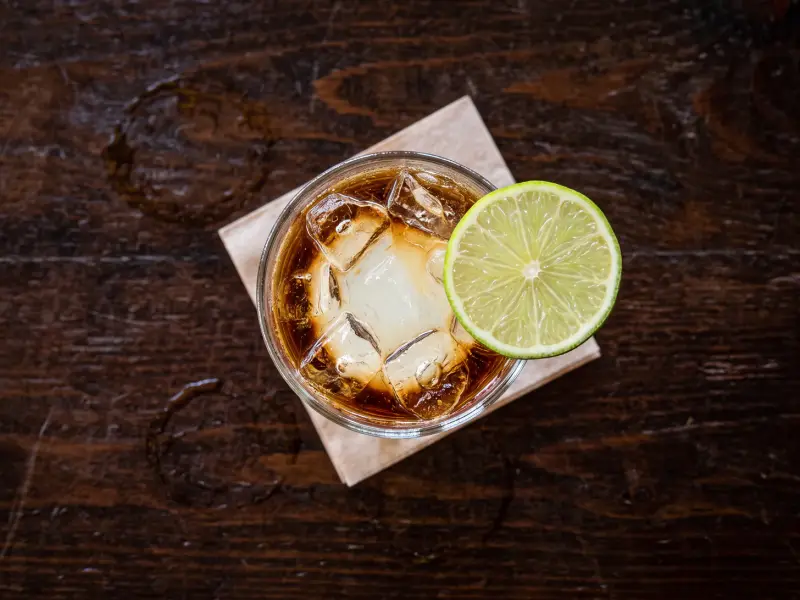 Dark and Stormy
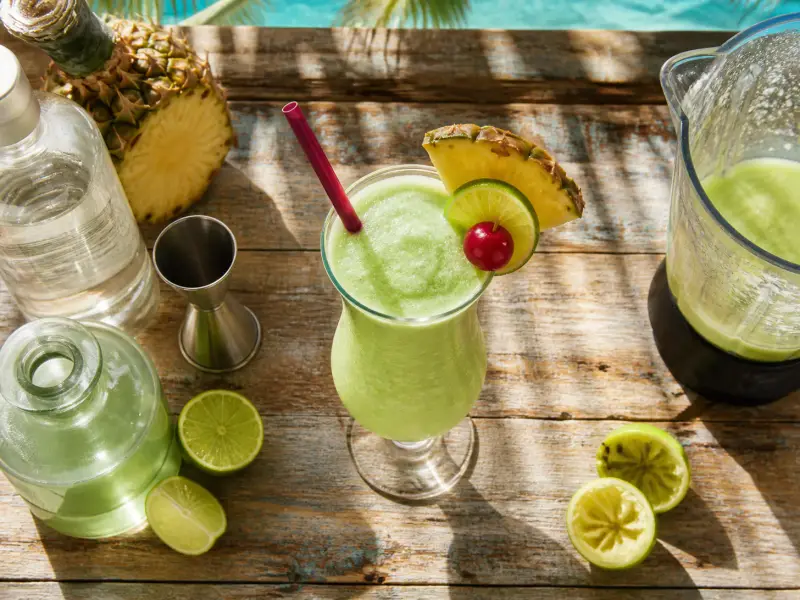 Frozen Melon Colada
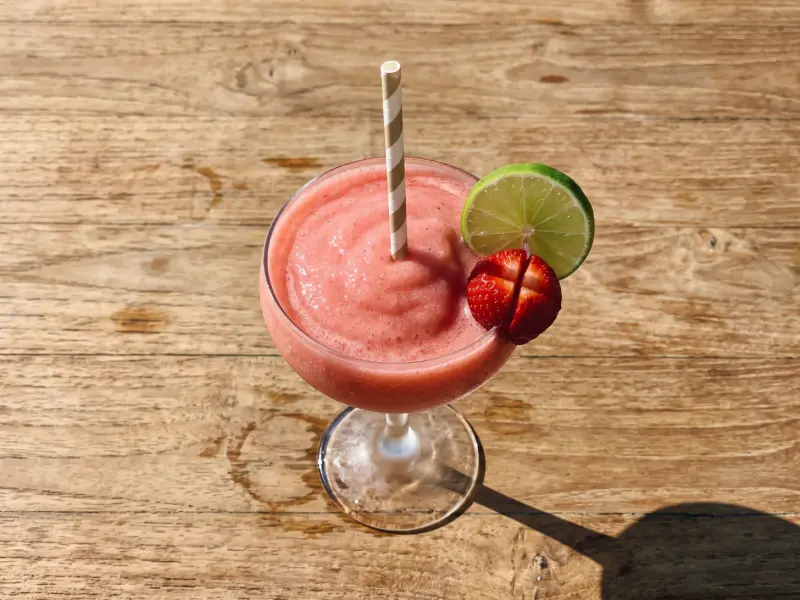 Frozen Strawberry Daiquiri