Slow-Cooked Black Dal
दाल मखनी
Dal makhani
दाल मखनी — buttery dal.
Whole urad soaked overnight and simmered for hours until it turns black and glossy, then finished with butter and a little cream.
- Prep
- 20 min
- Cook
- 3 hr 30 min
- Resting
- 12 hr
- Total
- 15 hr 50 min
- Serves
- 6
- Revisions
- 5
Allergens
- Cereals containing gluten (via Skillet Flatbreads)
- Milk
Named from the ingredients as written, including those carried in from sub-recipes. This is not a guarantee — check the labels on what you actually buy, and note that a product’s recipe can change.
Ingredients
Serves
Method
Put the urad and the kidney beans in a large bowl and cover them with cold water by at least 5cm.
Soak for 12 hours or overnight. They roughly double in size, and a pan started from dry will not soften evenly however long you give it.
Drain the pulses and rinse them well.
Tip them into a large pan with the 1.5 litres of fresh water and bring to a hard, rolling boil.
Boil hard and uncovered for 10 minutes, skimming off the foam that rises.
Do not shorten that hard boil or replace it with a gentle simmer. Dried kidney beans carry a lectin that is destroyed by ten minutes at a full boil and is not destroyed by slow cooking below it, and undercooked beans make people ill.
Turn the heat down to a steady simmer and part-cover the pan.
Cook for 1.5-2 hours, topping up with hot water from the kettle whenever the pulses come near the surface, until an urad bean crushes to cream between finger and thumb with no grit left in the middle.
Melt the 40g of butter with the oil in a wide pan over medium heat while the pulses cook.
Cook the onion for 10-12 minutes, stirring, until it is soft and deep gold at the edges.
Add the ginger, garlic and green chillies and cook for 2 minutes, until the raw smell has gone.
Stir in the cumin, coriander, turmeric and chilli powder and cook for 30-60 seconds, until they darken slightly and smell toasted. Ground spices give their flavour up to fat and burn in a dry pan, which is why they go in here rather than into the liquid later.
Add the crushed tomatoes and cook for 8-10 minutes, stirring, until the mixture has darkened and the fat separates back out around the edge of the pan.
Keep the tomatoes out until the pulses are already tender. Acid is what holds a pulse firm, and a pot that has tomato in it from the start can simmer all day without the beans ever going soft.
Tip the tomato base into the pan of cooked pulses along with all their liquid.
Stir in the 6g of fine salt.
Simmer uncovered over the lowest heat you can hold for 60-90 minutes, stirring every 15 minutes and scraping the base as you go.
Crush a ladleful of the beans against the side of the pan each time you stir, which thickens the pot without any flour.
Add hot water whenever it thickens enough to catch. A dal this dark hides a scorched base until you taste it, and burnt is the one flavour that goes all the way through.
Stop when it has gone glossy and almost black and a spoon dragged through leaves a trench that holds for a second.
Stir in the garam masala and cook for 2 minutes more. It is an aromatic blend rather than a base spice, and it goes flat if it boils for an hour.
Pour in the cream and warm it through over low heat for 2-3 minutes, without letting the pan bubble. Once dairy is in, a boil splits it into grains sitting in thin liquid.
Take the pan off the heat and stir in the cold butter until it melts and the surface turns glossy.
Taste and add salt.
Scatter over the chopped coriander.
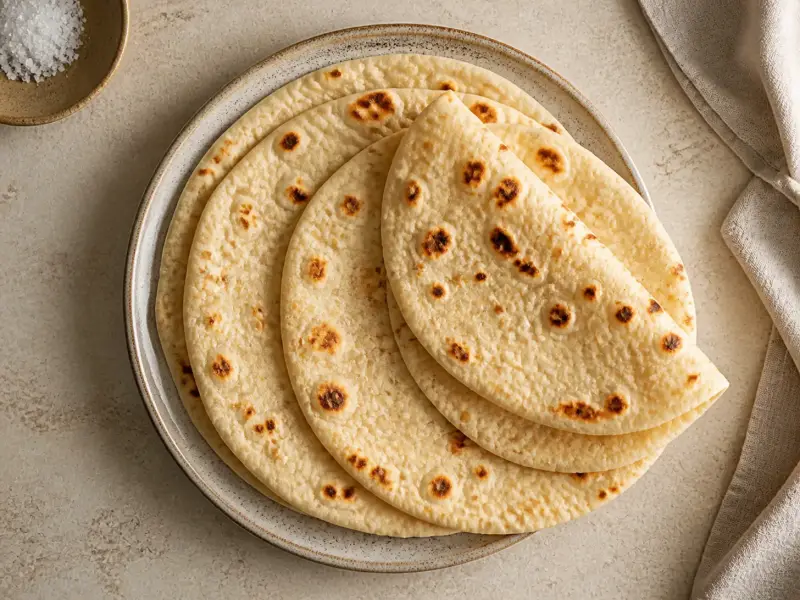
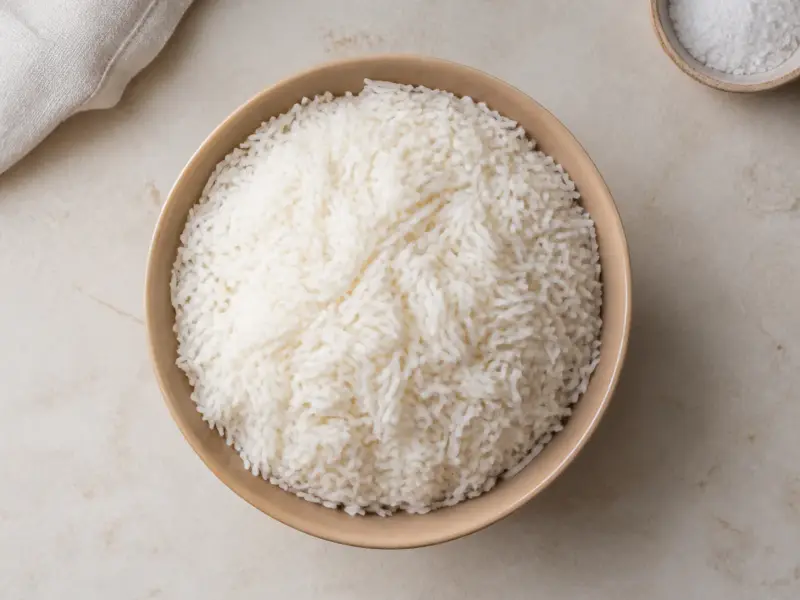
Serve with warm flatbreads or steamed basmati rice.
Note that this is the opposite end of the same family from the weeknight red lentil dal in this collection: split lentils with the skin off collapse in half an hour, whole skin-on urad takes most of an afternoon.
Nobody has rated this recipe yet.
Sign in to rate this recipe. One rating per person, and you can change it.
What to expect
- Taste
Deep, dark and savoury, with the long-cooked urad providing a rich, almost meaty earthiness that's genuinely different from a paler, faster-cooking lentil. Butter and cream round the whole dish into something luxurious rather than plain, the tomato base gives a gentle acidity underneath, and garam masala's warm, complex spice blend arrives as a final aromatic layer rather than a base note, since it's added late specifically so it doesn't cook flat.
- Aroma
Rich, buttery and deeply savoury, with garam masala's warm spice blend the most noticeable single element once it's stirred in, and a faint smokiness underneath from the long-cooked pulses themselves.
- Texture
Thick and creamy, with the pulses broken down enough to give real body but not blended smooth — there should still be some texture from partially intact beans against the mostly-collapsed background, and the whole thing should hold its shape rather than pool thinly.
- Sound
A slow, heavy, occasional bubble at the lowest simmer setting, and a soft sizzle as the onion browns at the earlier stage.
- How the flavour moves
Rich butter and cream arrive first on the palate, the deep, earthy urad flavour filling the middle of the mouthful, and garam masala's warm spice the last thing to register, lingering after the swallow.
- Serve it
Served hot, and it holds heat exceptionally well given how thick and dense the finished dal is.
- Goes with
The skillet flatbreads or steamed basmati rice in this collection, exactly as its own steps suggest — this dal wants something plain to scoop it up with rather than any competing side dish.
Cook's notes
- Difficulty
Moderate. The individual steps are simple, but the dish demands real patience over several hours and close attention at the initial hard-boil stage, which is a genuine safety step rather than an optional one.
- Cost
Cheap — dried urad and kidney beans, a modest amount of aromatics and spice, and butter and cream for the finish.
- Equipment
A large heavy pan for the long simmer, and a separate pan for building the onion-tomato base.
- When to make it
A weekend or a day when the pot can be left simmering gently for a few hours, rather than a genuine weeknight dish.
- Best season
None — every ingredient is a dry store-cupboard item or a standard fresh aromatic.
- You know it is done when
The dal should turn glossy and almost black as it cooks, deepening steadily from an early grey-brown — a pot that still looks grey-brown after the full simmering time has not been on long enough.
- And it feels like
An urad bean should crush to cream between finger and thumb with no grit left in the middle; the finished dal should hold a trench for a second when a spoon is dragged through it.
- Food safety
The initial hard boil of the kidney beans is a genuine safety requirement, not a technique preference — phytohaemagglutinin, the lectin present in raw and undercooked kidney beans, causes real illness and is destroyed specifically by a rolling boil rather than by extended slow cooking at a lower temperature.
- Where it goes wrong
- Skipping or shortening the initial ten-minute hard boil of the kidney beans, which is a genuine food-safety failure rather than a minor shortcut.
- Adding the tomatoes before the pulses are already tender, which can leave them firm no matter how much longer they're cooked afterwards, since acid holds pulses firm.
- Boiling the pot once the cream has gone in, which splits it into curds and thin liquid.
- Adding the garam masala too early, so its aromatic quality cooks away over the long simmer rather than arriving fresh at the end.
- If it does go wrong
Pulses still firm despite hours of cooking: check whether tomato went in too early, since acid genuinely prevents softening. Split, grainy sauce: the cream was boiled rather than just warmed through. Flat-tasting garam masala: it needs to go in at the very end, not simmered for a long stretch.
- Making it ahead
Excellent made a day or more ahead — restaurant versions are often deliberately held overnight over very low heat specifically because the dish rounds out and smooths with time.
- Keeping it
Three to four days refrigerated, and widely considered to improve with time as the flavours continue to meld.
- Reheating
Gently, with a splash of water if it has thickened too much on standing.
- Freezing
Freezes well for up to three months, ideally before the cream is added, with cream stirred in fresh on reheating.
- Leftovers
Very good the next day, and many restaurant versions are deliberately held overnight over low heat specifically because it improves with time.
- Scaling it
Scales up well in a larger pan, though the long simmering time stays roughly the same regardless of batch size.
- Substitutions
Any dark, well-textured dal can be adapted from this method, though whole black urad specifically is what gives this dish its name and colour, which deepens the longer it cooks as the skins bleed into the pot.
- Dietary swaps
Contains milk from the butter and cream finish; a plant-based butter and cream alternative would make this vegan, and it's a fairly straightforward substitution since neither is load-bearing to the pulses' texture, only to the final richness. Naturally gluten-free provided rice rather than flatbread is served alongside.
- Shopping for it
Whole black urad, sold as sabut urad or black gram, is available from South Asian grocers and is genuinely a different product from split red lentils — don't substitute one for the other expecting the same result.
- Keeping the cost down
Dried pulses are considerably cheaper than the equivalent in tinned form, and this dish specifically depends on that long, slow cook from dried rather than any shortcut.
- Sustainability
Pulses generally carry one of the lowest environmental footprints of any protein source, needing little nitrogen fertiliser and improving the soil they're grown in.
- Nutrition
A rich, protein-and-fibre-dense main course, made more indulgent than a plain dal by the butter and cream finish.
- Worth it?
A genuinely rich, deeply satisfying dish that rewards its long cooking time with a depth no faster dal can match, and a good demonstration of a real food-safety rule that's worth understanding rather than just following.
Where it comes from
- Origin
Punjab, spanning both India and Pakistan.
- Also called
Dal makhani, meaning buttery dal, for the enriched restaurant version; the plain long-cooked whole urad dal has no single fixed name of its own beyond simply being described by its ingredient.
- Said out loud
dahl mukh-KHAN-ee.
- What the name means
Makhan is Hindi and Punjabi for butter, and makhani describes anything cooked in a buttery style — dal makhani is, quite literally, buttery dal.
- History
The technique of simmering whole black urad slowly, traditionally over embers or a low hearth fire overnight, long predates any restaurant version and has no attributable date or inventor. The rich, cream-and-butter-finished restaurant style most people now think of as dal makhani is commonly credited to Kundan Lal Gujral of the Moti Mahal restaurant, which relocated from Peshawar to Delhi after Partition in 1947 — this attribution comes substantially from the restaurant's own telling of its history rather than independent documentation, and should be understood as the standard, widely repeated account rather than settled fact.
- Why it matters
Everyday food across Punjab in both India and Pakistan, and the standard dal on North Indian restaurant menus worldwide, usually served alongside naan, roti or rice.
- When it is eaten
An everyday dish at home, and a near-universal presence on restaurant menus wherever North Indian food is served, making it one of the most internationally recognised dals despite its humble, slow-cooked origins.
- The traditional way
Soaking whole urad and often kidney beans overnight, a long, slow simmer over very low heat — traditionally overnight in some restaurant kitchens — and a finish of butter and sometimes cream.
- How it changed
The shift from a plain, slow-simmered household dal to the rich, butter-and-cream restaurant version associated with Moti Mahal represents the dish's move from home cooking to a signature restaurant item, a transition that happened specifically in the post-Partition period as displaced Punjabi cooks and restaurateurs rebuilt their businesses in Delhi.
- Regional variations
Urad, sold as black gram or sabut urad, is a genuinely different pulse from the split red lentils used in the weeknight red lentil dal elsewhere in this collection — whole and with its skin on, it needs hours rather than the twenty minutes red lentils take, which the recipe's own steps note explicitly as the opposite end of the same family.
- How this version differs
This recipe keeps the traditional long simmer for the pulses themselves but finishes, restaurant-style, with a measured amount of butter and cream rather than either the plain traditional version or an especially heavy restaurant one.
- Sources and credit
The Moti Mahal and Kundan Lal Gujral attribution for dal makhani specifically is presented here as the standard, widely told account rather than as independently verified history, since it rests substantially on the restaurant's own record of events.
Related recipes
This recipe uses
Made from scratch here, or buy it — either works.
 Skillet Flatbreads
 Steamed Basmati Rice
 Chana Masala
 Chickpea and Spinach Stew
 Classic Margherita Pizza
 Pasta alla Norma
 Weeknight Red Lentil Dal
 Beef and Ale Stew with Herb Dumplings