Margarita
Margarita
Margarita — daisy, which is also the family of drinks it belongs to.
Tequila, lime and orange liqueur shaken hard and served in a glass salted on one side only, so you can choose.
- Prep
- 6 min
- Total
- 6 min
- Serves
- 1
- Revisions
- 6
Ingredients
Serves
Method
Run a cut lime around the outer edge of half the glass rim.
Press that half into a saucer of flaky salt, keeping the glass tilted so nothing falls inside.
Fill the glass with ice and set it aside.
Shake the tequila, lime juice, orange liqueur and agave syrup hard with ice for 12 seconds.
Taste before you strain. Limes vary enormously and the agave is there to correct for that, not as a fixed quantity.
Strain over the fresh ice in the prepared glass.
Hang the lime wheel on the unsalted side of the rim.
Nobody has rated this recipe yet.
Sign in to rate this recipe. One rating per person, and you can change it.
What to expect
- Taste
Sour first and hard — fresh lime at 25ml puts a real slug of acid into a small glass, and a properly made margarita is more tart than most people expect. Under the sourness the blanco tequila is vegetal and peppery, closer to a roasted vegetable than to a grain spirit: cooked agave is genuinely sweet-savoury, with white pepper and something faintly mineral, almost saline. The orange liqueur widens the middle with candied peel and leaves a small bitterness at the back from the orange oil. The salt on the lip changes all of it. Sodium suppresses the bitter receptors and lifts perceived sweetness and aroma, so the same liquid over a salted rim tastes rounder, less bitter and more intensely limey than over a bare one — which is why the half-and-half rim is not a gimmick but a genuine A/B test in a single glass.
- Aroma
Cut lime zest is the loudest thing above the glass and arrives before you have tasted anything, partly from the wheel on the rim and partly from the oil left by the wedge used to wet it. Underneath it, the orange liqueur gives candied peel and a faint marmalade sweetness. The tequila's own smell is the interesting one and the one people miss: cooked agave smells sweet and steamed and slightly earthy, like the inside of a roasted vegetable, with white pepper over the top. Cold suppresses volatiles, so a margarita straight out of the shaker smells much quieter than the same mix will ten minutes later, and the aroma actually grows as the drink warms and dilutes.
- Texture
Thin, clean and quick — this is not a drink with body. The small amount of sugar from the liqueur and the agave syrup is doing all the work of stopping it feeling watery; take it out and the drink turns thin and hard-edged, which is exactly what an under-sweetened margarita tastes like. Shaking softens the first mouthful: it is fractionally frothier and rounder than the second. The only real texture in the glass is the salt itself, which arrives as distinct crystals on the lip and dissolves in the first second, so the mouthfeel changes between the lip and the tongue.
- Sound
A shaken cocktail is the noisiest thing on a quiet bar, and the sound has a shape. It starts as a hard, bright rattle of whole cubes striking steel, then goes progressively duller and heavier as the ice fractures and the shards round off — bartenders stop by ear, not by clock. Then the seal breaks with a short suck and click, the pour is a thin steady stream, and the drink settles onto the fresh ice with a flat clink and a few seconds of ticking as the cubes shift. What it does not have is any continuing sound: once it is poured, a margarita is silent, which matters if you are pointing a microphone at one.
- How the flavour moves
Salt lands first, before any liquid, because the rim reaches the lip a beat before the drink reaches the tongue. Then lime, immediately and sharply, with the mouth-watering reflex that comes with real acid. About a second behind it the orange liqueur opens the middle out into sweet candied peel, and only then does the tequila arrive — the spirit is the last thing to show up, not the first. The finish is the longest part of the drink and the driest: cooked agave, a peppery warmth low in the throat, and a thin bitterness from the orange oil that scrubs the sweetness off. It ends drier than it starts, which is precisely why the second sip follows so quickly. Across the whole glass the arc runs the other way — dilution softens it and the drink tastes progressively sweeter, while the salt on the drying rim tastes progressively stronger.
- Serve it
Very cold and only briefly. It leaves the shaker at around minus three to minus six degrees, with roughly a fifth of its volume as melted ice, and both of those numbers are the recipe as much as the ingredients are. The cold is what makes it drinkable at this strength — it blunts the alcohol and tightens the acid — and the drink deteriorates measurably as it warms, going sweeter, softer and more obviously alcoholic within about ten minutes. The salted rim is the exception: it is at room temperature and slightly rough, so every sip starts warm and dry and finishes freezing and wet.
- Goes with
It wants salt, fat, acid and chilli, and it is very hard to defeat. Ceviche and aguachile, where the drink and the food share the same lime. Grilled fish tacos. Guacamole and salted tortilla chips, which is nearly a cliché and is a cliché because it works — the acid resets the palate against the fat and the salt on the rim continues the salt on the chip. Charred corn with lime and chilli. Salted almonds. Anything fried. It cuts capsaicin heat better than beer does, because the sugar and the cold both damp the burn. Where it fails is against anything delicate or sweet: it flattens white fish served plain, it fights most cheese except the hard salty ones, and it makes dessert taste like nothing.
Cook's notes
- Difficulty
Easy to make and hard to make well. There is no technique in it that takes practice — the difficulty is entirely in judgement: how much agave syrup this particular lime needs, when to stop shaking, and resisting the urge to make it sweeter than it should be.
- Cost
Moderate, and almost all of it is the tequila: it is both the largest pour and the most expensive thing per millilitre once you insist on 100 per cent agave. The orange liqueur is the second outlay and lasts a long time. Limes, salt and agave syrup are negligible. Per drink it costs a fraction of what a bar charges, which is most of the reason people learn to make it.
- Equipment
A cocktail shaker — Boston or cobbler, either is fine; a hawthorne strainer if the shaker has no built-in one; a jigger or any accurate small measure, because this recipe is a ratio and eyeballing it is where most home margaritas go wrong; a citrus squeezer; a saucer wide enough to lay the rim into; a coupe or rocks glass; and enough ice that you can shake with one lot and serve over another. Nothing here is special equipment and nothing can be usefully improvised except the strainer.
- When to make it
Hot afternoons, the start of a meal, and any occasion where you need to make twenty drinks without standing at a shaker for twenty minutes — that is what the freezer batch is for.
- Best season
None to speak of — limes are available all year and everything else is a shelf-stable bottle. The drink is seasonal only in the sense that nobody wants one in February.
- You know it is done when
The outside of the shaker frosts over and holds a matte layer of ice when you set it down; if you can still see a shine on the metal, keep going. The drink itself comes out pale, opaque and greenish-white with a fine collar of bubbles from the aeration, which settles over about a minute.
- And it feels like
Listen rather than look. The shake starts as a hard, high rattle of whole cubes against steel and goes progressively duller and slushier as the ice breaks down and the shards round off. When the rattle has gone soft, it is done. In the mouth, the finished drink should be sharply cold, very slightly frothy on the first sip, and thin-bodied without being watery.
- Food safety
Nothing perishable and no cooking, so the risks are small and ordinary: wash the limes before you cut them, since the peel touches the glass rim and the drink; use ice you would eat; and do not leave juiced lime sitting out in warm weather. The real safety note is the obvious one — this is close to two US standard drinks in a single glass, it tastes far less alcoholic than it is because the cold and the sourness mask the spirit, and it is not for pregnancy.
- Where it goes wrong
Bottled lime juice, which is the single biggest one and is not close — it tastes cooked and flat and no amount of good tequila rescues it. Mixto tequila rather than 100 per cent agave. Salting the entire rim, which makes every sip salted whether the drinker wanted it or not. Making it too sweet, usually by treating the agave syrup as a fixed quantity. Not tasting before straining. Shaking with three sad cubes, which gives you dilution without cold. Blending it with ice and calling it the same drink. Tipping the glass while rimming so salt falls inside, which does not season the drink so much as ruin the bottom of it. And serving it in a warm glass, which quietly undoes the shake.
- If it does go wrong
Too sour: add agave syrup 2ml at a time and re-taste; it takes very little. Too sweet and flabby: more lime, and check whether you used a sweet triple sec rather than Cointreau. Tastes harsh and hot: it is under-shaken and under-diluted — put it back in the shaker with fresh ice for a few seconds. Tastes weak and watery: it is over-shaken or was served over the melting shaking ice. Tastes of nothing much: the glass or the ingredients were warm. Salt falling into the drink: tilt the glass and rim the outer edge only, never the inner lip.
- Making it ahead
Very well, with one rule — mix the tequila, orange liqueur and agave syrup ahead and hold the lime back until service if you can. If you cannot, a fully mixed batch is fine on the same day and noticeably duller on the second. For a crowd, pre-dilute the batch with about 20 per cent water and keep it in the freezer; it stays pourable and needs no shaking, no ice and no measuring at the point of serving.
- Keeping it
A finished margarita does not keep. Batched and undiluted — tequila, liqueur, lime and agave mixed and refrigerated in a sealed bottle — it holds for a day or two, but the lime dulls noticeably by the second day and by the third the drink tastes flat and slightly bitter. Batch the spirits and liqueur ahead if you must; add the lime at the last minute.
- Reheating
Not applicable. Nothing about this drink survives being warmed.
- Freezing
Freezing is genuinely useful, with one caveat. A batch at this strength will not freeze solid in a domestic freezer — the alcohol keeps it slushy — so a pre-mixed, pre-diluted batch (add about 20 per cent water to stand in for the shake) can live in the freezer and be poured straight into a salted glass with no ice and no shaker. That is the best trick in the recipe for serving a room full of people. What you should not do is blend it with ice, which over-dilutes and foams and mutes the aromatics; frozen and shaken are two different drinks and the shaken one is sharper.
- Leftovers
There is no such thing as half a margarita worth keeping. If you have over-batched, the mix is better used the next day as a base for a long drink — top it with soda and more ice and it recovers as something perfectly good that is no longer a margarita.
- Scaling it
Scales cleanly and linearly, which not every cocktail does. Multiply everything, mix in a jug or bottle, and pour. The one thing that does not scale is the shake: past about three drinks a shaker cannot chill the volume properly, so batch and pre-dilute rather than making a bigger shake.
- Substitutions
Cointreau is the reference orange liqueur and is worth the money; a cheap triple sec is sweeter, thinner and more artificial, and if you use one you will want less agave syrup. Grand Marnier swaps in but it is cognac-based and heavier, and the result is properly a Cadillac Margarita — richer, rounder, less bright. Simple syrup replaces agave syrup one for one, but agave syrup echoes the tequila and simple syrup just adds sugar. A reposado tequila makes a softer, rounder, faintly oaky drink and is a legitimate variation rather than a compromise. Mezcal in place of some or all of the tequila turns it smoky and is a different drink with the same shape. Lemon juice will work in an emergency but tastes obviously wrong — lime's bitterness is part of the balance.
- Dietary swaps
It is dairy free, nut free and egg free as written. A 100 per cent agave tequila is gluten free, as is Cointreau. Vegans should check the liqueur, since fining agents are not always declared. For less sugar, drop the orange liqueur entirely and lengthen the agave syrup slightly, which gives you a Tommy's Margarita — a recognised drink in its own right, not a diet version. A convincing alcohol-free margarita is genuinely hard, because blanco tequila is carrying the vegetal, peppery backbone that nothing else in the glass supplies; lime, agave syrup and salt alone make a decent limeade but not a margarita, and a zero-proof agave spirit is the only route that gets close.
- Shopping for it
Look for the words '100% agave' on the tequila label; anything without them is a mixto, made with up to 49 per cent other sugars, and is the reason tequila has a hangover reputation. Blanco or silver for this drink — unaged, so the agave is undisguised. Limes should be heavy for their size with thin, smooth, slightly yielding skin; the hard, pale, thick-skinned ones are dry inside. Flaky sea salt rather than table salt or the pre-ground 'margarita salt' sold in tubs, which is usually just fine salt at a markup.
- Keeping the cost down
Buy one good 100 per cent agave blanco rather than two mediocre bottles — it is the ingredient you actually taste and a bottle makes fourteen drinks. Do not buy expensive añejo for this; the oak fights the lime and you are paying for something the drink throws away. Limes are cheapest bought by the bag and juiced in one go, and the spent shells are worth keeping for rimming. The one economy that is never worth it is the orange liqueur: a cheap triple sec costs a third as much and makes a visibly worse drink in a way nothing else in the glass can compensate for.
- Sustainability
Worth knowing and rarely mentioned. Blue agave takes six to eight years to mature and is harvested before it flowers, which removes the plant's role in feeding the nectar-eating bats that pollinate it — a documented conservation problem, and the reason 'bat-friendly' tequila certification exists at all. The tequila boom has also pushed large areas of Jalisco into agave monoculture, and distillation produces a large volume of acidic vinasse waste per litre of spirit. None of this makes the drink unconscionable; it does mean that buying a bottle from a producer who talks about these things is a more meaningful choice than it is with most spirits. Limes are usually air-freighted to northern markets, which is the smaller but not trivial part of the footprint.
- Nutrition
Roughly 190 calories per drink, calculated from the pours rather than measured — about 110 of them from the tequila, most of the rest from the liqueur, and only around 20 from the agave syrup. It carries about 28ml of pure alcohol, which is close to 2.8 UK units or just under two US standard drinks in a single small glass. It is worth saying plainly because the cold and the acidity hide it: a margarita tastes considerably less alcoholic than it is.
- Worth it?
One of the few genuinely great three-ingredient drinks, and one of the most consistently ruined. Made properly it is sharper, drier and far more interesting than its reputation — the tequila does something no other spirit does against lime. The half-salted rim is the detail that makes it worth filming, because it turns the drink into a choice the viewer can see being offered.
Where it comes from
- Origin
Mexico's northern border and the American bars on the other side of it, somewhere between the 1920s and the 1940s. The drink belongs to the era when Americans crossed to Tijuana and Ciudad Juárez to drink legally, and it is best understood as the moment tequila was fitted into an existing American cocktail template rather than as a single invention.
- Also called
Margarita. In its earlier and better-documented form the same combination was a Tequila Daisy, and the Café Royal Cocktail Book of 1937 carries essentially this recipe under another name, usually cited as the Picador.
- Said out loud
Spanish: mar-ga-REE-ta, four syllables with the stress on the third, a tapped single r and a clean open a at the end. English speakers habitually say mar-guh-REE-tuh, which is fine and universal.
- What the name means
Margarita is Spanish for daisy — and Daisy is also the name of the nineteenth-century family of drinks the recipe belongs to: a spirit, citrus and a sweetener or liqueur, sometimes lengthened with soda. Cocktail historians note the coincidence constantly and it is very hard to believe it is one, but there is no document showing the translation was deliberate, so it should be offered as a strong suggestion rather than a fact.
- History
Prohibition and its aftermath moved a great deal of American drinking south of the border, and the bars of Tijuana and Juárez spent two decades serving American customers American-style cocktails made with whatever was local — which meant tequila. The Daisy template was already in every bartender's hands. Wondrich's find of a Tequila Daisy at Tijuana's Turf Bar in 1925 sits exactly in that context. The name attaches later, the drink spreads into California and Texas after the Second World War, and by the time Esquire prints it as the Drink of the Month in December 1953 it is established enough to be introduced as a known thing rather than a novelty.
- Why it matters
It is the drink that made tequila an international spirit, and it is routinely reported in industry surveys as the best-selling cocktail in American bars. That success has a cost attached: for two generations most margaritas were made from a sweet-and-sour mix and a mixto tequila, and the drink's reputation as a sugary holiday slush is entirely deserved by the version most people met first. It is also inseparably attached in the United States to Cinco de Mayo, an occasion whose American observance is largely a drinks-industry construction and is only a minor regional commemoration in Mexico — worth knowing before writing anything that treats the two as the same thing.
- When it is eaten
Warm weather and the first drink of an evening, because it is short, cold and sour and it sharpens appetite rather than dulling it. It is a party drink at scale — the freezer batch is the reason — and a restaurant drink at the start of a Mexican meal. It does not work as a nightcap and it does not work warm.
- The traditional way
Shaken hard with ice and strained, which is the standard treatment for any drink containing citrus: the shake chills, dilutes and aerates all at once, and citrus needs the aeration to sit properly. The salted rim comes into the printed record with Esquire in 1953. Rimming only half is a modern working-bar practice rather than a tradition.
- How it changed
Three big shifts. First, the frozen machine: Mariano Martinez converted a soft-serve ice-cream machine in his Dallas restaurant in 1971 to make frozen margaritas consistently and at volume, and the original machine was acquired by the Smithsonian's National Museum of American History in 2005. That machine, more than any bartender, made the margarita a mass-market drink and made most of them slush. Second, the rise of pre-made sweet-and-sour mix through the 1970s and 1980s, which replaced fresh lime with an industrial sour and is the reason a whole generation thinks margaritas taste of nothing in particular. Third, the correction: from the 1990s a return to fresh lime and 100 per cent agave tequila, of which the clearest single marker is the Tommy's Margarita — tequila, lime and agave syrup, no orange liqueur — devised by Julio Bermejo at his family's Tommy's Mexican Restaurant in San Francisco around 1990, and added to the IBA's official list in 2008 as the first venue-specific cocktail to make it.
- Regional variations
Tommy's Margarita drops the orange liqueur for agave syrup and tastes markedly more of tequila. The Cadillac uses Grand Marnier, sometimes floated on top, and is richer and heavier. Frozen and blended versions are their own category. A mezcal margarita adds smoke. Spicy versions muddle jalapeño or use a chilli-salt rim, which is a genuinely good idea because chilli and salt are already in the drink's grammar. The Paloma — tequila, lime, grapefruit soda, salt — is a different drink but is far more commonly drunk in Mexico itself. Structurally the margarita is the same drink as a Sidecar with tequila in place of cognac and lime in place of lemon, and the same drink as a Daiquiri with the sugar swapped for orange liqueur; knowing that tells you more about how to fix a bad one than any origin story does.
- How this version differs
Two things. The rim is salted on one half only, so the salt is an option the drinker exercises rather than a decision the bartender made for them. And the agave syrup is written as a variable rather than a fixed measure, with an instruction to taste before straining — because limes vary more between one fruit and the next than any other ingredient in the glass, and a fixed sugar quantity is the single commonest reason a correctly measured margarita comes out wrong.
- Sources and credit
No individual can be credited with the drink and this file deliberately does not credit one. The historical material here follows the mainstream cocktail-historical position, principally David Wondrich's work placing the margarita in the Daisy family and his 1925 Tijuana citation, together with the December 1953 Esquire appearance as the earliest known print use of the name. The frozen-machine and Tommy's Margarita details are documented and safe to repeat. Every named-inventor story is marked in the history field as unverified because that is what it is.
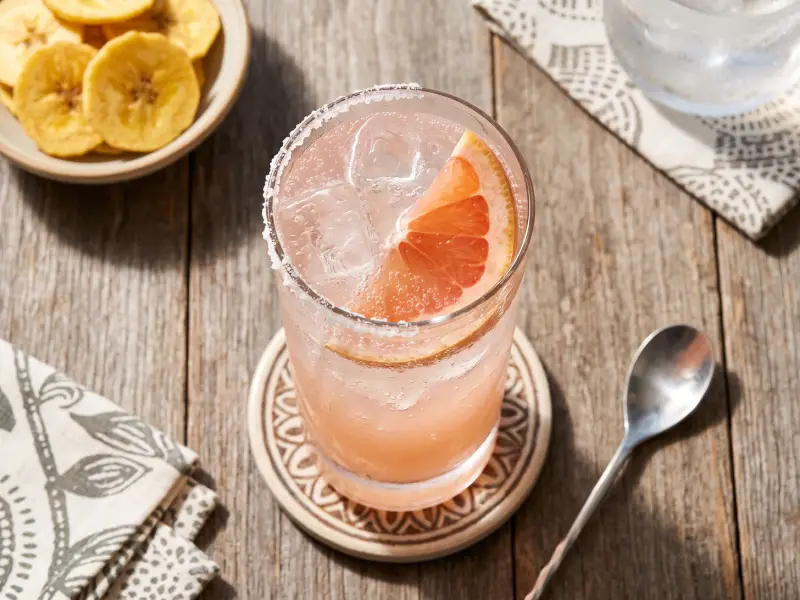 Paloma
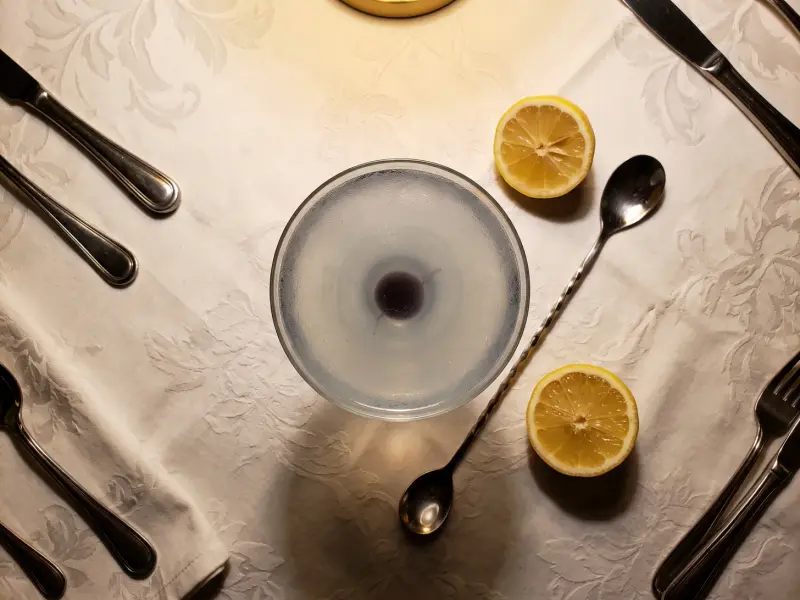 Aviation
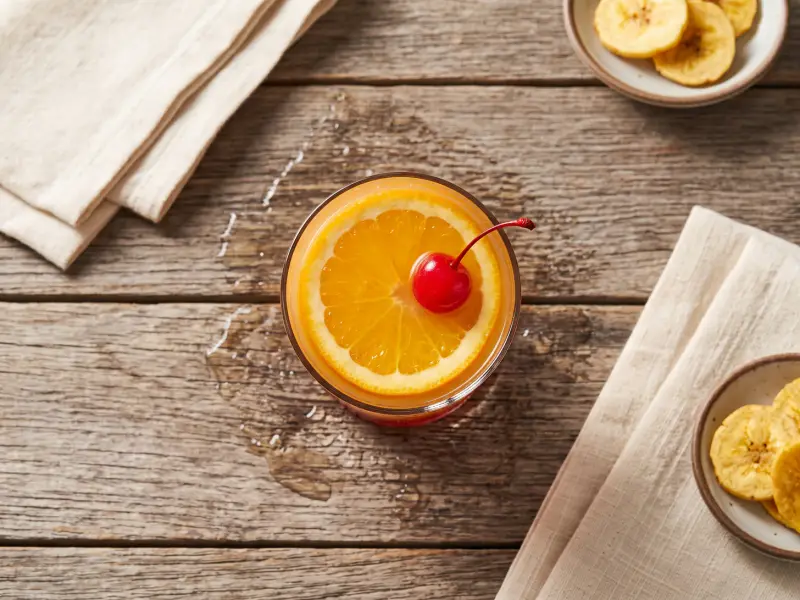 Bahama Mama
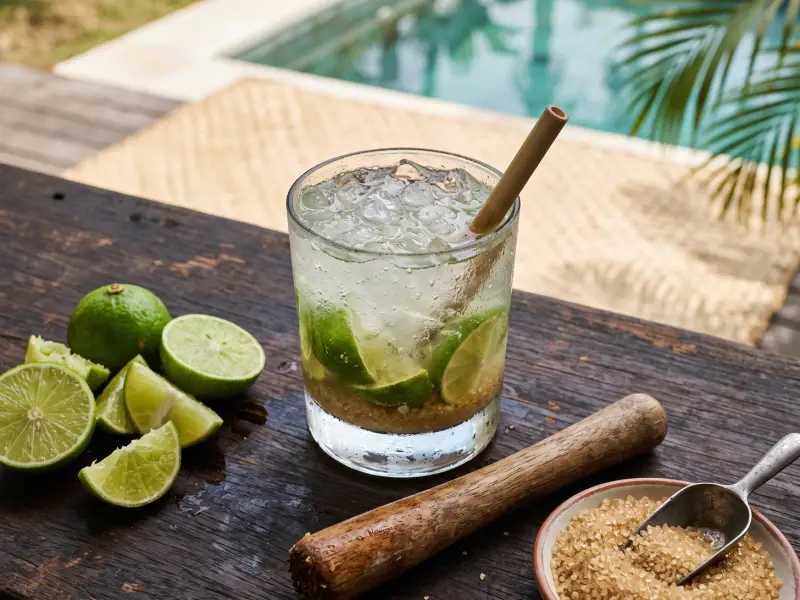 Caipirinha
 Caribbean Rum Punch
 Daiquiri